
Engineering the Perfect Crunch: How to Master the Texture of Extruded Snacks

In the world of leisure foods, texture is king. While flavor may draw a consumer in, it is the mouthfeel—the crispy snap, the airy melt, or the dense crunch—that makes them return for another bite. snack extruder machine For extruded snacks (puffs, curls, pellets), texture is not an accident; it is a carefully engineered result of balancing raw materials, machine mechanics, and thermodynamics. So, how do food scientists achieve the perfect bite? Here are the critical parameters for mastering extruded snack texture. 1. The Foundation: Selecting the Right Raw Material The starch source dictates the texture’s ceiling. Pro Tip: Adding a small amount of amylose-rich starch (like high-amylose corn) reduces […]
The Art and Science of Puffing: A Look into the Processing Technology of Leisure Snacks
From the crispy corn curls that melt in your mouth to the airy cheese balls that dissolve on your tongue, leisure puffed snacks are a global phenomenon. snack food processing equipment Their universal appeal lies in their unique, light texture and satisfying crunch. But behind this simplicity is a fascinating piece of food engineering that transforms humble grains (like corn, rice, and wheat) or starches (like potato) into sophisticated, ready-to-eat products. The core of this technology is extrusion. This high-temperature, short-time (HTST) process is the workhorse of the snack food industry. Let’s break down the journey of a puffed snack, from raw material to shiny, seasoned final product. Step 1: […]
Processing Technology of Puffed Snacks
Puffed snacks—such as corn curls, rice crisps, cheese balls, and direct-expanded cereals—are produced by cooking and expanding starch-based materials under high temperature, pressure, or other physical methods. The result is a low-density, crisp, porous structure. This article outlines the main processing technologies used in the industrial production of puffed snacks. 1. Raw Material Preparation The base ingredients are typically cereal flours or starches: Additives may include: The raw materials are dry-mixed to ensure uniformity. Moisture content is adjusted to 12–18% — critical for proper expansion. 2. Main Puffing Technologies There are four primary methods for producing puffed snacks. 2.1 Extrusion Puffing (Most Common) Extrusion is the dominant industrial method.Process: Advantages: […]
How to Create Puffed Snacks in Various Shapes?
Puffed snacks—like cheese balls, shaped cereal pieces, or filled corn puffs—are beloved for their light, crispy texture and fun forms. extruder snack machine Making them in different shapes involves a combination of food science, processing techniques, and molding methods. Below is a step-by-step guide to producing puffed snacks in diverse shapes. 1. Understand the Basics of Puffing Puffing occurs when moisture inside a starch-based dough turns into steam under heat and pressure, expanding the structure. The two main methods are: For complex shapes, extrusion is the most versatile. 2. Choose the Right Ingredients 3. Use an Extruder with Shaped Dies An extruder pushes the dough through a metal plate called […]
Processing Technology of Sandwich Rice Snacks (Puffed Rice Rolls with Filling)
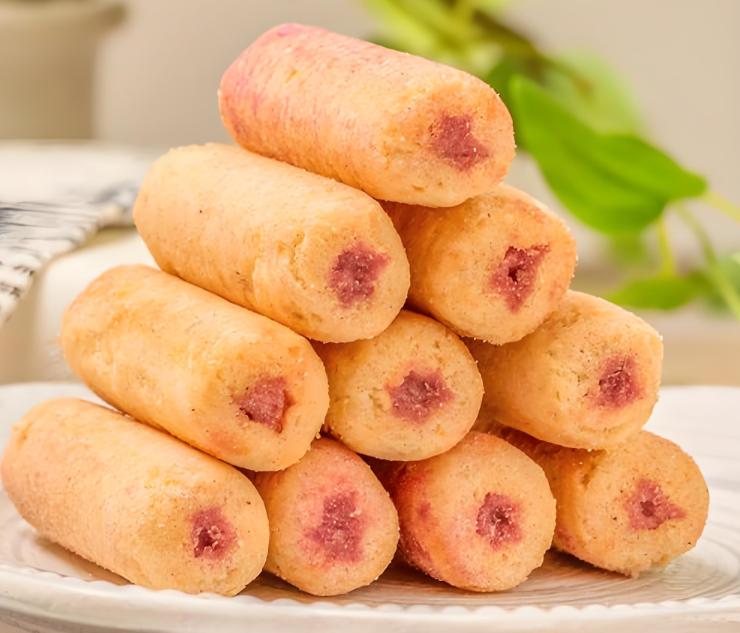
1. Introduction Sandwich rice snacks, also known as filled puffed rice rolls or “sandwich rice crackers”, are popular extruded snack foods consisting of a crispy hollow puffed rice tube filled with a creamy or pasty filling such as chocolate, peanut butter, cheese, or fruit-flavored cream. These snacks are favored for their light, crispy texture and rich flavor, achieved through a combination of extrusion technology and filling injection. Compared to traditional fried snacks, extruded sandwich rice snacks are typically lower in oil content and can be formulated to include functional ingredients like dietary fiber, vitamins, and minerals. This article provides a comprehensive overview of the processing technology for sandwich rice snacks, […]
Optimum Raw Material Moisture Range for Extruded Snack Production

Moisture content of the raw material (feed) is one of the most critical parameters in extrusion cooking. It directly affects expansion ratio, texture, bulk density, corn puff machine and overall product quality. Unlike post-extrusion drying, the feed moisture determines how the melt behaves inside the extruder barrel and at the die. General Recommended Range For most direct-expanded snacks (corn curls, rice puffs, wheat-based snacks), the optimal feed moisture is 11–18% (wet basis). The exact value depends on the target texture and starch composition. Moisture Zones and Their Effects Feed Moisture Extrudate Behavior Typical Products 9–11% Very high friction, excessive wear, rough surface, burnt notes Hard-crunch pellets, some third-generation snacks 11–14% […]
Tailoring Extruded Snack Textures: Formulation Strategies for Crispy vs. Hard-Crunch Profiles
Introduction Texture is a critical quality attribute of extruded snacks (e.g., corn puffs, cheese balls, and expanded pellets). Two desirable textures—crispy (light, fragile, and rapidly disintegrating under force) and hard-crunch (dense, strong, and requiring higher bite force)—are primarily controlled by formulation. corn puffing machine This guide outlines key ingredient adjustments to achieve each profile. 1. Starch Type and Amylose/Amylopectin Ratio 2. Protein Content and Source 3. Fat and Emulsifiers 4. Fiber and Bulking Agents 5. Moisture Content and Water Activity (aw) 6. Sugar and Salt 7. Acidulants and Minerals 8. Processing Interaction (Brief Note) While formulation is key, adjust screw speed and barrel temperature accordingly: Conclusion To design a crispy […]
Why High Protein Content Reduces Expansion in Puffed Foods
Introduction In the production of puffed snacks, breakfast cereals, and texturized plant-based proteins, achieving a high expansion ratio (large, uniform air cells) is a primary goal. snacks making machine While starch is well-known as the key component responsible for expansion, protein plays a more complex role. Although moderate protein levels can contribute to structure and nutrition, excessively high protein content consistently leads to poor puffing, resulting in dense, hard, and unexpanded products. Understanding the underlying mechanisms is essential for formulators aiming to create high-protein puffed foods without sacrificing texture. General Principle: Starch vs. Protein in Expansion Successful puffing relies on three critical factors: Starch, when fully gelatinized, forms an ideal […]
The Impact of Puffing on Nutritional Content: A Double-Edged Sword for Vitamins and Minerals

Introduction Puffing, primarily achieved through extrusion cooking or hot-air expansion, is widely used to produce breakfast cereals, snacks, and textured proteins. snack extruder machine While this process creates desirable textures (crispiness, porosity) and inactivates anti-nutritional factors, it also significantly alters the nutritional profile of the raw materials. The effects on vitamins and minerals are complex: some nutrients degrade under heat and pressure, while others become more bioavailable. Understanding these changes is critical for optimizing processing conditions to preserve or enhance nutritional quality. General Principles: How Puffing Affects Nutrients During puffing, food is subjected to high temperature (typically 120–200°C), high pressure, mechanical shear, and rapid moisture evaporation. These conditions trigger chemical […]
Starch Gelatinization: The Key to Texture and Expansion in Puffing

Introduction Starch gelatinization is a fundamental physicochemical process in food science, puffed snack machine particularly in the production of puffed snacks, cereals, and texturized plant-based proteins. Understanding this process is essential for controlling product quality, texture, and volume. In simple terms, gelatinization is the process where starch granules absorb water and swell when heated, leading to the loss of their crystalline structure. In puffing (e.g., extrusion or hot-air puffing), this transformation is the driving force behind expansion and crispiness. What is Starch Gelatinization? Starch is naturally present in plants as semi-crystalline granules composed of two polysaccharides: amylose (linear) and amylopectin (branched). In their native state, puffed snack machine these granules […]
How Starch Content Affects Puffing Degree
In the world of puffed snacks—from light rice cakes to crunchy corn puffs—one factor stands out as the primary driver of expansion: starch. The amount, type, and structure of starch in a raw material directly determine how much it will puff. Simply put, the higher and more suitable the starch content, the greater the potential for a light, airy, porous structure. This article explores the science behind why starch is so critical to puffing. 1. Starch: The Engine of Expansion Starch is a polysaccharide made up of long chains of glucose. It exists in two main forms: amylose (linear chains) and amylopectin (highly branched chains). When a starch-rich grain or […]
Which Grains Are Best Suited for Puffed Snacks?
Not all grains are created equal when it comes to puffing. While you can technically puff almost any starchy grain, some produce light, crispy, and uniform snacks while others yield dense, hard, or uneven results. The suitability of a grain for puffing depends primarily on its starch composition, moisture content, protein level, puffed snack machine and kernel structure. Below is a breakdown of the most common puffed grains and why they work so well. 1. Rice: The Gold Standard Rice, especially short-grain and medium-grain varieties, is arguably the most popular grain for puffing worldwide (e.g., rice cakes, puffed rice cereal). 2. Corn (Maize): The Versatile Performer Corn is another top […]
 Japanese
  English
  Russian
  Spanish
  Italian
  Arabic
  Portuguese
  German
  French
  Moroccan Arabic
  Persian
  Belarusian