
Comprehensive Maintenance Guide for Snack Food Extruders

Introduction Snack food extruders are the cornerstone of modern expanded snack production, serving as the primary equipment for manufacturing products such as puffed rice snacks, corn curls, cereal flakes, and numerous other expanded food items. These machines operate under extreme conditions—high temperatures, elevated pressures, and continuous mechanical stress—making proper maintenance not merely a recommendation but an operational necessity. A well-maintained extruder delivers consistent product quality, minimizes unplanned downtime, extends equipment service life, and ultimately protects the manufacturer’s bottom line . This article provides a systematic examination of extruder maintenance practices, drawing on industry expertise and established operational protocols. The discussion covers daily maintenance routines, scheduled servicing, troubleshooting common issues, and […]
The Manufacturing Processes of Dog Food

The production of commercial dog food is a sophisticated industrial process that combines nutritional science, food engineering, and stringent safety protocols. While dry kibble dominates the global market (with approximately 95% of household pet food being extruded), various manufacturing methods exist to create different product formats, each with distinct processes and quality control considerations. 1. Extrusion – The Dominant Process for Dry Kibble Extrusion is the most common method for producing dry dog food, accounting for the vast majority of kibble on the market. It is a high-temperature, short-time cooking process that transforms raw ingredients into shelf-stable, nutritionally complete pellets. Ingredient Preparation and Mixing The process begins with the selection […]
Key Considerations in the Production of Fish Feed

The production of high-quality fish feed is a complex process that directly influences the growth, health, and profitability of aquaculture operations. Unlike livestock feed, fish feed must meet unique physical and nutritional requirements to ensure water stability, palatability, and minimal environmental impact. Below are the critical factors that manufacturers must monitor throughout the production cycle. 1. Ingredient Selection and Quality ControlThe foundation of any good feed is its raw materials. Fish meal, plant proteins (soybean, corn gluten), oils, carbohydrates, vitamins, and minerals must be sourced from reliable suppliers. Key points include: 2. Grinding and Particle Size ReductionFish, especially larval and juvenile stages, have limited digestive capacities. Therefore, the grinding process […]
The Manufacturing Process of Fortified Rice: A Comprehensive Overview
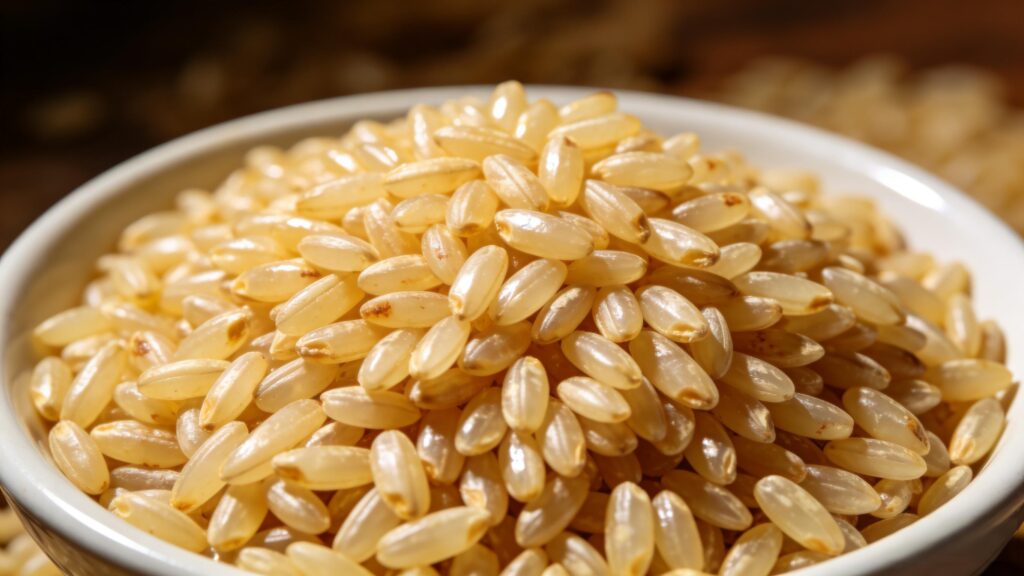
Fortified rice has emerged as a strategic intervention to combat micronutrient malnutrition, commonly known as “hidden hunger,” which affects approximately two billion people worldwide . Rice serves as an ideal vehicle for fortification because nearly half of the global population consumes it as a staple food . This article provides a comprehensive overview of the manufacturing process for fortified rice kernels (FRK) and the various technologies employed. Why Fortify Rice? Traditional rice milling removes the nutrient-rich bran layers, leaving polished white rice as a poor source of essential micronutrients . This processing step, while improving palatability and shelf life, strips away vitamins and minerals that are crucial for human health. […]
Single-Screw vs. Twin-Screw Extruders: A Comprehensive Technical Comparison
Selecting the right extrusion equipment is a foundational decision that directly impacts production efficiency, product quality, and operational costs. In polymer processing, the choice between a single-screw extruder (SSE) and a twin-screw extruder (TSE) is particularly critical. While both machines serve the same fundamental purpose—melting and conveying polymeric materials—their underlying mechanics, capabilities, and ideal applications differ significantly . Fundamental Design and Material Conveyance Single-Screw Extruders The single-screw extruder is the simpler and more widely used machine. It consists of one rotating screw within a cylindrical barrel. Its operation relies on drag flow—the friction between the polymer pellets and the heated barrel wall pulls the material forward . The material is […]
A Comprehensive Guide to Cleaning Extruder Screws: Methods, Materials, and Best Practices
The extruder screw is the heart of any plastic processing operation. Over time, however, this vital component becomes coated with degraded polymer, carbonized residues, and additive deposits. A dirty screw leads to poor melt quality, dimensional instability, and material contamination—culminating in costly downtime and scrap. Effective screw cleaning is not merely a maintenance task; it is a precision procedure that protects your capital investment. This guide outlines the primary methods for cleaning extruder screws, ranging from routine purging to manual extraction, while emphasizing safety and best practices. 1. Preventive Strategy: Purging Compounds The most efficient cleaning is the one that prevents build-up in the first place. Purging compounds are chemical […]
Cleaning Methods for Twin-Screw Extruders
Maintaining a clean twin-screw extruder is essential for product quality, equipment longevity, and operational efficiency. Residue buildup—whether from carbonized deposits, pigments, or material cross-contamination—can lead to defects like black spots and streaks in the final product . snack food extruder This article outlines the primary cleaning methods for twin-screw extruder components, from in-machine purging to disassembled part cleaning. 1. In-Machine Purging (Resin Cleaning Method) This is the most common method for routine cleaning and material changeovers. It uses the physical displacement and chemical compatibility of molten cleaning resins to flush out residual material from the screws and barrel . Procedure: Advantages: Simple, no disassembly required, suitable for routine maintenance.Limitations: May […]
How Floating Fish Feed Is Made: The Science of Buoyancy
Floating fish feed—those small, golden-brown pellets that stay on the water’s surface for hours—is a marvel of food engineering. Unlike sinking feed, which simply drops to the bottom, floating pellets are designed to trap microscopic air bubbles inside their structure. extruder machine for fish feed This buoyancy is not a natural property of the ingredients; it is deliberately created through a precise combination of heat, pressure, and sudden expansion. Here is a detailed look at how floating fish feed is manufactured. Step 1: Ingredient Selection and Formulation The journey to buoyancy begins with the recipe. To create a floating pellet, the formulation must include a sufficient amount of starch—typically from […]
How Fish Feed Pellets Get Their Shape: A Journey Through Extrusion Technology

The uniform, cylindrical pellets or floating crumbles that fish farmers rely on do not occur by accident. Their precise shape, size, and buoyancy are the result of a highly controlled industrial process known as extrusion. This process combines cooking, forming, and drying into a continuous, high-tech production line. Here is a step-by-step breakdown of how fish feed shapes are made. Step 1: Grinding and Mixing – The Foundation of the Pellet Before any shape can be formed, the raw ingredients—fishmeal, soybean meal, wheat flour, vitamins, and oils—must be ground into a fine, homogeneous powder. This fine particle size is critical; if the particles are too coarse, the final pellet will […]
The Art and Science of Breakfast Cereal Flavoring: A Technical Exploration
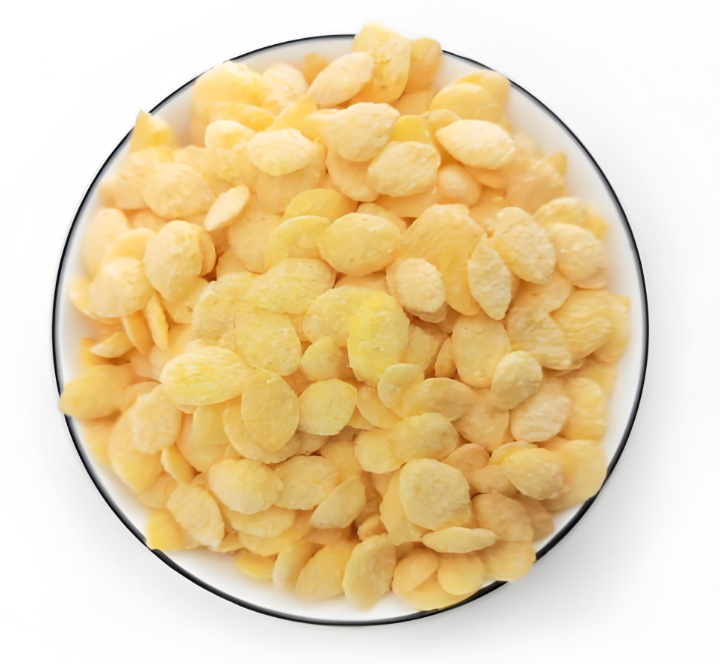
The flavoring of breakfast cereal is a sophisticated interplay of food science, culinary artistry, and industrial engineering. Far from a simple sprinkle of sugar or dusting of cinnamon, the process involves multiple strategic approaches to ensure that every puff, flake, or loop delivers a consistent, appealing, and long-lasting taste experience. The methods employed fall into three broad categories: internal flavoring, external coating, and post-consumer customization. Internal Flavoring: Building Taste from the Inside Out The most foundational approach to flavoring occurs during the cereal’s formation. By incorporating flavoring agents directly into the dough or slurry before it is cooked and shaped, manufacturers create a base taste that is integral to every […]
Title: The Breakfast Cereal Market: Crunching the Numbers on a Complex Future
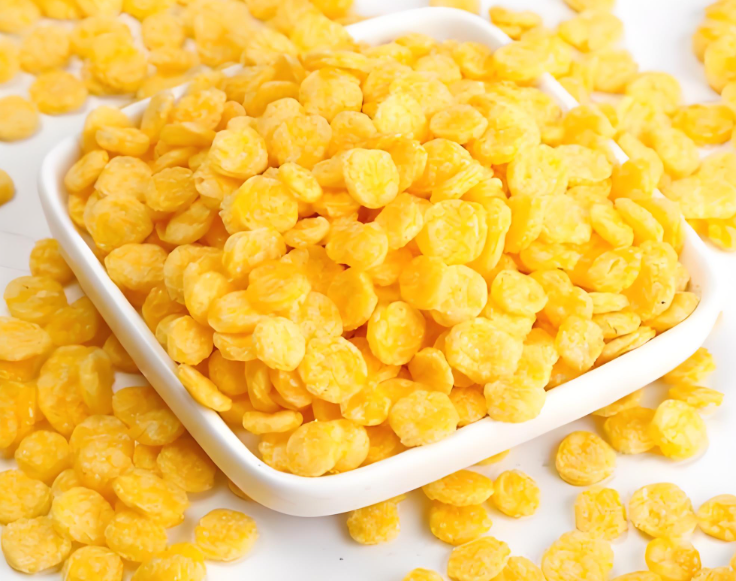
The breakfast cereal aisle has long been the heartbeat of the modern grocery store. For over a century, the ritual of pouring flakes, puffs, or loops into a bowl has defined mornings for millions. Yet, in 2026, this storied category finds itself at a crossroads. Once an untouchable staple of the Western diet, the breakfast cereal market is now navigating a perfect storm of shifting consumer habits, health re-evaluation, and digital disruption. Its future, however, is far from stale. The Current State of the Bowl Globally, the breakfast cereal market remains a substantial enterprise. Valued at approximately $40–45 billion, it continues to grow, albeit at a sluggish compound annual growth […]
Processing Technology of Fried Puffed Foods
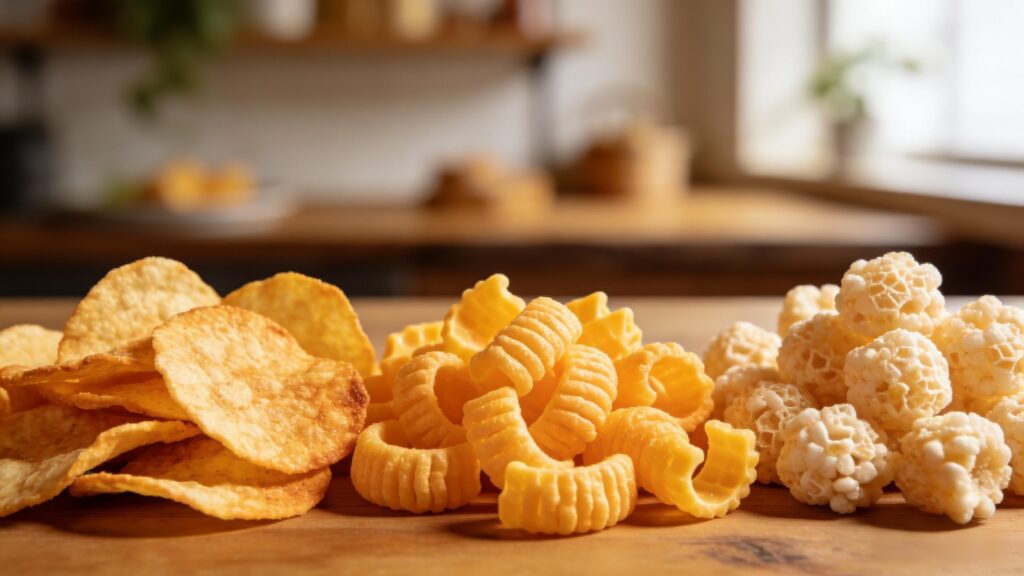
Abstract Fried puffed foods represent a major category in the global snack industry, characterized by their light, crispy texture and porous structure achieved through rapid moisture vaporization in hot oil. This article provides a comprehensive overview of the processing technologies for fried puffed foods, examining the fundamental principles of puffing, the two main production pathways (direct-expanded and indirect-expanded/third-generation snacks), critical processing parameters, and specialized techniques including vacuum frying. 1. Introduction Fried puffed foods are products in which the volume expands significantly during or after frying, resulting in a characteristic porous, crispy texture. The puffing phenomenon occurs when moisture inside the food rapidly vaporizes and expands, transforming the starch-protein matrix into […]
 Japanese
  English
  Russian
  Spanish
  Italian
  Arabic
  Portuguese
  German
  French
  Moroccan Arabic
  Persian
  Belarusian