
The Art and Science of Crispy, Puffy, and Tender Extruded Snacks
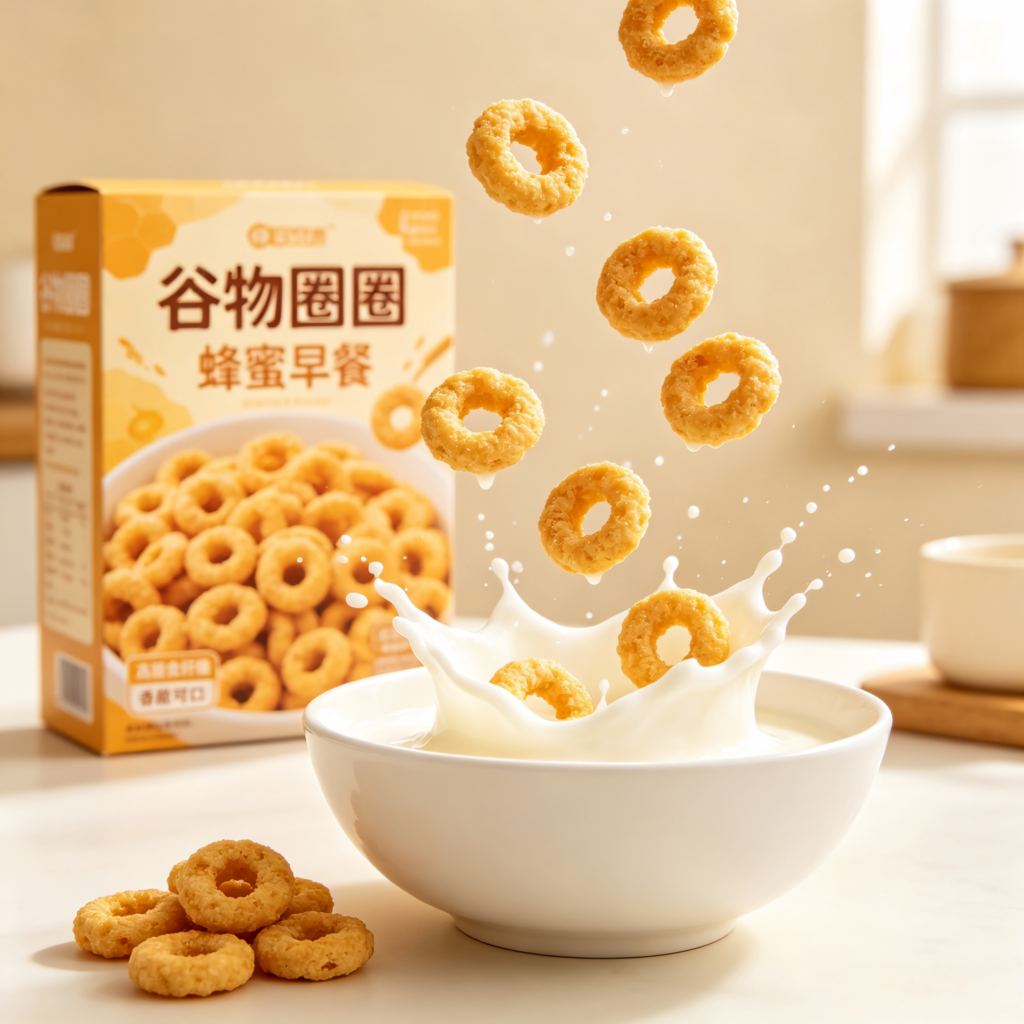
There is a magical moment when you bite into a well-made cheese puff or a corn curl: the shell shatters with a crisp snap, the interior melts into an airy fluff, and the whole structure collapses with a delicate, tender chew. This is not luck; it is food engineering at its finest. puffed snack food machine Achieving that perfect balance of crispy, puffy, and tender is a complex interplay of raw materials, moisture control, and thermal processing. Here is how snack manufacturers create that iconic texture. 1. The Right Foundation: Starches and Proteins Texture begins with the recipe. The primary structure of puffed snacks comes from starch, typically corn, wheat, […]
Complete guidance on fish food processing technology
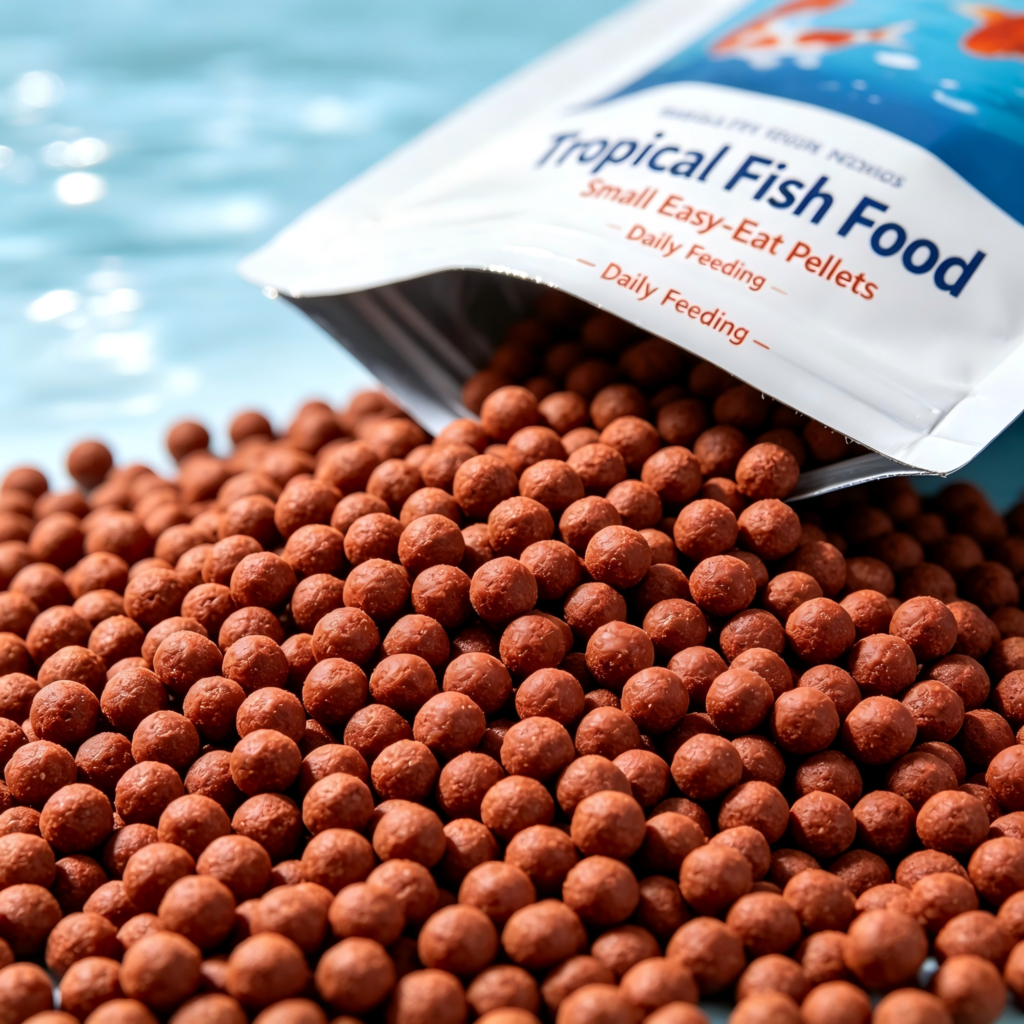
A Brief Introduction to Fish FeedFish feed is a specially formulated diet designed to meet the complete nutritional needs of farmed fish, crustaceans, and ornamental species. fish feed making machine Unlike the natural food found in the wild, commercial fish feed provides a consistent, balanced, and scientifically optimized source of energy and essential nutrients.Modern fish feed is primarily produced in the form of dry, stable pellets. These pellets come in various sizes—from fine powders for newly hatched larvae (fry) to large, robust chunks for mature adults—and can be engineered to either float on the water’s surface or slowly sink to the bottom, depending on the feeding habits of the target […]
Complete guidance for establishing puffed food factories
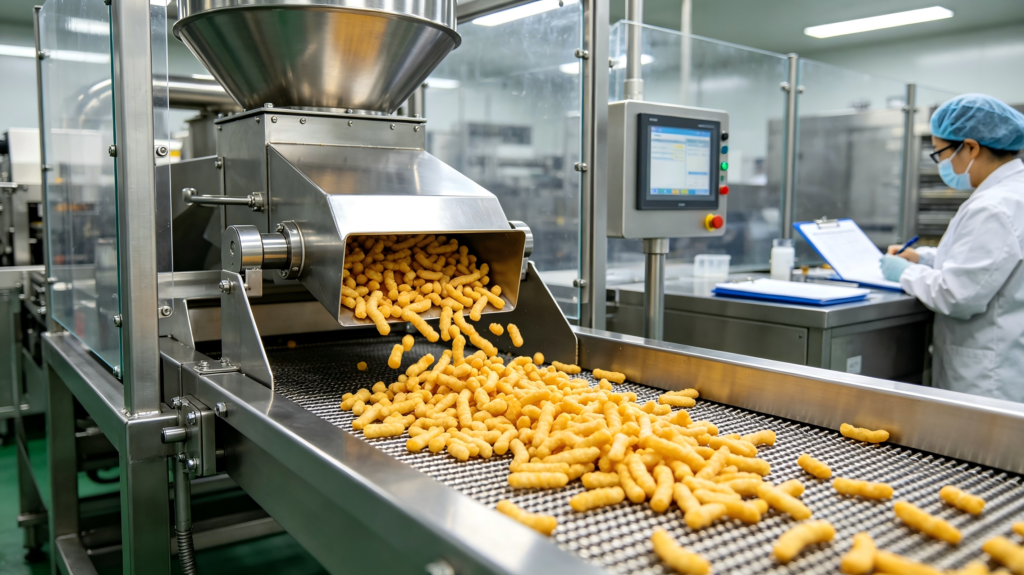
Extruded Snacks: A Brief Introduction Extruded snacks are a popular category of ready-to-eat food products created through a process called extrusion cooking. puffed snack food machine This technology transforms raw ingredients—typically cereals, starches, or protein-rich flours—into expanded, crispy, and often intricately shaped snack foods. Common examples include cheese puffs, corn curls, onion rings, and popular branded snacks like Kurkure and Cheetos. The extrusion process involves mixing raw materials with water and other ingredients to form a dough, which is then cooked under high temperature and pressure inside a machine called an extruder. As the cooked dough is forced through a die (a specially shaped opening at the end of the […]
Key Considerations for Producing High-Quality Kurkure
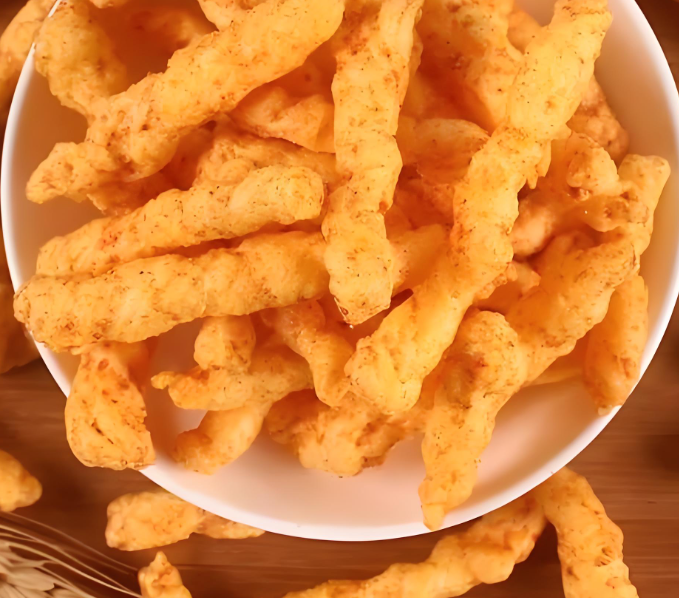
Kurkure, the popular extruded snack known for its distinctive curl shape and crispy texture, represents a triumph of food engineering. kurkure making machine Producing a consistent, high-quality product requires meticulous control over every stage of the manufacturing process—from raw material selection to final packaging. This article outlines the critical factors that manufacturers must address to achieve the ideal texture, flavor, and shelf life that consumers expect. 1. Raw Material Selection: The Foundation of Quality The journey to a premium Kurkure begins with the right ingredients. Corn grits serve as the primary raw material, and their quality directly influences the snack’s expansion and crispness. High-starch, low-fat corn grits are preferred for […]
Top Eight Key Tips for Making Better Extruded Snack Foods

Extruded snacks—puffs, curls, rings, and balls—are among the most popular convenience foods worldwide. Their appeal lies in their light, crispy texture and bold flavors. However, producing consistently high-quality extruded snacks requires careful control of ingredients, equipment, and processes. Here are eight essential tips for making better extruded snack foods. 1. Start with the Right Raw Materials The foundation of any good extruded snack is the flour blend. While corn meal is the most common base, many manufacturers use combinations of corn, wheat, rice, or potato starches. 2. Optimize Feed Moisture for Maximum Expansion Feed moisture is arguably the most critical variable in snack extrusion. It directly affects product expansion, density, […]
Top Five Key Tips for Making Better Breakfast Cereals
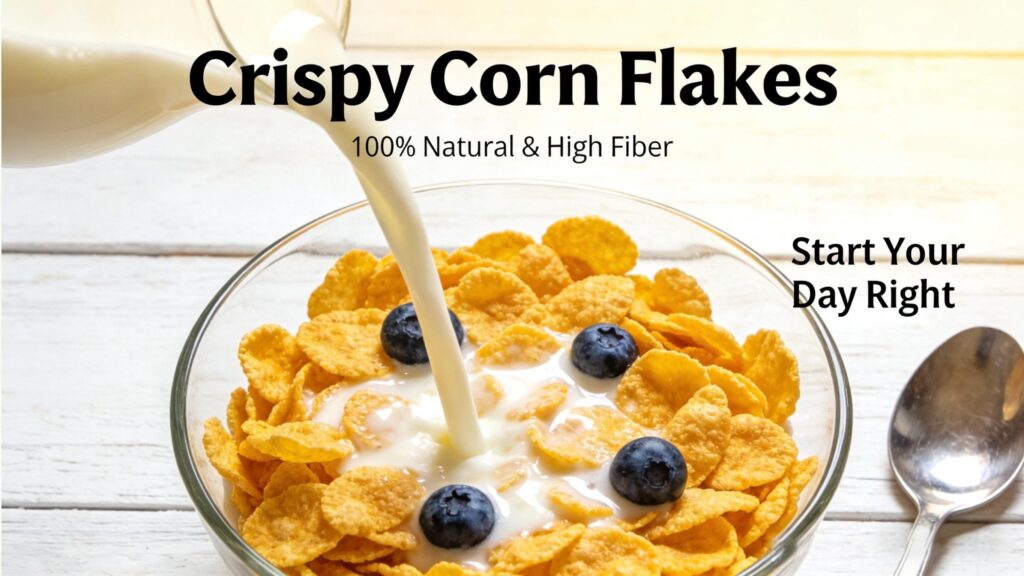
Breakfast cereals are a global staple, but producing a product that is both delicious and nutritious requires careful attention to ingredients, processing, and consumer trends. Based on current industry research and best practices, here are five key tips for making better breakfast cereals. 1. Prioritize Whole Grains and Functional Ingredients The most significant opportunity for improvement lies in ingredient selection. Consumer demand for healthier options is rising, and whole grains are at the forefront of this shift . Oats, whole wheat, brown rice, and corn are excellent bases that retain the germ and bran, providing essential dietary fiber, B vitamins, and minerals . For an even greater nutritional boost, consider […]
How to Clean a Twin-Screw Extruder: A Practical Guide

Cleaning a twin-screw extruder is a critical maintenance task that ensures product quality, prevents contamination, and extends equipment life. The process can be broadly divided into in-machine purging (for quick changeovers) and manual teardown cleaning (for deep maintenance). The right approach depends on the resin being processed, the severity of contamination, and the time available. In-Machine Purging Purging is the primary method for cleaning the screw and barrel without disassembly. It is used for color or material changes and for routine preventative maintenance. The Purging Procedure Choosing the Right Purge Compound Manual Cleaning (Screw Pull) When a deep clean is required—for example, to change screw designs or remove severe contamination—the […]
The Twin-Screw Extruder: A Cornerstone of Modern Manufacturing
The twin-screw extruder is a highly versatile piece of processing equipment that has become indispensable across a wide range of industries, from plastics and polymers to food, pharmaceuticals, and advanced materials research. Its ability to continuously mix, cook, and shape materials with exceptional precision makes it a cornerstone of modern manufacturing . What is a Twin-Screw Extruder? Fundamentally, a twin-screw extruder consists of two intermeshing, rotating screws housed within a cylindrical barrel. Unlike its single-screw counterpart, which primarily melts and conveys material, the twin-screw design is engineered for superior mixing and compounding of complex formulations . The two screws can be configured in different ways, most commonly as co-rotating (turning […]
Top 10 Practical Suggestions for Making Great Puffed Snacks
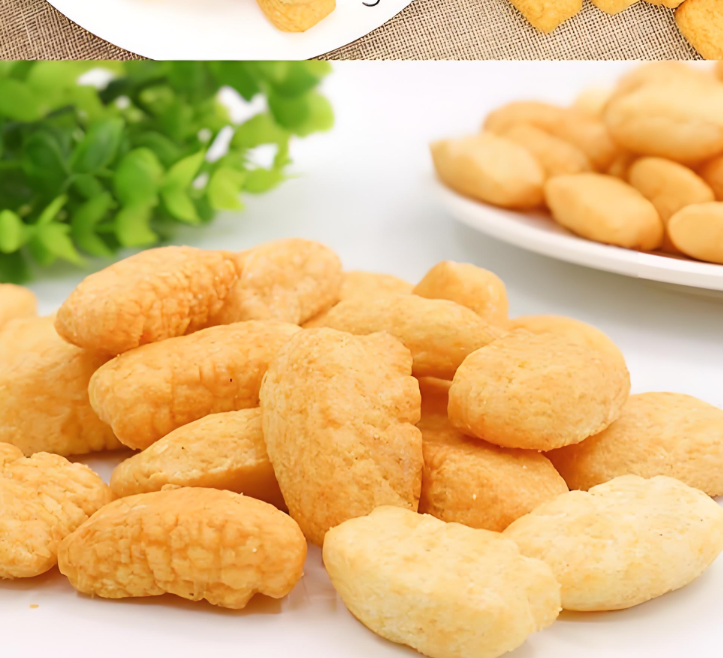
Puffed snacks are loved for their light crunch, bold flavors, and addictive texture. But achieving that perfect puff—uniform, crispy, and flavorful—requires more than just heat and flour. Based on real production experience, here are 10 concrete suggestions to help you consistently produce top-quality puffed products, whether you’re using an extruder, frying line, or oven. Suggestion 1 – Start with a Blended Flour, Not a Single GrainSingle flours (e.g., pure cornmeal or pure rice flour) often give inconsistent results. Instead, blend 70% corn with 20% rice and 10% tapioca starch. The tapioca adds lightness, rice improves crispness, and corn provides the classic savory backbone. Always sieve the blend through a 60-mesh […]
Top 8 Essential Elements for Perfect Puffed Snacks

Puffed snacks—crispy, airy, and explosively flavorful—are a marvel of food science and culinary craft. Whether you’re making cheese balls, rice crisps, or corn puffs, the difference between a mediocre batch and a standout product comes down to eight critical factors. Here’s your blueprint for puffed-perfection. 1. The Right Raw Material (Starch & Protein Balance)Not all flours puff equally. High-starch bases (corn, rice, wheat, or potato) work best, but the protein content matters just as much. Too much protein (above 12%) creates a tough, dense structure; too little (below 6%) yields weak, fragile puffs. Aim for a mid-range protein flour with a fine, uniform particle size—this ensures even hydration and consistent […]
The Complete Guide to Making High-Quality Floating Fish Feed

Floating fish feed—also known as extruded or puffed feed—offers significant advantages for aquaculture: you can directly observe fish feeding behavior, reduce waste, and maintain better water quality. Unlike sinking pellets, floating feed is engineered to be less dense than water through a process that creates tiny air pockets inside each pellet . fish food making machine This guide covers the entire process, from formulation to final storage. Phase 1: Understanding the Science of Floating Feed The “secret” to floating feed is extrusion technology. This process uses high temperature, pressure, and moisture to gelatinize starches, causing the feed to expand dramatically when released from high pressure to normal atmospheric conditions . […]
The Complete Guide to Processing Commercial Dog Food: From Raw Ingredients to Finished Kibble
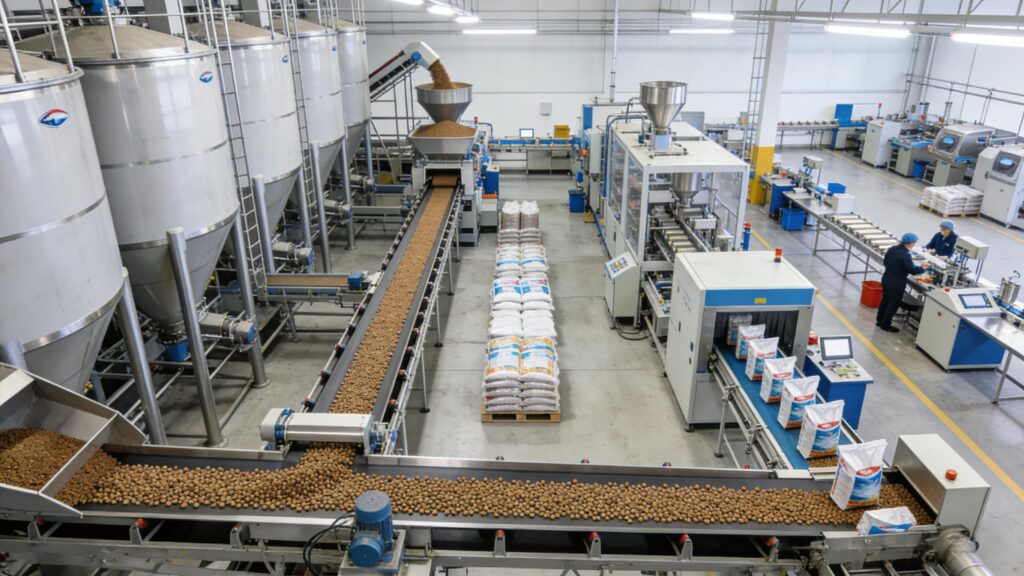
Processing dog food is a complex industrial operation that combines animal nutrition science, food engineering, and strict quality control. dog food making machine The goal is to transform raw agricultural and animal-derived ingredients into a stable, palatable, and nutritionally complete product that meets the standards set by organizations like the AAFCO (Association of American Feed Control Officials). This guide provides a step-by-step breakdown of the entire process. Phase 1: Ingredient Receiving, Grinding, and Mixing (The “Mash” Stage) The process begins not with cooking, but with preparation. This phase is critical for creating a homogenous base. 1. Ingredient Intake and Storage: 2. Grinding: To ensure digestibility and a consistent texture, dry […]
 Japanese
  English
  Russian
  Spanish
  Italian
  Arabic
  Portuguese
  German
  French
  Moroccan Arabic
  Persian
  Belarusian