
Puffed corn cereal presents itself as one of the simplest products on the breakfast aisle. A bag of Arrowhead Mills Puffed Corn Cereal, for instance, lists exactly one ingredient: organic puffed corn. The nutrition panel shows 50 calories per serving, zero grams of sugar, and zero milligrams of sodium. This minimalist facade suggests a equally simple origin—perhaps corn kernels exposed to heat until they pop, much like popcorn.

The industrial reality is far more engineered. corn flakes machine The light, airy, golden globes that float in milk are the product of a multi-stage manufacturing sequence involving pressure vessels, extrusion machinery, controlled moisture gradients, and precise thermal manipulation. Understanding this process reveals that “puffed corn” is less a natural transformation of the whole grain and more a carefully orchestrated structural collapse.
Stage One: From Kernel to Grit
The process does not begin with whole corn kernels destined for the cereal bag. Instead, manufacturers typically start with corn grits or cones—the degerminated, granular endosperm remaining after the bran and germ have been removed. A representative industrial formulation blends approximately 86 to 88 parts corn cones with small quantities of sugar, salt, malt flour, and mineral supplements. The removal of the germ is critical: its oil content would oxidize and turn rancid during the high-heat stages that follow.

This grit mixture is fed into a cooking chamber with sufficient water to form a dough. The cooking step, whether conducted in a batch kettle or a continuous extruder, corn flakes machine serves one primary purpose: gelatinizing the starch. In a pressure cooker operating at roughly 15 pounds of steam pressure, this gelatinization can take between one and a half to two hours. The mass must be cooked until it acquires both the desired color—partially from caramelization of sugars—and the necessary stiffness for subsequent handling.
Stage Two: The Extrusion and Tempering Sequence
Once cooked, the dough-like mass is cooled and broken into pieces before being fed into an extruder. Here, the material is forced through dies to produce strands roughly three-quarters of an inch in diameter. These strands are not yet the final product; they are intermediate pellets, and their treatment at this stage determines the texture of the finished cereal.
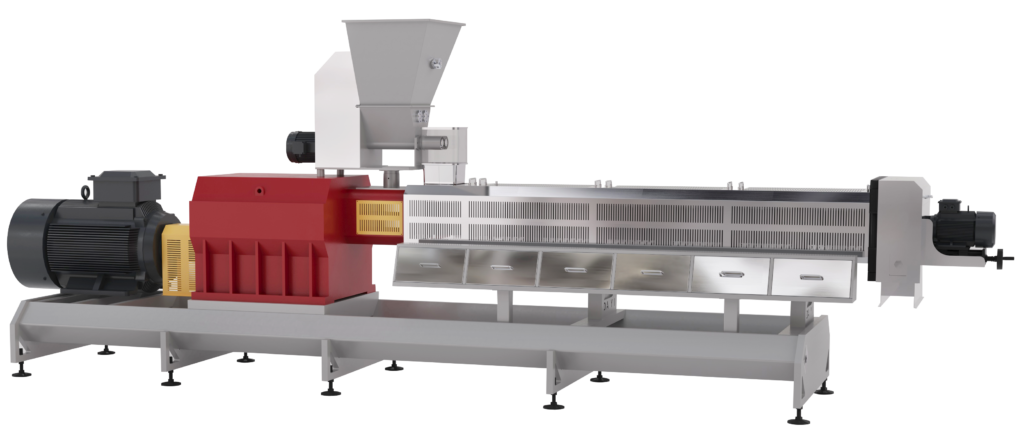
Industrial patents describe a repeated extrusion and cooling cycle. After the first extrusion, the strands are surface-dried with cool air for approximately ten minutes. They are then extruded again, a process repeated two or three times until the desired light color is achieved. Each extrusion kneads the material further, making it smoother and finer-grained while reducing moisture content incrementally. The resulting pellets are cut into short cylinders and dried once more.
This repeated working eliminates the porosity of the pellet’s outer skin. The two surfaces of each pellet become sealed at the edges while remaining separable in the interior—a structural precondition for the puffing that follows.
Stage Three: The Puffing Oven and the Illusion of Simplicity
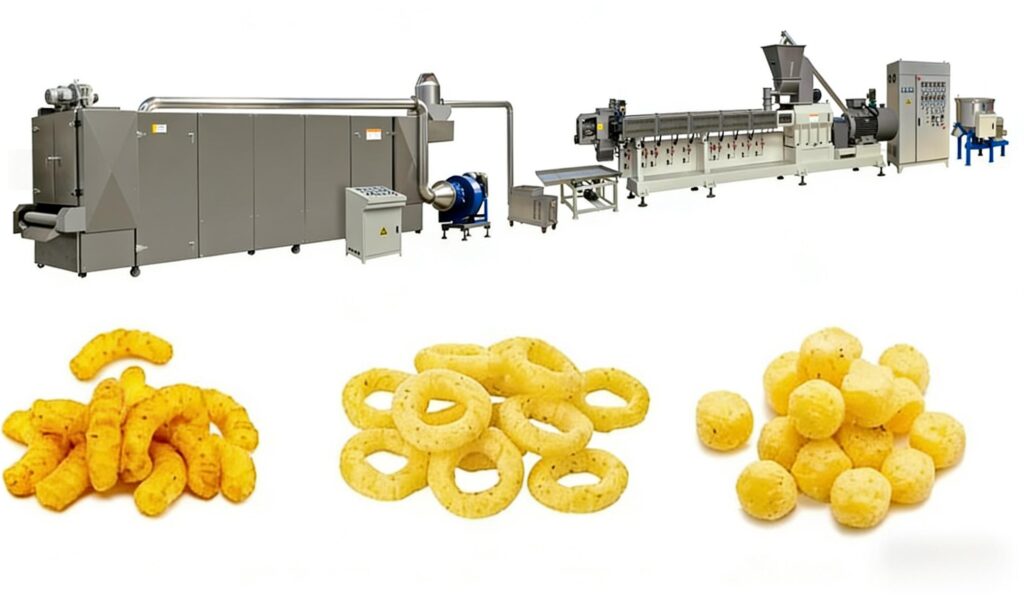
The dried pellets are conveyed into a rotary oven divided into two zones: a puffing zone at the entrance and a toasting zone occupying the remainder. Oven temperatures range from 285 to 300 degrees Fahrenheit, with the toasting end running slightly hotter than the puffing end. The total residence time is approximately four minutes.
What happens inside the oven is the transformation that gives the cereal its name. Upon entering the heat, the pellets puff into globular form almost immediately. corn flakes machine The sealed outer skins separate and stretch “somewhat like a small rubber balloon when it is inflated,” as one patent describes it. The films hold together at the edges due to the earlier drying, which formed a tight seal preventing air from entering. The pellets emerge as bright golden-brown hollow shells—not solid puffs, but fragile, air-filled spheres.
The smooth, shiny surface of these shells results partly from toasted or caramelized sugars present in the mix and partly from the mechanical kneading of repeated extrusion. This fine-grained skin resists moisture absorption, which is why the cereal retains crispness in milk longer than flat flakes might. The hollow structure also minimizes surface area per unit weight, further slowing the soggy descent.
What the Label Doesn’t Say
The single-ingredient label on a bag of puffed corn cereal is technically accurate. No additives, preservatives, or flavorings are required to produce the puff. But the label omits the machinery, the pressure, the repeated extrusion, and the precisely controlled oven zones that make the product possible.
The process also raises a question about what “puffed” actually means. The corn has been gelatinized, mechanically worked, dried, and then expanded by internal steam pressure within a sealed skin. It is less a popped grain than a restructured starch matrix engineered to inflate. The resulting cereal is low in calories and fat—about 50 to 60 calories per serving—but it is also low in protein and fiber, with most of the grain’s original bran and germ removed during the initial milling.
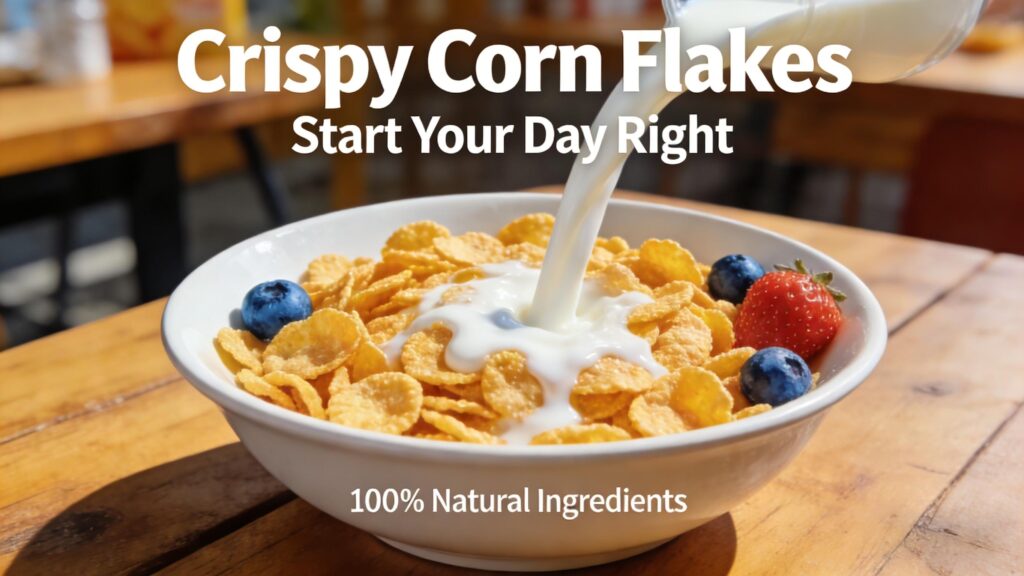
The simplicity of the finished product masks the complexity of its manufacture. The airy, fragile globes that fill the bowl are not exploded kernels but hollow shells, shaped by industrial processes designed to maximize expansion, minimize density, and ensure that the cereal stays crisp just long enough to be eaten.
 Persian
 English
 Russian
 Spanish
 Italian
 Arabic
 Portuguese
 German
 French
 Japanese
 Moroccan Arabic
 Belarusian