
Making fish feed is not simply a matter of grinding ingredients and pressing them into pellets. Whether you intend to produce feed on a small scale for your own pond or to establish a commercial feed mill, the preparatory work spans nutrition science, equipment selection, facility design, regulatory compliance, and quality management. Many first-time producers underestimate the front-end planning and discover costly problems only after equipment has been purchased or a facility has been built. The following guide outlines the essential preparations across each critical domain.
Understanding the Nutritional Requirements of Your Target Species
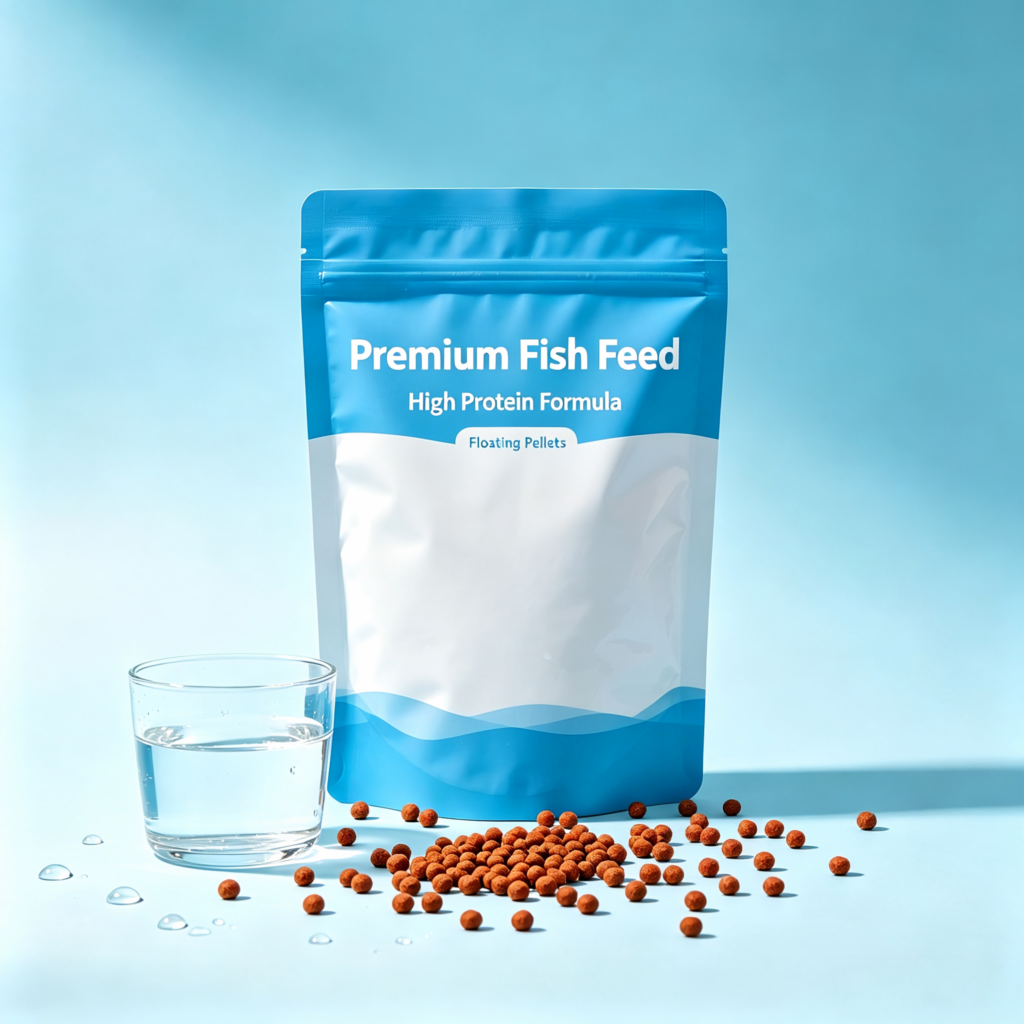
Before selecting a single ingredient or piece of equipment, you must define what the feed is actually supposed to do. fish feed making machine Fish species differ dramatically in their nutritional needs, and a feed designed for tilapia will fail if fed to largemouth bass. Herbivorous and omnivorous species such as grass carp and common carp can utilize plant-based proteins and carbohydrates efficiently, whereas carnivorous species like large yellow croaker and largemouth bass require high levels of animal protein and essential fatty acids. The stage of life matters equally: larval and juvenile fish need finer particles and higher nutrient density than adult fish, with some micro-feeds for fry requiring particle sizes as small as 50 microns. Your formulation must also account for the intended pellet behavior. Floating feeds suit surface and mid-water feeders, while sinking feeds are preferred for shrimp and certain marine species. Deciding these parameters at the outset determines everything from ingredient sourcing to extruder configuration.
Formulating the Diet and Sourcing Ingredients
Once the nutritional targets are clear, the next step is to design a formulation that meets them at a feasible cost. A typical dry pellet formulation combines protein sources (fishmeal, soybean meal, poultry by-product meal), energy sources (wheat, maize), lipid sources (fish oil, soybean oil), vitamin and mineral premixes, and binders. Fishmeal remains the gold standard protein source because of its balanced amino acid profile, but it is expensive and its supply is inconsistent; plant proteins can partially replace it provided they are properly processed to remove anti-nutritional factors. fish feed making machine Sourcing must be approached with the same care as formulation. Ingredients should be purchased from reliable suppliers who can provide consistent quality, and incoming lots should be checked for moisture, protein content, and contamination. Storage conditions matter from the moment ingredients arrive: dry ingredients should be kept below roughly 13% moisture in a cool, clean environment, and heat-sensitive materials such as vitamins and enzymes require dedicated temperature-controlled storage. A first-in, first-out inventory policy prevents spoilage and maintains traceability.

Selecting and Configuring Equipment
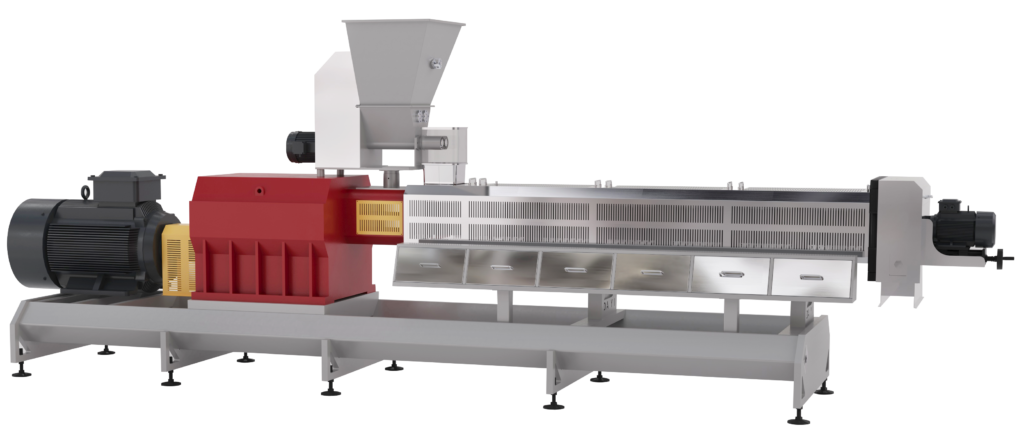
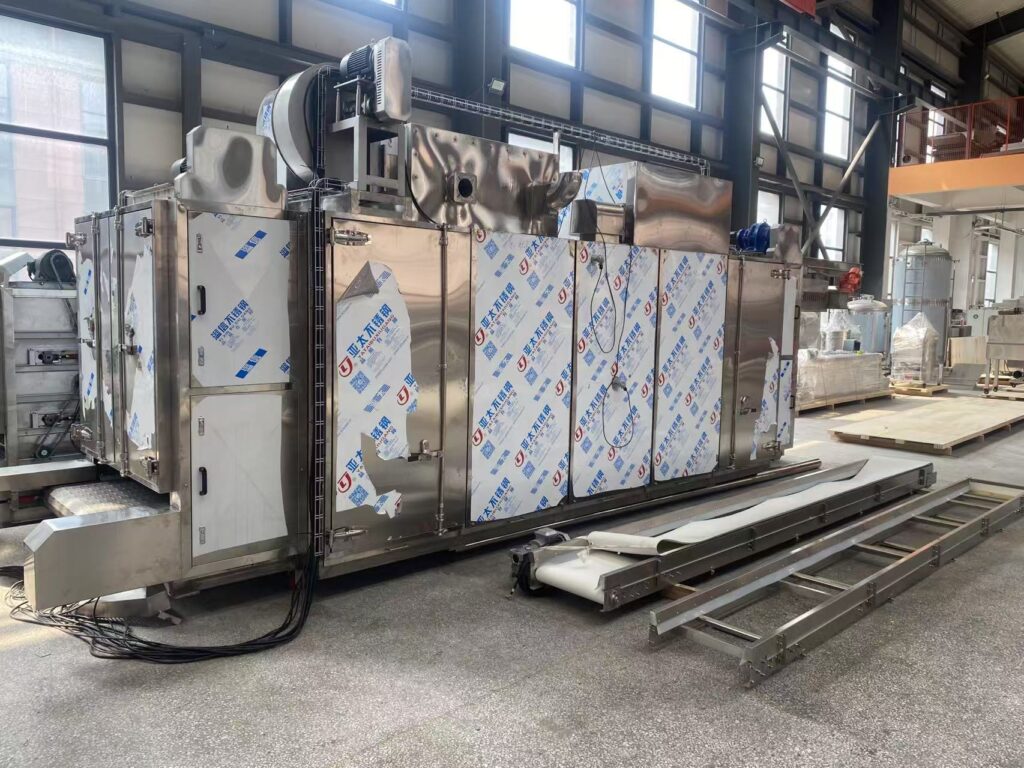
The equipment package depends on the intended scale and the type of feed to be produced. A small-scale operation producing 20 to 50 kilograms per day can operate in approximately 300 square meters, while commercial mills require substantially more space and more sophisticated machinery. The core equipment train includes a grinder or hammer mill for particle size reduction, a mixer for achieving homogeneity, a steam conditioner to preheat and hydrate the mash, an extruder or pellet mill to shape and cook the product, a dryer, a fat coater for post-pellet oil application, and a cooler and screener for finishing. The extruder is the most consequential investment: it is capable of producing floating pellets through controlled expansion, whereas a simple pellet mill produces denser sinking pellets. The choice between single-screw and twin-screw extrusion, and the selection of die configurations, should be made with the target product range in mind. Under-sizing the extruder or dryer to save capital cost is a common error that limits production flexibility later.

Facility Design and Layout
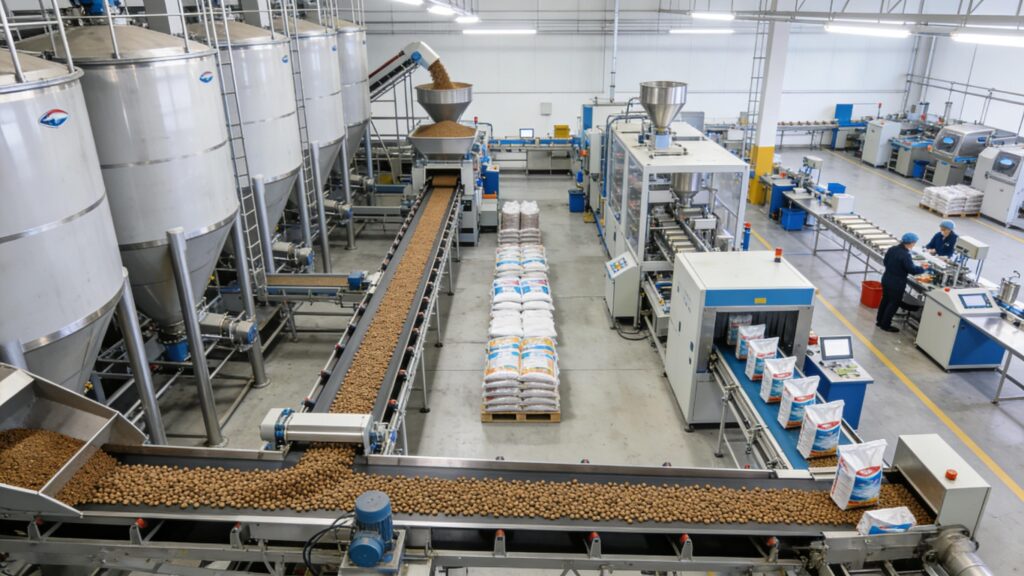
The physical facility must be designed to support hygienic, efficient production and to satisfy regulatory inspection requirements. The building should be pest- and rodent-proof, with adequate access to roads and electricity. Internally, functional areas must be clearly separated: raw material receiving and storage, grinding and mixing, thermal processing, drying and coating, finished product storage, and quality control or laboratory space. Cross-contamination between raw ingredients and finished feed must be prevented through controlled personnel and material flow. Moisture control is a structural as well as an operational concern; walls and floors should be designed to resist dampness and allow cleaning. If the operation falls under formal feed manufacturing regulations, the layout will be scrutinized during the licensing inspection, and deficiencies discovered after construction can be expensive to correct.
Regulatory Compliance and Licensing
Anyone intending to produce feed commercially must investigate the licensing requirements in their jurisdiction before committing to a facility. In China, for example, feed production requires a Feed Production License issued by the provincial agricultural authority. The application process involves company registration with the appropriate business scope, environmental impact assessment and fire safety approval, verification of plant layout and equipment, staffing with qualified technical and inspection personnel, and establishment of a documented quality management system. fish feed making machine The timeline from initial preparation to license issuance typically runs three to six months, with most delays occurring in the preparatory phase rather than in the approval itself. A frequent and avoidable mistake is beginning construction or equipment installation without first confirming that the planned layout and equipment configuration will pass inspection. Consulting with local authorities or experienced advisors before finalizing facility plans can save both time and substantial remediation costs.
Staffing and Quality Management Systems
Even a modest feed operation requires defined roles and documented procedures. The licensing framework typically expects a technical responsible person with relevant educational qualifications, trained laboratory or inspection personnel, and staff capable of executing and recording production and quality control activities. More fundamentally, the operation needs a quality management system that covers raw material receiving and inspection, batch production records, finished product testing, non-conforming product handling, and traceability from ingredient lot to finished feed. These systems are not merely paperwork for licensing; they are the mechanism by which consistency is maintained and problems are caught before they reach the fish. Records of ingredient testing, for instance, should be kept for at least two years in regulated contexts, and raw materials should be periodically tested for sanitary indicators.
Planning for Quality Control and Product Testing
Quality control begins with incoming ingredients and continues through every processing stage. Basic laboratory capability—or a reliable arrangement with an external laboratory—is necessary for verifying moisture, protein, fat, and ash content, as well as for screening for contaminants such as mycotoxins and microbial pathogens. Finished pellets should be assessed not only for nutritional composition but also for physical quality: durability, water stability, buoyancy, and pellet size uniformity. The ultimate test, of course, is palatability and performance in the target fish, which can be evaluated through simple feeding trials before committing to full-scale production. A producer who cannot measure quality cannot control it, and in a market where feed represents the single largest operating cost for fish farmers, inconsistent product quality quickly destroys reputation.
Заключение
Preparing to make fish feed is fundamentally an exercise in matching biological requirements to engineering and economic realities. The sequence matters: define the species and product first, formulate and source ingredients second, specify equipment and facility third, and secure regulatory approval before construction rather than after. Each of these preparatory steps carries its own technical demands, and shortfalls in any one of them—an inadequate extruder, a poorly designed building, an undocumented quality system—will surface later as either regulatory delay, product failure, or financial loss. For the smallholder producing feed for a single pond, the preparation can be modest but the principles remain the same. For the commercial producer, the front-end investment in planning and compliance is not overhead; it is the foundation on which consistent, safe, and effective fish feed is built.
 Russian
 English
 Spanish
 Italian
 Arabic
 Portuguese
 German
 French
 Japanese
 Moroccan Arabic
 Persian
 Belarusian