
Introduction
Dog food is made to meet the nutritional needs of dogs at different life stages. It also has to be safe, palatable, and stable in storage. dog food extruder Dry kibble is the most widely sold format. It is made mainly by extrusion, and it is the focus of this guide. Wet, baked, and cold-pressed formats are covered briefly.
Producing quality dog food takes careful formulation, raw material control, precise processing, and strict food safety management. This guide covers the whole process, from ingredients to packaging.

1. Types of Dog Food
| Type | Moisture | Main process | Notes |
|---|---|---|---|
| Dry kibble | 6–10% | Extrusion, drying, coating | Most common, long shelf life, cost-effective |
| Wet/canned | 70–82% | Mixing, filling, retort sterilization | High palatability, higher cost |
| Semi-moist | 15–30% | Extrusion or mixing with humectants | Soft texture, needs preservatives |
| Baked/pellet | 6–10% | Baking or pelleting | Biscuit-style or treat products |
| Cold-pressed | 8–12% | Low-temperature pressing | Less heat exposure |
| Freeze-dried/air-dried | 2–10% | Drying of raw or cooked blends | Premium, requires careful safety control |
2. Process Overview (Dry Kibble)
- Formulation and nutritional design
- Ingredient receiving and storage
- Grinding
- Batching and mixing
- Preconditioning
- Extrusion
- Drying
- Cooling
- Coating (fat and palatant)
- Final cooling and packaging
3. Formulation and Nutrition
3.1 Nutritional Standards
Formulas should meet recognized standards for the target market, such as:
- AAFCO nutrient profiles (United States)
- FEDIAF guidelines (Europe)
- Local regulations, such as those of China’s feed authorities
Products are labeled for a life stage: growth/puppy, adult maintenance, dog food extruder all life stages, or specific needs such as weight control, sensitive digestion, or senior care.
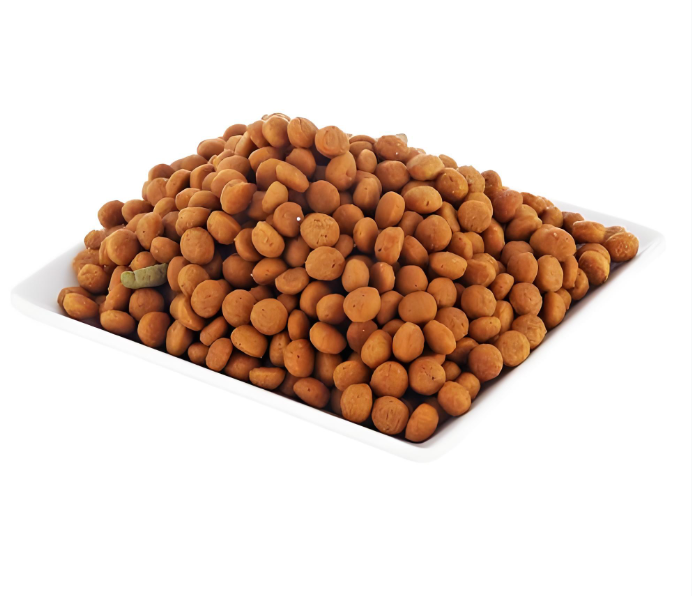
3.2 Typical Nutrient Ranges for Adult Dry Food
| Nutrient | Typical range (dry matter) |
|---|---|
| Crude protein | 18–30% (AAFCO adult minimum 18%) |
| Crude fat | 8–18% (AAFCO adult minimum 5.5%) |
| Crude fiber | 2–5% |
| Ash | 5–9% |
| Calcium | 0.6–1.5% |
| Phosphorus | 0.5–1.2% |
Puppy and large-breed diets need carefully controlled calcium and phosphorus. Requirements vary by standard, so always check the current version.
3.3 Main Ingredient Groups
Protein sources
- Fresh or frozen meat (chicken, beef, lamb, fish)
- Meat meals (such as chicken meal), which are rendered and concentrated
- Plant proteins (soy, corn gluten meal, pea protein)
- Eggs and dairy ingredients
Carbohydrate sources
- Corn, rice, wheat, barley, sorghum, oats
- Potatoes, sweet potatoes, peas, lentils (common in grain-free formulas)
- Starch is needed in extrusion, since it forms the structure of the kibble. Typically at least 20–30% starch is required for good expansion.
Fats and oils
- Animal fats (chicken fat, tallow) and fish oil
- Plant oils
- Provide energy, essential fatty acids, and palatability
Fiber sources
- Beet pulp, cellulose, rice bran, pea fiber
Vitamins and minerals
- Premix supplying vitamins A, D, E, B-complex, plus zinc, iron, copper, selenium, and others
- Often supplemented to compensate for processing losses
Functional additives
- Antioxidants (mixed tocopherols, rosemary extract)
- Probiotics, prebiotics, omega-3 fatty acids
- Glucosamine and chondroitin for joint support
- Natural or synthetic preservatives
Palatants
- Digests made from animal tissue or yeast, applied after extrusion
4. Raw Material Handling
4.1 Receiving and Inspection
- Verify supplier certificates and specifications.
- Check moisture, protein, fat, odor, color, and foreign matter.
- Test for mycotoxins (aflatoxin, DON, fumonisin), heavy metals, and Salmonella where appropriate.
- Reject lots that are moldy, infested, or contaminated.
4.2 Storage
- Keep dry ingredients in clean, dry, ventilated silos or warehouses.
- Store fats and oils in sealed tanks with antioxidant protection.
- Keep fresh or frozen meat at proper temperature.
- Apply first-in, first-out (FIFO) rotation.
- Keep pests out.
5. Processing Steps in Detail
5.1 Grinding
- Ingredients are ground using hammer mills or pin mills.
- Target particle size is usually under 1 mm for small kibble, with a fairly uniform distribution (about 95% passing a 0.8–1.0 mm screen for many formulas).
- Fine grinding improves mixing, cooking, and kibble texture. However, too fine a grind can raise energy use and heat.
5.2 Batching and Mixing
- Weigh ingredients with calibrated scales. Accuracy matters most for micro-ingredients.
- Mix in a ribbon, paddle, or double-shaft mixer until uniform.
- Typical mixing time is 2–5 minutes for dry blends. Verify uniformity with a mixer performance test (coefficient of variation, ideally under 5–10%).
- Add micro-ingredients as a premix to avoid segregation.
- Sequence matters. Do not let dry mix sit for long, since particles can separate.
5.3 Preconditioning
The mixed meal enters a preconditioner before the extruder.
- Steam and water are added to moisten and partly cook the meal.
- Temperature reaches about 80–95 °C. Residence time is 1–3 minutes, or longer in some systems.
- Moisture reaches roughly 20–30%.
- Benefits: more uniform cooking, higher throughput, lower wear and energy use in the extruder, and better starch gelatinization.
Fresh meat can be added as a slurry or directly into the preconditioner or extruder, depending on the plant design.
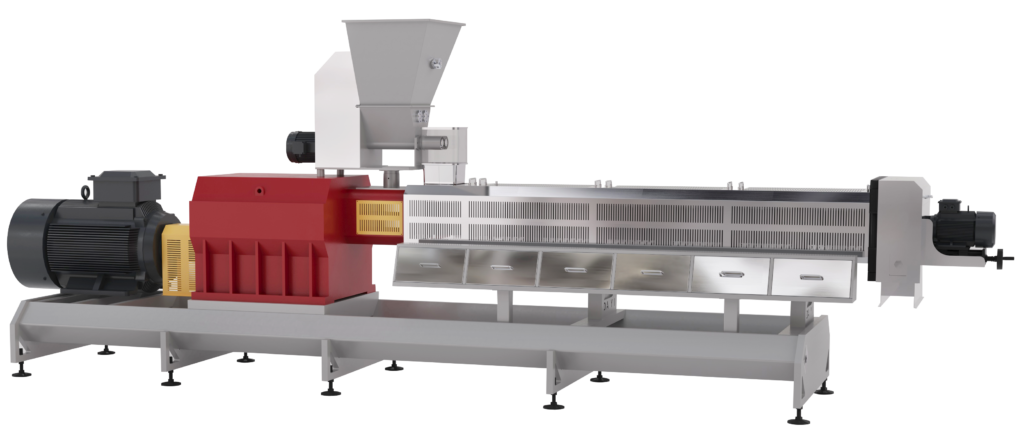
5.4 Extrusion
Extrusion is the core step. It cooks the mix, forms its structure, and shapes the kibble.
Equipment
- Single-screw extruders are common and economical.
- Twin-screw extruders offer more control, more flexibility with high-fat or high-meat formulas, and better handling of difficult recipes.
Typical conditions
| Parameter | Typical range |
|---|---|
| Barrel temperature (final zones) | 100–150 °C |
| Moisture in extruder | 22–30% |
| Pressure at die | 20–50 bar (varies) |
| Residence time | 20–60 seconds |
| Specific mechanical energy (SME) | 20–60 Wh/kg |
What happens
- Heat, moisture, and shear gelatinize starch.
- Proteins denature and align, forming texture.
- Pathogens are reduced through heat.
- At the die, pressure drops and water flashes to steam, causing expansion.
- A rotating knife cuts the extrudate into pieces of the desired length.
Controls for kibble quality
- Die design controls shape and size. Different dies create different forms, such as rounds, triangles, and shaped bits.
- Knife speed controls piece length.
- Moisture, temperature, and screw speed control density and degree of cook.
- Fat in the extruder should be limited to about 6–10%. More fat lowers expansion and reduces friction. Additional fat is sprayed on after extrusion.
Density control
- Sinking foods (for example, for some fish diets) are dense.
- Floating foods are lighter. For dog kibble, a medium bulk density is typical, around 300–450 g/L, though it varies by product and kibble size.
5.5 Drying
Wet extrudates leave the extruder at about 20–28% moisture and are dried to a safe level.
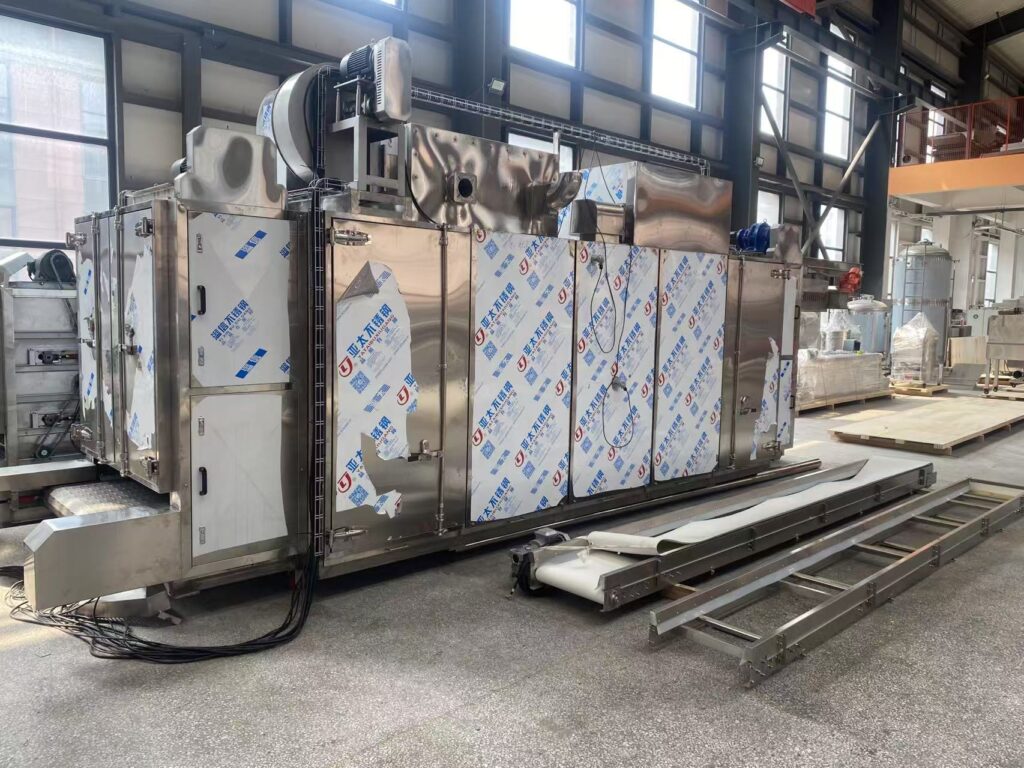
- Typical dryers are multi-pass belt dryers or horizontal convection dryers.
- Air temperature is about 100–150 °C, with drying times of 10–30 minutes.
- Target final moisture is 6–10% before coating, often below 10% for safety.
- Even airflow across the bed prevents wet or over-dried spots.
Over-drying wastes energy and may make kibble brittle. Under-drying invites mold growth.
5.6 Cooling
- A counter-flow cooler brings the kibble down to near ambient temperature (within about 5–10 °C above room temperature).
- Cooling must happen before coating and packing. Warm product causes condensation in the bag.
5.7 Coating
Coating is added to the cooled kibble to raise palatability and energy density.
- Fat/oil (often 5–10% of the total weight) is sprayed in a vacuum coater or drum coater. Vacuum coating pulls fat into the pores of the kibble, which reduces surface greasiness and improves oxidative stability.
- Palatants (liquid or powder digests) are applied afterward.
- Heat-sensitive ingredients, such as probiotics, vitamins, and omega-3 oils, are often added here.
- Antioxidants should be added to the fat before application.
5.8 Final Cooling, Screening, and Packaging
- After coating, screen out fines and oversized pieces. Fines can be reworked in small percentages.
- Metal detectors or X-ray systems should be placed before packaging.
- Weigh and fill into bags, and then seal them.
6. Packaging and Storage
- Materials: Multi-layer bags with a barrier to moisture, oxygen, and light. Many bags include a PE/PET or aluminum/metallized layer.
- Options: Nitrogen flushing or oxygen scavengers help to extend shelf life of high-fat, premium products.
- Labeling: Include product name, guaranteed analysis, ingredient list in descending weight, feeding directions, life stage statement, net weight, lot code, best-before date, and manufacturer information.
- Shelf life: Usually 12–18 months for dry kibble, depending on formulation and packaging.
- Storage: Store in a cool, dry place. Keep bags off the floor and away from sunlight.
7. Alternative Production Methods
7.1 Wet/Canned Dog Food
- Meat, by-products, grains, and gravy are ground and mixed.
- The mix is heated, filled into cans or trays, and sealed.
- Retort sterilization (typically around 121 °C for a time set by a process authority) makes the product commercially sterile.
- Shelf life is often 2–3 years.
7.2 Baked Biscuits and Treats
- A dough is mixed, sheeted or molded, cut, and baked at moderate temperatures. It is then dried to low moisture.
7.3 Cold-Pressed or Air-Dried Foods
- These use lower temperatures to maintain some nutrient quality.
- Microbial safety needs special attention. Validated kill steps or ingredient controls are essential.
7.4 Freeze-Dried and Raw Products
- Freeze-drying removes water at low temperature under vacuum.
- Raw products carry greater pathogen risk (such as Salmonella and Listeria). They need strict controls, and many use high-pressure processing (HPP).
8. Quality Control
8.1 Raw Material Tests
- Moisture, protein, fat, fiber, and ash
- Mycotoxins and contaminants
- Particle size
- Microbiology
8.2 In-Process Checks
- Mixer uniformity
- Extruder temperature, pressure, motor load, and feed rate
- Kibble size, bulk density, and expansion
- Dryer moisture profile
- Coating level (fat percentage)
8.3 Finished Product Tests
| Test | Purpose |
|---|---|
| Proximate analysis | Confirms protein, fat, fiber, moisture, and ash match the label |
| Moisture and water activity | Safety and shelf life; water activity target usually below about 0.6 |
| Kibble size and shape | Consistency |
| Bulk density | Packaging and feeding |
| Hardness/breaking force | Texture and durability |
| Fines percentage | Handling quality |
| Peroxide value and rancidity | Fat stability |
| Microbiology | Salmonella, Enterobacteriaceae, mold, and yeast |
| Palatability trials | Acceptance by dogs |
| Digestibility trials | Nutritional value |
9. Food and Feed Safety
- Salmonella control: This is the major hazard in pet food. Use validated heat steps, and prevent post-extrusion recontamination. Separate raw and finished-product zones, control air and traffic flow, and clean carefully.
- HACCP and preventive controls: Follow regulations like the FDA FSMA Preventive Controls for Animal Food or equivalent local rules.
- Mycotoxin management: Test grains and set acceptance limits.
- Foreign material: Use magnets, sieves, metal detectors, and X-ray.
- Allergen and cross-contact controls: Especially important with different protein sources.
- Traceability and recall readiness: Keep lot records that link ingredients to finished goods.
- Sanitation: Plan dry cleaning, wet cleaning where appropriate, and environmental monitoring.
10. Troubleshooting
| Problem | Likely causes | Solutions |
|---|---|---|
| Kibble too dense | Low temperature, low SME, high fat or fiber, high moisture | Raise heat or energy input, adjust formula, reduce moisture |
| Over-expanded, fragile kibble | High starch, high temperature, low moisture | Adjust formula or process conditions |
| Inconsistent size | Unstable feed, worn die or knife | Stabilize feeding, replace worn parts |
| High fines | Over-drying, rough handling, weak structure | Adjust drying and conveyors, improve formulation |
| Mold in bags | High moisture, condensation, packaging leaks | Dry to target moisture, cool fully, check seals |
| Rancid smell | Oxidized fat, poor antioxidants, high oxygen exposure | Add antioxidants, use fresh fat, improve packaging |
| Greasy bags | Too much surface fat, warm product | Use vacuum coating, reduce fat, cool before coating |
| Low palatability | Poor-quality ingredients, rancid fat, low palatant | Improve ingredient quality and palatant use |
| Uneven nutrient levels | Poor mixing, ingredient segregation | Verify mixer performance, change mixing sequence |
11. Tips for Success
- Start with a sound formula. Work with a qualified animal nutritionist or veterinary nutritionist.
- Control ingredient quality. The final product can never be better than its inputs.
- Standardize grinding and mixing. These steps strongly affect every later stage.
- Monitor extrusion carefully. Small changes in moisture or temperature shift texture and density.
- Separate clean and dirty zones. Prevent recontamination after the kill step.
- Protect fats from oxidation. Use antioxidants and good packaging.
- Test with real dogs. Laboratory results do not replace feeding trials and palatability testing.
- Keep full records. Good documentation helps with audits, troubleshooting, and recalls.
Conclusion

Processing dog food combines nutrition science, food engineering, and strict safety management. Dry kibble production depends on careful grinding, mixing, preconditioning, extrusion, drying, coating, and packaging. Each stage affects the nutritional value, texture, palatability, and safety of the final product. A manufacturer that controls its ingredients, monitors its process, and keeps strong food safety systems can deliver dog food that is healthy, appealing, and reliable.
 Japanese
 English
 Russian
 Spanish
 Italian
 Arabic
 Portuguese
 German
 French
 Moroccan Arabic
 Persian
 Belarusian