
Introduction
The twin-screw food extruder is one of the most significant innovations in modern food processing engineering. It is a versatile, continuous manufacturing device that uses two intermeshing, rotating screws inside a heated barrel to cook, mix, shape, and texturize food ingredients. Often described as a pump, a heat exchanger, and a continuous high-pressure, high-temperature reactor combined into a single piece of equipment, the twin-screw extruder has become the industry standard for producing a vast array of food and feed products—from breakfast cereals and snacks to plant-based meats and aquatic feed.
This article provides a comprehensive introduction to the food twin-screw extruder, covering its working principle, key components, types, applications, advantages, and limitations.
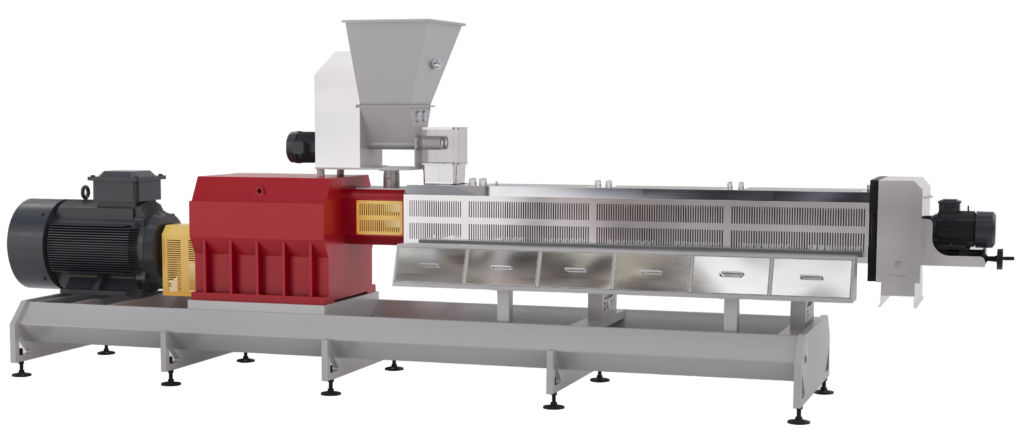
1. What is a Twin-Screw Extruder?
A twin-screw extruder consists of two parallel screws placed side by side inside a barrel with a figure-eight (∞-shaped) cross-section. As the screws rotate, they convey, compress, mix, and cook the raw material as it travels from the feed hopper to the discharge die.
The primary purpose of this twin-screw geometry is to overcome the limitations of single-screw extruders, particularly the problem of material slipping against the barrel wall. In a single-screw extruder, the material must adhere to the barrel wall and slip on the screw surface to achieve output—a condition that fails with oily, sticky, or wet ingredients. Twin-screw extruders, by contrast, use positive displacement to convey materials, making them far more robust and flexible.
2. Working Principle: The Journey Through the Barrel
The extrusion process can be understood as a sequence of functional zones, each performing a specific operation on the material.
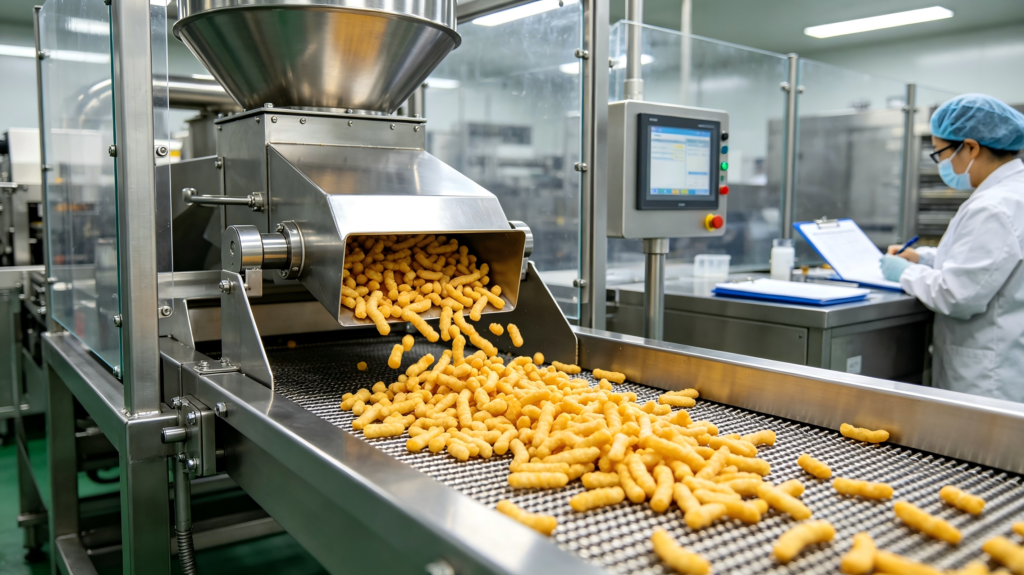
2.1 Feeding Zone
Raw materials—typically in powder, granule, or liquid form—are introduced into the extruder barrel through a hopper. The initial screw sections are designed to convey this material forward and begin compacting it. In many food extrusion systems, the raw materials are first pre-conditioned with steam and water in a separate preconditioner to raise moisture content and initiate starch gelatinization.
2.2 Melting, Mixing, and Cooking Zone
As the material moves along the barrel, it is subjected to intense mechanical shear, friction, and external heating. The twin screws knead, fold, and mix the material with extreme uniformity, ensuring that additives, flavors, colors, and nutrients are homogeneously distributed.
Under these conditions—temperatures typically ranging from 100°C to 200°C (and in some specialized systems up to 450°C) and pressures up to 300 bar—several critical transformations occur:
- Starch gelatinization: Starch granules absorb moisture, swell, and rupture, forming a viscous, plastic mass that is highly digestible.
- Protein denaturation and texturization: Proteins unfold and reorient, creating fibrous structures essential for meat analogues.
- Enzyme inactivation: Harmful enzymes are destroyed, improving shelf stability.
- Microbial reduction: The high temperatures contribute to product safety.
The mechanical energy generated by the screws’ rotation contributes significantly to the heating process, reducing the need for external electrical energy by 30–40% in some configurations.
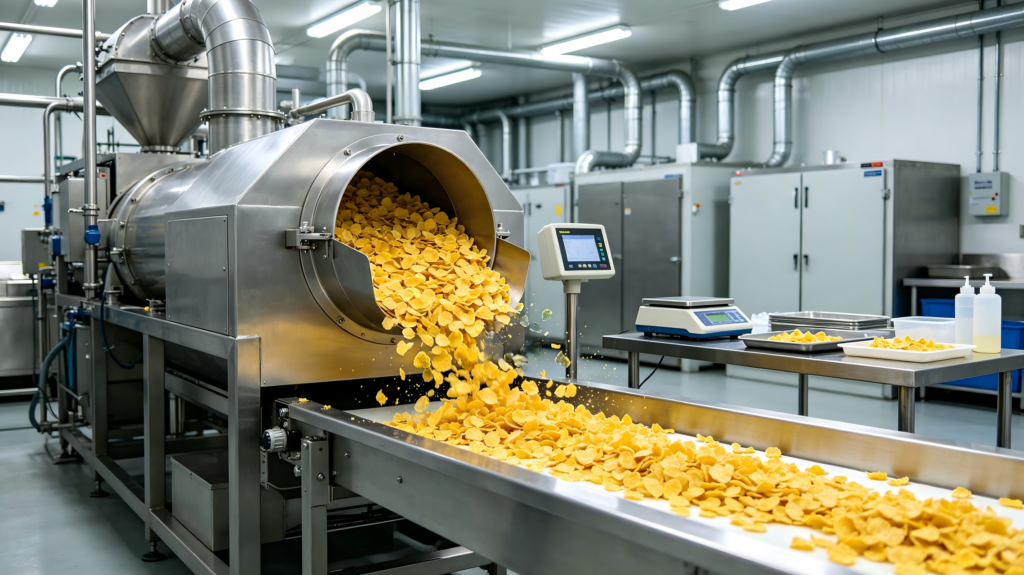
2.3 Pressure-Building and Die Zone
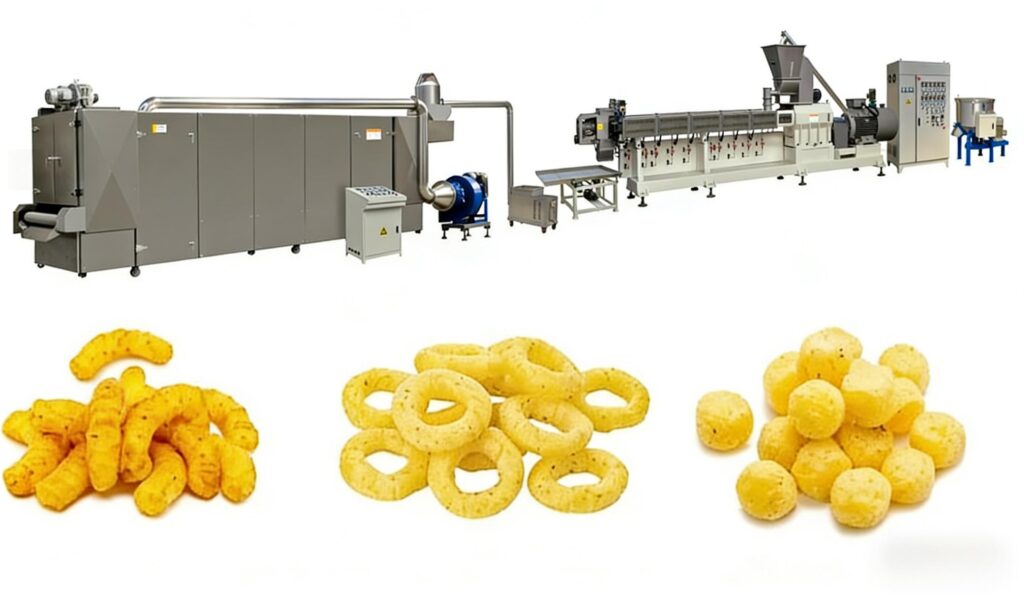
In the final section of the barrel, the screw design changes to build up uniform pressure. This homogenous, pressurized melt is then forced through a die—a metal plate with holes of a specific shape and size—which forms the final product profile, such as pellets, strands, sheets, or tubes.
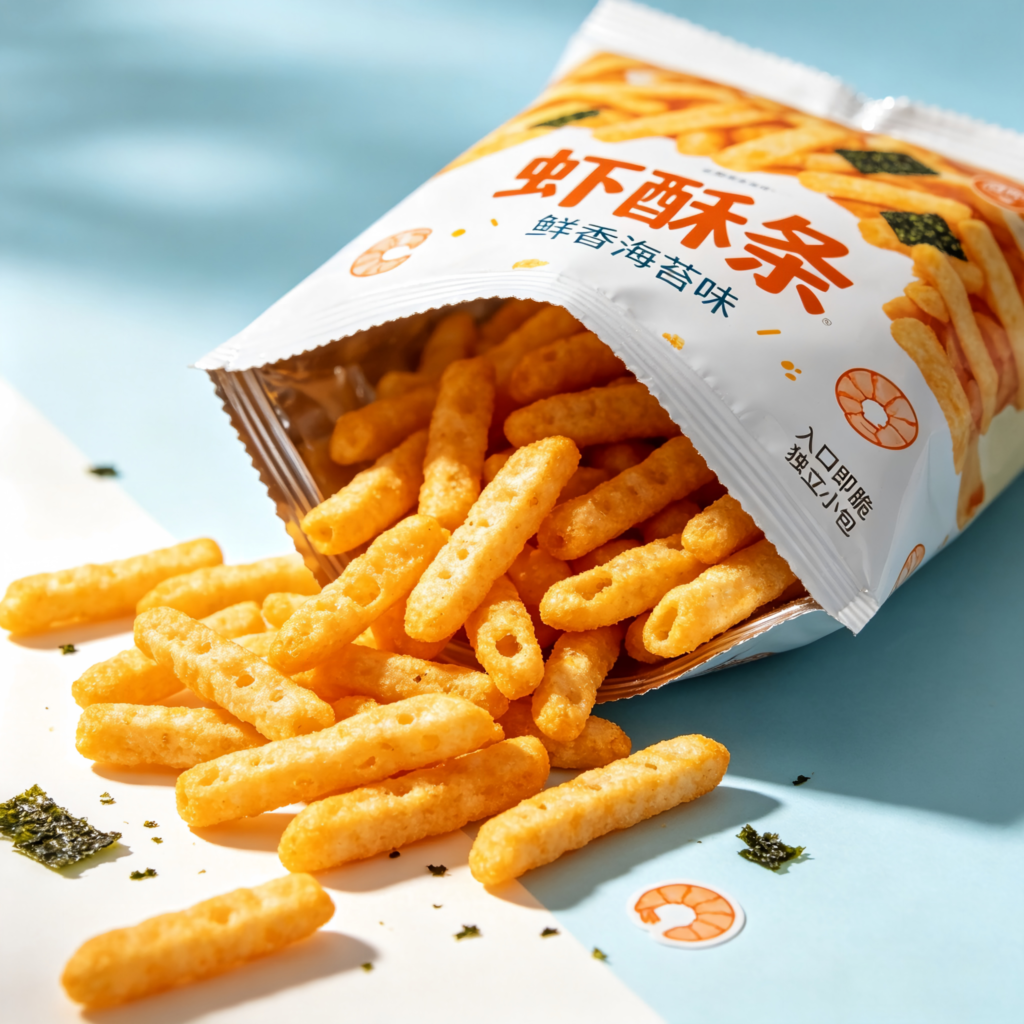
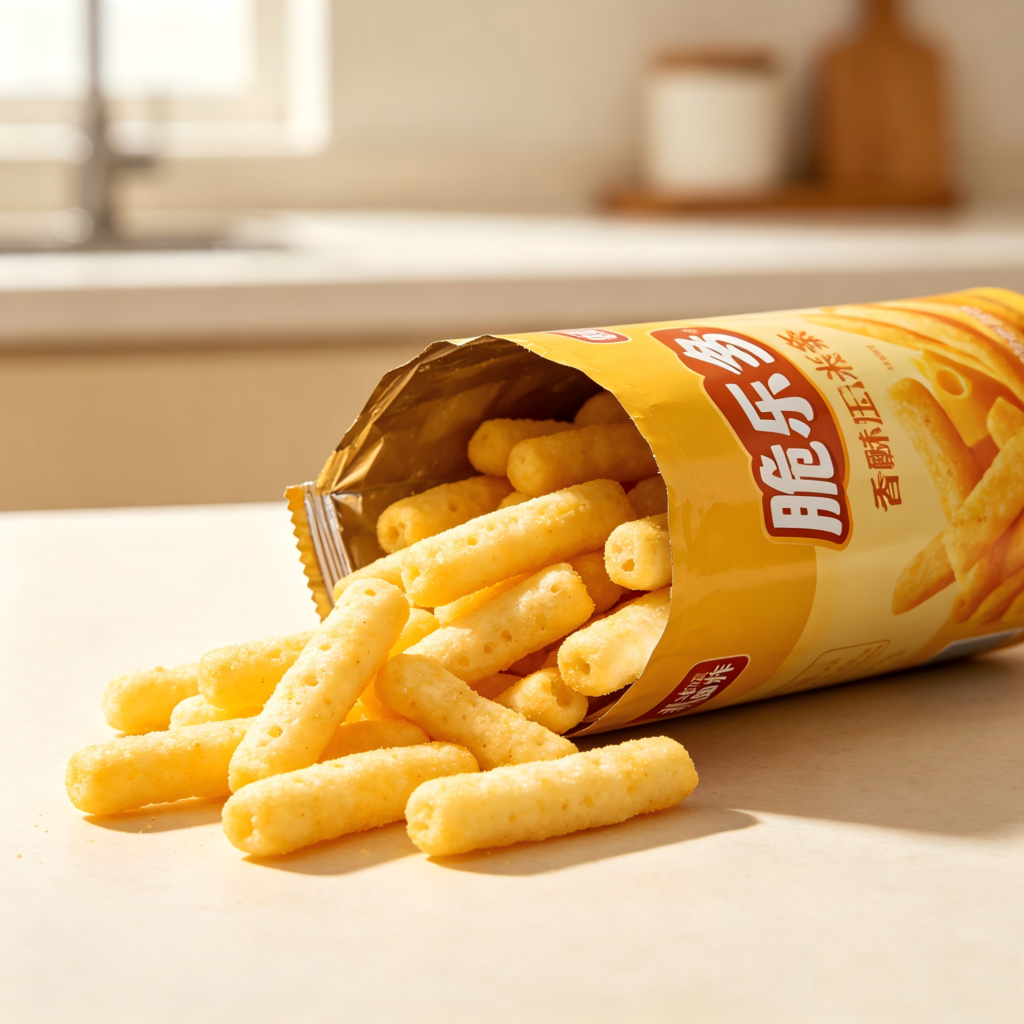
As the material exits the die, it is suddenly exposed to atmospheric pressure. The superheated moisture within the material flashes into steam, causing the product to expand or “puff” —a phenomenon known as extrusion expansion. This expansion creates the porous, crispy texture characteristic of many extruded snacks and breakfast cereals. A rotating knife at the die face cuts the extrudate into the desired length.
3. Key Components
A modern twin-screw food extruder comprises several critical components:
- Screws: The heart of the machine. Twin-screw extruders feature modular screw designs, where the shafts are fitted with various interchangeable elements—including conveying elements, kneading blocks, and mixing gears. This modularity allows engineers to precisely tailor the screw profile to the specific requirements of each product and recipe.
- Barrel: Typically made of stainless steel for hygiene and food safety. The barrel is often hinged or clamshell-designed, allowing it to be opened easily for cleaning, inspection, and screw configuration changes.
- Drive System: A powerful motor and gearbox that drive the two screws. Some systems deliver up to 1,200 rpm or higher, with torque capacities exceeding 150 Nm per screw.
- Die: The shaping tool at the exit end, available in countless configurations to produce different product shapes and sizes.
- Control System: Modern extruders are equipped with modular intelligent control systems that independently monitor key parameters—including temperature, pressure, torque, screw speed, and throughput—ensuring consistent product quality and a high degree of automation.
4. Types of Twin-Screw Extruders
Twin-screw extruders can be classified based on the direction of screw rotation:
- Co-rotating extruders: The two screws rotate in the same direction. This is the most common type in the food industry. Co-rotating designs provide excellent distributive mixing, high shear, and self-wiping characteristics—meaning one screw cleans the surface of the other as they rotate, preventing material from stagnating or overheating.
- Counter-rotating extruders: The two screws rotate in opposite directions. These create a powerful pumping action and are often used for processing shear-sensitive materials or for specific applications like confectionery production.
5. Applications in the Food Industry
The twin-screw food extruder is remarkably versatile, capable of processing a wide range of raw materials—including corn, wheat, rice, soy, and various protein sources—into an equally wide array of products:
| Category | Examples |
|---|---|
| Cereal and starch-based products | Breakfast cereals, puffed rice cakes, bread crumbs |
| Snacks | Extruded snacks, cheese curls, crisp breads |
| Pet food | Dry kibble, semi-moist pet food, pet treats |
| Aquatic feed | Floating and sinking fish feed pellets |
| Plant-based proteins | Textured vegetable protein (TVP), high-moisture meat analogues (HMMA) |
| Confectionery | Licorice, candy, chocolate |
| その他 | Functional food powders, nutritional supplements, flavor encapsulation |
6. Advantages Over Single-Screw Extruders
Twin-screw extruders offer numerous advantages over their single-screw counterparts:
- Superior material handling: They can process viscous, oily, sticky, or very wet materials—including formulations with up to 25% fat content—that would slip in a single-screw extruder.
- Positive pumping action: Twin screws provide consistent, non-pulsating feed and reduced pressure fluctuations at the die.
- Greater flexibility: They accommodate a wide range of particle sizes, from fine powders to whole grains.
- Self-wiping design: The intermeshing screws continuously clean each other, making cleanup easy and reducing downtime.
- Uniform processing: The shear rate is more uniform than in a single-screw extruder, resulting in greater product homogeneity.
- Easier scale-up: Process development on pilot-scale twin-screw extruders translates reliably to full-scale production.
- Forgiving operation: The process is more tolerant of operator inexperience and recipe variations.
7. Limitations and Considerations
Despite its many advantages, the twin-screw extruder is not without limitations:
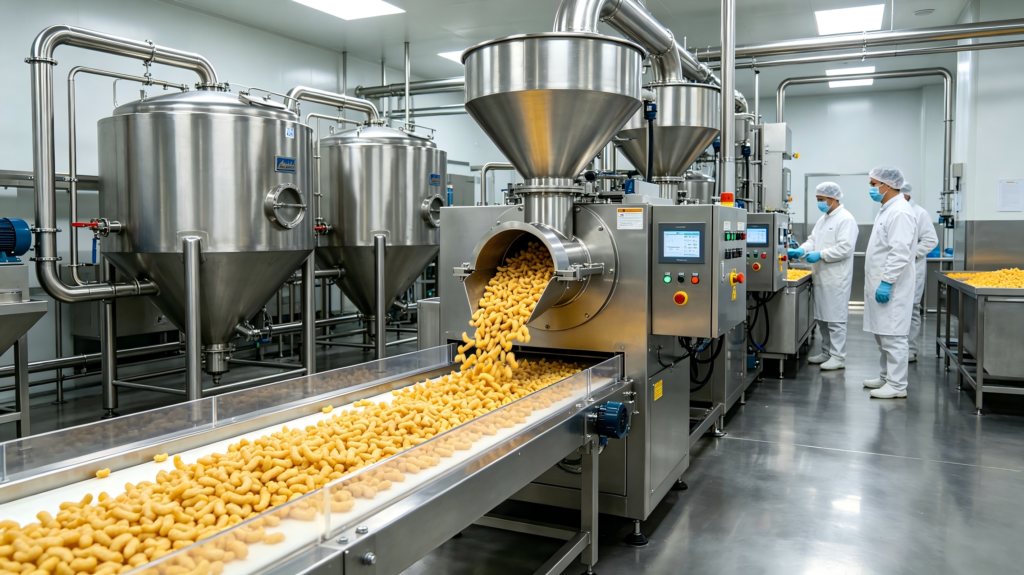
- Higher cost: Twin-screw extruders are mechanically more complex and require a more sophisticated gearbox and tighter manufacturing tolerances, resulting in a significantly higher initial capital investment.
- Increased maintenance: The complexity that provides versatility also demands more diligent maintenance.
- Energy consumption: While energy-efficient relative to some alternatives, the high-power drives (often exceeding 300 kW in large-scale production) represent a significant operational cost.
8. Recent Developments
The field of twin-screw food extrusion continues to evolve. Recent innovations include:
- Hygienic design: Modern extruders feature open stainless steel frames, easy-access clamshell barrels, and food-grade materials to meet increasingly stringent food safety requirements.
- Advanced process control: Sophisticated software platforms now enable real-time monitoring and control of all critical process parameters, facilitating data-driven decision-making throughout product development.
- Plant-based protein applications: Twin-screw extrusion has emerged as a key technology for producing textured plant-based meat alternatives that mimic the structure and chew of conventional animal meat.
- Pilot-scale systems: New extruder models bridge the gap between laboratory research and full-scale production, enabling manufacturers to test formulations and optimize parameters with throughputs of up to 100 kg/hour.
Conclusion
The food twin-screw extruder is a cornerstone of modern food processing—a machine that combines cooking, mixing, shaping, and texturizing into a single, continuous, highly efficient operation. Its ability to handle diverse ingredients, produce a vast array of products, and deliver consistent quality has made it indispensable in the production of snacks, cereals, pet food, aquatic feed, and plant-based proteins.
While the initial investment is substantial, the twin-screw extruder’s flexibility, efficiency, and scalability offer food manufacturers a powerful tool for innovation and high-volume production. As consumer demand for diverse, convenient, and sustainable food options continues to grow, the twin-screw extruder will undoubtedly remain at the forefront of food processing technology for decades to come.
Title: Common Problems and Solutions in Food Twin-Screw Extruder Operation
Introduction
The twin-screw extruder is a cornerstone of modern food processing, widely used in the production of breakfast cereals, snacks, pet food, aquatic feed, and plant-based proteins. However, like any complex industrial machinery, it is susceptible to a variety of operational problems that can compromise product quality, reduce throughput, and cause unplanned downtime. Troubleshooting a twin-screw extruder has often been compared to diagnosing a human medical condition—requiring systematic observation, root-cause analysis, and targeted intervention.
This article provides a comprehensive overview of the most common problems encountered during food twin-screw extruder operation, along with their causes and practical solutions. The issues are categorized into three main groups: mechanical failures, process stability problems, and raw material-related issues.
Part I: Mechanical Failures
1. Screw and Barrel Wear
Problem: Wear on screw elements and the inner barrel wall is one of the most common and costly issues in twin-screw extrusion. Over time, abrasive ingredients—such as minerals, fibers, or hard cereal grains—gradually erode the screw flights and barrel surfaces. If wear occurs in the melting section, it leads to a decrease in melting capacity and causes uneven temperature and pressure fluctuations. If wear occurs in the melt delivery section, it reduces the melt conveying ability. The increased clearance between the screw flights and the barrel wall also reduces heat transfer efficiency between the barrel and the material.
In conveying zones, wear increases clearances and reduces intake capacity, causing material to back up into the feed throat and forcing operators to reduce throughput. Worn kneading blocks in the melting/mixing zone fail to melt the material efficiently, leading to poor dispersion, degraded physical properties, and increased screen-changer plugging. In severe cases, excessive wear can lead to screw and barrel scrapping.
Solutions:
- Preventive maintenance: Regularly inspect screw elements and barrel liners for signs of wear. Replace worn parts proactively rather than waiting for catastrophic failure.
- Material selection: Use wear-resistant materials for screw elements and barrel liners. Advanced coatings such as tungsten carbide formulations have been shown to extend screw wear life from three weeks to thirty-six weeks or more.
- Screw design optimization: Ensure the screw configuration is appropriate for the specific formulation being processed. An incorrect melt-mixing configuration can cause excessive abrasive wear.
- Process parameter adjustment: Reduce screw speed or feed rate when processing highly abrasive materials to minimize wear rates.
2. Screw Shaft and Segment Fracture
Problem: Screw shafts and segments can fail catastrophically under extreme operating conditions. Research has shown that a combination of torsional and bending stresses leads to failure. In one documented case, shaft and screw segment fractures occurred after only 12 days of operation. The initiation of cracks has been linked to the presence of coarse carbide deposits, leading to micro-cracks on the shaft surface. Under torsional-bending cyclic loading, these cracks expand as low-cycle fatigue fractures. Defects such as holes and coarse sediments within the segment also contribute to conditions conducive to rapid crack growth.
Solutions:
- Material quality control: Ensure that screw shafts and segments meet design specifications and material standards.
- Regular non-destructive testing: Implement periodic inspections using techniques such as dye penetrant or magnetic particle inspection to detect micro-cracks before they propagate.
- Operating within design limits: Avoid operating the extruder beyond its rated torque and pressure limits.
- Proper assembly: Ensure screw elements are installed in the correct order. Assembly errors can cause immediate deviations in processing behavior and material properties.
3. Gearbox Failures
Problem: The gearbox is a critical component that transmits power from the motor to the screws. Many operational issues are not caused by gearbox design itself but by inadequate lubrication, poor cooling performance, contaminated oil, or bearing wear. In some cases, excess case carburization and poor surface finish have been identified as key factors contributing to gear breakage by lowering the fatigue limit of the material.
Solutions:
- Regular oil changes: Replace the lubricating oil of a newly commissioned gearbox after the first 250 hours of operation.
- Oil quality monitoring: Regularly check whether the lubricating oil is clean. If oil is mixed with impurities or contains metal powder, it indicates internal wear and requires immediate investigation.
- Bearing inspection: Clean bearings periodically and check for cracks in the inner jacket. Observe idle running noise and radial gap size.
- Gear inspection: Remove the gearbox cover and check the wear and meshing of transmission reduction gears. If burrs or shallow pits are found on meshing surfaces, polish them smooth with an oil stone.
4. Motor Start-Up Failure
Problem: The main motor may fail to start due to non-standard operating procedures, circuit system faults, or interlock protection device activation.
Solutions:
- Standardize operating procedures.
- Troubleshoot the circuit system thoroughly.
- Reset the interlock protection device by checking the operation status of the lubricating oil pump and cooling system one by one.
- Address inverter issues by turning off the main power supply and waiting for more than five minutes before restarting.
Part II: Process Stability Problems
5. Surging (Inconsistent Output)
Problem: Surging refers to fluctuations in output flow rate over time, resulting in inconsistent product quality. Common causes include uneven feeding, excessive screw speed leaving the extruder unfilled, or disturbances from feeders. Surging can also be caused by variations in melt temperature and viscosity.

Solutions:
- Use a forced metering feeder: A loss-in-weight (LIW) or volumetric feeder with proper screw design ensures a uniform flow of raw materials and prevents surging.
- Optimize screw speed: Run the extruder at approximately 80–85% of maximum torque to maintain proper fillage and reduce surging.
- Match feed rate to capacity: Adjust the feeder speed to prevent overfeeding and ensure it matches the machine’s capacity.
- Stabilize melt temperature: Ensure consistent temperature control throughout the barrel to maintain uniform melt viscosity.
6. Temperature Control Problems
Problem: Temperature control is one of the most frequently cited challenges in twin-screw extrusion. Excessive shear forces can generate significant heat, leading to thermal degradation of ingredients. Poor temperature control can result in uneven cooking, degraded product quality, and reduced palatability. Additionally, temperature-induced thermal expansion is a primary cause of barrel deformation in food processing. The axial thermal deformation of the barrel is comparable to the total thermal deformation and far exceeds deformation in other directions.
Solutions:
- Zone-specific temperature control: Modern extruders are equipped with multiple heating/cooling zones along the barrel. Each zone should be independently controlled and monitored.
- Barrel cooling: Ensure cooling systems (water or air) are functioning properly. Localized overheating often results from heater band failure or cooling loss.
- Screw configuration: Adjust screw design to manage shear heat generation. A melt-mixing design that is too intense may degrade the material.
- Regular calibration: Periodically calibrate temperature sensors and controllers to ensure accurate readings.
7. Die-Related Problems
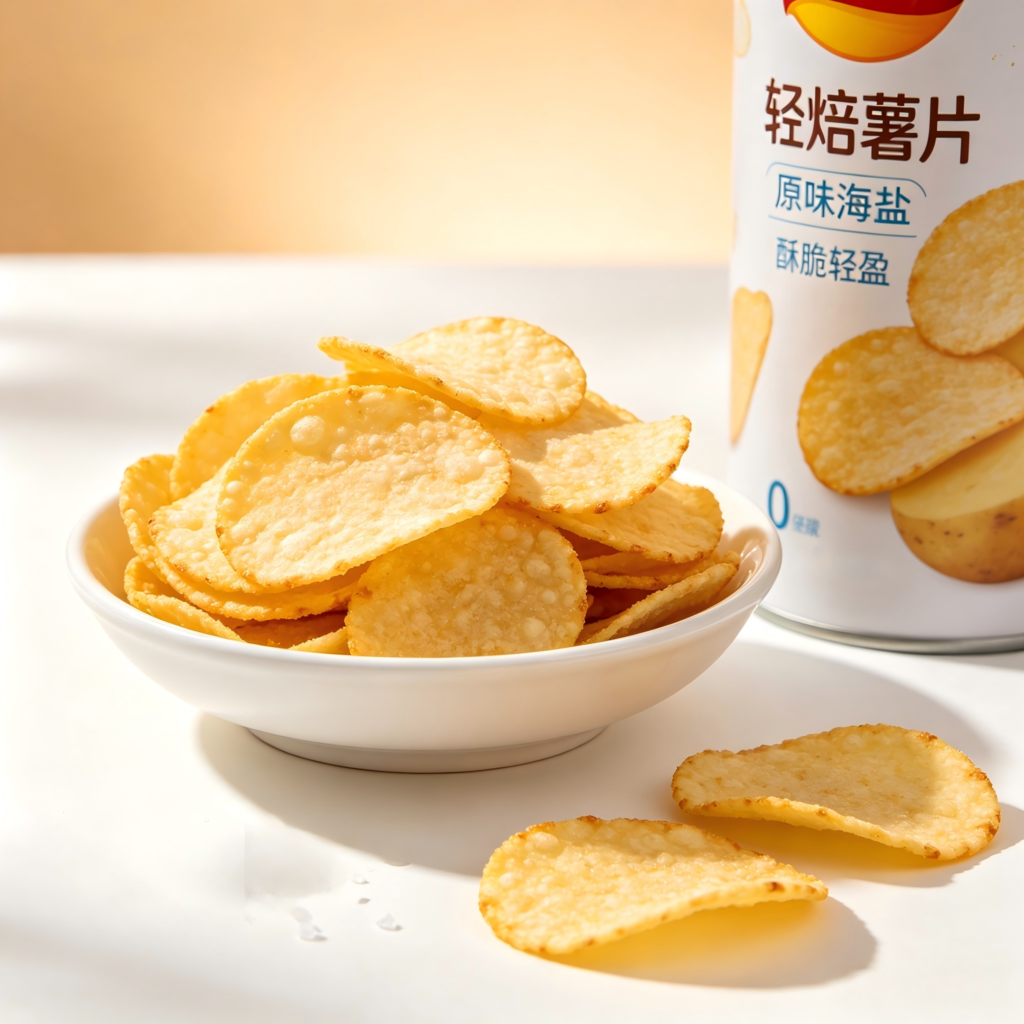
Problem: Issues at the die head can manifest as die swelling, hole freezing, strand breakage, or uneven product shape. Die swelling—where the extrudate expands excessively upon exiting the die—is influenced by the melt’s rheological properties. Die hole freezing occurs when material cools and solidifies at the die face, blocking flow. Strand breakage is often a symptom of poor melt strength or inconsistent flow.
Solutions:
- Increase die temperature: Raising the die temperature reduces melt viscosity and minimizes extrudate swell.
- Reduce extrusion velocity: Lowering the screw speed or feed rate can help manage die swelling.
- Use external lubricants: In some cases, lubricants can reduce friction at the die wall.
- Regular cleaning: Clean the die face periodically to prevent material buildup and hole freezing.
- Optimize die design: Ensure the die land length and geometry are appropriate for the specific material being processed.
8. Vent Flooding and Vacuum Zone Problems
Problem: The vacuum vent zone is designed to remove moisture and volatile compounds. However, vent flooding occurs when melt backs up into the vent port, reducing vacuum efficiency and leading to porous pellets and strand breakage. This is often caused by wear in the pressure-building zone, which forces melt backward into the vacuum vent. Blockage of the vacuum vent is a common defect.
Solutions:
- Replace worn parts: Wear in the pressure-building zone is a chronic issue that requires replacement of worn screw elements.
- Upgrade vent design: If regular cleaning is required, consider upgrading to a vent system with easier cleaning access, such as a ZS-EG design.
- Extend with side devolatilization: For persistent degassing problems, consider extending the system with a side devolatilization unit.
- Monitor vent flow: Advanced systems with temperature probes and cooling jackets can detect vent flow issues in real time and trigger automated responses.
Part III: Raw Material and Formulation Issues
9. Raw Material Inconsistency
Problem: Variations in raw material properties—such as moisture content, particle size, protein content, or starch gelatinization characteristics—can cause significant processing problems and quality variation. Even when the same formulation is run, batch-to-batch differences in raw materials can lead to sudden drops in quality or processing stability. In food extrusion, the presence of additional components such as moisture, fats, or fibers can significantly affect processing behavior.
Solutions:
- Strict supplier quality control: Establish and enforce rigorous raw material specifications with suppliers.
- Incoming material testing: Test each batch of raw materials for moisture content, particle size distribution, and other critical parameters before use.
- Adjust process parameters: When raw material variations are unavoidable, adjust extrusion parameters (temperature, screw speed, feed rate) to compensate.
- Blending: Blend multiple batches of raw materials to average out variations.
10. Material Blockage and Jamming
Problem: Material blockage can occur in the feed throat, along the barrel, or at the die. Twin-screw extruders are prone to material blockage when operating continuously for long periods or when processing highly filled and viscous materials. The phenomenon of “jamming” or “locking” (卡顿、抱死) in food processing has been attributed to excessive radial deformation of the barrel and screws. In some cases, the piston gets stuck, and screws become difficult to clean, with traces of material sticking even after cleaning.
Solutions:
- Proper start-up procedure: Ensure the feeder is turned on only when the main machine is rotating normally. Otherwise, it will cause blockage.
- Feed rate control: Do not exceed the maximum feed rate that the extruder can handle.
- Screw design: Use screw configurations that promote material flow and prevent stagnation.
- Regular cleaning: Clean the barrel and screws thoroughly after each production run, especially when processing sticky or heat-sensitive materials.
- Thermal management: Control barrel temperatures to prevent localized overheating or cooling that could cause material to adhere to surfaces.
11. Poor Product Quality (Expansion, Texture, Color)
Problem: Product quality issues can manifest as poor expansion (low puffing ratio), undesirable hardness or brittleness, poor water absorption, or discoloration. These problems are often linked to suboptimal processing parameters. For example, studies on mushroom twin-screw extrusion have shown that material blockage, low pre-cooking degree, and missing operating parameters can lead to low puffing rates, poor water absorption, and high hardness. The expansion ratio is significantly affected by moisture content, screw speed, and temperature. Product shape is also highly affected by die swelling of the melt.
Solutions:
- Optimize moisture content: The optimal moisture content for maximum expansion depends on screw speed and protein content. Generally, moisture levels of 16–18% are typical for many food extrusion applications.
- Control screw speed: Screw speed significantly affects mean residence time and, consequently, the degree of cooking and expansion.
- Adjust temperature profile: Barrel temperatures should be optimized for the specific formulation. Excessive temperatures can cause degradation, while insufficient temperatures result in poor cooking.
- Screw configuration: Modify screw design to achieve the desired mixing and shear intensity. Screw configuration can be altered to improve droplet breakup and reduce coalescence.
- Die design: Ensure the die geometry is appropriate for the desired product shape and expansion characteristics.
Part IV: Diagnostic Approach
Chronic vs. Transient Problems
An effective troubleshooting strategy begins with distinguishing between chronic and transient problems.
Chronic issues occur consistently every time a specific formulation is run—producing identical poor results such as consistent property degradation, black spots, continuous strand breakage, die hole freezing, or vent scaling. These symptoms suggest a fundamental flaw in the process itself, usually a poorly designed screw profile or fundamentally incorrect operating parameters. Curing a chronic issue requires major intervention, such as redesigning the screw configuration or completely optimizing the process parameters.

Transient issues occur suddenly when a formulation that has historically run perfectly suddenly goes off the rails. In this case, the investigation should focus on what variable changed overnight. The key variables to investigate, ranked by their impact on processing and quality, are: screw design and wear, screw speed, feed rate, extruder and die temperature, and environmental factors.
Summary Table
| Problem Category | Common Issues | Primary Solutions |
|---|---|---|
| Mechanical | Screw/barrel wear, shaft fracture, gearbox failure, motor failure | Regular inspection, wear-resistant materials, proper lubrication, standardized procedures |
| Process Stability | Surging, temperature fluctuations, die problems, vent flooding | Metered feeding, zone temperature control, die optimization, vent upgrades |
| Raw Material | Inconsistency, blockage, poor product quality | Strict QC, parameter adjustment, screw redesign, moisture optimization |
Conclusion

Operating a food twin-screw extruder involves managing a complex interplay of mechanical, thermal, and material factors. The problems discussed in this article—ranging from mechanical wear and gearbox failures to process instability and raw material inconsistency—are common challenges faced by production operators worldwide.
Effective troubleshooting requires a systematic approach: distinguishing between chronic and transient issues, investigating the five key variables (screw design, screw speed, feed rate, temperature, and raw materials), and implementing targeted solutions. Regular preventive maintenance, proper operator training, and rigorous quality control of raw materials are essential for minimizing downtime and ensuring consistent product quality.
While some problems can be resolved with simple adjustments, others require fundamental changes to screw design or process parameters. By understanding the root causes of common extrusion problems and applying the appropriate solutions, food manufacturers can maximize the productivity, efficiency, and product quality of their twin-screw extrusion operations.
 Japanese
  English
  Russian
  Spanish
  Italian
  Arabic
  Portuguese
  German
  French
  Moroccan Arabic
  Persian
  Belarusian