
The modern breakfast cereal aisle is a testament to nutritional science. While the base of a corn flake is a simple grain, its final form is often a meticulously engineered delivery system for vitamins, minerals, and even probiotics. The process of fortifying puffed breakfast cereals is a delicate balancing act, requiring food technologists to navigate the challenges of heat, pressure, and shelf life to ensure that the nutrients added are not only present but also bioavailable and stable. This article explores the core strategies and processes for adding nutritional elements to puffed corn flakes.
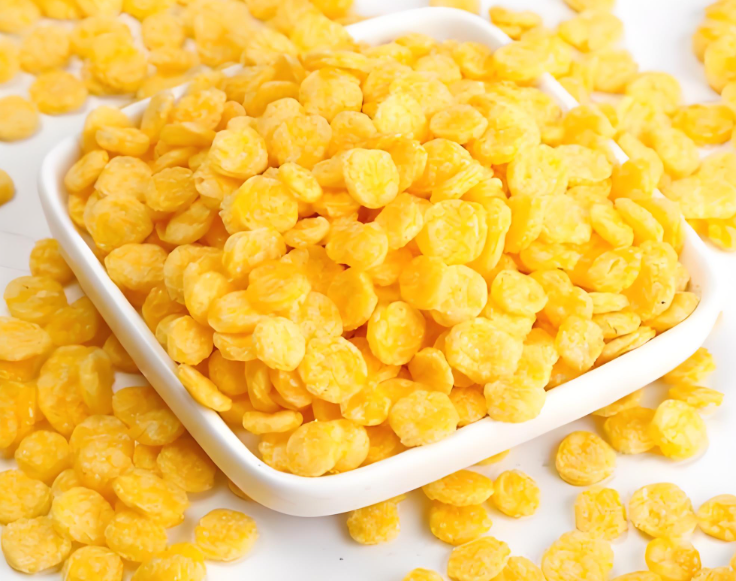
1. The “Why”: Addressing Losses and Consumer Needs
The primary driver of fortification is to correct for micronutrient losses inherent in the refining and high-heat processing of grains. The intense heat of toasting or extrusion can degrade naturally occurring vitamins. Furthermore, the goal is to transform a tasty snack into a food that actively contributes to dietary health, addressing common deficiencies in iron, B-vitamins, and vitamin A. A secondary, emerging driver is the creation of purpose-driven, functional foods that cater to specific lifestyles and health trends, such as high-protein or gut-health-focused cereals.
2. Strategic Formulation: Nutrient Selection and Synergy
The foundation of any fortification strategy lies in the formulation. Nutrient selection is governed by bioavailability, stability under processing, and cost. For instance, ferric pyrophosphate is a common iron source in extruded cereals because it is more stable and bioavailable than other iron salts under high heat. Similarly, B-vitamins like B2 and B3 are often added as part of a mineral-vitamin premix, as they can achieve greater molecular entanglement within the starch matrix during extrusion, enhancing their retention.

Beyond synthetic premixes, a “food-to-food” fortification approach is gaining traction. This involves blending the base corn with nutrient-dense ingredients. For example, incorporating brewer’s spent grain (BSG) can significantly boost protein and fiber content, though it may affect the cereal’s expansion and crispiness. In another study, blending sorghum, soybean flour, and fruit slurry successfully enhanced vitamins A, B1, B9, and C while also managing antinutritional factors. This method aligns with clean-label trends, but it introduces complexities in balancing sensory qualities and nutritional profile.
3. The Processing Crucible: Additives at Key Control Points
The point at which nutrients are introduced is critical. In the production of puffed corn flakes, there are three primary fortification points:
- Pre-Cooking Addition (The Syrup): For the base flake, vitamins and minerals are often added to the flavored syrup that is mixed with the corn grits before pressure cooking. This is effective for heat-stable nutrients but can lead to significant degradation of heat-labile compounds like vitamin C during the high-temperature cooking phase.
- Post-Extrusion/Toasting Spray (The Enrober): To protect sensitive nutrients, they are sprayed onto the freshly toasted flakes in the enrober drum. This is a preferred method for vitamins like C and B-complex vitamins that degrade in high heat. In this stage, a liquid solution containing the vitamin premix and a binding agent (like sugar syrup) is applied to the surface of the flake. The heat from the flake evaporates the water, leaving the vitamins behind in a thin, stable layer.
- Powder Dusting: This is a dry application method where a vitamin and mineral premix in powder form is dusted onto the flakes after they have been cooled. It is the gentlest method and is often used for final nutritional top-ups, though it requires careful engineering to ensure even distribution and adherence without altering the product’s mouthfeel.
4. Advanced Protection: Microencapsulation
For the most sensitive compounds, such as probiotics and certain antioxidants, microencapsulation is the industry’s most sophisticated tool. This process involves coating the sensitive nutrient in a protective matrix—often a lipid, protein, or carbohydrate—before adding it to the cereal.

- For Probiotics: A study on fortified sorghum cereals demonstrated that probiotic strains like Lactobacillus plantarum can be kept viable by employing cold extrusion and low-temperature drying (50°C) rather than traditional high-heat toasting. Encapsulation allows probiotics to survive the shearing forces of extrusion and remain viable at low water activities throughout the product’s shelf life.
- For Antioxidants: Microencapsulation shields polyphenols and carotenoids from oxidative degradation during high-temperature extrusion, ensuring they retain their bioactive properties until consumption.
5. The Challenge of Stability and Overage
A cornerstone of industrial fortification is the concept of overage. Because nutrients degrade over time due to oxidation, moisture, and light, manufacturers add a certain percentage “over” the label claim at the time of production. corn flakes machine This ensures that the product meets its declared nutritional value throughout its entire shelf life. The overage level is calculated based on the stability profile of each specific nutrient under the product’s packaging and storage conditions. Storage studies have shown, for example, that vitamin C and carotenoids degrade faster at ambient temperatures than under refrigerated conditions, factors that directly influence the overage calculation.
6. Process Considerations for Extrusion
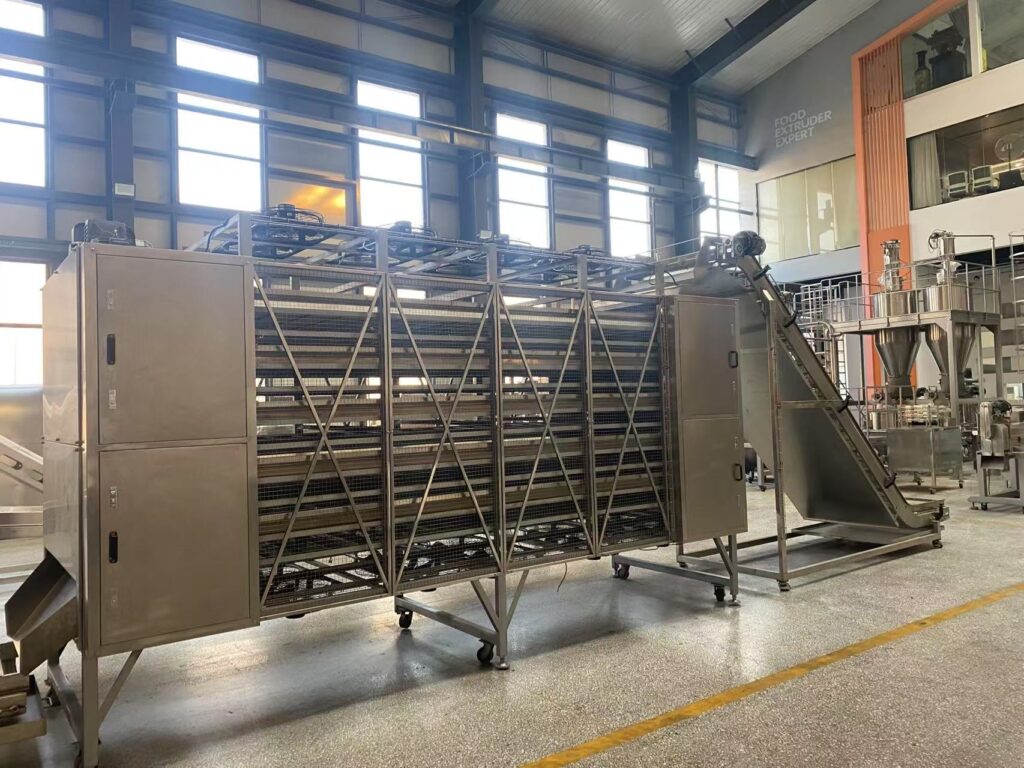
In the extrusion process used for many puffed cereals, the thermomechanical action of the machine creates a unique environment. The high shear and heat can break down starch and form complexes with lipids and proteins, which can be detrimental or beneficial for nutrient retention. For example, this environment can cause the loss of thermolabile compounds, but it can also lead to the release of bound phenolics from the grain matrix, which act as natural antioxidants. corn flakes machine Fortificants are often added to the flour blend before extrusion, and the process parameters (temperature, screw speed, and moisture content) must be carefully optimized to maximize the retention of the target nutrients.
Conclusion

The fortification of puffed corn flakes is a sophisticated blend of nutritional science and food engineering. It requires a multi-pronged approach: selecting the right nutrient forms, choosing the optimal addition point (whether in the cooking syrup, as a post-toasting spray, or as a dusting), and employing advanced techniques like microencapsulation to protect sensitive compounds. The ultimate goal is to deliver a product that is not only delicious and convenient but also a reliable source of essential nutrition, a goal that the breakfast cereal industry achieves through continuous innovation and careful process control.
 Japanese
  English
  Russian
  Spanish
  Italian
  Arabic
  Portuguese
  German
  French
  Moroccan Arabic
  Persian
  Belarusian