
Painting with Starch: The Art and Science of Multi-Colored Puffed Snacks
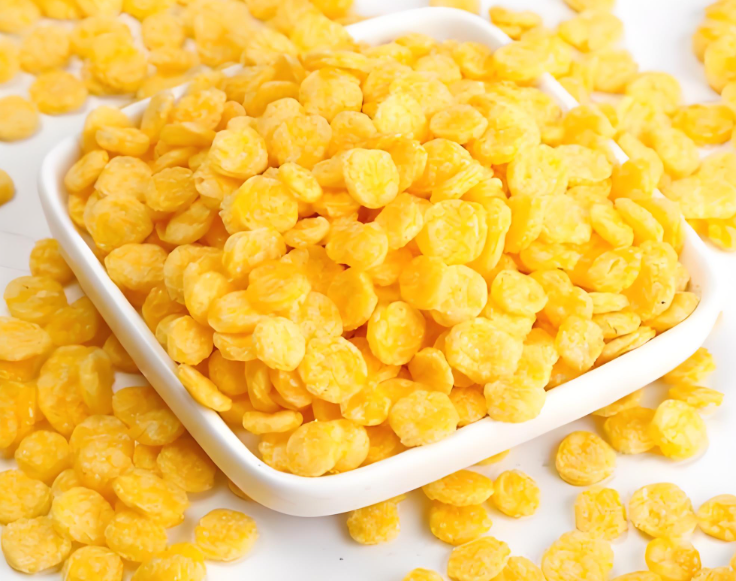
The modern snack aisle is a vibrant canvas. From brilliant red cheese puffs to deep green vegetable sticks and sunny yellow corn curls, color is a primary driver of consumer appeal. However, the process of creating stable, vivid colors in puffed snacks—particularly those made via high-temperature extrusion—is a formidable challenge in food engineering. This article explores the core strategies, colorant technologies, and process controls that allow manufacturers to produce a rainbow of puffed products. The Central Challenge: Heat, Shear, and Stability The extrusion process that puffs a snack is a hostile environment for most colorants. The combination of high temperature (often 130-180°C), intense mechanical shear, and pressure can degrade many […]
The Science of Crispness: How Puffed Snack Foods Are Made

The journey from raw grain to a light, crispy puff is one of food processing’s most fascinating transformations. Puffed snacks owe their characteristic airy texture to the rapid expansion of superheated steam. This expansion is achieved through two primary industrial methods—extrusion cooking and indirect puffing—each governed by the same fundamental principles of starch science and thermodynamics. The Core Principle: Gelatinization and the “Steam Explosion” At the heart of every puffed snack is starch gelatinization. Under heat and moisture, the tight, crystalline structure of raw starch granules breaks down, absorbing water and forming a plastic, gel-like mass. When this gelatinized dough is suddenly released from a high-pressure environment into normal atmospheric […]
Beyond the Crunch: The Core Processes of Nutritional Fortification in Puffed Corn Flakes
The modern breakfast cereal aisle is a testament to nutritional science. While the base of a corn flake is a simple grain, its final form is often a meticulously engineered delivery system for vitamins, minerals, and even probiotics. The process of fortifying puffed breakfast cereals is a delicate balancing act, requiring food technologists to navigate the challenges of heat, pressure, and shelf life to ensure that the nutrients added are not only present but also bioavailable and stable. This article explores the core strategies and processes for adding nutritional elements to puffed corn flakes. 1. The “Why”: Addressing Losses and Consumer Needs The primary driver of fortification is to correct […]
The Art and Science of the Flake: Core Processes in Breakfast Cereal Manufacturing

The humble corn flake is a breakfast staple, a perfect paradox of simplicity and complexity. While the ingredient list is short—primarily corn, malt, sugar, and salt—the journey from a hard kernel of maize to a crispy, golden flake is a masterclass in food engineering. It is a precise ballet of cooking, milling, forming, toasting, and coating. This article dissects the core (process flow) that transforms raw grain into the iconic breakfast cereal. 1. Raw Material Receiving and Cleaning The process begins with the arrival of dent corn, a variety specifically chosen for its high starch content and mild flavor. Upon delivery, the corn undergoes rigorous cleaning to remove foreign materials: […]
 Japanese
  English
  Russian
  Spanish
  Italian
  Arabic
  Portuguese
  German
  French
  Moroccan Arabic
  Persian
  Belarusian