
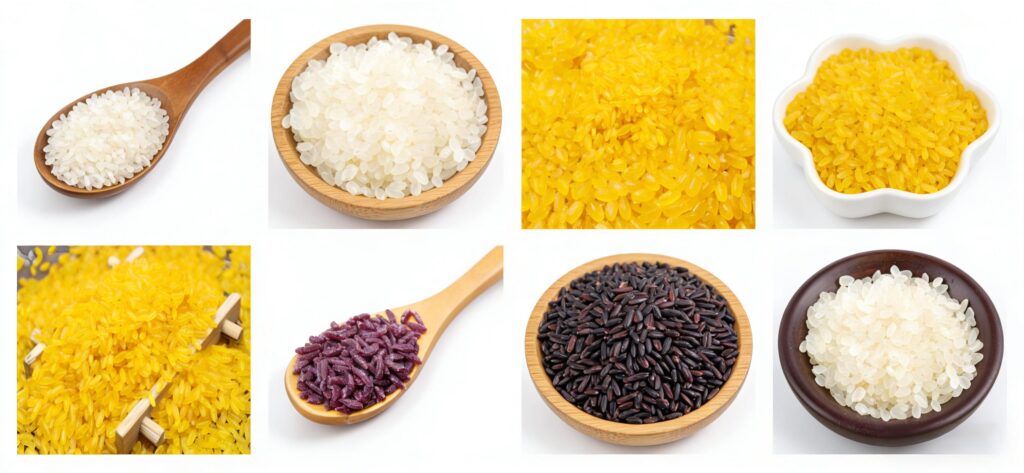
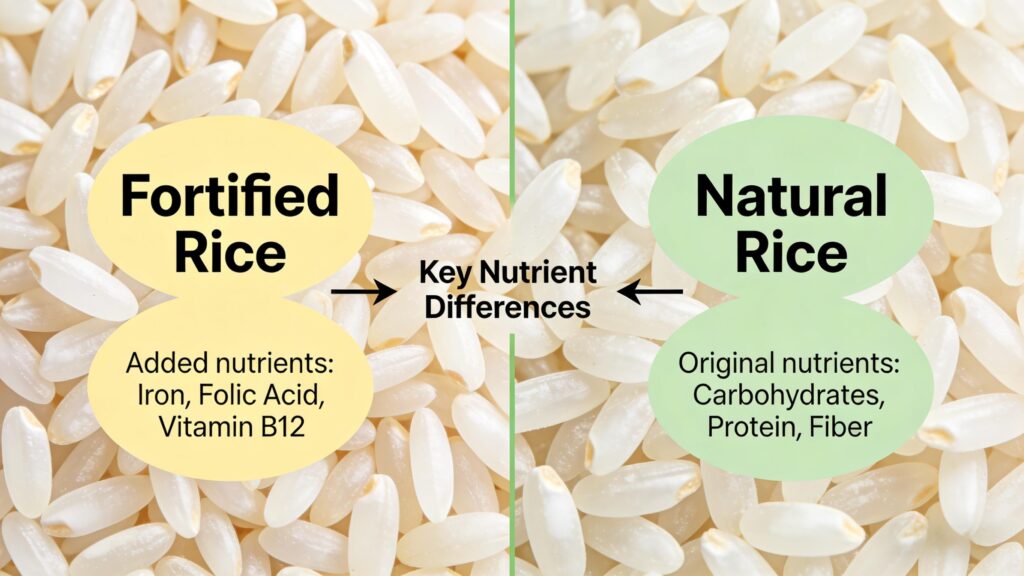
Fortified rice is an effective vehicle for delivering essential micronutrients such as iron, folic acid, vitamin B12, zinc, and vitamin A to populations dependent on rice as a staple food. fortified rice manufacturing machine However, many of these nutrients—particularly folic acid, certain B vitamins (B1, B6, B12), and vitamin A—are highly sensitive to heat. During production processes like extrusion, drying, and parboiling, exposure to elevated temperatures can degrade these nutrients, reducing their bioavailability and the overall efficacy of the fortified rice. Protecting heat-sensitive nutrients requires a combination of process engineering, ingredient formulation, and quality control measures.
Below are the key strategies used in the industry to minimize thermal degradation.
1. Use Cold Extrusion Instead of Hot Extrusion
The Problem:
Traditional hot extrusion operates at temperatures between 70–110°C. While this gelatinizes starch and creates a firm kernel, it also accelerates the degradation of thermolabile vitamins such as folic acid (degradation begins above 60°C) and vitamin B12 (unstable above 70°C).
The Solution:
Cold extrusion (also called low-temperature extrusion or ambient extrusion) uses high pressure but minimal external heat. Friction may raise the temperature slightly (typically below 50–60°C), but it remains far below the threshold for rapid vitamin destruction. The dough is then dried using gentle, controlled methods (see below) rather than high-temperature steaming.
Advantages:
- Preserves up to 90–95% of folic acid and vitamin B12 content.
- Maintains natural color and flavor of the rice matrix.
- Suitable for a wide range of heat-sensitive fortificants.
Disadvantages:
- Requires more robust equipment to handle high pressure without heat assistance.
- Drying time may be longer compared to hot extrusion.
2. Optimize Drying Conditions (Low Temperature + Reduced Time)
The Problem:
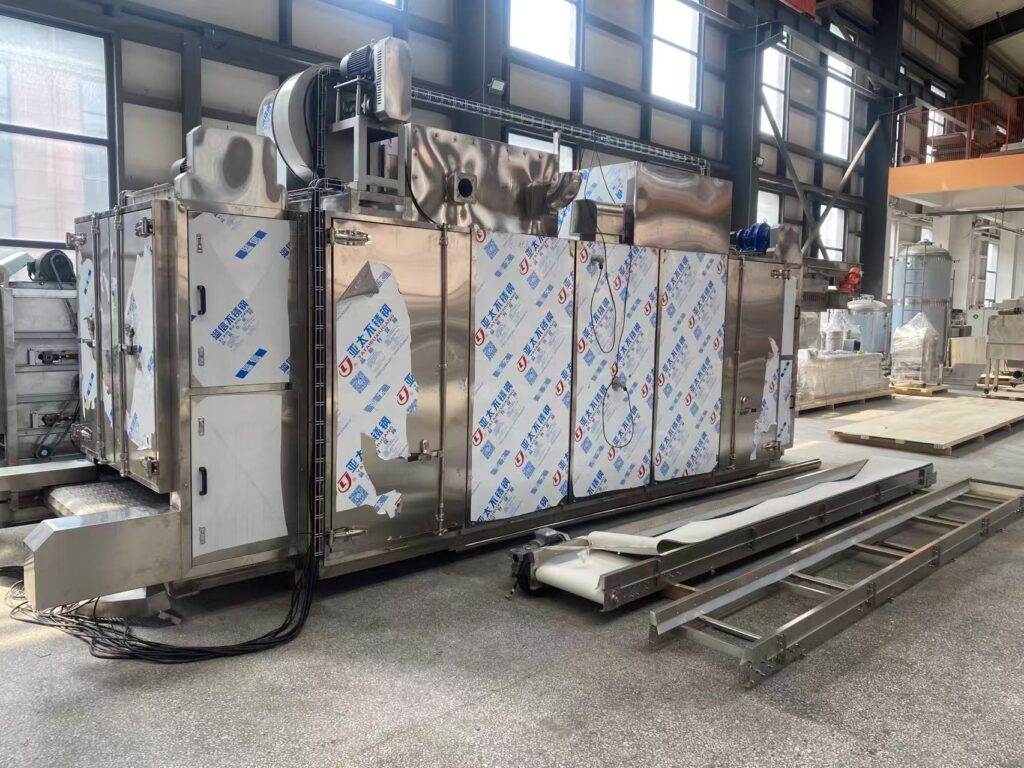
After extrusion, the fortified kernels contain 25–35% moisture and must be dried to 8–12% for shelf stability. fortified rice manufacturing machine Conventional hot-air drying at 80–100°C for several hours can severely damage heat-sensitive vitamins, especially on the kernel surface.
The Solution:
Implement low-temperature drying (40–60°C) with controlled humidity. Two effective methods are:
- Vacuum drying – Reduces the boiling point of water, allowing drying at 40–50°C under reduced pressure. This significantly cuts thermal exposure.
- Two-stage drying – First, rapid surface drying at moderate temperature (50–60°C) to remove free moisture, followed by slower, low-temperature drying (40°C) to reach final moisture content.
Best practices:
- Avoid prolonged drying beyond 6 hours at temperatures above 60°C.
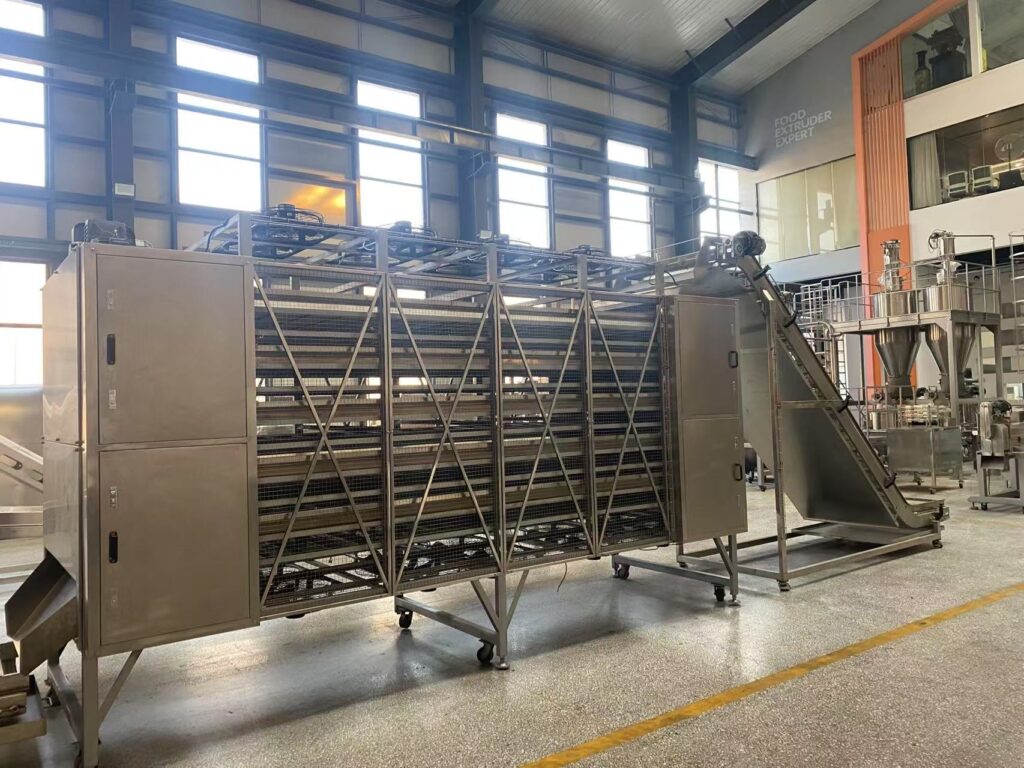
- Use fluidized bed dryers with precise temperature control rather than static ovens.
- Monitor kernel core temperature, not just air temperature.
3. Microencapsulation of Nutrients
The Principle:
Encapsulation coats each nutrient particle with a protective layer (e.g., hydrogenated vegetable fat, maltodextrin, starch, or cellulose derivatives). This physical barrier delays heat transfer and reduces direct contact with hot surfaces or steam.

How it helps:
- During extrusion, the capsule melts or softens only at high temperatures (often >80°C), protecting the nutrient inside during the brief heating phase.
- After processing, the capsule releases the nutrient gradually in the acidic stomach or during cooking, ensuring bioavailability.
- Also protects against oxidation and moisture degradation during storage.
Examples:
- Encapsulated vitamin A palmitate (resists up to 80–90°C for short periods).
- Encapsulated ferric pyrophosphate (less reactive and more heat-stable than ferrous salts, though iron itself is generally heat-tolerant).
Limitation:
Encapsulation adds cost and requires careful selection of coating materials that are food-grade and compatible with rice extrusion.
4. Reduce Processing Time (Flash Heating)
The Principle:
Thermal degradation is a function of both temperature and time. Even at moderately high temperatures, if the exposure time is very short, nutrient losses can be minimized.
Application in rice fortification:
- Use short-barrel extruders that process dough in seconds rather than minutes.
- In high-temperature short-time (HTST) systems, temperatures may reach 100°C for only 10–30 seconds, which causes less damage than 70°C for 30 minutes.
- Immediately after extrusion, rapid cooling (e.g., with ambient air or cool vacuum) stops further thermal degradation.
Trade-off:
Very short processing times may result in incomplete starch gelatinization, affecting kernel texture and cooking quality. A balance must be struck.
5. Separate Heat-Deficient Nutrients (Post-Extrusion Addition)
The Concept:
For extremely fragile nutrients that cannot survive any significant heat (e.g., certain probiotics, native folate), fortified rice manufacturing machine it may be best to add them after the extrusion and drying steps.
Methods:
- Surface coating after extrusion – The finished, cooled fortified rice kernels are sprayed or tumbled with a solution containing the heat-sensitive nutrient, then gently dried at room temperature or under vacuum.
- Double-grain blending – Produce two versions of fortified rice: one with heat-stable nutrients (e.g., iron, zinc) made via hot extrusion, and another with heat-sensitive nutrients (e.g., folic acid, B12) made via cold extrusion or post-coating. Then blend them together with natural rice.
Drawback:
Post-extrusion addition may lead to some nutrient loss during washing or cooking, so encapsulation is often used in combination.
6. Control Raw Material pH and Water Activity
Chemical considerations:
- Folic acid degrades faster in acidic conditions (pH < 5) and at high water activity (aw > 0.7). Keeping the dough pH near neutral (6–7) and minimizing free water helps stabilize it.
- Vitamin B12 is most stable at pH 4–6 and degrades in strong alkali or with reducing agents (e.g., vitamin C, cysteine). Formulators should avoid adding high levels of reducing agents in the same premix.
Practical steps:
- Use buffered premixes (e.g., with calcium carbonate or trisodium citrate) to maintain neutral pH.
- Limit added water during dough mixing to the minimum required for extrusion.
7. Monitor and Validate with Real-Time Analytics
Why monitoring matters:
Even with the best equipment, batch-to-batch variation occurs. Degradation can happen if temperature spikes, residence time increases, or drying airflow becomes uneven.
Tools for protection:
- Inline temperature sensors inside the extruder barrel and dryer.
- Near-infrared (NIR) spectroscopy to rapidly check nutrient levels in finished kernels.
- High-performance liquid chromatography (HPLC) periodically to quantify folic acid, B12, and other heat-sensitive vitamins.
Action threshold:
If a batch loses more than 15–20% of a heat-sensitive nutrient relative to the target, the process parameters should be adjusted immediately.

Summary Table: Strategies vs. Heat-Sensitive Nutrients
| Strategy | Folic Acid | Vitamin B12 | Vitamin A | Iron/Zinc (stable) |
|---|---|---|---|---|
| Cold extrusion | +++ | +++ | +++ | + (not needed) |
| Low-temp drying (40–60°C) | +++ | ++ | +++ | Not critical |
| Microencapsulation | ++ | ++ | +++ | Not needed |
| Short processing time | ++ | ++ | ++ | Not needed |
| Post-extrusion addition | +++ | +++ | + | Not recommended |
| pH & water control | + | + | + | Not needed |
+++ = excellent protection; ++ = good; + = mild benefit
Conclusion
Protecting heat-sensitive nutrients during fortified rice production is achievable through a combination of cold extrusion, low-temperature vacuum drying, microencapsulation, and post-extrusion addition for the most fragile vitamins. Process parameters must be carefully designed to balance thermal exposure with the need for starch gelatinization and kernel integrity. Regular quality monitoring and real-time analytics ensure that the final product delivers the intended nutritional benefit. By adopting these strategies, manufacturers can produce high-quality fortified rice that retains its full vitamin potency from factory to fork. If you are interested in the fortified rice making machine price you can contact me , i will give you good advice and solutions .
1.Will you help us with the installation ?
Yes , We will send engineers to install and debug the equipment, and assist in training your staff.
2.Are you a factory or trading company?
We are a factory.
3.What certificate do you have?
We have ISO and CE certificate.
4.How long is the warranty period?
All of our machines have one year warranty.
5.What’s the main market of your company?
Our customers all over the world.
6.How much production capacity of your company one year?
This depends on your needs.
 Japanese
  English
  Russian
  Spanish
  Italian
  Arabic
  Portuguese
  German
  French
  Moroccan Arabic
  Persian
  Belarusian