
Fortified rice has emerged as a strategic intervention to combat micronutrient malnutrition, commonly known as “hidden hunger,” which affects approximately two billion people worldwide . Rice serves as an ideal vehicle for fortification because nearly half of the global population consumes it as a staple food . This article provides a comprehensive overview of the manufacturing process for fortified rice kernels (FRK) and the various technologies employed.
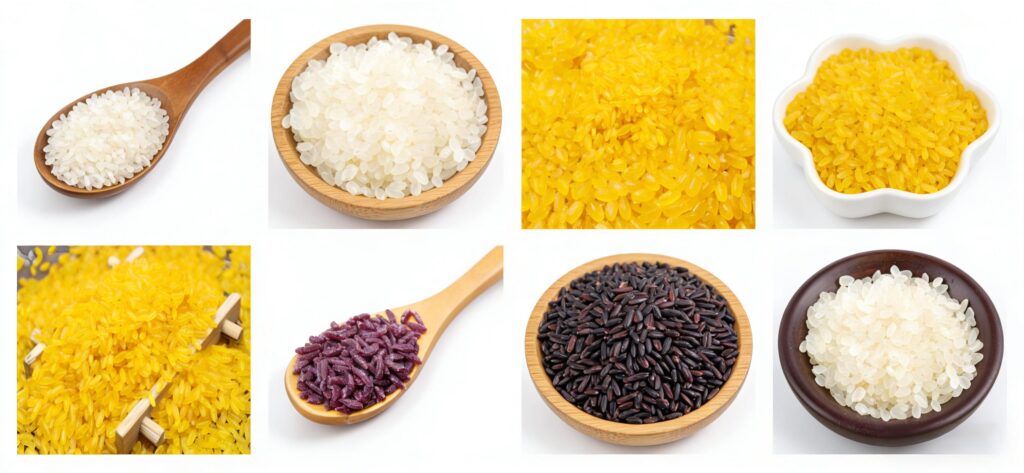
Why Fortify Rice?
Traditional rice milling removes the nutrient-rich bran layers, leaving polished white rice as a poor source of essential micronutrients . This processing step, while improving palatability and shelf life, strips away vitamins and minerals that are crucial for human health. Fortification addresses this nutritional gap by reintroducing key micronutrients such as Vitamin A, D3, B12, iron, folic acid, iodine, zinc, thiamin, and niacin back into the rice consumed by populations .
Primary Fortification Technologies
Three main technologies are employed for manufacturing fortified rice kernels: extrusion, coating, and dusting . Among these, extrusion is identified as the most scalable process capable of producing a stable product suitable for large-scale commercial production .
1. Extrusion Technology (The Preferred Method)
Extrusion is the most widely adopted and effective method for producing high-quality fortified rice kernels. It is cost-effective and provides controlled operating parameters that ensure consistent product quality .
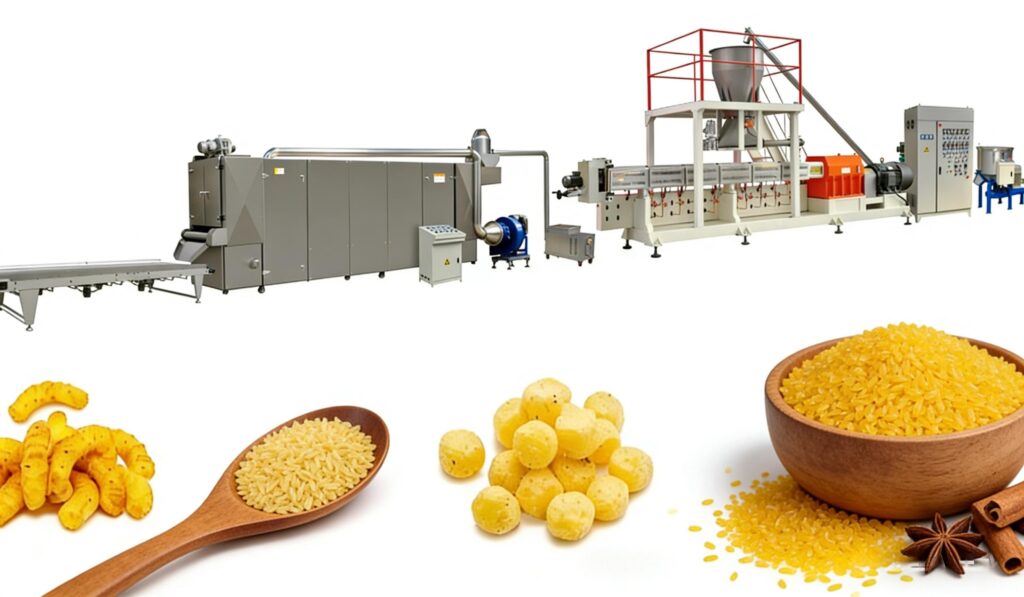
The Extrusion Process:
The manufacturing process begins with broken rice, an underutilized by-product of rice milling . This approach not only reduces waste but also creates a value-added pathway for converting a lower-grade material into a functional food ingredient .
Step-by-Step Process:
- Grinding: Broken rice is ground into a fine flour with suitable particle size to ensure optimal processing .
- Mixing: The rice flour is blended with a vitamin-mineral premix (VMP) and potable water to form a consistent dough . The micronutrient premix typically targets over 75% of the Recommended Dietary Allowance for key nutrients .
- Extrusion : The dough is passed through an extruder—either single-screw or twin-screw—where it is subjected to controlled heat (typically 70–110°C) and pressure . The material is forced through a die that shapes it into rice-like kernels. The extrusion process not only shapes the kernels but also decontaminates the rice of microbes, ensuring superior purity .
- Drying: The extruded kernels are dried using hot air to achieve a moisture content similar to regular rice (12–14%), ensuring a long shelf life .
- Polishing: The dried kernels are polished to improve their appearance, making them look more like conventional rice grains .
- Emballage : The final fortified rice kernels are packaged for distribution .
The Blending Process:
The manufactured fortified rice kernels are not intended to replace regular rice entirely. Instead, they are blended with conventional rice at a specific ratio—typically 1 part FRK to 100 parts regular rice (1:100) . This dilution ensures that consumers receive adequate micronutrients without significantly altering the appearance, cooking behavior, or taste of the rice .

Process Optimization:
Key extrusion parameters such as die and barrel temperature, screw speed, feed rate, and moisture content significantly influence the quality of the final product . Research has demonstrated that optimized conditions—for example, 90°C temperature, 120 rpm screw speed, and 20% moisture content—can maximize nutrient retention while producing kernels with desirable physical, textural, and functional properties .
2. Coating Method
The coating method involves spraying a micronutrient solution onto the surface of rice grains, often with the aid of protective coating materials such as waxes, gums, or methyl cellulose solutions .
Process Characteristics:
- The fortificant mixture is applied in layers onto the grain surface through dip coating or spray coating techniques .
- Spray coating with protective materials has been found more effective than dip coating, achieving over 90% nutrient retention .
- However, coating can result in some undesirable effects, including crack formation in the rice kernels and slight yellowish discoloration .
3. Dusting Method
The dusting method is the most economical fortification technique . It involves applying powdered micronutrient premix directly onto the surface of polished rice grains, where it adheres through electrostatic forces .
Key Consideration:
Because the nutrients are only on the surface, consumers are advised not to rinse or wash the rice before cooking to retain the micronutrients . This is the primary method used in the United States.
Quality Assurance and Standards
Maintaining consistent quality is essential for fortified rice production. Manufacturers must adhere to Good Manufacturing Practices (GMP), Hazard Analysis and Critical Control Points (HACCP) protocols, and relevant national standards . Regular inspection and safety checks are required to keep the extrusion system in proper working order . Quality assurance protocols include:

- Micronutrient content analysis to verify that kernels meet specified nutrient levels
- Shelf-life evaluation of both FRK and blended fortified rice
- Monitoring of consumer acceptance and sensory properties
Advantages of Extrusion-Based Fortification
Extrusion technology offers several significant advantages over other methods:
- Nutrient Stability: The “locking in” of vitamins and minerals through the extrusion process ensures they remain stable and effective even after cooking methods like boiling or steaming .
- Visual and Sensory Appeal: The fortified kernels produced by extrusion look, cook, and taste similar to regular rice, making them readily accepted by consumers without requiring changes in dietary habits .
- Sustainability: The use of broken rice, a by-product of rice milling, provides a sustainable and cost-effective solution .
- Efficacy: Pilot studies have demonstrated the nutritional effectiveness of extruded fortified rice. A 15-week study involving Indonesian adolescent girls showed a 41.4% decrease in the prevalence of anemia and significant increases in ferritin and folic acid levels .
Conclusion
The manufacturing of fortified rice through extrusion technology represents a scientifically robust and scalable approach to addressing micronutrient deficiencies in rice-consuming populations worldwide. By transforming broken rice into nutrient-dense kernels that blend seamlessly with regular rice, this process offers a practical solution to “hidden hunger” without requiring consumers to alter their eating habits. As the technology continues to evolve and production scales up, fortified rice holds significant promise for improving public health nutrition globally.
 French
  English
  Russian
  Spanish
  Italian
  Arabic
  Portuguese
  German
  Japanese
  Moroccan Arabic
  Persian
  Belarusian