
Nutritious rice is a value-added rice product designed to address nutritional deficiencies and enhance the health benefits of conventional white rice. Nutrition rice making machine The processing technology involves fortifying, enriching, or restoring micronutrients—such as vitamins, minerals, and sometimes proteins or fiber—that are lost during milling or are lacking in staple diets. Below is a detailed description of the typical processing technology used to produce nutritious rice.
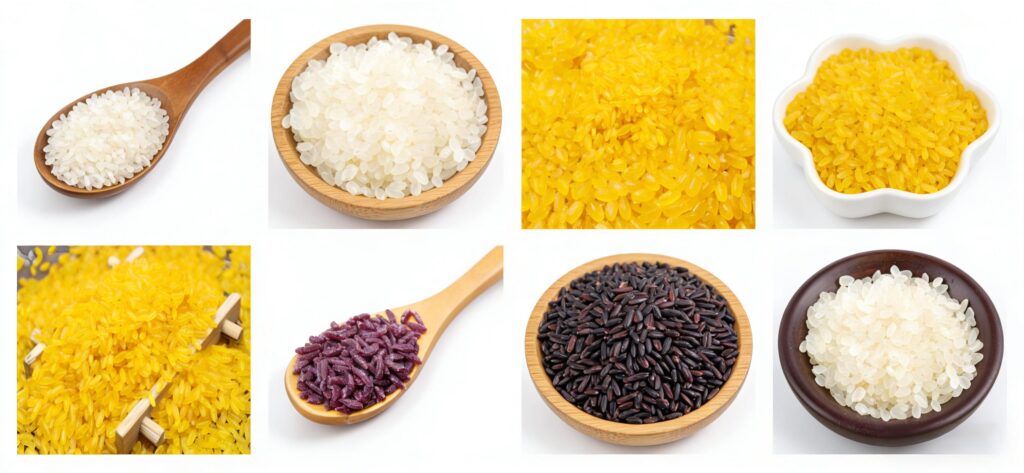
1. Raw Material Preparation
The process begins with selecting high-quality broken or low-grade rice grains, which are more cost-effective but serve as an excellent base for reconstitution. Alternatively, rice flour derived from fully milled rice is commonly used. The raw material is cleaned, de-stoned, and sieved to remove impurities, ensuring uniform particle size.
2. Milling and Grinding
The cleaned rice is ground into a fine flour (≥100 mesh) using advanced hammer mills or pin mills. The fineness of the flour is critical to achieve a smooth, rice-like texture after extrusion. For parboiled or brown rice-based nutritious rice, partial grinding may be applied to retain some bran layers, which provide additional dietary fiber and B vitamins.
3. Preparation of Nutrient Premix
A dry nutrient premix is formulated based on the target population’s needs (e.g., iron, folic acid, zinc, vitamin A, thiamine, and niacin). Common fortificants include:
- Iron (ferric pyrophosphate or NaFeEDTA)
- Zinc (zinc oxide or zinc sulfate)
- B vitamins (thiamine mononitrate, riboflavin, niacinamide)
- Vitamin A (retinol palmitate in beadlet form)
- Folic acid and occasionally calcium or iodine.
These nutrients are blended with a food-grade binder (e.g., guar gum, xanthan gum, or pregelatinized starch) and an emulsifier (e.g., monoglycerides) to ensure even dispersion and stability during extrusion.

4. Extrusion Processing (Key Step)
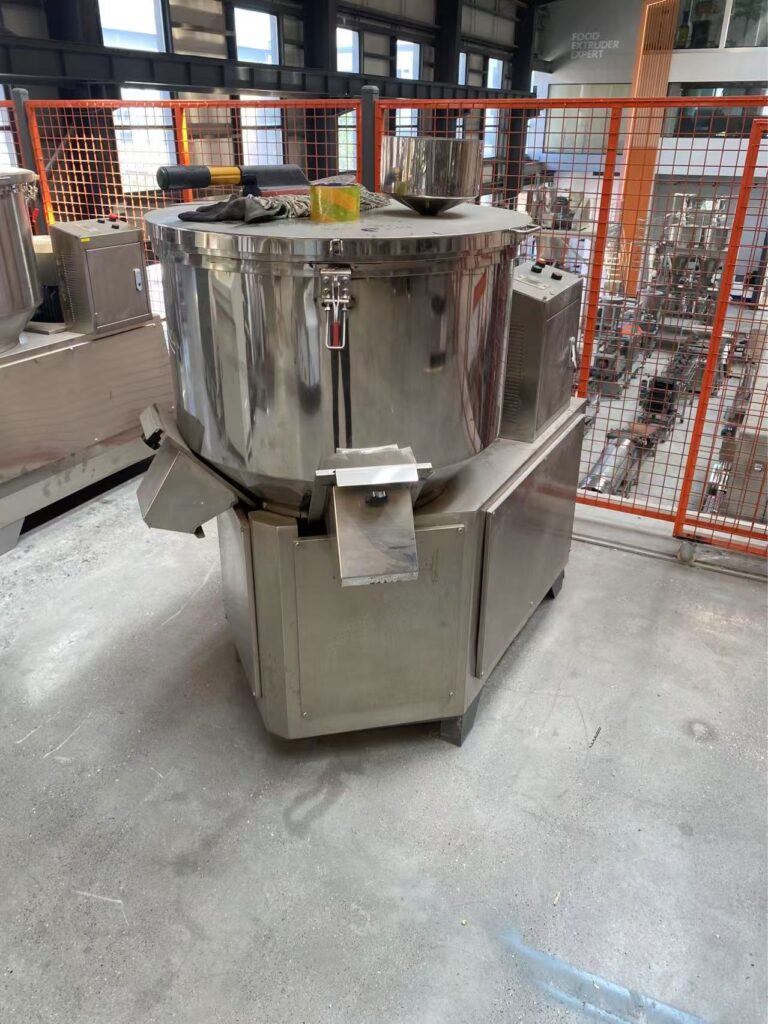
The rice flour and nutrient premix are dry-mixed in a ribbon blender or high-shear mixer, then transferred to a twin-screw extruder. The extrusion process includes:
- Conditionnement : Moisture content is adjusted to 25–35% by adding water or steam.
- Shearing & Cooking: Within the extruder barrel (temperature 90–110 °C), the starch gelatinizes under high pressure (20–40 bar) and shear force, forming a viscoelastic dough.
- Mise en forme : The dough is forced through a die plate with small holes (1.0–2.5 mm diameter) that resemble rice grain dimensions. A rotating cutter at the die face cuts the extrudate to lengths of 5–8 mm, mimicking natural rice.
- Expansion control: By carefully regulating temperature and moisture, the extruded kernels are produced with a similar density to natural milled rice.
5. Drying and Tempering
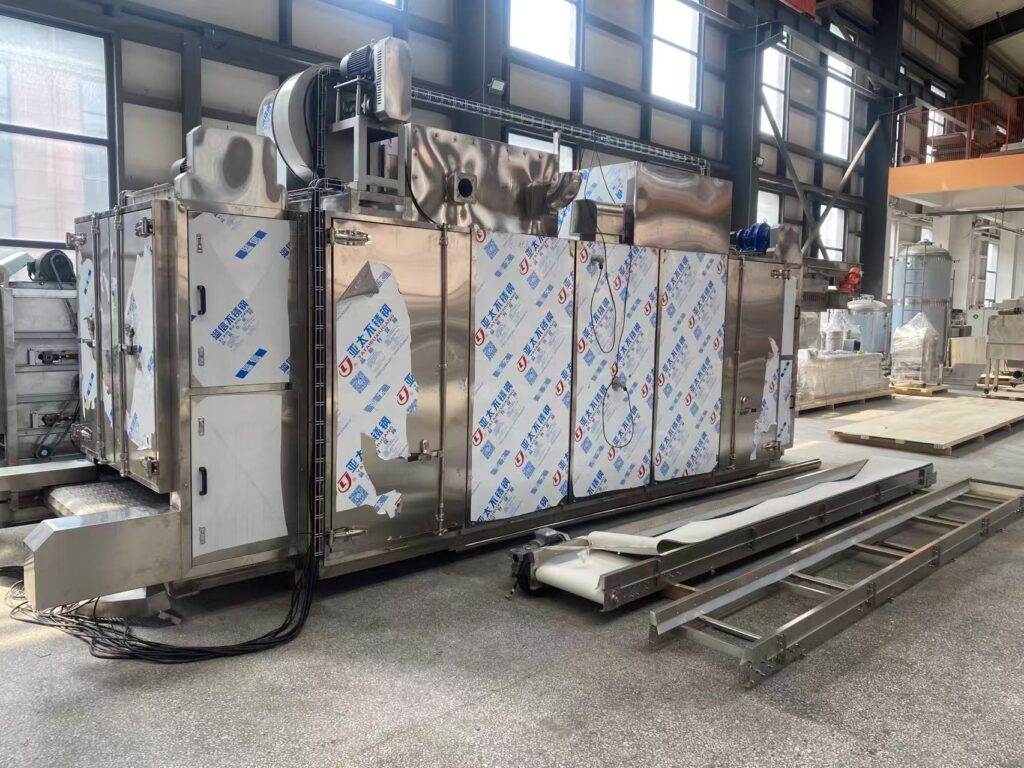
The freshly extruded nutritious rice kernels have a moisture content of 30–40% and must be dried to ≤12% to prevent spoilage and ensure textural stability. Nutrition rice making machine Drying is done in two stages:
- Flash drying: For 5–10 minutes at 80–100 °C to remove surface moisture.
- Tempering: Holding the kernels in a warm, humid environment (e.g., 50 °C, 60% RH) for 30–60 minutes to allow internal moisture migration.
- Final drying: In a belt or fluidized bed dryer at 50–60 °C until the moisture reaches 10–12%.
Slow drying prevents cracking and ensures the final product cooks similarly to natural rice.
6. Cooling, Sieving, and Polishing
After drying, the kernels are cooled to room temperature using ambient air or forced ventilation. They are then sieved to remove fines or misshapen pieces. Some manufacturers apply a light polishing using a rice polisher with a small amount of oil (e.g., vegetable oil) or talc to improve appearance and reduce stickiness during cooking.
7. Quality Control and Packaging
- Nutrient homogeneity: Samples are taken from each batch and analyzed for vitamin/mineral content using HPLC or ICP-MS.
- Cooking quality: A 10–15 minute boiling test is performed to check grain integrity, texture, and flavor.
- Storage stability: Accelerated shelf-life tests monitor for lipid oxidation and vitamin degradation.
The final product is vacuum-sealed or nitrogen-flushed in moisture-proof multilayer bags (PET/Al/PE) to prevent oxidation and hygroscopic absorption. Packaging is typically done in a low-humidity environment (≤40% RH).

8. Blending with Natural Rice (Optional)
For certain applications (e.g., school feeding programs), the nutritious rice kernels are blended with natural milled rice at a ratio of 1:50 to 1:200, depending on the nutrient concentration. This ensures that a standard serving of cooked rice provides the recommended daily intake of targeted nutrients without altering taste or appearance.
Advantages of Extrusion Technology for Nutritious Rice
- Preserves heat-sensitive vitamins due to short processing time (30–60 seconds).
- Produces a rice-like grain that is widely accepted by consumers.
- Allows precise control over nutrient levels.
- Offers good storage stability (up to 12 months).
Conclusion

The production of nutritious rice via extrusion-based processing technology is a scientifically validated approach to combat hidden hunger. Nutrition rice making machine By embedding essential micronutrients into a rice-shaped matrix, this technology bridges the gap between staple food consumption and nutritional adequacy, especially in developing regions where rice is a dietary mainstay. Continuous innovations in coating, encapsulation, and cold extrusion are further improving nutrient retention and consumer acceptance.
 French
  English
  Russian
  Spanish
  Italian
  Arabic
  Portuguese
  German
  Japanese
  Moroccan Arabic
  Persian
  Belarusian