
Investing in a commercial dog food production line is a significant financial commitment that requires careful planning, technical knowledge, and regulatory awareness. The global pet food market continues to grow rapidly—valued at over $107 billion in 2023 and projected to reach $125 billion by 2025—creating substantial opportunities for new entrants . However, success depends on understanding the full scope of investment required, from equipment selection to compliance and operational planning.
This guide walks you through everything you need to know about investing in a commercial dog food production line.
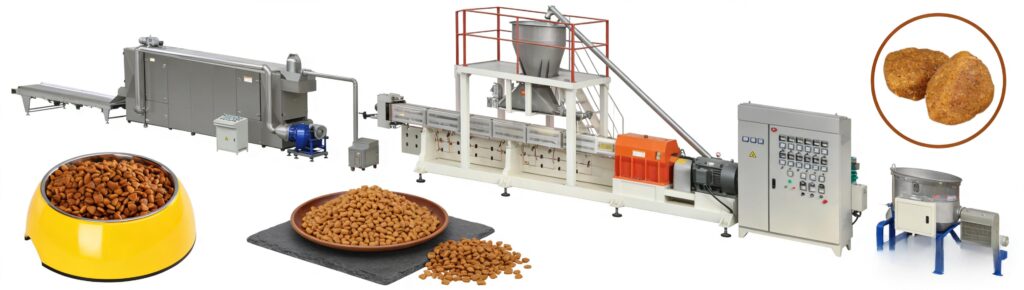
1. Understanding Your Production Options
Before calculating costs, you must decide what type of dog food you will produce. Each production method requires different equipment, facilities, and expertise.
Extruded (Dry Kibble) Production
Extrusion is the most common method for commercial dry dog food production. The process uses a machine called an extruder that cooks and shapes the dough under high heat and pressure, then forces it through a die to create kibble pieces .
Typical capacity range: 100 kg/h to 10+ tons/h
Baked Dog Food Production
Baking uses gentler heat in a conventional oven, dog food extruder similar to human cookie production. This method preserves more nutrients but has lower throughput and higher operating costs per unit.
Freeze-Dried and Other Premium Formats
Freeze-dried production requires specialized equipment and significantly higher capital investment—commercial freeze dryers range from $75,000 to over $1 million . This is generally suited for premium, niche markets.

For most new entrants, extruded kibble production offers the best balance of affordability, scalability, and market demand.
2. Equipment Investment: What You’ll Need
A complete dog food extrusion line consists of several integrated components :

| Equipment Component | Function | Approximate Cost Range |
|---|---|---|
| Grinder/Mixer | Grinds raw materials into uniform powder and mixes ingredients | $5,000 – $25,000 |
| Screw Conveyor | Transfers mixed material to extruder hopper | $2,000 – $8,000 |
| Extruder (Twin-Screw) | Cooks and shapes the kibble—the core of your line | $10,000 – $125,000+ |
| Air Conveyor | Moves wet kibble to dryer | $1,500 – $5,000 |
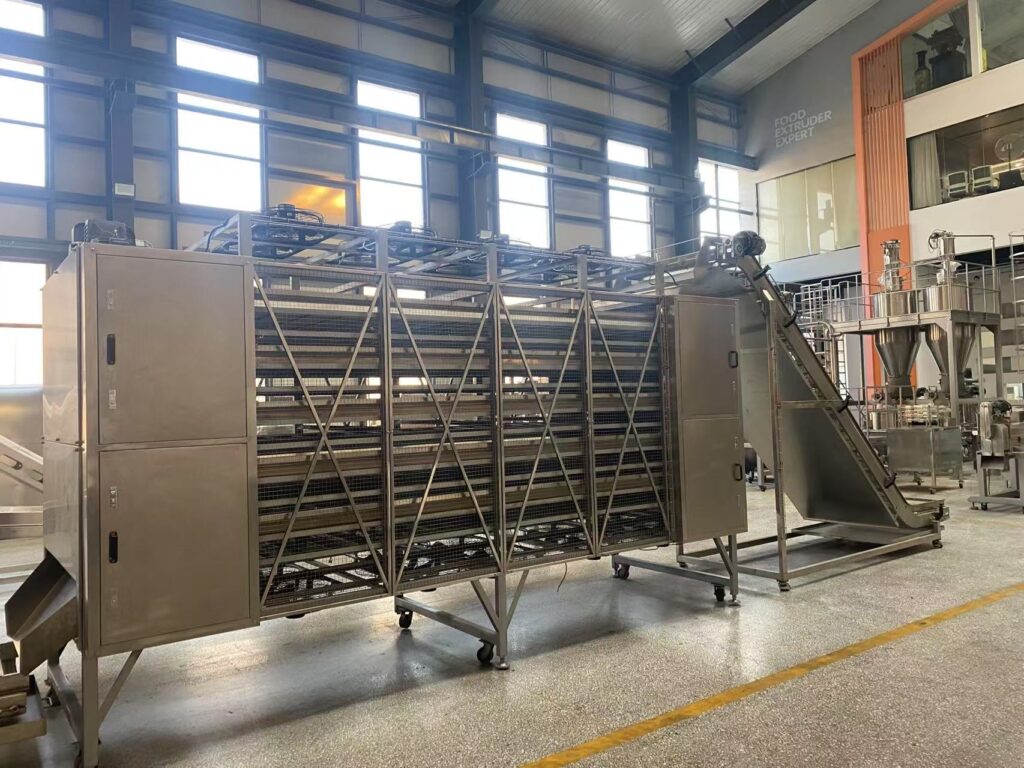
| Drying Oven | Removes moisture to achieve shelf stability | $8,000 – $40,000 |
| Flavoring Drum | Applies fat and flavor coatings | $3,000 – $15,000 |
| Cooling Conveyor | Cools product before packaging | $2,000 – $8,000 |
| Packaging Machine | Bags and seals finished product | $5,000 – $30,000 |
Extruder Selection Guide
Extruder capacity directly determines your production potential :
| Model | Output Capacity | Power | Ideal For |
|---|---|---|---|
| Small (65mm screw) | 100-150 kg/h | 22kw | Startup, small batches |
| Medium (70-75mm screw) | 200-500 kg/h | 30-40kw | Regional distribution |
| Large (85-95mm screw) | 400-2,500 kg/h | 55-160kw | Full-scale commercial |
| Industrial (115-132mm screw) | 3,000-7,000 kg/h | 160-250kw | Major manufacturer |
Turnkey Plant Costs
For a complete, ready-to-operate facility, prices vary significantly by capacity and automation level :
- Entry-level turnkey plant: $6,800 – $20,000 (very small scale)
- Small commercial line (100-500 kg/h): $30,000 – $60,000
- Mid-size commercial line (500-1,500 kg/h): $60,000 – $150,000
- Large industrial line (2-5+ tons/h): $150,000 – $500,000+
Key insight: Machinery suppliers in Shandong and Hebei provinces (China) offer competitive pricing. Jinan Sunrising, for example, dog food extruder provides modular systems scalable from 500 kg/h to 5,000 kg/h, allowing phased investment as you grow .
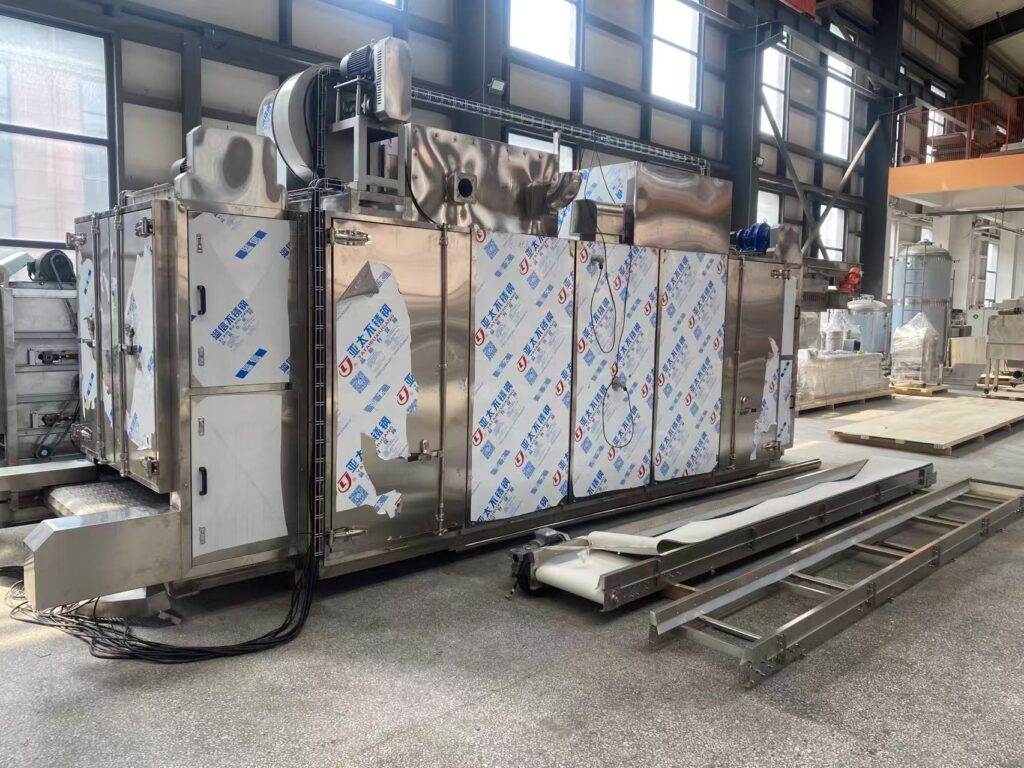
3. Ancillary and Facility Costs
The extruder is just the beginning. Many new investors underestimate the “behind-the-scenes” costs required for commercial operation.
Facility Requirements
- Space: A small line (100-200 kg/h) needs approximately 200-300 sq m (2,150-3,200 sq ft). Larger lines require 500+ sq m .
- Ceiling height: Minimum 4-5 meters for equipment clearance
- Flooring: Industrial-grade, waterproof, easy-to-clean surfaces
- Utilities: Three-phase power (380V/50Hz typical), water, drainage, ventilation
Ancillary Equipment Not Always Included
Based on real-world experience from freeze-dried producers, these hidden costs catch many investors off guard :
- Material handling: Forklifts ($15,000 – $40,000), pallet jacks, storage racks
- Cleaning system: Pan washing equipment, sanitation stations ($5,000 – $20,000)
- Quality control lab: Testing equipment for moisture, fat, protein analysis ($10,000 – $30,000)
- Cold storage: Freezers or coolers for raw ingredient storage ($10,000 – $50,000)
- Dust collection and ventilation systems ($5,000 – $25,000)
Raw Materials and Initial Inventory
Your first inventory purchase will include :
- Base grains: Corn flour, wheat flour, rice flour
- Protein sources: Meat meal, fish meal, bone meal
- Fats and oils: For coating and palatability
- Vitamins and minerals: For complete nutrition
Estimated first inventory investment: $5,000 – $20,000 depending on scale
4. Regulatory Compliance and Licensing
Pet food production is heavily regulated. dog food extruder Compliance is not optional—it’s a prerequisite for legal operation.

Key Regulatory Requirements (Based on EU Standards, Similar in Most Markets)
Before starting production, you must :
- Register your facility with the relevant food safety authority (e.g., BAES in Austria, FDA in the US)
- Obtain operating license from veterinary authorities if using animal by-products
- Implement HACCP (Hazard Analysis and Critical Control Points) principles
- Establish self-monitoring programs for:
- Microbiological contaminants (Salmonella, Enterobacteriaceae)
- Chemical contaminants (heavy metals, mycotoxins)
- Pesticides (for plant-based ingredients)
Ongoing Compliance Costs
- Regular lab testing: $2,000 – $10,000 annually depending on testing frequency
- Third-party audits: $3,000 – $15,000 for certifications (ISO, FSSC 22000)
- Legal and consulting fees: $2,000 – $8,000 annually
Important: Facilities processing animal by-products cannot share space with human food preparation. You need a dedicated, approved production facility .

5. Complete Investment Breakdown by Scale
Here’s a realistic picture of total startup investment by production scale:
Micro / Startup Scale (100-200 kg/h)
| Expense Category | Estimated Cost |
|---|---|
| Basic extrusion line | $25,000 – $40,000 |
| Facility lease/modifications | $10,000 – $20,000 |
| Ancillary equipment | $15,000 – $25,000 |
| Initial raw materials | $5,000 – $10,000 |
| Licensing and compliance | $3,000 – $8,000 |
| Total Estimated Investment | $58,000 – $103,000 |
Small Commercial Scale (300-600 kg/h)
| Expense Category | Estimated Cost |
|---|---|
| Mid-size extrusion line | $50,000 – $80,000 |
| Facility (purchase/lease + modifications) | $30,000 – $60,000 |
| Ancillary equipment | $25,000 – $50,000 |
| Initial raw materials | $10,000 – $20,000 |
| Licensing, compliance, certifications | $5,000 – $15,000 |
| Total Estimated Investment | $120,000 – $225,000 |
Medium Commercial Scale (1-2 tons/h)
| Expense Category | Estimated Cost |
|---|---|
| Industrial extrusion line | $100,000 – $200,000 |
| Facility (purchase + buildout) | $100,000 – $250,000 |
| Ancillary equipment | $50,000 – $100,000 |
| Initial raw materials | $20,000 – $40,000 |
| Licensing, certifications, lab setup | $15,000 – $30,000 |
| Staff training and initial operating capital | $30,000 – $60,000 |
| Total Estimated Investment | $315,000 – $680,000 |
6. Operating Costs and Financial Projections
Monthly Operating Expenses (Small Commercial Line)
| Expense | Estimated Monthly Cost |
|---|---|
| Raw materials | $8,000 – $15,000 |
| Utilities (electricity, gas, water) | $2,000 – $5,000 |
| Labor (2-4 operators + manager) | $8,000 – $20,000 |
| Packaging materials | $2,000 – $5,000 |
| Maintenance and spare parts | $500 – $2,000 |
| Quality testing | $500 – $1,500 |
| Marketing and distribution | $1,000 – $5,000 |
| Total Monthly Operating Cost | $22,000 – $53,500 |
Revenue Potential
At 300 kg/h, running 8 hours/day, 25 days/month:
- Monthly production: 60,000 kg (60 tons)
- Average wholesale price: $1.50 – $3.00 per kg
- Monthly revenue potential: $90,000 – $180,000
Gross margin: Typically 25-40% for commercial pet food manufacturing
7. Supplier Selection and Procurement Strategy
Choosing the right equipment supplier is critical. Here’s what to look for:
Red Flags to Avoid
- No after-sales service or technical support
- Unclear warranty terms
- Inability to provide references or customer reviews
- Vague specifications or unwillingness to customize
What Good Suppliers Offer
- Free factory layout design based on your space
- Basic formulation guidance to get started
- On-site installation and commissioning (technician sent to your facility)
- Operator training for your staff
- 1-year warranty with lifetime technical support
- Spare parts included with the machine
Recommended Procurement Workflow
- Define requirements: Output capacity, kibble shapes, automation level, budget
- Shortlist 3-5 suppliers from manufacturing hubs (Shandong, China is a major cluster)
- Request quotes and lead times (typical: 30-75 days for delivery)
- Request product samples made on their equipment
- Verify certifications (ISO, CE, etc.) and customer references
- Use secure payment methods (Trade Assurance, escrow for orders over $10,000)
- Include installation and training in the contract
8. Market Considerations and Niche Selection
The dog food market has several distinct segments :

| Segment | Growth Rate | Margin Potential | Competition |
|---|---|---|---|
| Economy kibble | Low | Low | Extreme |
| Premium kibble (grain-free, high-protein) | High | Medium-High | Moderate |
| Functional/specialty diets (joint health, weight control) | Very High | High | Low-Medium |
| Organic/natural | Very High | High | Low |
| Private label manufacturing | Medium | Medium | Moderate |
Recommendation for new entrants: Focus on a niche—grain-free, high-protein, or functional diets—rather than competing directly with established brands on price.
9. Risk Assessment
Major Risks to Mitigate
| Risk | Mitigation Strategy |
|---|---|
| Equipment failure | Choose reputable supplier, keep spare parts inventory, negotiate warranty terms |
| Quality drift | Establish clear specifications, require Certificates of Analysis per batch, use third-party lab testing |
| Regulatory non-compliance | Consult feed law expert before starting, maintain HACCP documentation, schedule regular internal audits |
| Supply chain disruption | Diversify raw material suppliers, maintain safety stock |
| Market entry failure | Start with regional distribution, build direct-to-consumer channels, partner with local pet stores |
10. Getting Started: 12-Month Roadmap
Months 1-3: Planning
- Market research and niche selection
- Business plan development
- Financial modeling and funding sourcing
Months 4-6: Setup
- Facility identification and lease/purchase
- Supplier selection and equipment order
- Regulatory registration and licensing
Months 7-9: Installation
- Facility modifications
- Equipment delivery and installation
- Staff hiring and training
Months 10-12: Launch
- Test runs and quality validation
- Initial production run
- First customer deliveries
Final Advice
Investing in a commercial dog food production line is achievable with proper planning, but it’s not a low-cost entry business. Even a small commercial line requires six-figure investment when all ancillary costs are included.
Start smaller than you think you need. Many successful pet food brands began with contract manufacturing (using an existing facility to produce their recipes) before investing in their own lines. This allows you to validate your market and recipe before committing to equipment.
Don’t skip compliance. Regulatory violations can shut down your operation permanently. Build relationships with food safety authorities early.
Choose your supplier carefully. The cheapest extruder will cost you more in downtime and frustration. Pay for quality, service, and support.
Note: All prices and costs are estimates based on 2024-2025 market data. Actual costs vary by location, supplier, exchange rates, and specific requirements. Always obtain multiple quotes and consult with industry professionals before making investment decisions.
 French
  English
  Russian
  Spanish
  Italian
  Arabic
  Portuguese
  German
  Japanese
  Moroccan Arabic
  Persian
  Belarusian