
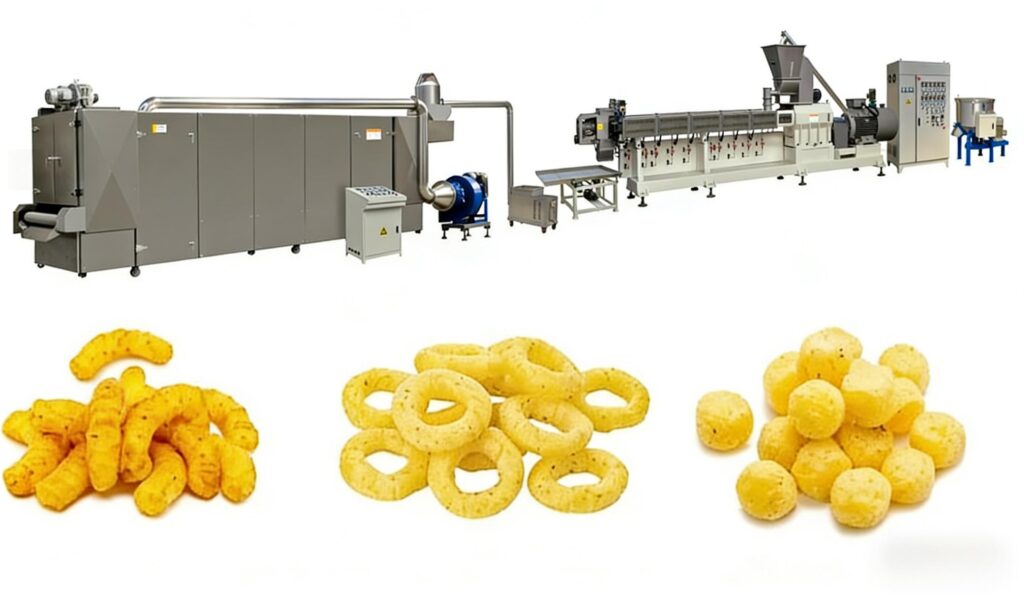
Puffing is a popular processing technique used to create light, crispy snacks like rice cakes, puffed corn, and cereal flakes. snack food extruder machine While it transforms the texture and mouthfeel of raw grains, it also brings about significant chemical and physical changes to their nutritional profile. The effects of puffing on nutrients can be both positive and negative, depending on the specific nutrient and processing conditions (such as temperature, pressure, and time).

1. Effects on Carbohydrates: Increased Digestibility
Puffing has a profound effect on starches, the primary carbohydrate in grains.
- Gelatinization: The high heat and moisture during puffing cause starch granules to absorb water, swell, and break down (gelatinization). This process makes complex carbohydrates much easier for human digestive enzymes to break down. As a result, the glycemic index (GI) of puffed grains is often higher than that of their unprocessed counterparts, meaning they cause a faster and larger spike in blood sugar.
- Reduction of Resistant Starch: Puffing reduces the amount of resistant starch (starch that resists digestion and acts like fiber). While this increases calorie availability, it lowers the prebiotic benefit that resistant starch provides to gut bacteria.
In summary: Puffing makes carbohydrate energy more readily available but can lead to a higher glycemic response.
2. Effects on Proteins: Mixed Outcomes
Proteins undergo denaturation and other changes during puffing.
- Improved Digestibility (Positive): Similar to cooking, puffing denatures proteins, unfolding their complex structures. snack food extruder machine This makes them more accessible to digestive enzymes (proteases), generally improving protein digestibility. This is especially beneficial for grains like corn or rice, which have lower baseline digestibility when raw.
- Loss of Lysine (Negative): The most significant downside for protein quality is the loss of certain heat-sensitive essential amino acids, particularly lysine. Puffing involves high temperatures, which can cause Maillard reactions between amino acids and reducing sugars. While this creates desirable flavor and color, it reduces the amount of bioavailable lysine. Since grains are often limiting in lysine to begin with, this can lower the overall protein quality score of the snack.
In summary: Puffing makes protein easier to digest but may reduce the content of essential amino acids like lysine.
3. Effects on Dietary Fiber: Both Soluble and Insoluble
Fiber is generally more stable than other nutrients, but puffing still alters it.
- Increased Soluble Fiber: Puffing can break down some insoluble fiber (e.g., cellulose, hemicellulose) into smaller, partially soluble fragments. This change may have prebiotic benefits, as soluble fiber is more easily fermented by gut bacteria.
- Loss of Total Fiber? The total amount of fiber typically remains similar on a dry-weight basis, as fiber molecules are not easily destroyed by heat alone. However, high-pressure extrusion (a common puffing method) can reduce the molecular weight of some fiber components, potentially altering their physiological effects (e.g., water-holding capacity).
In summary: Puffing can shift some insoluble fiber to soluble forms but does not drastically reduce total fiber mass.

4. Effects on Vitamins: Generally Negative
Vitamins are the nutrients most vulnerable to the high temperatures and pressures of puffing.
- Heat-Sensitive Vitamins: Significant losses occur for vitamin C, thiamin (B1), folate (B9), and vitamin A (or its precursors, like beta-carotene). Losses can range from 20% to over 80%, depending on the intensity of the process.
- More Stable Vitamins: Niacin (B3), riboflavin (B2), and vitamin E are more heat-stable and may retain a higher percentage of their original content, though some degradation still occurs.
- Mineral Bioavailability (Positive): Minerals like iron, zinc, and calcium are not destroyed by heat. In fact, puffing can sometimes improve their bioavailability. By breaking down phytic acid (an “antinutrient” in grains that binds to minerals and prevents absorption), puffing may release minerals, making them more absorbable in the human gut.
In summary: Puffing causes significant losses of heat-sensitive vitamins but may improve the bioavailability of certain minerals.
5. Formation of Potential Harmful Compounds
A nutritional concern with any high-temperature grain processing is the formation of neo-formed contaminants.
- Acrylamide: When starchy foods are heated above 120°C (250°F) in the presence of the amino acid asparagine, acrylamide can form. snack food extruder machine This compound is classified as “probably carcinogenic to humans.” Many puffed snacks (especially cereal-based ones) have been found to contain measurable levels of acrylamide, though manufacturers have worked to reduce it.
- Advanced Glycation End-products (AGEs): Puffing promotes Maillard reactions, which also produce AGEs. High dietary intake of AGEs has been linked to oxidative stress and inflammation.
Conclusion
Puffing has a dual effect on nutrition:
| Positive Effects | Negative Effects |
|---|---|
| Increases starch and protein digestibility | Raises glycemic index (faster sugar spike) |
| May increase soluble fiber | Destroys heat-sensitive vitamins (C, B1, folate) |
| Improves mineral bioavailability (by reducing phytates) | Reduces essential amino acid lysine |
| Creates desirable texture and flavor | Can form harmful compounds like acrylamide |
In practice, plain puffed grains (like puffed rice or millet) are light and easily digestible but are low in vitamins and can cause rapid blood sugar changes. As with most processed foods, puffed snacks should be consumed in moderation as part of a balanced diet that includes whole, minimally processed foods rich in fiber, vitamins, and intact proteins.
 French
  English
  Russian
  Spanish
  Italian
  Arabic
  Portuguese
  German
  Japanese
  Moroccan Arabic
  Persian
  Belarusian