
This guide outlines the essential procedures for producing high-quality, safe, and nutritionally balanced dry dog food (kibble) using an extrusion-based system. Adherence to these protocols ensures product consistency, regulatory compliance, and pet safety.
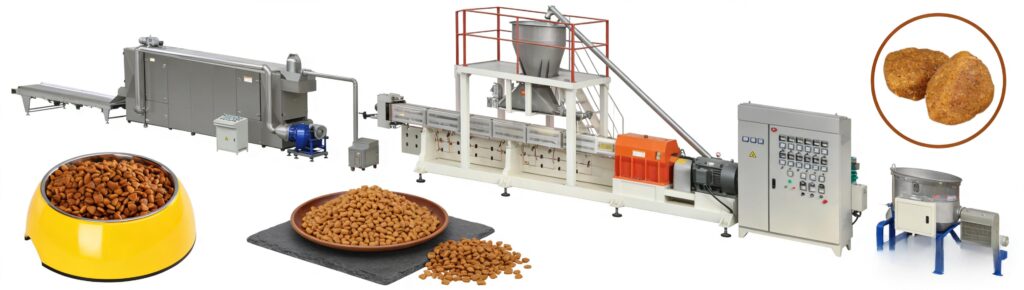
1. Ingredient Receiving and Storage
- Quality Control Upon Arrival: Inspect all incoming raw materials (meals, grains, vegetables, fats, vitamins) for contaminants, moisture, and pest damage. Reject any shipment with broken seals, unusual odors, or visible mold.
- Temperature Control: Store dry ingredients (grains, flours) in a cool, dry silo or warehouse at 15–20°C (59–68°F) with humidity below 50%. Refrigerate fresh meats or animal by-products at 0–4°C (32–39°F) and use within 48 hours.
- First-In, First-Out (FIFO): Label all batches with receipt date and lot number. Use older stock first to prevent spoilage.
2. Batching and Mixing
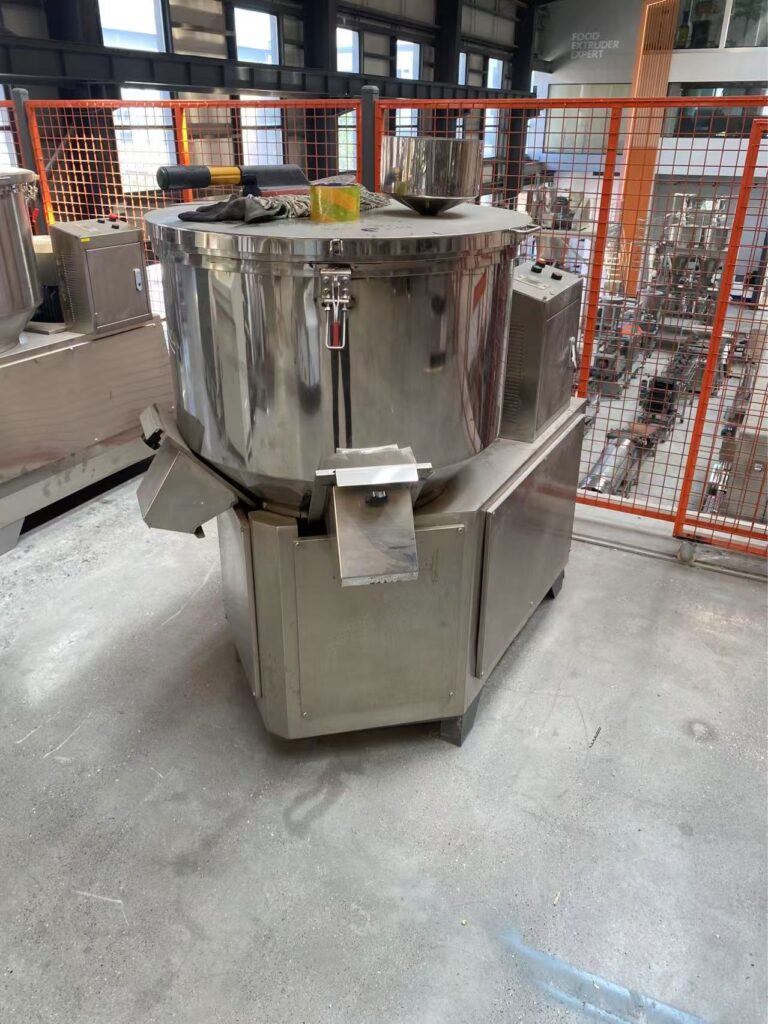
- Recipe Adherence: Follow a veterinary-approved formulation. Use a digital scale to weigh each ingredient (e.g., 40% protein meal, 50% grains, 10% vitamins/minerals). Tolerance: ±0.5%.
- Grinding: Reduce particle size of grains and protein meals through a hammer mill to 1–2 mm mesh. This improves digestibility and extrusion uniformity.
- Mixing: Combine dry ingredients in a ribbon or paddle mixer for 3–5 minutes. Add liquid components (fats, water, meat slurry) gradually. Mix until a homogenous dough forms – test by squeezing a handful; it should hold shape without exuding water.
3. Extrusion – The Heart of Kibble Production

- Preconditioning: Steam the dough to 90–95°C (194–203°F) for 2–4 minutes. This gelatinizes starches and kills surface bacteria.
- Extrusion Parameters:
- Pressure: 30–60 bar (435–870 psi)
- Temperature at Die: 120–150°C (248–302°F)
- Die Plate: Choose die shape (round, triangular, bone-shaped) based on product spec.
- Process: The hot, pressurized dough expands upon exiting the die. A rotating knife cuts the extrudate into desired kibble lengths. Monitor kibble diameter and thickness every 15 minutes.
4. Drying
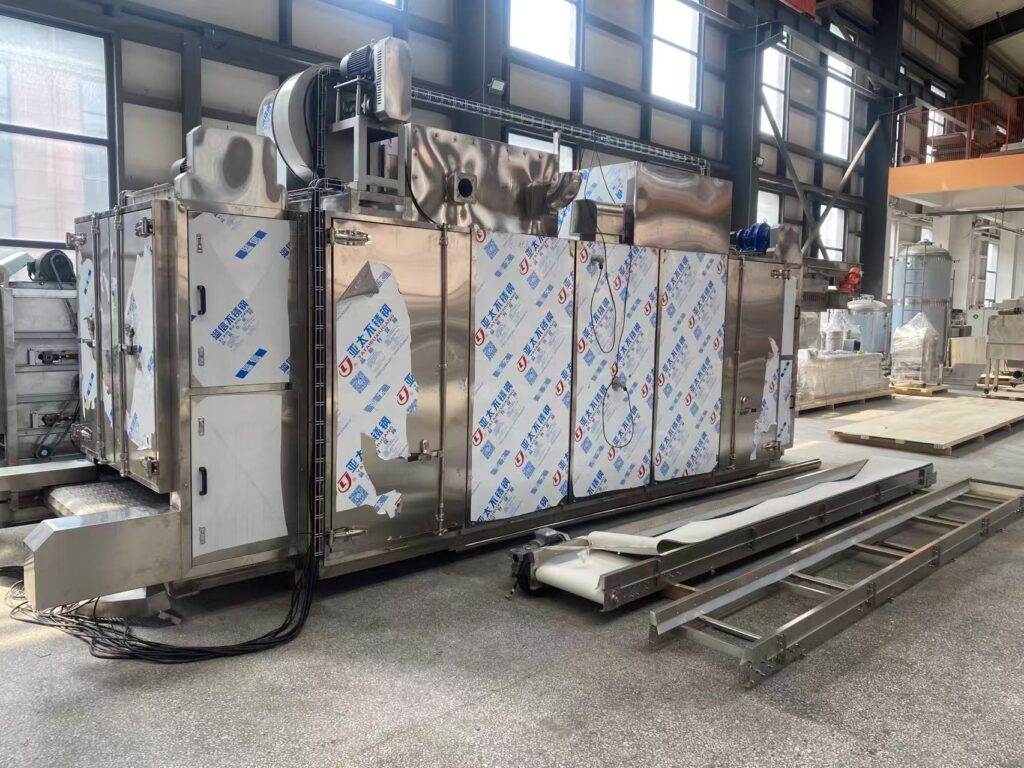
- Equipment: Multi-pass belt dryer or rotary drum dryer.
- Parameters: Dry kibble until moisture content is 8–10%. Initial zone: 160–180°C (320–356°F) for surface drying. Final zone: 80–100°C (176–212°F) to equalize internal moisture.
- Residence Time: 20–40 minutes depending on kibble size.
- Testing: Take samples every 30 minutes. Use a moisture analyzer – reject any batch above 11% (risk of mold) or below 7% (excessively brittle).
5. Coating

- Fat Application: Spray poultry fat or fish oil onto hot (40–50°C / 104–122°F) kibble in a rotary drum coater. Target coating level: 8–12% of final weight.
- Palatability Enhancers: Apply digest (hydrolyzed liver or poultry) as a second spray or powder. Ensure even coverage – uncoated spots lead to poor acceptance by dogs.
- Post-Coating Rest: Allow coated kibble to rest for 5–10 minutes before packaging to let fats absorb into the pores.
6. Quality Assurance (QA) Checks
Every batch must pass the following tests before packaging:
| Parameter | Acceptable Range | Test Method | Frequency |
|---|---|---|---|
| Moisture | 8–10% | Moisture analyzer | Every 30 min |
| Density | 350–450 g/L | Volumeter | Every 2 hours |
| Fat | 10–14% (dry matter basis) | Ether extraction | Per shift |
| Protein | 22–30% (dry matter basis) | Kjeldahl | Per shift |
| Hardness | 20–30 N (Newton) | Texture analyzer | Every 4 hours |
| Water activity (Aw) | <0.65 | Water activity meter | Every 2 hours |
- Foreign Material Check: Pass each kibble stream through a magnet and a sifter (mesh size 2 mm) to remove metal fragments or fines.
- Microbial Safety: Send weekly samples to an external lab for Salmonella and E. coli testing. Zero tolerance for pathogens.
7. Packaging and Labeling
- Bagging: Use multi-layer barrier bags (e.g., Kraft paper with polyethylene lining) to block oxygen and moisture. Fill by net weight – check scales every hour against certified weights.
- Label Requirements (compliant with AAFCO/FEDIAF):
- Product name and intended life stage (e.g., “Adult Complete & Balanced”)
- Guaranteed analysis (crude protein, fat, fiber, moisture)
- Ingredient list in descending order by weight
- Feeding guidelines
- “Best By” date (14–18 months from production) and batch/lot number
- Seal Integrity: Perform a “squeeze test” on three bags per pallet – no air leakage. For valve bags, ensure the valve is self-sealing.
8. Sanitation and Maintenance

- Daily Cleaning (End of Shift):
- Sweep and vacuum floors, walls, and conveyors.
- Disassemble and wash the extruder screw, die, and cutter with warm water and food-grade sanitizer (e.g., peracetic acid).
- Drain and rinse fat spray lines with hot water (80°C / 176°F) to prevent rancidity.
- Weekly Deep Clean:
- Remove all product from silos and mixers; scrub interior surfaces.
- Inspect dryer belts for charred debris – replace damaged segments.
- Test electrical panels and emergency stops.
- Pest Control: Deploy pheromone traps and rodent stations around the perimeter. Log catches daily. No pesticide use inside processing zones.
9. Traceability and Recall Plan

- Batch Numbering System: Format: YYYY-MM-DD-Line-Shift-Batch# (e.g., 2025-07-04-L2-1-037).
- Record Keeping: Retain production logs, QA test results, and ingredient certificates of analysis for a minimum of two years.
- Mock Recall: Conduct a mock recall every six months. Target: trace 100% of a batch from finished bag back to individual raw material lots within 4 hours.
10. Employee Hygiene and Safety

- Personal Protective Equipment (PPE): Hairnets, beard covers, non-slip waterproof boots, earplugs (near extruder/dryer), and cut-resistant gloves.
- Hand Washing: Mandatory upon entry, after breaks, dog food extruder and after any contact with raw meat. Use a 60-second scrub with antibacterial soap.
- No Contamination: No jewelry, false nails, or food/drink in production areas. Cover any open wounds with a bright blue waterproof bandage.
- Safety Training: All staff must complete HACCP (Hazard Analysis Critical Control Point) certification and annual refreshers on lockout/tagout for machinery.
Critical Control Points (CCP) Summary
| CCP | Hazard | Critical Limit | Monitoring | Corrective Action |
|---|---|---|---|---|
| Extrusion temperature | Bacterial survival (e.g., Salmonella) | Die temperature ≥120°C (248°F) | Continuous digital thermometer | Re-route product to rerun bin; re-sterilize equipment |
| Drying | Mycotoxin growth | Moisture ≤10% | Sample every 30 min | Extend drying time or reject batch |
| Metal detection | Metal fragments | No ferrous/non-ferrous >2 mm | Pass through detector after coating | Reject and analyze any positive package |
Final Notes
- Do not use raw meat or eggs that have not been thermally processed (minimum 85°C / 185°F internal temperature for 15 seconds).
- Never add propylene glycol or artificial sweeteners (xylitol is fatal to dogs).
- If a kibble color or odor changes unexpectedly, stop the line and investigate immediately.
This guide follows Codex Alimentarius and AAFCO principles. For specific regulatory requirements in your country, consult local animal feed authorities before production begins.
 English
  Russian
  Spanish
  Italian
  Arabic
  Portuguese
  German
  French
  Japanese
  Moroccan Arabic
  Persian
  Belarusian