
Puffed snacks—crispy, airy, and endlessly snackable—are a staple in grocery aisles worldwide. Yet the question of what they actually contribute nutritionally remains surprisingly complex. The answer depends heavily on raw materials, processing methods, and fortification strategies. This article examines the nutritional realities of puffed snacks, from their macronutrient composition to the effects of extrusion on vitamins, minerals, and anti-nutrients.
The Base Macronutrient Profile
The nutritional foundation of any puffed snack begins with its primary ingredient. Cereal-based puffs, such as corn or rice snacks, are predominantly carbohydrate-rich. A standard corn puff without added salt contains approximately 379 kcal per 100 g, with fat contributing only 1.4 g—a remarkably lean profile for a snack food . This low fat content reflects the base material rather than the finished product, as most commercial puffs receive oil coatings after puffing to carry seasonings and enhance mouthfeel.
When cheese-flavored coatings are applied, the picture shifts dramatically. A cheese-flavored extruded corn puff can reach 1,269 kcal per 100 g, with fat rising to over 81 g and sodium exceeding 2,300 mg . This illustrates a critical principle: the nutritional quality of puffed snacks is determined less by the puffing process itself and more by what is added afterward.
Chocolate-coated puffed corn snacks follow a similar pattern, reaching 531 kcal per 100 g with significantly elevated fat content . The base corn puff is nutritionally modest; the coating transforms it into a calorie-dense treat.

How Extrusion Reshapes Nutrition
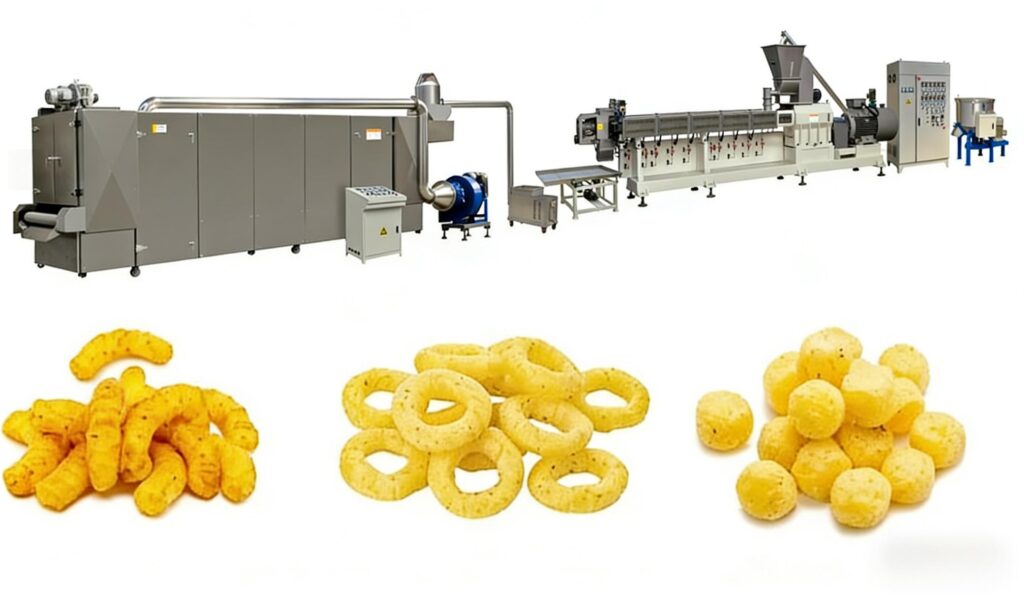
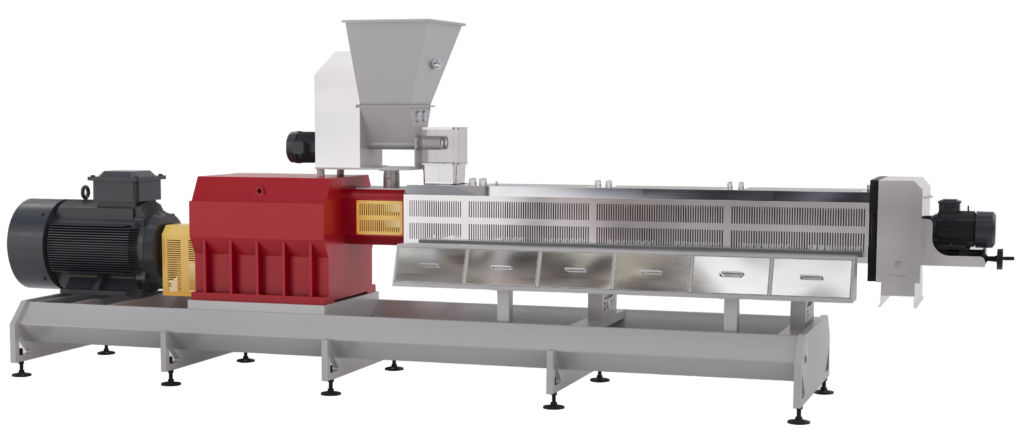
Extrusion cooking—the dominant industrial method for producing puffed snacks—is a high-temperature, short-time process that gelatinizes starch and expands the melt through pressure release. This physical transformation has measurable nutritional consequences.
A 2023 study on multigrain puffs incorporating sorghum, millet, and beans found that extrusion caused significant increases in fat content (from 2.22% to 2.61% in one blend) while decreasing protein content (from 14.44% to 13.34% in the same blend) . The fat increase likely results from cell wall disruption releasing bound lipids, while protein loss may stem from Maillard reactions or thermal degradation.
Mineral changes were mixed: iron, zinc, and sodium increased significantly after extrusion, while calcium decreased, and magnesium and phosphorus showed no change . The sodium increase is unsurprising given that many formulations include salt, but the differential effects on other minerals suggest that extrusion alters mineral bioavailability in complex ways.
The Anti-Nutrient Story
One of the most nutritionally significant effects of extrusion is its impact on anti-nutrients—compounds that interfere with nutrient absorption. A study on corn starch snacks fortified with common bean flour found that phytic acid and trypsin inhibitor levels were reduced by nearly 50% and 100%, respectively, after extrusion . These reductions indicate that extrusion can improve the bioavailability of minerals and proteins that would otherwise be bound or blocked.
A separate study on multigrain puffs reported similar findings: tannins decreased from 6.82% to 6.01% in one blend, while phytates dropped from 2.82% to 2.43% . In some formulations, phytate reduction reached over 87%. These anti-nutrient reductions represent a genuine nutritional improvement, particularly for snacks incorporating legumes or whole grains.
Fortification: Enhancing the Base
Given that plain cereal puffs offer limited protein and fiber, manufacturers increasingly fortify them with legume flours, protein isolates, or fiber-rich ingredients. Adding 30% bean flour to corn starch snacks increased crude protein 12-fold while also raising total phenols and antioxidant activity . However, these nutritional gains came with textural trade-offs: the fortified extrudates were denser, less expanded, and harder than pure corn starch puffs.
Rice crackers fortified with soy protein isolate showed that protein addition can regulate melt viscoelasticity, improving expansion and crispness while simultaneously boosting nutritional value . This dual benefit—better texture through protein-starch interactions—suggests that fortification need not compromise snack quality.
Beyond Macronutrients: Vitamins and Phytochemicals
Puffed snacks retain varying levels of vitamins depending on processing conditions. Corn puffs without added salt provide modest amounts of B vitamins, including niacin (2.7 mg/100 g), riboflavin (0.06 mg), and thiamine (0.07 mg) . Folate is present at 15 µg/100 g. Vitamin C is absent—not surprising given its heat sensitivity.
Fortification with bean flours introduces polyphenols and antioxidant capacity. Red bean-fortified corn snacks showed higher phenol levels and both DPPH and ORAC antioxidant activities compared to navy bean versions . While extrusion reduced these antioxidant measures by 10–70% depending on the specific compound, the finished snacks still delivered more phytochemicals than unfortified corn puffs.
The Sodium and Additive Reality
A nutritional exploration of puffed snacks would be incomplete without addressing sodium and additives. Cheese-flavored puffs can contain over 2,300 mg sodium per 100 g —more than the daily recommended limit in a single serving. Even “healthier” non-fried versions often rely on salt, sweeteners, and flavor enhancers to compensate for the blandness of the base material. Some non-fried puffed snacks contain fat levels exceeding 15–30%, challenging the assumption that “non-fried” automatically means low-calorie .
The Chinese Nutrition Society notes that while puffed snacks are not inherently “junk food,” their nutritional incompleteness and frequent high oil and salt content warrant moderation, particularly for children and adolescents .
Emerging Concerns: Arsenic Speciation
Recent research has raised a novel concern specific to rice-based puffed snacks. High-temperature puffing of rice can transform dimethylarsenate (DMA)—a relatively less toxic arsenic species—into dimethylmonothioarsenate (DMMTA), a highly cytotoxic compound . Analysis of commercial puffed rice cakes found DMMTA and related thioarsenates at levels up to 537 µg/kg in generic products and 241 µg/kg in infant-labeled products. Because DMMTA is misidentified as non-regulated DMA by routine testing methods, these compounds may evade current safety thresholds. This finding underscores that the nutritional and toxicological profile of puffed snacks continues to evolve as analytical science advances.
Заключение
Puffed snacks occupy a nuanced nutritional space. Their base ingredients—cereals, tubers, legumes—carry inherent nutritional value, and the extrusion process can reduce anti-nutrients while preserving much of the macronutrient content. Fortification with legumes or protein isolates can substantially enhance protein, fiber, and antioxidant levels. However, the finished products are often defined by what manufacturers add: oil, salt, sugar, and coatings that can transform a modest 379-kcal corn puff into a 1,269-kcal indulgence.

For consumers, the practical implication is straightforward: the nutritional quality of a puffed snack depends less on whether it is “puffed” and more on its ingredient list and nutrition facts panel. The base material matters, the processing matters, but the formulation—what gets added and in what quantities—ultimately determines whether a puffed snack contributes meaningfully to nutrition or simply delivers empty calories.
 Russian
  English
  Spanish
  Italian
  Arabic
  Portuguese
  German
  French
  Japanese
  Moroccan Arabic
  Persian
  Belarusian