
Introduction
The pet food industry has experienced remarkable growth over the past decade, driven by increasing pet ownership and a growing willingness among consumers to invest in premium nutrition for their animals. For entrepreneurs and established manufacturers alike, entering or expanding in this market requires a critical decision: selecting the right processing equipment. The choice is not merely about buying a machine—it determines production capacity, product quality, operational costs, and ultimately, the viability of the business.
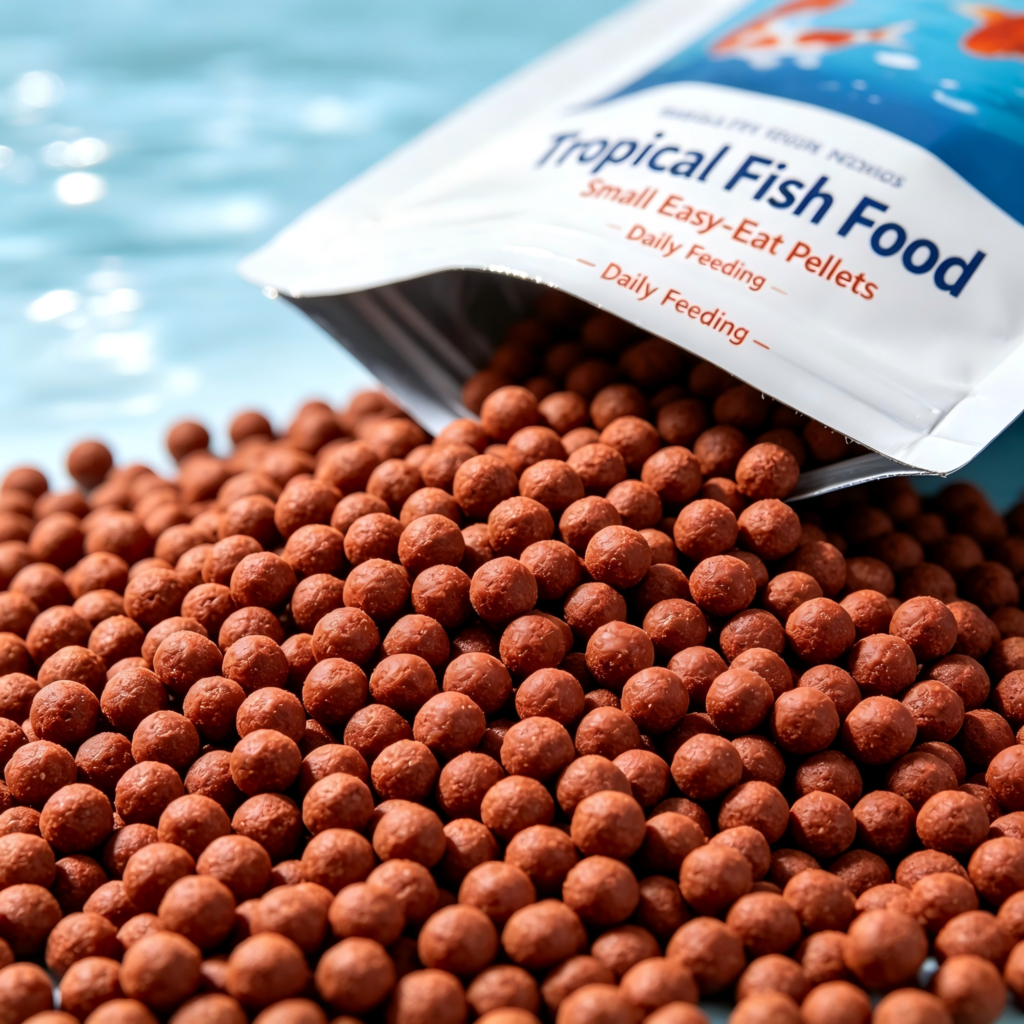
Pet food equipment encompasses a range of machinery designed for grinding, mixing, extrusion, drying, coating, and packaging. The specific configuration depends on the type of product being manufactured—dry kibble, wet food, treats, or specialized formulations—and the scale of production. This article provides a structured framework for evaluating equipment options, focusing on the key variables that should guide the selection process.
Define Your Production Scale First
The single most important determinant of equipment selection is production volume. The machinery that suits a home-based operation producing fifty kilograms per month is fundamentally different from what a commercial facility producing five hundred kilograms per hour requires.
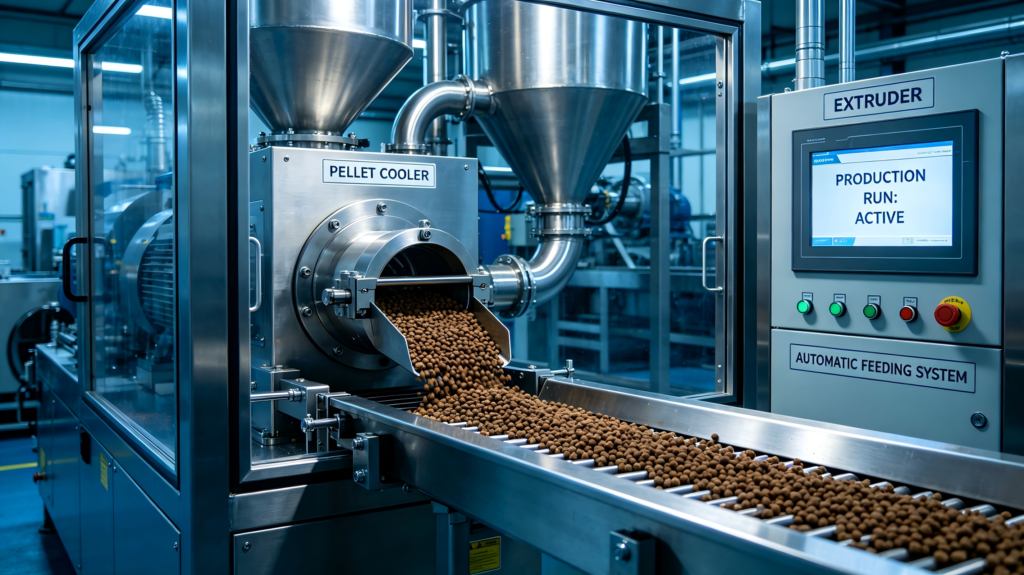
For small-scale production (monthly output of 50–500 kg), single-screw extruders are typically sufficient. These machines are compact, relatively inexpensive (ranging from approximately $1,500 to $5,000 for basic models), and simple to operate. They are well-suited for family workshops, small pet shops producing their own branded dry food, or startups testing the market. A small dry extruder occupying two to three square meters can produce 100–150 kg per hour using straightforward formulations based on corn flour and chicken meal.
For medium-scale production (monthly output of 5–50 tons), the choice becomes more nuanced. Twin-screw extruders offer superior mixing capability and can handle complex formulations with higher meat content (over 40%), producing more uniform nutritional profiles. A medium-sized twin-screw extruder can achieve 500–2,000 kg per hour and is compatible with a wider range of products, including hypoallergenic and prescription diets. While approximately 50% more expensive than single-screw alternatives, the enhanced product quality and flexibility often justify the investment for operations targeting premium market segments.
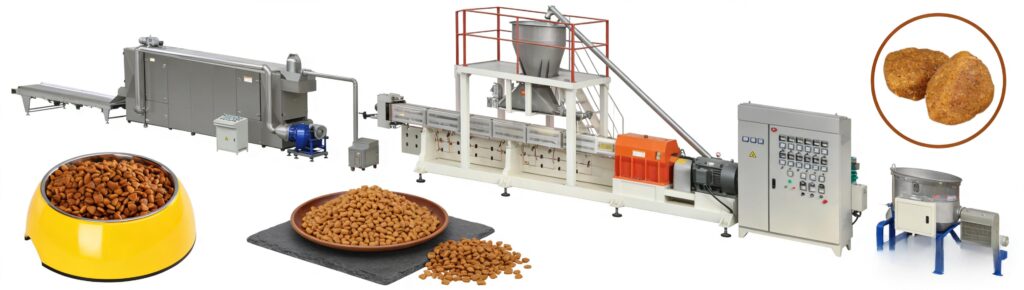
For large-scale industrial production (monthly output exceeding 50 tons), wet extruders with integrated steam systems and high-capacity drying lines become necessary. These systems offer superior stability and energy efficiency during continuous operation, with steam heating ensuring more uniform processing and reducing equipment failure rates compared to dry extrusion. A large production line at 1,500–3,500 kg per hour represents an equipment investment of $300,000 to $800,000 or more.
Match Equipment to Raw Material Characteristics
The composition of the intended formulations directly influences equipment requirements. High-protein recipes with substantial meat or bone meal content (over 40%) demand wear-resistant alloy screws, which have a lifespan three to five times longer than standard screws. Twin-screw extruders are particularly advantageous for such formulations because their intermeshing screws provide stronger mixing and can process 20–40% animal viscera or bone paste directly.
Moisture content in raw materials is another consideration. If ingredient moisture fluctuates significantly, equipment with moisture-adaptive capabilities or an integrated drying system may be necessary to maintain consistent processing conditions. For extrusion, raw material moisture typically needs to be controlled within the 10–20% range.
The starch source also matters. While corn and wheat are conventional choices, alternative starches such as tapioca and cassava can be used with appropriate equipment adjustments. Understanding the gelatinization characteristics of the selected starch is essential for achieving proper expansion and texture in the final product.

Evaluate Dry vs. Wet Extrusion Technology
The choice between dry and wet extrusion is one of the most consequential technical decisions. Dry extruders rely solely on mechanical friction to generate heat, while wet extruders inject steam and water into the preconditioner to facilitate cooking.
Dry extruders are simpler, require less auxiliary equipment, and have lower capital costs. They are appropriate for basic dry pet food and are particularly favored in humid regions where raw material moisture absorption is a concern, as the friction-based heating can tolerate some moisture variability. However, dry extrusion offers limited control over product density and texture, and it struggles with high-moisture or high-fat formulations.
Wet extruders provide superior control over processing conditions. Steam conditioning allows thorough protein denaturation, improving palatability and digestibility. The ability to precisely manage temperature, moisture, and retention time in the preconditioner enables the production of premium products—grain-free, high-protein, and functional formulations—that command higher market prices. The trade-off is higher equipment cost (the steam generator and dryer alone may exceed $7,000) and greater utility requirements.
Consider the Complete Production Line
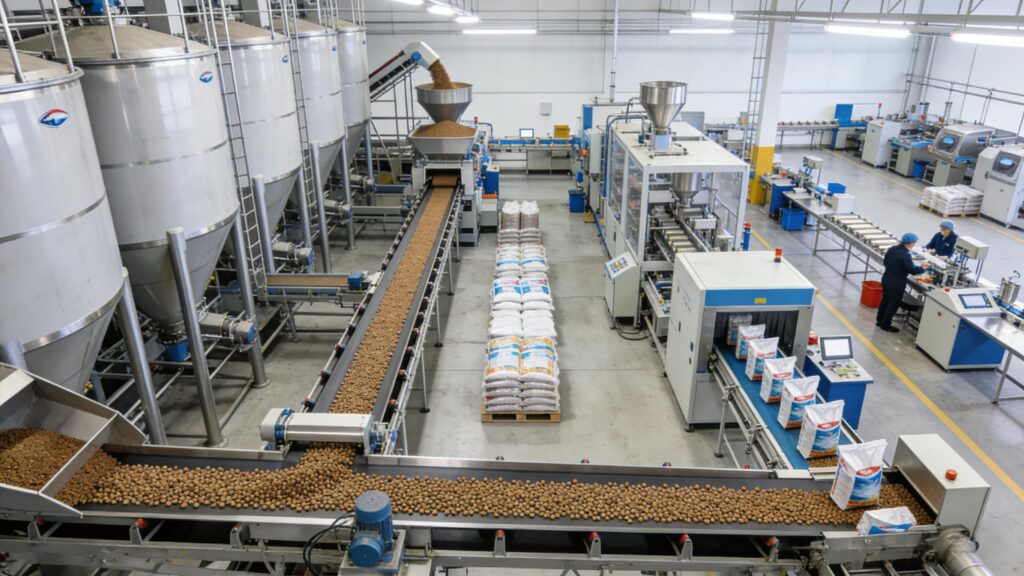
Pet food manufacturing is not a single-machine operation. A functional production line typically includes several interdependent components:
Grinding equipment (hammer mills or pulverizers) reduces raw materials to the required particle size. For pet food, a finer grind generally improves mixing uniformity and pellet formation, though excessive grinding increases energy consumption without proportionate benefit.
Mixers ensure uniform distribution of ingredients, which is critical for nutritional consistency. The coefficient of variation (CV%) is the standard metric for mixing uniformity, with lower values indicating better performance.
Extruders are the core processing unit, responsible for cooking, shaping, and expanding the product.
Dryers reduce moisture content to the target level (typically below 10–12%) for shelf stability. The dryer must be sized to match the extruder’s sustained output, not its peak rate.
Coating equipment (vacuum coaters or drum coaters) applies fats, oils, and flavorings to the pellet surface. Vacuum coating is preferred for higher fat inclusion rates and more uniform distribution.
Packaging machinery must be selected based on bag format, weight range, and throughput. For dry kibble, multihead weighers paired with vertical form-fill-seal machines offer the best combination of speed and accuracy for small to medium bag sizes.
Assess Utilities, Space, and Infrastructure
Equipment does not operate in isolation. Before committing to a purchase, verify that the facility can support the utility loads. Steam demand (measured in kilograms per hour) feeds preconditioners and dryers. Compressed air drives pneumatics and conveying systems. Water and wastewater loads depend on cleaning and cooking operations. Air handling and odor control—easily overlooked—are particularly important for wet and meat-heavy production and can be expensive to retrofit.
Space requirements scale with capacity. As a rough guide, a pilot line at 100–200 kg/h fits within 200–300 square meters, while an industrial line at 4,000 kg/h or more requires 3,000 square meters or more. Each machine should be sized with a 10–20% buffer above expected throughput to accommodate formulation variations and future growth.
Prioritize Sanitary Design and Compliance
For any pet food operation, hygiene and regulatory compliance are non-negotiable. Equipment selection should prioritize sanitary design features that facilitate cleaning and prevent cross-contamination.
Product-contact surfaces should be constructed from 304 stainless steel as standard, with 316L preferred where chlorides or salt are present. Clean-in-place (CIP) capability allows cleaning without full disassembly, reducing downtime and contamination risk.
Hygienic zoning separates raw material handling from finished product areas, with unidirectional flow to prevent clean product from crossing into contaminated zones.
Regulatory compliance depends on the target market. In the United States, FSMA preventive controls and HACCP principles apply, with extrusion serving as a critical control point. For European export, CE marking under the Machinery Directive and compliance with ISO 22000 are baseline requirements. Nutritional and labeling standards are set by AAFCO (US) and FEDIAF (Europe). Specifying these requirements at the time of purchase is far less expensive than retrofitting later.
Look Beyond Purchase Price: Total Cost of Ownership
The sticker price of equipment is only the beginning of the cost equation. Total cost of ownership includes operating costs, maintenance, spare parts, and downtime.
Operating costs are dominated by raw materials (50–65% of total), followed by energy (15–25%), labor (10–20%), and maintenance (3–5%). Energy efficiency is the lever most directly influenced by equipment selection. Dryer choice, in particular, has a significant impact on energy consumption per ton of product.
Spare parts availability is a frequently overlooked factor. Equipment from manufacturers with limited distribution networks may become idle for weeks awaiting replacement screws, dies, or bearings. Prioritize suppliers who maintain local parts inventories or can guarantee rapid delivery.
After-sales support matters enormously for processors new to the industry. Manufacturers offering on-site installation, commissioning, operator training, and responsive technical support reduce the risk of costly production interruptions. Warranties of at least one year are standard among reputable suppliers.
For those evaluating Chinese versus European equipment, Chinese manufacturers typically offer CE-certified machinery at 40–60% of European pricing, with a gap of 50–67% on twin-screw extruders, while maintaining comparable quality for many applications. This cost advantage can be decisive for startups and small-to-medium enterprises.
Conclusion
Selecting pet food equipment is a strategic decision that requires balancing production scale, product ambition, technical capability, and financial resources. The process begins with a clear definition of target output and product type, followed by matching extruder technology to formulation requirements, sizing the complete line for consistent throughput, and verifying that the facility can support the necessary utilities. Sanitary design and regulatory compliance should be specified from the outset, not treated as afterthoughts. Finally, the evaluation should consider the full lifecycle cost—not merely the purchase price—including energy, maintenance, spare parts, and after-sales support. By approaching the decision systematically, processors can acquire equipment that not only meets today’s production needs but provides a foundation for future growth.
 Portuguese
  English
  Russian
  Spanish
  Italian
  Arabic
  German
  French
  Japanese
  Moroccan Arabic
  Persian
  Belarusian