
Breadcrumbs appear simple—ground toast or cracker meal—but the manufacturing route determines whether a crumb ends up sandy and fine, light and flaky, or dense and sturdy. Commercial production relies on three broadly distinct approaches: conventional thermal baking followed by grinding, electrical-resistance baking for Japanese panko, and continuous extrusion or rapid non-fermented processes. Each method produces a crumb with different structure, moisture behavior, and culinary performance.

The Conventional Baked Route: American and Cracker Crumbs
The most established industrial method begins with a yeast-leavened dough that is sheeted and baked much like bread. For American-style breadcrumbs, dough is mixed, extruded into a sheet roughly 25 mm thick, docked to prevent blistering, and passed through a convection oven at around 400°F for approximately 20 minutes . The baked sheet is then ground while still hot, dried in a fluidized bed, and packaged. Cracker meal follows a similar logic but uses a thinner sheet, a much shorter, hotter bake—roughly four minutes at 500°F—and a finer grind . The resulting crumbs are dense, uniform, and absorb moisture readily, making them suited to binding meatloaves or adding a compact crust to fried foods. A variation patented in the early 1980s achieves a similar crumb without fermentation, using chemical leavening and a fast continuous bake of four to six minutes at 500–750°F, followed by grinding and drying to 4–12% moisture . The shortcut sacrifices some fermented flavor but reduces processing time dramatically.

Electrical Baking and the Making of Panko
Japanese panko depends on a fundamentally different baking principle. Instead of convection heat, dough is passed between steel plates and subjected to an electrical current. The resistance of the dough generates heat internally, effectively steaming the bread from the inside out . Because the dough contains less salt to prevent short-circuiting, and because no dry oven air surrounds it, the loaf forms no crust . The result is a pale, dense, crustless bread that, when ground, yields elongated, flaky shards rather than the irregular granules of conventionally baked crumbs.
The structural consequences are significant. Panko’s open, airy flakes stay crisp longer under a fried coating and resist becoming greasy, which is why tonkatsu restaurants favor it . The density of electrically baked bread also means the crumb is firmer and more durable than thermally baked panko, an advantage for takeout foods that must hold their texture during transport . Industrial patents describe a related approach using radio-frequency heating for continuous panko production, which allows deeper and more even penetration than microwaves and avoids crust formation while maintaining high throughput . Some manufacturers also produce panko from recycled bread crusts, a lower-cost route that yields a darker, more flavorful crumb popular with butcher shops and delicatessens .

Fresh, Dried, and the Question of Scale
At the opposite end of the technological spectrum sits the domestic and small-scale method: grinding stale or lightly toasted bread in a food processor. Fresh crumbs, made from crustless bread pulsed briefly, are soft and perishable; they brown quickly and are best used in dishes where the coating is protected by moisture or butter . Dried crumbs require a low oven—around 150°C—to drive off moisture before grinding, which extends shelf life to weeks or months . These distinctions matter because fresh and dried crumbs are not interchangeable: fresh crumbs will steam and soften under a casserole topping, while dried crumbs will crisp and brown. Neither, however, replicates panko’s shard-like flake, which depends on the crustless, electrically baked loaf.
Choosing a Method, Choosing a Texture
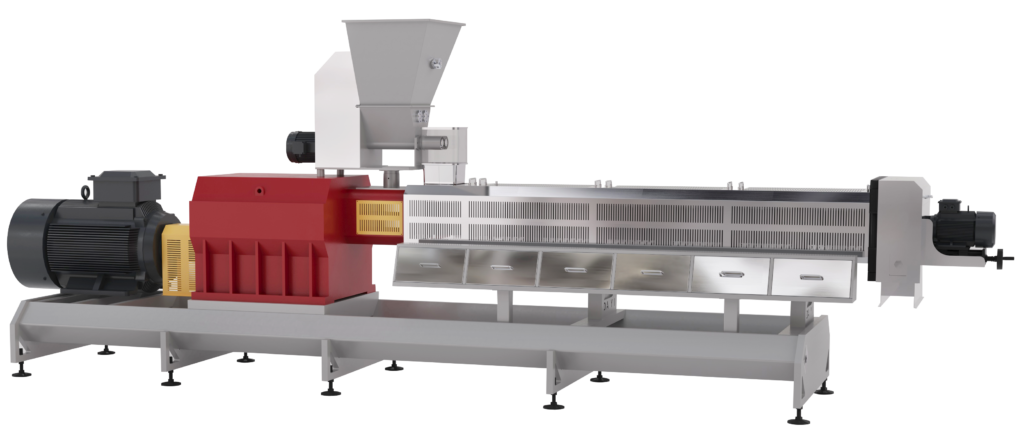
The processing method ultimately dictates where a crumb belongs. Conventionally baked American crumbs excel at binding and fine coating. Rapid non-fermented processes offer efficiency for high-volume, low-cost production. Electrical baking produces the distinctive light, flaky panko that stays crisp and resists oil absorption. Fresh and dried crumbs made at home or in small bakeries serve immediate, low-volume needs. None is superior in absolute terms; each is a solution to a particular texture problem, and the manufacturing route is the clearest predictor of how the crumb will behave in the pan, the fryer, or the oven.
 Portuguese
 English
 Russian
 Spanish
 Italian
 Arabic
 German
 French
 Japanese
 Moroccan Arabic
 Persian
 Belarusian