
Extruded Snacks: A Brief Introduction
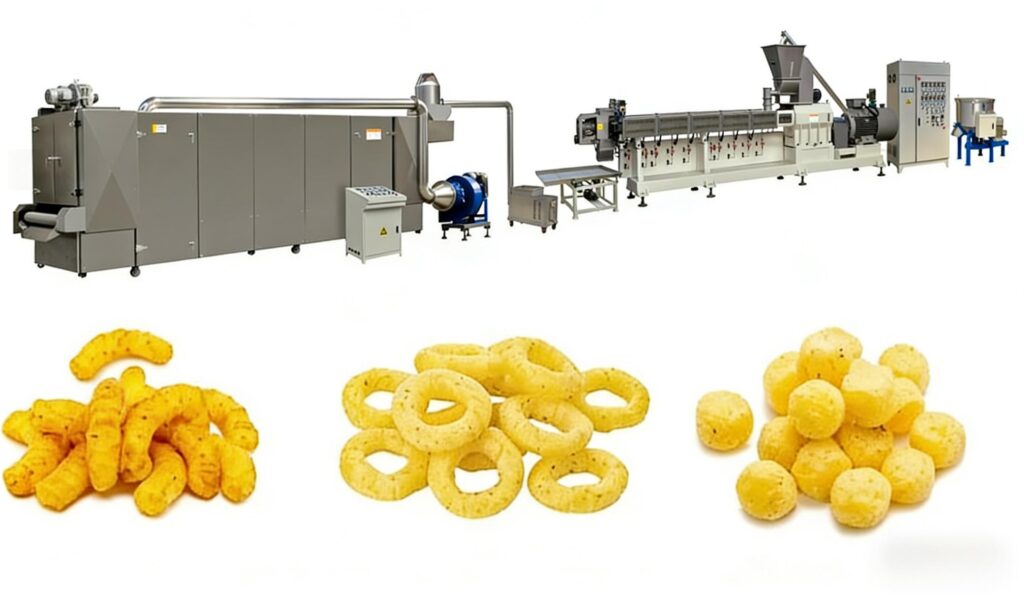
Extruded snacks are a popular category of ready-to-eat food products created through a process called extrusion cooking. puffed snack food machine This technology transforms raw ingredients—typically cereals, starches, or protein-rich flours—into expanded, crispy, and often intricately shaped snack foods. Common examples include cheese puffs, corn curls, onion rings, and popular branded snacks like Kurkure and Cheetos.
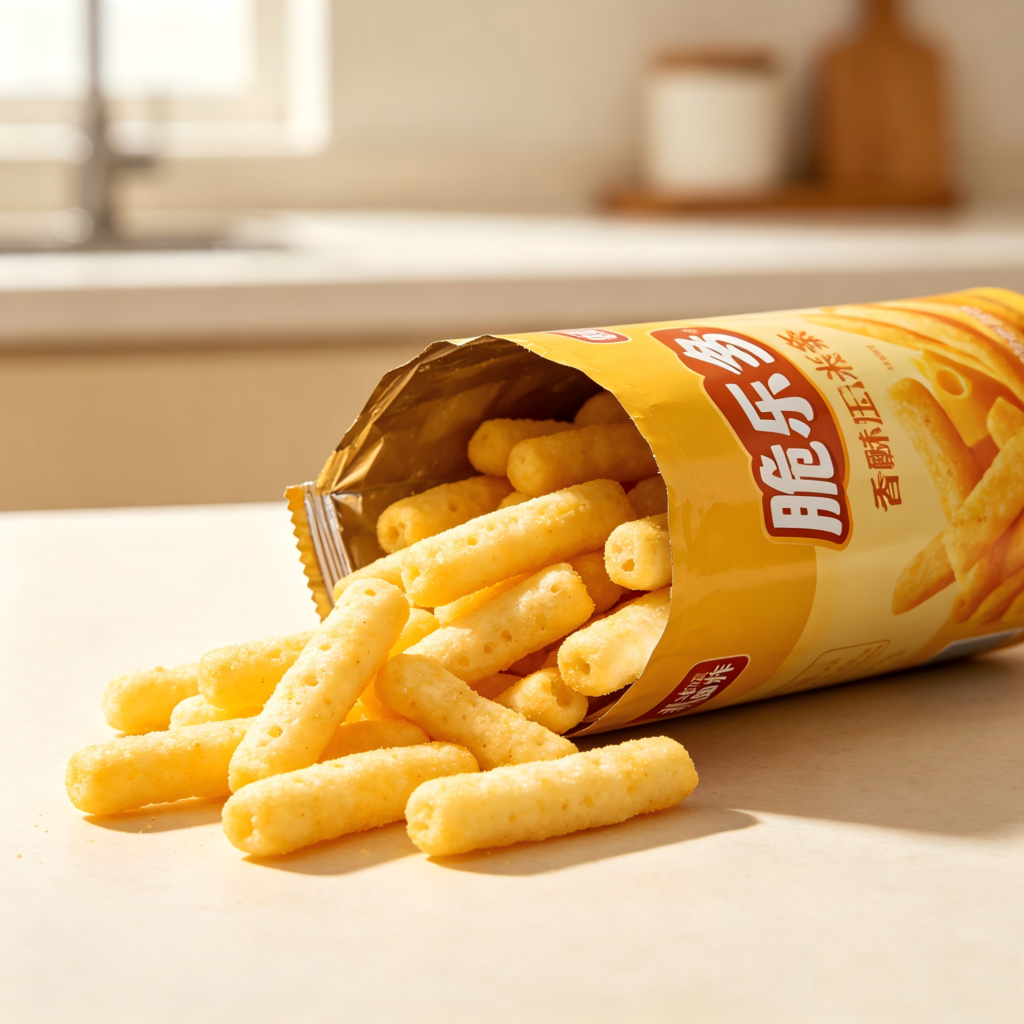
The extrusion process involves mixing raw materials with water and other ingredients to form a dough, which is then cooked under high temperature and pressure inside a machine called an extruder. As the cooked dough is forced through a die (a specially shaped opening at the end of the machine), it emerges into normal atmospheric pressure. The sudden pressure drop causes the superheated moisture inside the dough to flash into steam, creating the characteristic light, airy, and crispy expansion. The emerging continuous “rope” of snack is then cut to the desired length by rotating blades, yielding pieces of uniform size and shape.
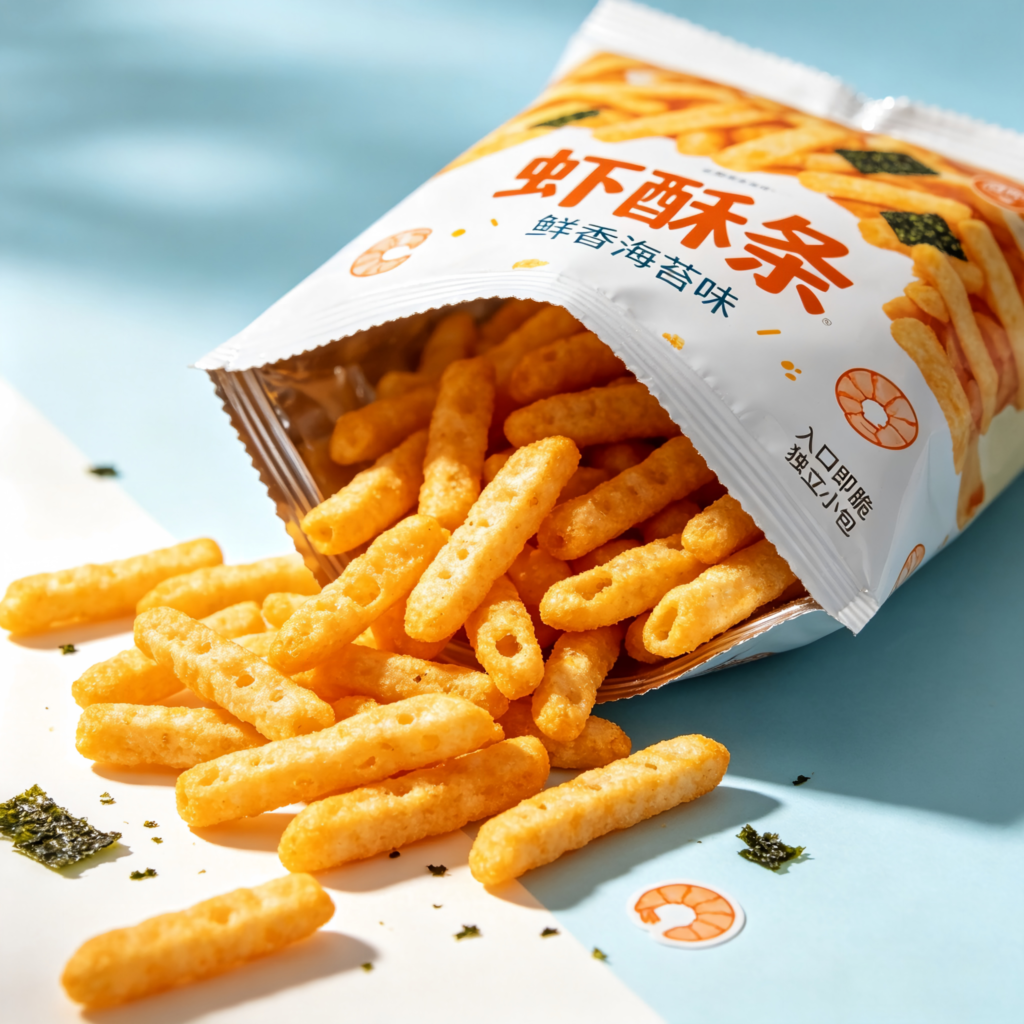
Extruded snacks are known for their versatility. puffed snack food machine Manufacturers can create virtually any shape, size, color, and texture by adjusting the extrusion parameters—such as moisture content, barrel temperature, and screw speed—or by changing the die design. Additionally, a wide range of flavors can be applied after the cooking stage, often via a seasoning drum that coats the snacks with oils, spice blends, cheese powders, or other flavoring agents.
In terms of nutrition, extruded snacks are generally high in carbohydrates and moderate in fat (especially if fried or oil-coated) and sodium, while being relatively low in protein and dietary fiber. However, the industry has responded to shifting consumer preferences by developing healthier variations: baked instead of fried, fortified with vitamins and minerals, or made with whole grains, legumes, and alternative flours to improve nutritional profiles.
From a consumer standpoint, extruded snacks are valued for their convenience, affordability, long shelf life, and satisfying crunch. puffed snack food making machineThey are a staple of modern snacking culture, enjoyed by people of all ages worldwide. Their popularity continues to grow, driven by ongoing innovations in flavor, texture, and healthier formulations that cater to diverse tastes and dietary needs.
The Composition of an Extruded Snack Production Line
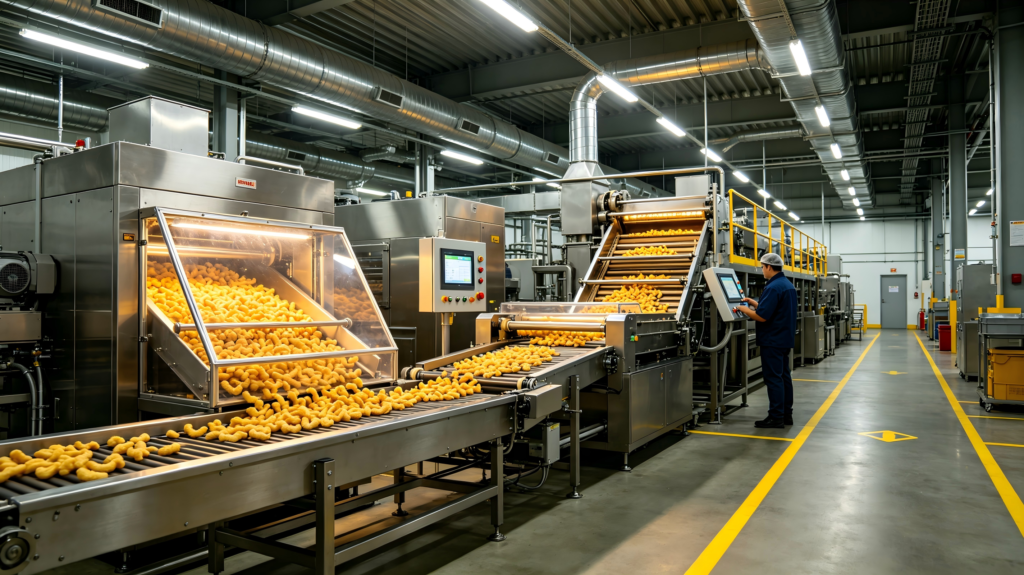
An extruded snack production line is a sophisticated, integrated system of machinery designed to transform raw ingredients into finished, ready-to-package snack products. From the initial mixing of flours to the final packaging of crispy curls and puffs, each piece of equipment plays a specific and essential role. The entire line can be broadly divided into several key stages: raw material preparation, extrusion, drying or frying, flavoring, and packaging. Below is a detailed breakdown of the typical components that make up a complete production line.
1. Raw Material Handling and Preparation Section
This is the starting point of the production line, where dry ingredients are received, stored, and prepared for processing.
- Storage Silos and Hoppers: Large storage containers hold bulk raw materials such as corn grits, rice flour, wheat flour, and other starches. These are often equipped with level sensors to ensure a continuous supply.
- Sifters / Screens: These machines remove impurities, foreign matter, and oversized particles from the dry ingredients, protecting downstream equipment from damage and ensuring product purity.
- Weighing and Dosing Systems: Automated scales and feeders accurately measure and dispense precise amounts of each ingredient according to the recipe. This ensures batch-to-batch consistency.
- Mixing and Pre-conditioning Units: Dry ingredients are fed into a mixer where they are blended with water and other liquid ingredients (such as colorants or emulsifiers). A pre-conditioner may also be used to apply steam and water, initiating the hydration process and pre-cooking the mixture before it enters the extruder.
2. Extrusion Section
The heart of the production line, this section cooks and shapes the dough into its final expanded form.
- Extrusora: This is the core machine. It typically consists of a barrel housing one or two rotating screws (single-screw or twin-screw extruders). The screw(s) convey, compress, and knead the dough while applying heat (through electrical heating elements or mechanical friction). The combination of high temperature, high pressure, and shear forces cooks the starches and proteins. At the end of the barrel, the cooked dough is forced through a die, where the sudden pressure drop causes the moisture to flash into steam, puffing the product into its expanded shape.
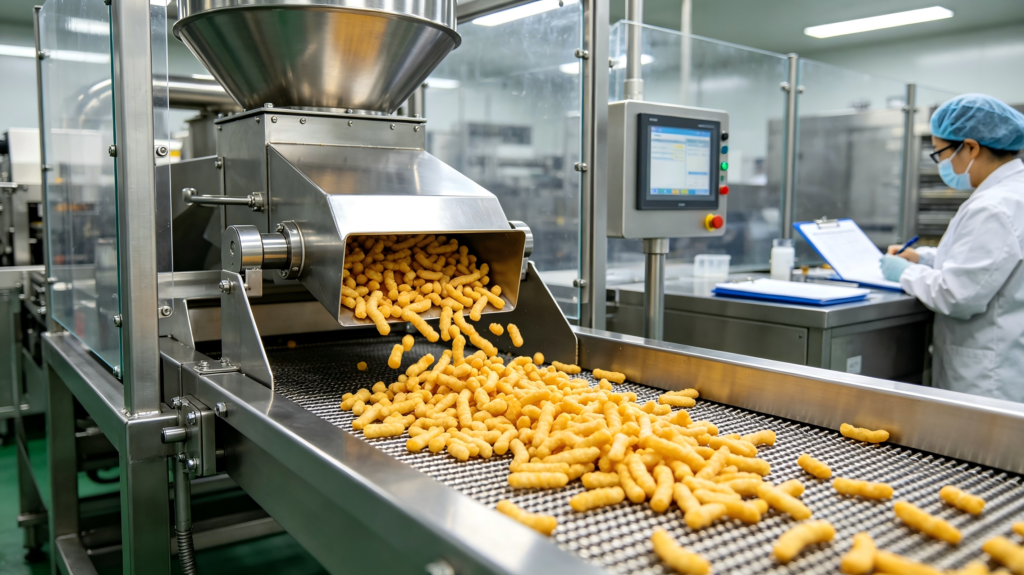
- Die and Cutter Assembly: The die determines the cross-sectional shape of the snack (round, star-shaped, or in the case of Kurkure, an irregular curl). Immediately after extrusion, a high-speed rotating cutter blade slices the emerging “rope” of puffed dough into individual pieces of the desired length.
- Blower or Cooling Conveyor: After cutting, the hot, moist snacks are conveyed away from the extruder. A blower or cooling conveyor uses ambient air to reduce the temperature and moisture content of the pieces slightly, stabilizing their structure before the next stage.
3. Drying or Frying Section
This section removes residual moisture and develops the final crispy texture and color of the snack.
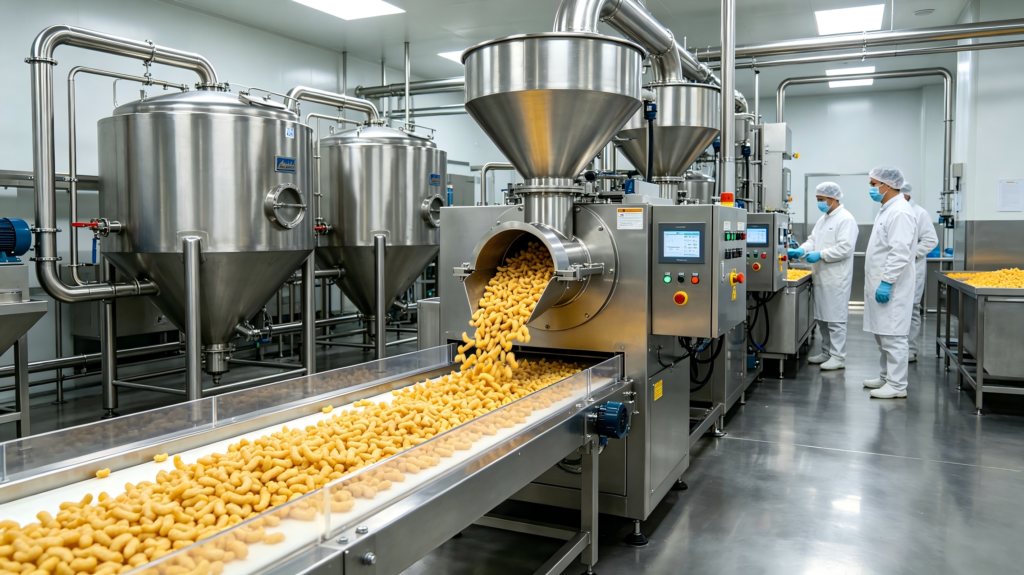
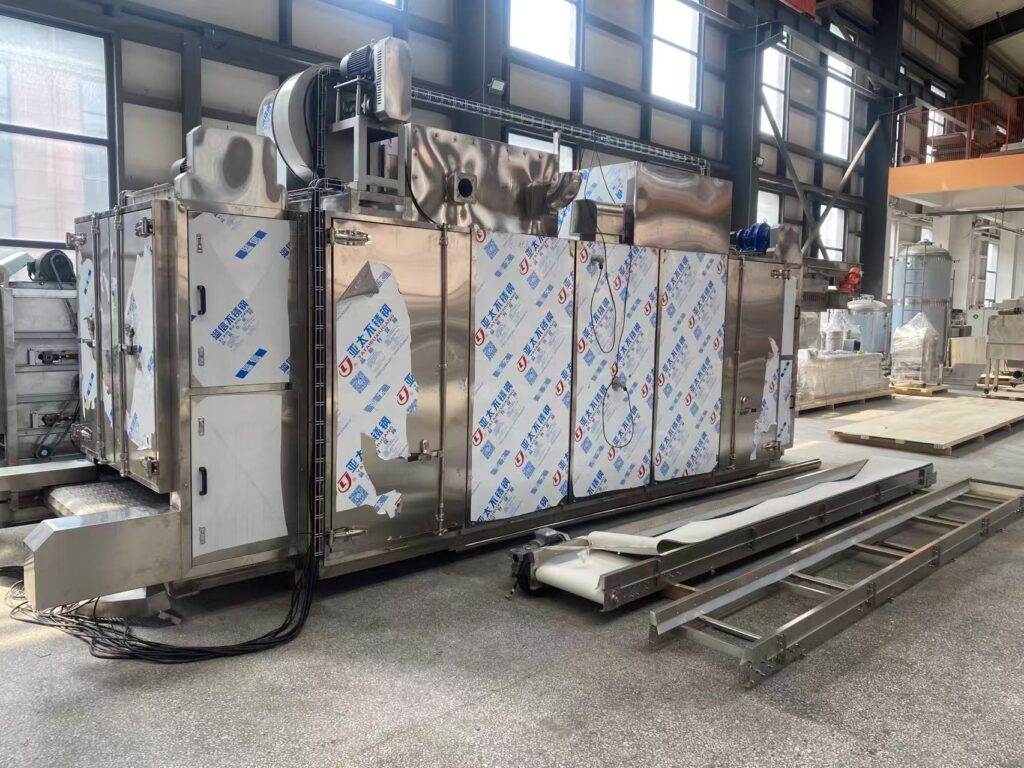
- Continuous Dryer (for baked or low-oil products): A multi-tier belt dryer uses controlled hot air (typically 80–120°C) to slowly remove moisture from the extruded pieces over a period of several minutes. This produces a dry, crispy product with lower oil content.
- Continuous Fryer (for fried products): The snacks are immersed in a bath of hot oil (typically 170–190°C) as they travel through the fryer on a conveyor. The high temperature quickly drives off moisture and creates a characteristic crispy texture and golden color. An oil filtration system continuously removes debris and extends the life of the frying oil.
- Dewatering / De-oiling Conveyor: After frying, the snacks are passed over a vibrating screen or a de-oiling conveyor to drain excess oil from the surface. This reduces oil absorption and improves the final texture.
4. Flavoring and Coating Section
In this section, the plain snack base receives its distinctive taste and appearance.
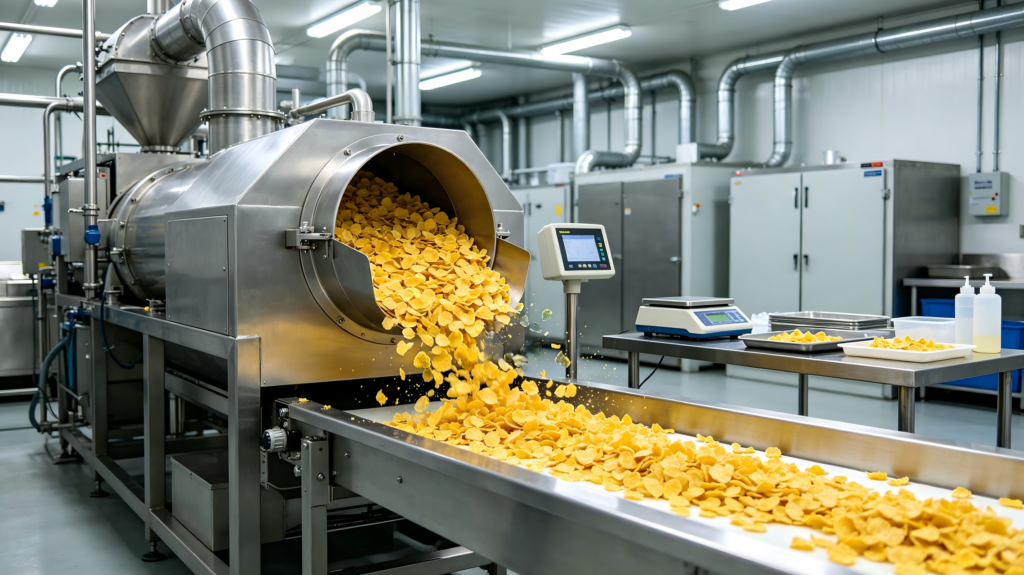
- Flavoring Drum / Coating Machine: This is typically a rotating, inclined drum. The plain snacks are fed into the drum, where they are tumbled as spray nozzles apply a precise amount of oil or slurry. This liquid coating helps the dry seasonings adhere to the surface.
- Seasoning Applicator: Flavoring powders (such as cheese, barbecue, chili, or masala blends) are added to the drum via a screw feeder or vibration feeder. The tumbling action ensures that the powder is evenly distributed and coats every piece uniformly.
- Polishing Conveyor: After coating, the snacks may pass through a gently vibrating conveyor or a polishing drum to remove excess seasoning and ensure a uniform, clean appearance.
5. Cooling Section
Before packaging, the coated snacks must be cooled to ambient temperature.
- Cooling Conveyor: A long, open conveyor with fans or blowers circulates ambient air around the snacks. This cools them down, prevents moisture condensation inside the packaging, and ensures that the seasoning is set firmly on the surface. Proper cooling is critical for maintaining crispness and extending shelf life.
6. Packaging Section
The final stage of the production line seals the finished snacks in consumer-ready packages.
- Weighing and Filling Systems: Multi-head weighers precisely measure the exact weight of snacks for each package (e.g., 20g, 50g, 100g) and drop them into the packaging machine.
- Vertical Form-Fill-Seal (VFFS) Machine: This is the most common packaging system. It takes a flat roll of flexible packaging film, forms it into a tube, seals the bottom, fills the tube with the measured snacks, and then seals the top to create a finished pillow-shaped bag. Many systems include an inert gas (often nitrogen) flushing feature to replace oxygen inside the bag, which helps preserve freshness and crispness.
- Checkweigher and Metal Detector: After packaging, each bag passes through a checkweigher to verify that the weight is within acceptable limits. A metal detector ensures that no metallic contaminants are present in the final product.
- Case Packer and Palletizer: The individual bags are then collated, packed into larger cartons or cases, and finally stacked onto pallets for storage and distribution.
7. Ancillary and Support Systems
In addition to the main processing equipment, the entire production line relies on several support systems:
- Control Panel / PLC System: A centralized computer system monitors and controls all the parameters (temperature, pressure, speed, etc.) across the entire line, allowing operators to maintain consistency and make real-time adjustments.
- Steam Boiler: Supplies steam for pre-conditioning and other heating needs.
- Oil Heating System: Provides and maintains the precise temperature required for frying.
- Air Compressor: Supplies compressed air for pneumatic controls and cleaning.
Conclusion
A modern extruded snack production line is a seamless integration of mechanical, thermal, and control technologies. Starting with simple grains and starches, each section—from ingredient preparation, through extrusion and drying, to flavoring and packaging—adds value and transforms the raw materials into the crispy, flavorful, and shelf-stable snacks that consumers enjoy. The effectiveness of the line depends not only on the quality of each individual machine but also on the precise synchronization of all components working together as one cohesive system.
Common Problems in Extruded Snack Production Lines
Despite advances in automation and process control, extruded snack production lines are complex systems that can encounter a wide range of operational issues. These problems can affect product quality, production efficiency, equipment longevity, and ultimately, profitability. Understanding these common issues and their root causes is essential for manufacturers to maintain consistent output and minimize downtime. Below is a comprehensive overview of the most frequently encountered problems across different stages of the production line.
1. Raw Material and Mixing Stage Problems
Inconsistent Ingredient Quality
Variations in raw material properties—such as moisture content, particle size, or starch composition—can have a cascading effect on the entire process. For example, corn grits with higher than expected moisture may require adjustment of water addition during mixing, while inconsistent particle size can lead to uneven cooking and expansion during extrusion.
Poor Mixing and Non-Uniform Hydration
If dry ingredients are not thoroughly blended with water, the dough may develop “wet spots” and “dry spots.” This leads to:
- Inconsistent expansion during extrusion
- Product breakage or weak structure
- Fluctuations in extruder motor load and die pressure
- Equipment blockages
Incorrect Moisture Content
The feed moisture is critical. Too much water results in a sticky, dense dough that produces under-expanded, heavy snacks. Too little water causes excessive friction in the extruder, leading to overheating, burnt spots, and equipment wear.
2. Extrusion Stage Problems
Surging and Unstable Extrusion Flow
Surging refers to irregular, pulsating flow of dough from the extruder die. This causes wide variations in piece weight, size, and density. Causes include:
- Inconsistent feed rate
- Fluctuating moisture content
- Worn or improperly designed screws
- Temperature fluctuations within the barrel
Poor Expansion (Dense or Shrunken Products)
When snacks do not puff properly, the result is a hard, dense, or shriveled product. This is often attributed to:
- Insufficient barrel temperature (starch not fully gelatinized)
- Excessive moisture in the dough
- Incorrect screw speed causing low shear
- Inappropriate die design or blockage
Burned or Discolored Products
Dark, scorched spots or an overall burnt appearance can be caused by:
- Excessive barrel temperature
- Prolonged residence time in the extruder
- Accumulation of stuck material on screw or barrel surfaces
- Insufficient cooling sections
Die Blockages and Flow Interruptions
The die can become partially or completely blocked due to:
- Foreign particles in the dough
- Incomplete hydration causing dry lumps
- High fat content ingredients sticking to die surfaces
- Inadequate cleaning between production runs
Uneven Cutting (Irregular Piece Lengths)
If the rotating cutter blade is not synchronized with the extrusion rate, or if the blade is dull, the resulting pieces will have inconsistent lengths. This affects packaging weight accuracy and product appearance.
3. Drying and Frying Stage Problems
Inconsistent Moisture Content After Drying
In a dryer, uneven air distribution, variable belt speeds, or fluctuating inlet temperatures can result in some snacks being under-dried (soggy) while others are over-dried (hard and brittle). This compromises the final texture and shelf life.
Oil Absorption Issues in Frying
Excessive oil absorption makes the product greasy, heavy, and prone to rancidity. This occurs when:
- Frying temperature is too low (slow moisture removal allows oil to penetrate)
- The snack base has low expansion density
- Frying time is too long
Oil Quality Deterioration
Frying oil degrades over time due to oxidation, hydrolysis, and thermal breakdown. Signs include darkening color, increased foam, off-flavors, and high free fatty acid (FFA) levels. Poor oil quality transfers undesirable tastes to the product and poses health concerns.
Non-Uniform Color and Texture
Hot spots in the fryer or uneven oil circulation can cause some pieces to fry faster than others, resulting in a mix of pale and dark pieces within the same batch.
4. Flavoring and Coating Stage Problems
Uneven Seasoning Distribution
If the seasoning powder is not uniformly applied, some snacks become overly salty or spicy while others are bland. Causes include:
- Inadequate tumbling action in the coating drum
- Incorrect oil-to-powder ratio (insufficient oil as a binder)
- Clumping of seasoning powders due to moisture
- Improper feed rates of snacks and seasoning
Seasoning Build-Up and Dusting
Excess powder accumulating on equipment surfaces and conveyor belts leads to:
- Waste of expensive ingredients
- Difficult cleanup and sanitation issues
- Potential cross-contamination between different flavors
Poor Adhesion
Seasonings may flake off easily if:
- The surface oil spray is insufficient
- The oil is not evenly distributed
- The snacks are too hot or too cold during coating
5. Cooling Stage Problems
Incomplete Cooling
If snacks are not adequately cooled before packaging, residual heat can cause moisture to condense inside the sealed bag. This results in a loss of crispness and promotes microbial growth, significantly shortening shelf life.

Breakage and Fragmentation
Overly aggressive cooling airflows or vibrations on the cooling conveyor can cause fragile snacks to crack or break, generating excessive fines and dust that end up in the packaging.
6. Packaging Stage Problems
Weight Inconsistencies
Multi-head weighers may produce underweight or overweight packages due to:
- Irregular piece sizes from previous stages
- Static electricity causing pieces to stick together or to the weigher
- Mechanical wear on weighing sensors
Seal Integrity Issues
Poor heat seals can lead to:
- Leakage and loss of nitrogen flushing (if used)
- Moisture and oxygen ingress
- Reduced shelf life and consumer complaints
Causes include incorrect sealing temperature, pressure, or dwell time, as well as contaminated seal areas.
Packaging Film Problems
Issues with the packaging film itself—such as wrinkles, poor print registration, or inadequate barrier properties—can result in cosmetic defects and compromised protection.
7. General and Cross-Stage Problems
Product Contamination
Contamination risks include:
- Metal debris: From equipment wear (screws, blades, bearings)
- Foreign materials: From raw ingredients or the production environment
- Microbial contamination: Due to poor sanitation or high moisture conditions
Excessive Fines and Breakage
Throughout the production line, from the cutter to packaging, snacks can break into small particles or “fines.” This happens due to:
- Overly fragile product formulation
- Excessive conveying speeds or drops between equipment
- Rough handling in the flavoring drum
Downtime and Low OEE (Overall Equipment Effectiveness)
Frequent interruptions due to:
- Product changeovers
- Cleaning requirements
- Unplanned maintenance
- Material blockages
…all reduce productivity and increase per-unit production costs.
Inconsistent Color Across Batches
Variations in extruder temperature, fryer settings, or raw material color can cause noticeable differences between production lots, affecting brand consistency.

8. Strategies for Prevention and Resolution
To minimize these common issues, manufacturers should adopt a proactive approach:
- Regular Equipment Maintenance: Scheduled inspections, lubrication, and replacement of worn parts (screws, dies, blades, bearings) prevent many mechanical failures.
- Real-Time Process Monitoring: Utilizing PLC systems with sensors for temperature, pressure, torque, and moisture allows operators to detect deviations early and make immediate corrections.
- Ingredient Quality Control: Strict incoming material testing and supplier qualification ensure consistency.
- Standard Operating Procedures (SOPs): Well-documented cleaning, startup, shutdown, and changeover procedures reduce human error.
- Operator Training: Skilled personnel who understand the science behind each process stage are better equipped to troubleshoot effectively.
- Preventive Cleaning Schedules: Regular sanitation prevents build-up of burnt material and microbial growth.
Conclusion
Producing consistent, high-quality extruded snacks is a balancing act. Every stage of the production line presents potential pitfalls, from inconsistent raw materials and unstable extrusion to uneven seasoning and poor packaging seals. However, by understanding these common problems and their underlying causes, manufacturers can implement effective monitoring, maintenance, and quality control systems. In the competitive snack food industry, the ability to quickly identify and resolve these issues is essential for maintaining product integrity, consumer satisfaction, and operational profitability.
 Portuguese
  English
  Russian
  Spanish
  Italian
  Arabic
  German
  French
  Japanese
  Moroccan Arabic
  Persian
  Belarusian