
Selecting the Right Corn Type for Breakfast Cereal Corn Flakes Production
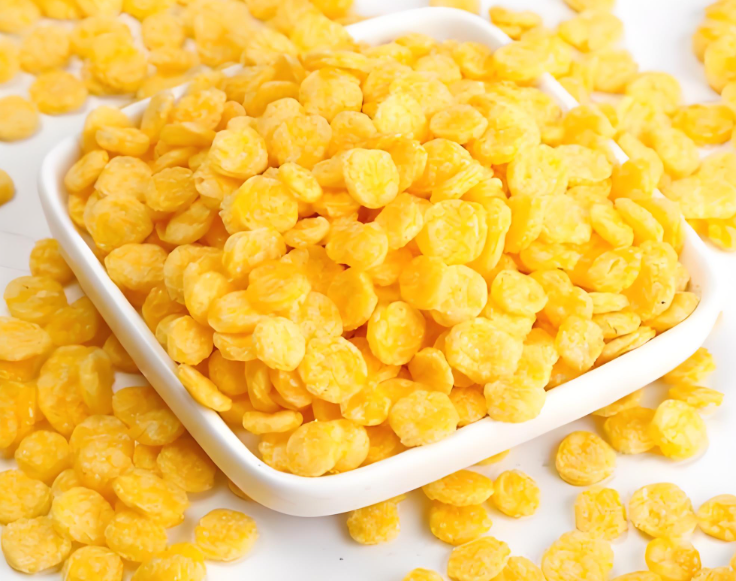
Introduction The quality of breakfast corn flakes begins not in the cooking kettle or the flaking roll, but in the cornfield. The choice of corn variety significantly influences flake texture, color, flavor, nutritional profile, and processing efficiency. corn flakes making machine While consumers see only golden, crispy flakes, manufacturers must navigate a complex decision between dent corn, flint corn, yellow versus white corn, and even specialty varieties. This article provides a practical guide for selecting corn types optimized for commercial corn flake production. 1. Key Corn Characteristics for Flake Production Before comparing varieties, it is essential to understand which corn properties matter most: 2. Dent Corn (Zea mays indentata) – […]
Tailoring Extruded Snack Textures: Formulation Strategies for Crispy vs. Hard-Crunch Profiles

Introduction Texture is a critical quality attribute of extruded snacks (e.g., corn puffs, cheese balls, and expanded pellets). Two desirable textures—crispy (light, fragile, and rapidly disintegrating under force) and hard-crunch (dense, strong, and requiring higher bite force)—are primarily controlled by formulation. corn puffing machine This guide outlines key ingredient adjustments to achieve each profile. 1. Starch Type and Amylose/Amylopectin Ratio 2. Protein Content and Source 3. Fat and Emulsifiers 4. Fiber and Bulking Agents 5. Moisture Content and Water Activity (aw) 6. Sugar and Salt 7. Acidulants and Minerals 8. Processing Interaction (Brief Note) While formulation is key, adjust screw speed and barrel temperature accordingly: Conclusion To design a crispy […]
Key Factors in Dog Food Production

Producing high-quality dog food is a complex process that requires careful attention to nutrition, safety, and palatability. Below are the essential factors that manufacturers must consider to ensure their products are both healthy and appealing to dogs. 1. Nutritional BalanceThe foundation of any dog food is its nutritional profile. Recipes must meet the standards set by organizations such as the Association of American Feed Control Officials (AAFCO). Essential nutrients include proteins, fats, carbohydrates, vitamins, and minerals. Protein sources (e.g., chicken, lamb, or fish) should be high-quality and digestible, while fats provide energy and support skin and coat health. Carbohydrates like rice or sweet potatoes offer fiber and energy, but fillers […]
Title: The Art of the Core: How Cream Filling Is Injected into Rice Puff Snacks
Introduction Cream-filled rice puff snacks—crispy, hollow cylinders or bars with a sweet or savory center—are a popular confectionery worldwide. While the outer shell provides a light, melt-in-the-mouth texture, it is the precisely injected filling that delivers the burst of flavor. core filled snack food machine Achieving a perfectly filled snack with even distribution and no leakage requires a sophisticated combination of extrusion technology, fluid dynamics, and timing. This article explains the step-by-step process of how the filling gets inside the rice puff. Step 1: Producing the Hollow Shell (Pre-Conditioning & Extrusion) Before any filling can be injected, an empty cavity must be created. The outer shell is made using a […]
Key Considerations for Ingredient Selection in Extruded Snack Foods

Introduction The selection of raw ingredients is a critical step in the production of expanded (puffed) snacks.puffed snack machine Whether produced via direct extrusion, baking, or frying, the physical and chemical properties of the base materials directly determine the final product’s texture, flavor, appearance, and nutritional profile. The primary goal in ingredient selection is to achieve optimal expansion, crispiness, and consumer appeal while maintaining cost-effectiveness and processing efficiency. 1. Cereal Flours: The Structural Backbone The most common base ingredients for puffed snacks are cereal flours, with corn, rice, wheat, and potato derivatives being the industry standards. 2. Starches and Flours from Tubers and Legumes Adding isolated starches (corn, tapioca, potato) […]
Extruder Operation: Essential Safety Precautions
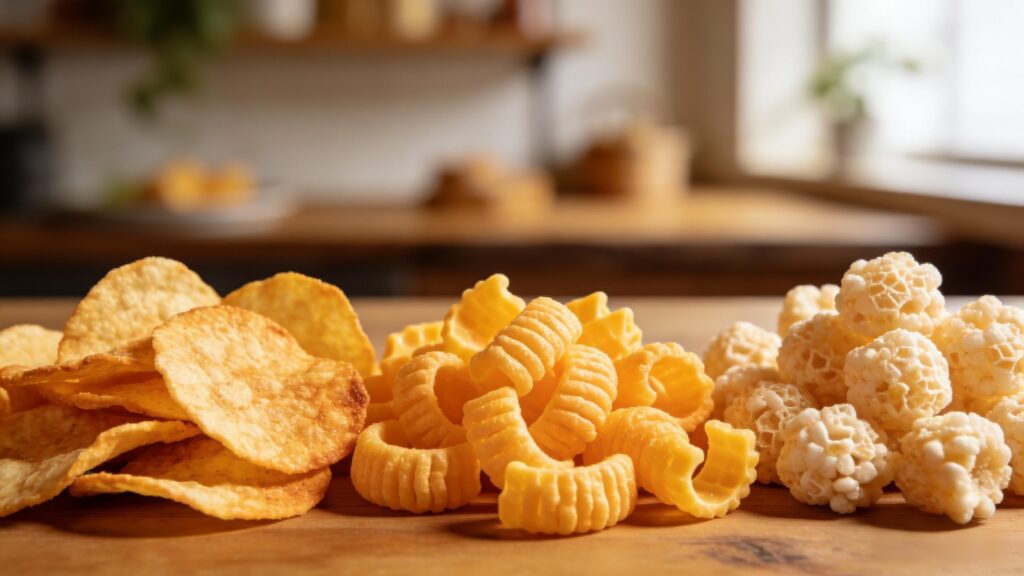
Extruders are powerful, high-temperature, high-pressure machines widely used in food, feed, and plastic processing. Improper operation can lead to serious injuries, including burns, crushing, amputations, and even fatal explosions. Understanding and strictly following safety protocols is non-negotiable for all operators and maintenance personnel. Below are the critical safety precautions grouped by operational phase. 1. Pre-Startup Safety Checks 2. Startup and Warm-Up Safety 3. Operational Safety (Running Mode) 4. Handling Blockages (Plugging) 5. Shutdown and Cleaning Safety 6. Emergency Response Emergency Action Die blowout / hot material spray Hit emergency stop immediately. Evacuate the area. Use safety shower if skin contact occurs. Fire inside barrel (smoke from die) Stop feeders and […]
Co-Rotating vs. Counter-Rotating Twin-Screw Extruders: Key Differences

Twin-screw extruders are widely classified into two main types based on the direction of screw rotation: co-rotating (both screws turn in the same direction) and counter-rotating (screws turn in opposite directions). While both offer advantages over single-screw extruders, their distinct designs lead to significant differences in material transport, mixing efficiency, shear behavior, and application suitability. 1. Screw Rotation and Configuration 2. Conveying Mechanism Feature Co-Rotating Counter-Rotating Material transport Positive displacement but with some backflow; relies on the relative motion of screw flights. True positive displacement, similar to a gear pump; material is trapped in C-shaped chambers and forced forward. Conveying efficiency Moderate to high; better for starve-fed operations. Very high […]
Single-Screw vs. Twin-Screw Extruders: Similarities and Differences
Extrusion technology is widely used in the food, feed, plastics, and chemical industries. Among the most common types of extruders are the single-screw extruder and the twin-screw extruder. While they share fundamental working principles, they differ significantly in design, performance, and application. Similarities Differences Feature Single-Screw Extruder Twin-Screw Extruder Screw Configuration One screw rotating inside a smooth barrel. Two intermeshing or non-intermeshing screws rotating in same or opposite directions. Conveying Mechanism Relies on friction between material and barrel; less efficient for sticky or low-friction materials. Positive displacement pumping due to intermeshing screws; efficient for slippery, wet, or oily materials. Mixing Capability Limited mixing; mainly distributive mixing (simple blending). Excellent mixing: […]
How Starch Content Affects Puffing Degree
In the world of puffed snacks—from light rice cakes to crunchy corn puffs—one factor stands out as the primary driver of expansion: starch. The amount, type, and structure of starch in a raw material directly determine how much it will puff. Simply put, the higher and more suitable the starch content, the greater the potential for a light, airy, porous structure. This article explores the science behind why starch is so critical to puffing. 1. Starch: The Engine of Expansion Starch is a polysaccharide made up of long chains of glucose. It exists in two main forms: amylose (linear chains) and amylopectin (highly branched chains). When a starch-rich grain or […]
The Complete Guide to Investing in a Cat Food Processing Plant

Introduction The global pet food industry is booming, with the cat food segment experiencing particularly robust growth. Driven by humanization trends (treating pets as family), premiumization (demand for high-protein, grain-free, natural recipes), and the expansion of e-commerce, investing in a cat food processing plant can be a highly lucrative venture. cat food machine However, it requires significant capital, regulatory knowledge, and operational expertise. This guide provides a step-by-step roadmap for potential investors, from market analysis to exit strategies. Phase 1: Market Research & Feasibility Analysis Before spending a dollar, validate the opportunity. 1.1 Understand Market Segments 1.2 Analyze Your Target Geography 1.3 Competitive Landscape Key Feasibility Questions: Phase 2: Business […]
How to Invest in a Commercial Dog Food Production Line: A Complete Guide
Investing in a commercial dog food production line is a significant financial commitment that requires careful planning, technical knowledge, and regulatory awareness. The global pet food market continues to grow rapidly—valued at over $107 billion in 2023 and projected to reach $125 billion by 2025—creating substantial opportunities for new entrants . However, success depends on understanding the full scope of investment required, from equipment selection to compliance and operational planning. This guide walks you through everything you need to know about investing in a commercial dog food production line. 1. Understanding Your Production Options Before calculating costs, you must decide what type of dog food you will produce. Each production […]
The Great Kibble Debate: Baked vs. Extruded Dog Food
At first glance, baked dog food and extruded (commonly known as puffed ) dog food look similar. Both come in dry, shelf-stable pieces. dog food extruder However, the way they are made leads to significant differences in texture, nutrient retention, digestibility, and production cost. Understanding these differences can help you make a more informed choice for your canine companion. The Core Difference: How They Are Made Extrusion (Puffed Kibble) This is the industry standard for the vast majority of commercial dry dog foods. The process involves: Baking This process is much closer to how we make cookies or biscuits at home. Key Differences at a Glance Feature Extruded (Puffed) Kibble […]
 Japanese
  English
  Russian
  Spanish
  Italian
  Arabic
  Portuguese
  German
  French
  Moroccan Arabic
  Persian
  Belarusian