
Regular cleaning of a twin-screw extruder is essential for maintaining product quality, preventing cross-contamination, and extending equipment lifespan. Puffed snack food extruder Residual materials left in the screw elements, barrel, and die head can harden, degrade, and cause abrasion or even catastrophic equipment failure . This guide provides a systematic approach to cleaning twin-screw extruders, covering both purge-based methods and full disassembly cleaning.

Safety First
Before beginning any cleaning procedure, observe the following safety precautions:
- Lock-out/Tag-out (LOTO) : Ensure the extruder is completely powered off and cannot be accidentally started .
- Personal Protective Equipment (PPE) : Wear heat-resistant gloves, safety glasses or face shield, and protective clothing .
- Hearing protection: When using impact hammers or grinding equipment .
- Ventilation: When using flame cleaning methods or chemical solvents, ensure adequate airflow .
- Hot surface awareness: Screws and barrels retain heat even after shutdown.
Cleaning Method 1: Purge-Based Cleaning (Without Disassembly)
This method is suitable for routine color or material changes when the screw assembly does not need to be removed from the barrel.
Step 1: Prepare the Extruder
- Close the feed port at the bottom of the hopper to stop new material from entering .
- Reduce screw speed to 15–25 RPM and maintain until melt flow at the die front stops .
- Set barrel heating zones to approximately 10–20°C above the melting point of the purge material .
Step 2: Introduce Purge Compound
- Add the purge material (e.g., polyester resin, epoxy resin, or commercial purge compound) to the feeder or hopper .
- Run the screw at low speed (50–100 RPM) initially, then gradually increase to normal operating speed .
- Continue purging until the discharged material appears clean and free of residues from the previous run .
Step 3: Final Purge and Shutdown
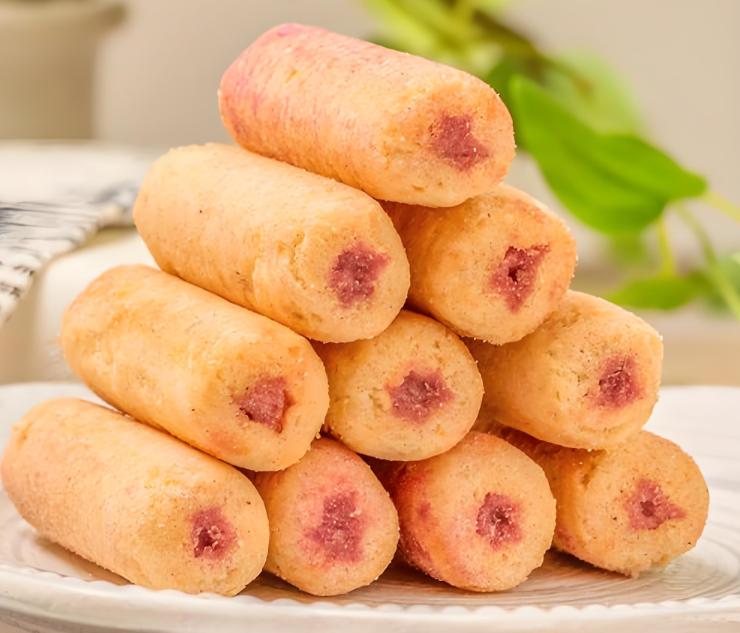
- When the discharged purge material is white (or shows no trace of the previous material), stop screw rotation .
- Open the die and remove any remaining material .
- If switching to a new production material, flow the next material through with the die open until complete replacement is confirmed .
Cleaning Method 2: Flame Cleaning (For Screws Removed from the Barrel)
Flame cleaning is effective for removing baked-on, degraded plastics. However, Puffed snack food extruder it requires careful temperature control to avoid damaging the screw metallurgy.
Step 1: Screw Removal
- After purging the barrel, stop the extruder and allow controlled cooling.
- Remove the screw shafts from the barrel following the manufacturer’s procedures .
- If screw elements are stuck, heat evenly with a rosebud acetylene torch. Do not let the elements change color—this indicates excessive temperature that can alter metallurgy .
- Use a wooden or hard plastic punch, or an aluminum/brass drift pin, to push elements from the shaft .
Step 2: Initial Mechanical Cleaning
- While screws are still warm, use a steel wire brush or copper gauze to remove loose material .
- For stubborn, baked-on residues:
- Use a stiff steel wire brush wheel on a bench grinder
- Use a small belt sander
- Employ sandblasting or dry-ice blasting
Step 3: Torch Cleaning (If Needed)
Critical Warning: Never use acetylene gas flame to clean screws—its temperature (~3000°C) will destroy metal characteristics and cause warping .
- Use a standard propane blowtorch with controlled flame .
- Heat evenly, focusing on areas with adhered plastic.
- Remove softened plastic with brass or copper scrapers—avoid steel tools that can gouge the screw surface .
Cleaning Method 3: Water-Based / Automated Cleaning
Automatic screw washing machines use hydrodynamic rotational energy to achieve 360° cleaning without damaging screw geometry .
Procedure:
- Disassemble screws from the extruder and remove residual material from the barrel .
- Place screws into the automatic cleaning machine.
- The cleaning cycle typically takes 10–20 minutes per screw .
- Remove and inspect screws for completeness of cleaning.
Advantages: Environmentally friendly, efficient, non-damaging.
Disadvantages: High initial equipment cost .
Post-Cleaning: Inspection and Maintenance
Once the screw elements are clean, thorough inspection is critical.
Visual and Dimensional Inspection
- Check for hairline cracks: Discard any elements with cracks—they can break apart during operation, twisting shafts and wrecking barrels .
- Inspect for nicks and gouges: Smooth out minor damage gently with a file or grinding disc. Nicks may become crack initiation points .
- Verify intermesh gap: A gap should be visible between screw elements. Use a flashlight to confirm the line of light running between elements remains constant .
End Face Refinishing
- Stone or sand end faces smooth with 320-grit sandpaper .
- Work on a level, flat surface (marble slab or thick steel plate).
- Move the element face in a figure-eight pattern with light, even pressure .
Lubrication and Storage
- Clean keyways and splined bores thoroughly .
- Apply high-temperature grease to inner holes and core shaft surfaces before reassembly .
- If screws will not be used immediately, apply rust-preventive oil and store vertically in a dry, ventilated area .
Barrel and Die Head Cleaning
- バレル: Clean inner holes with a cloth wrapped around a wooden stick—never use steel tools that could scratch the barrel liner .
- Die head: Disassemble and soak components in cleaning solution or use a temperature-controlled oven to remove hardened residues . Clean flow channels carefully without damaging surface finish.
Summary of Cleaning Methods Comparison
| Method | Best For | Effectiveness | Risk of Damage | Cost |
|---|---|---|---|---|
| Purge/Resin | Routine color/material changes | Good | Low | Moderate |
| Flame (Torch) | Stubborn, baked-on residues | Excellent | High if improperly done | Low |
| Water/Automated | Thorough non-damaging cleaning | Excellent | Very Low | High (equipment) |
Preventive Maintenance Tips

- Clean the extruder immediately after each production run—residues are easier to remove while still warm .
- For high-viscosity materials (PC, ABS, POM), purge with PP or PE before shutdown .
- Never run the extruder empty for more than 30 minutes .
- Keep records of screw dimensions to track wear rates over time .
- Replace hydraulic oil annually and clean the tank .
- Regularly clean dust from control cabinets and fan hoods to prevent overheating .
By following these procedures systematically, you will maintain extruder performance, reduce unplanned downtime, and extend the service life of your twin-screw extruder components.
 Japanese
  English
  Russian
  Spanish
  Italian
  Arabic
  Portuguese
  German
  French
  Moroccan Arabic
  Persian
  Belarusian