
Extruder Operation: Essential Safety Precautions
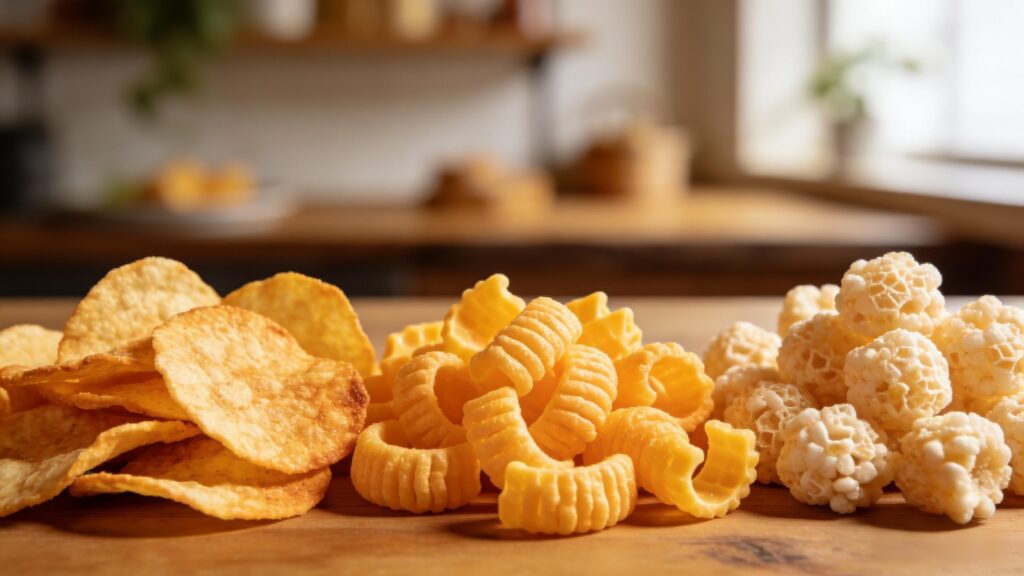
Extruders are powerful, high-temperature, high-pressure machines widely used in food, feed, and plastic processing. Improper operation can lead to serious injuries, including burns, crushing, amputations, and even fatal explosions. Understanding and strictly following safety protocols is non-negotiable for all operators and maintenance personnel. Below are the critical safety precautions grouped by operational phase. 1. Pre-Startup Safety Checks 2. Startup and Warm-Up Safety 3. Operational Safety (Running Mode) 4. Handling Blockages (Plugging) 5. Shutdown and Cleaning Safety 6. Emergency Response Emergency Action Die blowout / hot material spray Hit emergency stop immediately. Evacuate the area. Use safety shower if skin contact occurs. Fire inside barrel (smoke from die) Stop feeders and […]
Co-Rotating vs. Counter-Rotating Twin-Screw Extruders: Key Differences

Twin-screw extruders are widely classified into two main types based on the direction of screw rotation: co-rotating (both screws turn in the same direction) and counter-rotating (screws turn in opposite directions). While both offer advantages over single-screw extruders, their distinct designs lead to significant differences in material transport, mixing efficiency, shear behavior, and application suitability. 1. Screw Rotation and Configuration 2. Conveying Mechanism Feature Co-Rotating Counter-Rotating Material transport Positive displacement but with some backflow; relies on the relative motion of screw flights. True positive displacement, similar to a gear pump; material is trapped in C-shaped chambers and forced forward. Conveying efficiency Moderate to high; better for starve-fed operations. Very high […]
Single-Screw vs. Twin-Screw Extruders: Similarities and Differences
Extrusion technology is widely used in the food, feed, plastics, and chemical industries. Among the most common types of extruders are the single-screw extruder and the twin-screw extruder. While they share fundamental working principles, they differ significantly in design, performance, and application. Similarities Differences Feature Single-Screw Extruder Twin-Screw Extruder Screw Configuration One screw rotating inside a smooth barrel. Two intermeshing or non-intermeshing screws rotating in same or opposite directions. Conveying Mechanism Relies on friction between material and barrel; less efficient for sticky or low-friction materials. Positive displacement pumping due to intermeshing screws; efficient for slippery, wet, or oily materials. Mixing Capability Limited mixing; mainly distributive mixing (simple blending). Excellent mixing: […]
How Starch Content Affects Puffing Degree

In the world of puffed snacks—from light rice cakes to crunchy corn puffs—one factor stands out as the primary driver of expansion: starch. The amount, type, and structure of starch in a raw material directly determine how much it will puff. Simply put, the higher and more suitable the starch content, the greater the potential for a light, airy, porous structure. This article explores the science behind why starch is so critical to puffing. 1. Starch: The Engine of Expansion Starch is a polysaccharide made up of long chains of glucose. It exists in two main forms: amylose (linear chains) and amylopectin (highly branched chains). When a starch-rich grain or […]
Which Grains Are Best Suited for Puffed Snacks?
Not all grains are created equal when it comes to puffing. While you can technically puff almost any starchy grain, some produce light, crispy, and uniform snacks while others yield dense, hard, or uneven results. The suitability of a grain for puffing depends primarily on its starch composition, moisture content, protein level, puffed snack machine and kernel structure. Below is a breakdown of the most common puffed grains and why they work so well. 1. Rice: The Gold Standard Rice, especially short-grain and medium-grain varieties, is arguably the most popular grain for puffing worldwide (e.g., rice cakes, puffed rice cereal). 2. Corn (Maize): The Versatile Performer Corn is another top […]
How Does Puffing Affect the Nutritional Value of Food?
Puffing is a popular processing technique used to create light, crispy snacks like rice cakes, puffed corn, and cereal flakes. snack food extruder machine While it transforms the texture and mouthfeel of raw grains, it also brings about significant chemical and physical changes to their nutritional profile. The effects of puffing on nutrients can be both positive and negative, depending on the specific nutrient and processing conditions (such as temperature, pressure, and time). 1. Effects on Carbohydrates: Increased Digestibility Puffing has a profound effect on starches, the primary carbohydrate in grains. In summary: Puffing makes carbohydrate energy more readily available but can lead to a higher glycemic response. 2. Effects […]
Why Do Puffed Snacks Have a Porous Structure?

If you’ve ever bitten into a cheese puff, a rice cake, or a piece of puffed corn snack, you’ve noticed their unique, airy texture. Under a microscope or even just looking closely, snack extruder machine you can see countless tiny holes or pores. But why do puffed snacks have this porous structure? The answer lies in a fascinating combination of physics, chemistry, and food engineering. 1. The Role of Moisture and Heat The key to puffing is trapped moisture. The raw ingredients—usually starches from corn, rice, wheat, or potatoes—contain a small amount of water. When these ingredients are heated rapidly (through processes like extrusion, frying, or baking), the water inside […]
 Japanese
  English
  Russian
  Spanish
  Italian
  Arabic
  Portuguese
  German
  French
  Moroccan Arabic
  Persian
  Belarusian