
Walk down any cereal aisle, and you are greeted by a cacophony of promises: “Whole Grain First,” “Fortified with Vitamins,” “Naturally Low Fat.” cereal extrusion The boxes are adorned with pastoral images of golden wheat fields and frisky cartoon animals. But step behind the curtain of a massive food processing plant, and the reality looks less like a farm and more like a heavy chemical engineering lab.
Welcome to the world of extrusion cooking—the industrial process that transforms raw grains into puffs, flakes, and loops.
Step 1: The Grain Grind
It starts with grain, but not the kind you would recognize. Corn, rice, or wheat arrives in massive dusty silos. It is stripped of its bran and germ—the parts containing fiber and healthy oils—because those spoil quickly and mess with machinery. cereal extrusion What remains is the starchy endosperm. To make it palatable after this stripping, the manufacturer adds a “shotgun blast” of refined sugar, high-fructose corn syrup, chocolate, or marshmallow bits.

Step 2: The “Gun” (Extrusion)
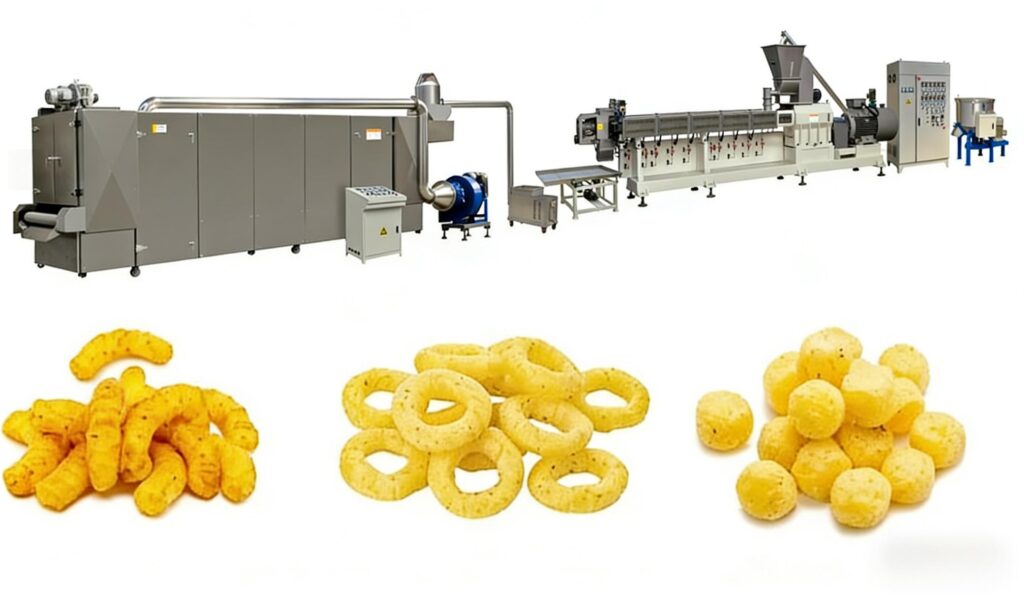
This is the magic trick. The grain slurry is force-fed into a machine called an extruder. Imagine a sausage grinder mixed with a pressure cooker. Inside, the mixture is subjected to incredible heat (up to 400°F) and pressure (up to 600 psi).
As the molten dough is forced through a tiny die (the hole that shapes the cereal), it hits normal air pressure. The moisture inside instantly turns to steam, causing the dough to explode outward. This is why a tiny pellet of rice becomes a giant, airy “Krispie.” It is not baking; it is a controlled starch explosion.
Step 3: The Drying Oven (The Sugar Seal)
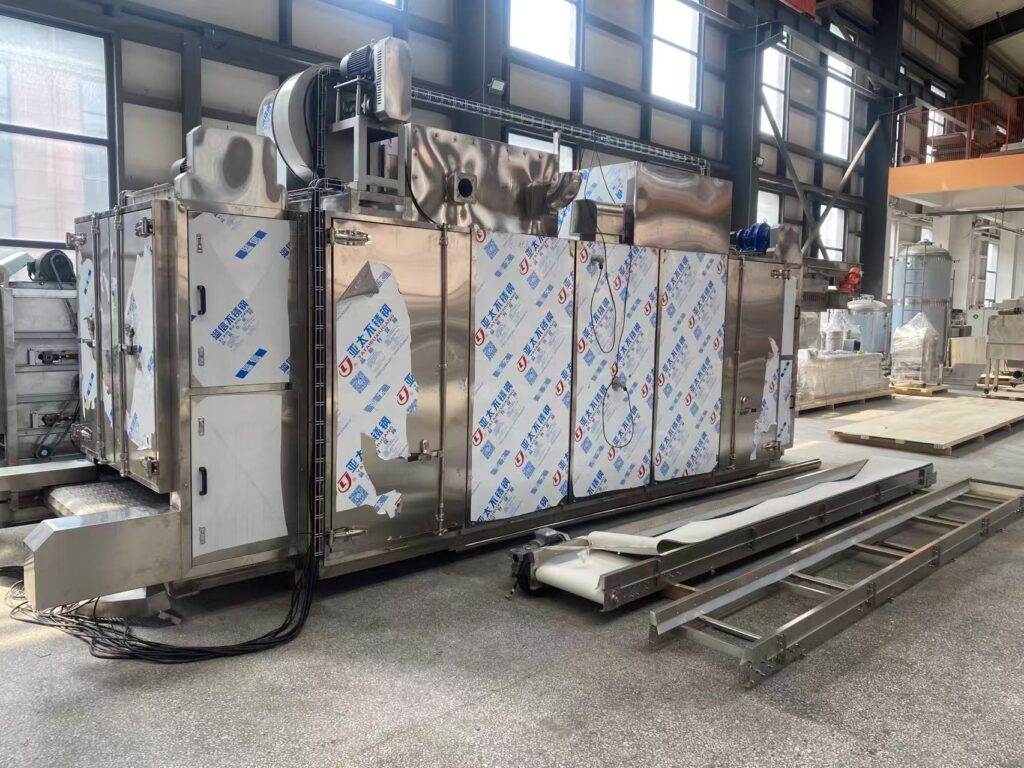
After the puff, the cereal is soft and moist. It moves through a massive drying oven to remove that moisture. cereal extrusion Why? Because a dry cereal absorbs milk better and weighs less, maximizing the company’s profit per box.

Step 4: The Spray-On “Nutrition”
Here is the industry’s dirty secret: the vitamins. You see “100% Daily Value of 12 Vitamins & Minerals” on the box. They are not baked into the grain. Most are destroyed by the extreme heat of extrusion.
Instead, after the cereal is cooked and dried, it goes through a “vitamin spray.” A fine mist of synthetic, isolated vitamins (often diluted with sugar water) is sprayed onto the outside of the puff. The same goes for flavor. cereal extrusion If you buy “Frosted Strawberry” cereal, there are no strawberries inside. There is a drum where liquid sugar and artificial flavoring are sprayed onto the naked puffs.
Step 5: The Glaze and the Preservative
To ensure that cereal stays “crunchy” for two years on a shelf, manufacturers apply a chemical seal. This is often BHT (Butylated Hydroxytoluene) or Vitamin E (listed as “mixed tocopherols” for marketing). While the dangers of BHT are debated, the fact remains: you are eating a petroleum-derived preservative so the product can survive a nuclear winter.
Finally, the “marshmallows.” If you see those hard, pastel-colored bits, understand they are not freeze-dried candy. They are a mixture of sugar, gelatin, artificial dye (Red #40, Blue #1), and wax. They are stamped out by a high-speed press, tumbled in sugar to stop them from sticking, and then dumped into the mix.
The Nutritional Bottom Line
Once the cereal comes off the line, a nutritionist analyzes it. To make it past FDA labeling rules, the company ensures a serving size is very small (usually 30 grams—about 1/2 cup). In that tiny bowl:
- Sugar is often the first or second ingredient (making up nearly 40% of the puff).
- Sodium is added to mask the metallic taste of the synthetic vitamins.
- Fiber is often stripped out during debranning and then re-added later as isolated powdered cellulose (aka wood pulp) so they can claim “good source of fiber.”
The Wake-Up Call

The next time your child begs for the cereal with the toucan or the tiger, remember the industrial process. You aren’t buying a wholesome breakfast. You are buying a $6 box of processed starch explosions—puffed, sugared, synthetic-vitamin-sprayed, and sealed with wax—designed to dissolve instantly in milk so your child craves another bowl in 45 minutes.
Breakfast may be the most important meal of the day. But real food—eggs, oats (real oatmeal, not the instant packet), or yogurt—doesn’t require an industrial extruder to create.
 Italian
  English
  Russian
  Spanish
  Arabic
  Portuguese
  German
  French
  Japanese
  Moroccan Arabic
  Persian
  Belarusian