
Kurkure, a popular brand of extruded snack food known for its unique curly shape and spicy, crunchy texture, is a staple in many markets, particularly in India. kurkure making machine Produced by PepsiCo, the manufacturing process is a sophisticated interplay of food engineering and material science. While the exact industrial recipe is proprietary, the core manufacturing process is well-documented and follows a specific sequence of high-temperature, short-time (HTST) extrusion.

This article outlines the step-by-step mechanical process used to transform raw corn grits into the final packaged snack.
1. Raw Material Preparation and Mixing
The primary raw material for Kurkure is corn grits (also known as maize grits). Other dry ingredients, such as rice flour, gram flour (besan), and spices incorporated into the dough, are also used .
The process begins in a high-speed mixer where the dry ingredients are blended. Crucially, water is added to achieve a specific moisture level, typically between 12% and 15% . This hydration is critical for the next stage, as it plasticizes the starch and prepares it for cooking under mechanical pressure. The mixture is blended until a uniform, damp particulate dough is formed.

2. Extrusion: The Core of the Process
Extrusion is the heart of Kurkure manufacturing. The prepared mix is fed into a hopper and conveyed into a Rotary Head Extruder . This is distinct from standard screw extruders; it utilizes a unique rotating plate system.
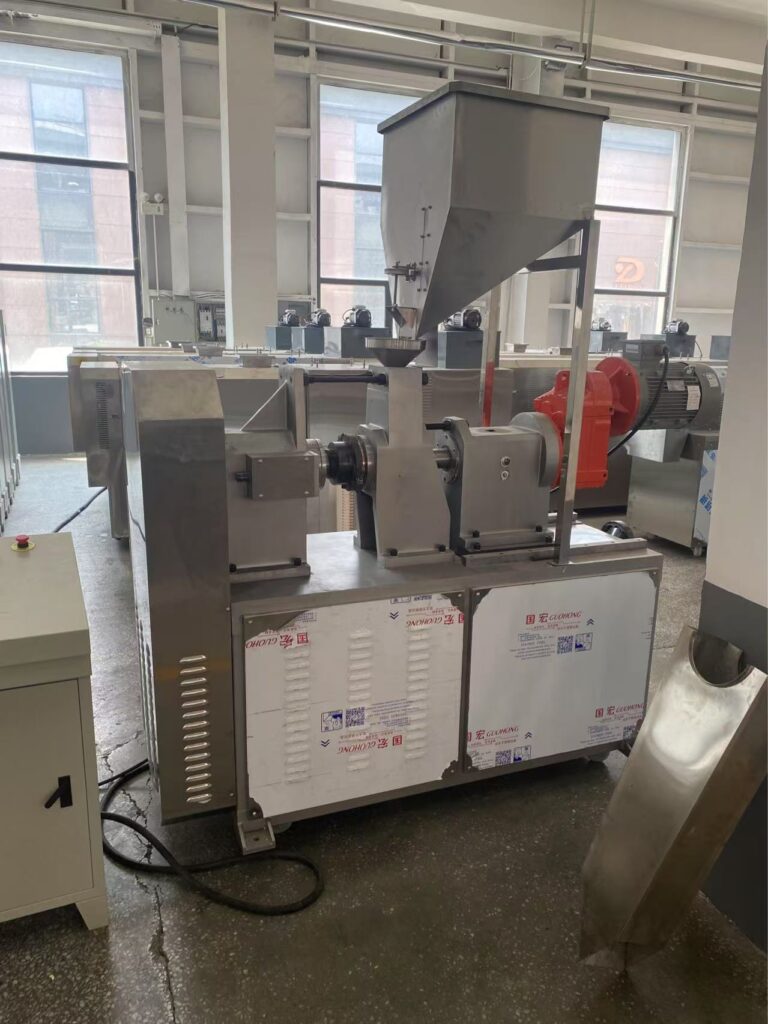
- The Mechanism: Inside the extruder, the dough is subjected to high mechanical shear and pressure (typically 10-20 bar) as it passes between rotating plates .
- Friction and Heat: This intense pressure and friction raise the temperature of the dough rapidly to approximately 150-180°C (300-350°F) . kurkure making machine This is known as a High-Temperature Short-Time (HTST) process, which gelatinizes the starch without burning it.
- Mise en forme : The cooked dough is forced through a mourir with a specific orifice design. As the high-pressure dough exits the die into the atmosphere, the superheated water instantly flashes into steam, causing the product to expand (puff). The rotary cutting blades at the die face cut the expanding rope into specific bite-sized lengths, creating Kurkure’s signature twisted, irregular curls .
3. Material Separation and Sieving
After extrusion, the newly formed snacks are still slightly moist and soft. They are transported via a conveyor to a Rotary Sifter or vibrating screen .
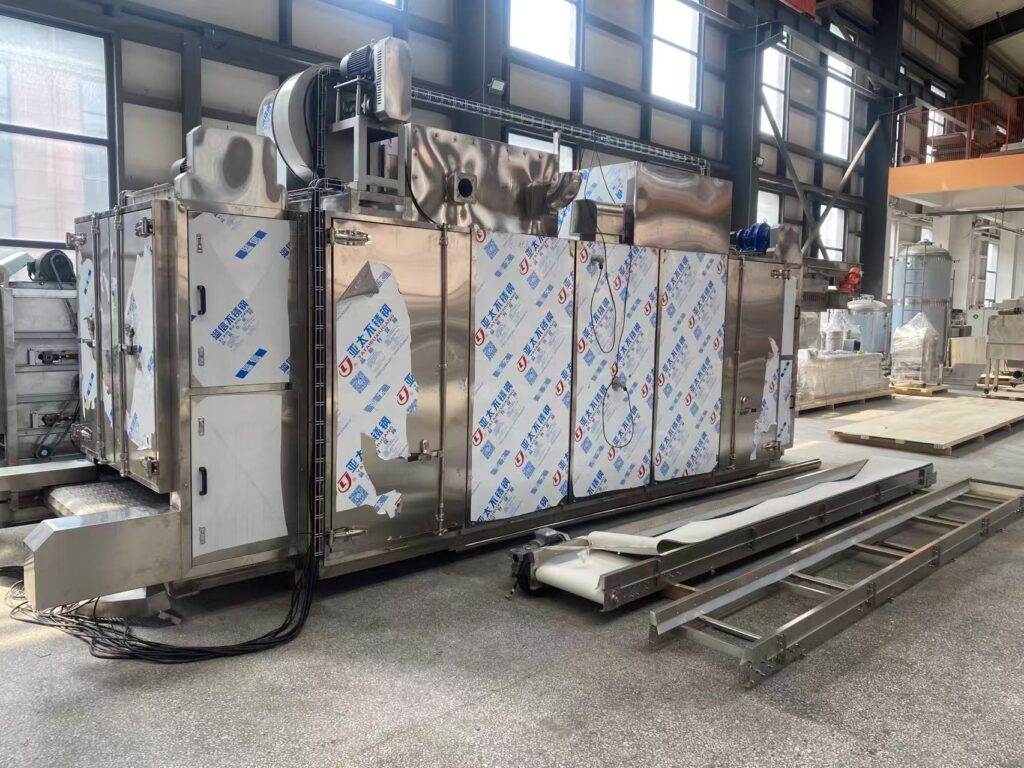
This step serves a dual purpose:
- Removing “Fines”: It separates loose crumbs, partially cooked grits, and broken pieces from the fully formed curls.
- Recycling: The collected waste material (fines) is recycled back into the extruder hopper to be re-extruded, minimizing raw material waste .
4. Frying (Moisture Removal and Texture Development)
To achieve the signature “crunch,” the puffed curls undergo a frying process. They are fed via an elevator into a continuous oil fryer .
- Oil Temperature: The oil is maintained at a high temperature, generally between 170°C and 190°C .
- Function: The high heat rapidly drives out the remaining moisture (from roughly 20% down to less than 2%). As the water leaves, oil is absorbed into the porous starch matrix, creating a crisp, brittle texture.
- De-oiling: After frying, the snacks pass through a Vibrating De-Oiler. This machine shakes off excess surface oil to ensure the final product is not greasy and to maintain flavor clarity .
5. Flavoring Application
At this stage, the base snack is hot, crispy, and porous—ideal for flavor adhesion. It enters a Rotary Drum Flavoring System .
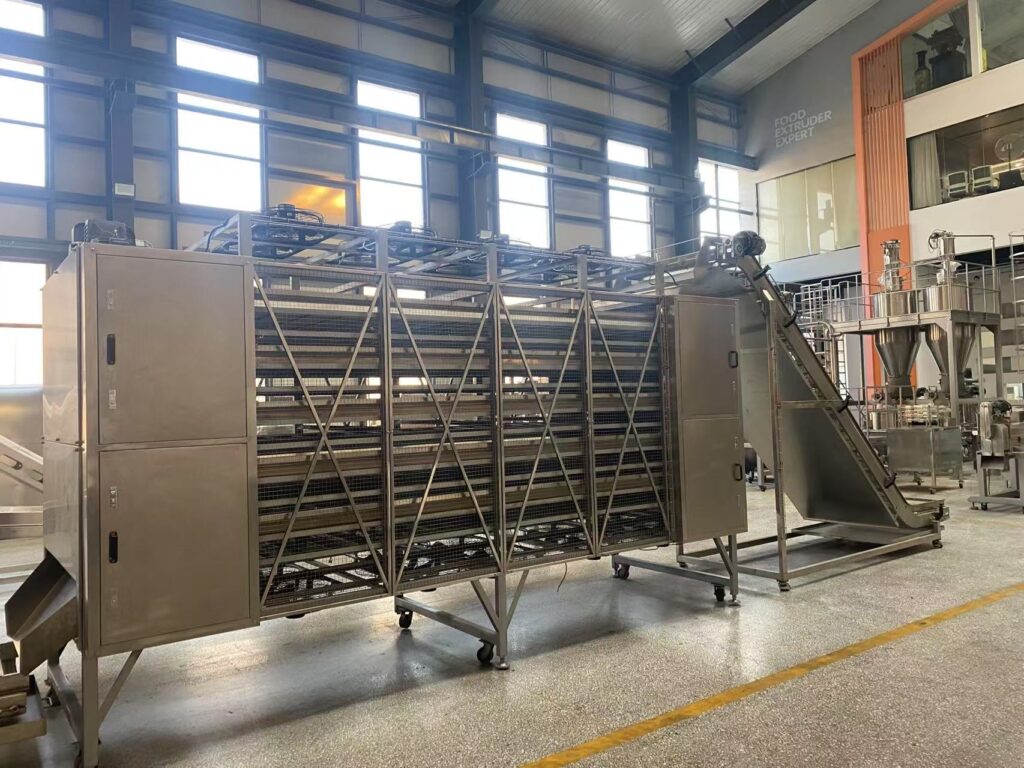
- Oil Spray: A fine mist of oil is often sprayed onto the snacks as they tumble. This acts as a binding agent (tack agent) for the flavor powder.
- Powder Coating: Simultaneously, a fine proprietary spice blend (containing salt, chili, mango powder, and other spices) is dusted onto the moving snacks. The tumbling action ensures a uniform coating on the complex, curved surfaces of the product.
6. Cooling and Packaging
The finished Kurkure is hot, oily, and somewhat fragile immediately after flavoring. They are transferred onto a Cooling Conveyor (often a long belt with ambient or forced air) . kurkure making machine This step allows the snack to cool to room temperature and allows the fats to solidify slightly, stabilizing the texture.

Finally, the product is transported to a packaging machine. To preserve crispiness and extend shelf life (generally up to 2 months or more), the packaging is critical. The snacks are sealed in metalized films (polyethylene-coated aluminum) that provide a moisture barrier. Often, nitrogen flushing is used to displace oxygen inside the pack, preventing oxidative rancidity of the fats and maintaining the crunch .
Summary of Equipment Flow
A standard Kurkure processing line integrates the following machinery in sequence :
- Mixer (Batch mixing of grits and water)
- Screw Conveyor (Transfer to hopper)
- Rotary Head Extruder (Shaping and puffing)
- Rotary Sifter (Separation of broken pieces)
- Continuous Fryer (Cooking and crisping)
- Vibrating De-Oiler (Oil removal)
- Flavoring Drum (Seasoning)
- Cooling Conveyor
- Vertical Form-Fill-Seal (FFS) Machine (Packaging)
Conclusion

The production of Kurkure is a highly efficient industrial process that relies on precise control of moisture, temperature, and pressure. From a simple mix of corn grits and water, the unique combination of high-shear extrusion followed by frying creates the distinctive light texture and curl, while the final tumbling step delivers the intense, savory flavor profile consumers recognize.
 French
  English
  Russian
  Spanish
  Italian
  Arabic
  Portuguese
  German
  Japanese
  Moroccan Arabic
  Persian
  Belarusian