
In an era where pet owners view their dogs not just as companions, but as family members, the demand for premium nutrition has transcended the standard “fillers and chicken meal” model. High-end dog food is no longer a commodity; it is a crafted nutritional protocol.

But what separates a $20 bag of generic kibble from a $120 bag of human-grade artisan fare? The answer lies not just in the ingredients, but in the philosophy, the sourcing, and the meticulous engineering of the process.
Phase 1: Sourcing the Blueprint (Ingredients)
The journey begins long before the factory floor. Dog food making machine Where a standard manufacturer might purchase “meat meal” from a rendering plant, a high-end producer deals directly with certified farms.
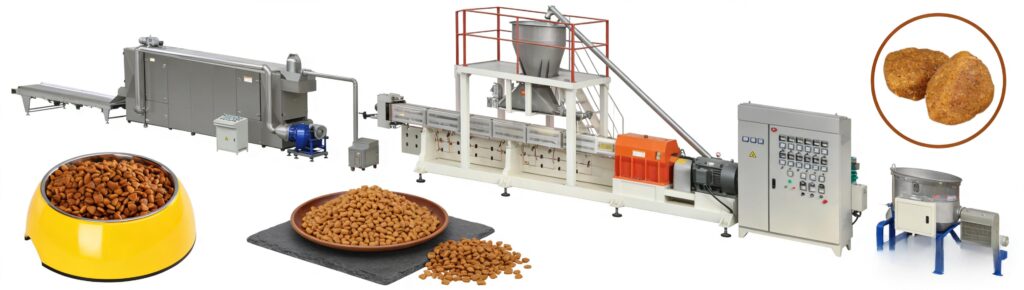
- The Protein: Grass-fed lamb from the New Zealand highlands, free-range duck from French farms, or wild-caught salmon from Alaskan waters. Each batch comes with traceability. The goal is not just high protein content, but high bioavailability—ensuring the dog’s body recognizes and absorbs the amino acids efficiently.
- The Carbohydrates: There is no corn, wheat, or soy. Instead, you see low-glycemic options like sprouted barley, chickpeas, or sweet potatoes. These provide steady energy without the insulin spike.
- The “Superfoods”: Blueberries, kale, turmeric, and seaweed extracts are added not as marketing gimmicks, but as measured nutraceuticals. They act as natural anti-inflammatories and antioxidants.
Phase 2: Cold-Pressed vs. Extrusion (The Method)
The most critical divergence in quality occurs during cooking. Standard kibble is “extruded.” Dough is forced through a die under high heat (over 200°C) and high pressure, then sprayed with fats. This process often denatures proteins and destroys heat-sensitive vitamins.
High-end manufacturers are shifting toward Cold-Pressing (or low-temperature dehydration).
- Mixing: All raw ingredients—meat, organs, vegetables, and oils—are gently combined into a homogeneous dough. No steam is added.
- Low-Temperature Processing: The dough is pressed into shape at temperatures below 55°C (130°F).
- Drying: The formed pieces move through slow-drying tunnels for several hours. The low heat preserves enzymes, natural flavors, and fatty acids (Omega-3s) that would be destroyed in high-heat extrusion.
Result: A kibble that retains the aroma of real meat and maintains its nutritional integrity. It is more porous and crumbly than hard kibble, mimicking the texture of raw meat.
Phase 3: Human-Grade Safety Protocols
High-end facilities look like human food processing plants—because they often are.
- Microbiology Labs: Every batch is tested for Salmonella, E. coli, and heavy metals. A single failed batch (usually 10,000 lbs) is discarded. No exceptions.
- The “Single Batch” Philosophy: Unlike mass production where “runoff” from different days is blended, premium makers produce in small, sealed batches. Dog food making machine This ensures that if a recall is needed, it affects 500 bags, not 500,000.
Phase 4: The Coat of Armor (Protection)
Without synthetic preservatives like BHA or BHT, how does the food stay fresh?
High-end manufacturers use natural preservation systems:
- Rosemary Extract: A potent antioxidant.
- Mixed Tocopherols (Vitamin E): Stops fats from going rancid.
- Oxygen Absorbers: Nitrogen-flushed packaging removes the oxygen that causes decay.
The bag itself is often a multi-layer foil barrier, not paper. This blocks UV light, which degrades Omega-3s.

Phase 5: The Final Lock (Testing)
Before a single bag ships to a boutique retailer or a customer’s doorstep, the food undergoes “beyond nutrition” testing. Palatability panels are conducted with actual dogs (the ultimate critics). If the dogs ignore the food, the run is rejected.
Furthermore, digestibility studies are run. High-end food aims for a digestibility score of 90% or higher. This means the dog uses 90% of what it eats, resulting in 50% less stool volume compared to standard brands.
The Verdict
Making high-end dog food is an exercise in restraint. It is saying “no” to cheap fillers, “no” to high-heat shortcuts, and “no” to artificial shelf-life extenders.
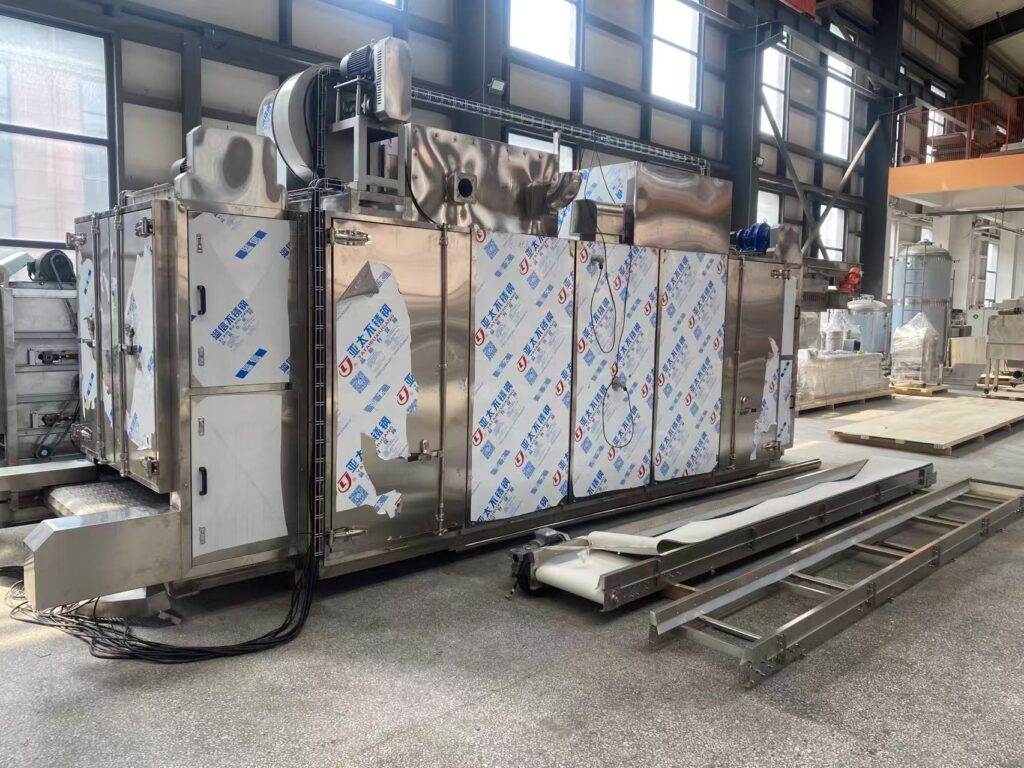
It is, at its core, the application of human nutritional science to canine biology. When you open a bag of true high-end food, you shouldn’t just smell “dog food.” You should smell the clean scent of dehydrated salmon, the earthy aroma of garden herbs, and the assurance that the creature who will eat it has been given the same respect as any human at the dinner table.
 Persian
  English
  Russian
  Spanish
  Italian
  Arabic
  Portuguese
  German
  French
  Japanese
  Moroccan Arabic
  Belarusian