
Breakfast cereals are a staple food product consumed worldwide, offering convenience, nutrition, and variety. Ready-to-eat (RTE) breakfast cereals are processed grain formulations that require no further cooking in the home—they are shelf-stable, lightweight, and ready to consume directly from the package with milk or yogurt . This article provides a comprehensive technical overview of the industrial manufacturing process for breakfast cereals, covering raw material handling through to finished product packaging.
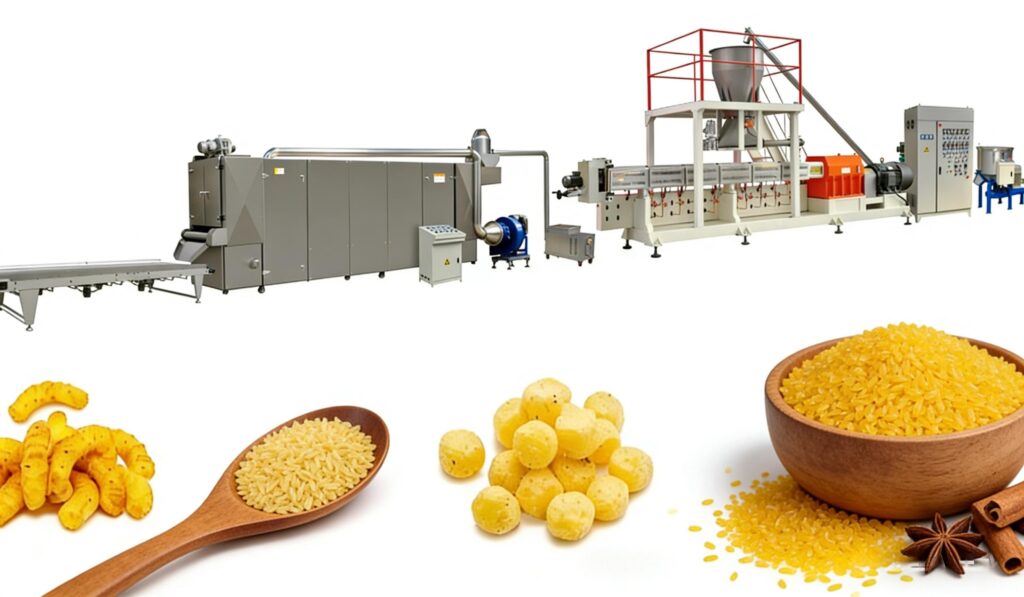
1. Introduction and Product Classification
Breakfast cereals are manufactured primarily from corn, wheat, oats, and rice—in approximately that order of production volume . The industry classifies RTE cereals into twelve general categories based on their manufacturing processes :
| Category | Examples |
|---|---|
| Flaked cereals | Corn flakes, rice flakes, wheat flakes |
| Gun-puffed whole grains | Puffed rice, puffed wheat |
| Extruded gun-puffed cereals | Puffed corn shapes |
| Shredded whole grains | Shredded wheat |
| Extruded shredded cereals | Biscuit-style cereals |
| Oven-puffed cereals | Puffed rice cakes |
| Granola cereals | Baked oat clusters |
| Extruded expanded cereals | Directly expanded puffs |
| Baked cereals | Whole grain baked shapes |
| Compressed flake biscuits | Compacted cereal biscuits |
| Muesli-type products | Unprocessed or lightly processed mixes |
| Filled bite-sized shredded wheat | Filled pillow cereals |
Each product type follows a similar core process flow but with variations in specific unit operations. The following sections detail the common manufacturing steps.
2. Raw Material Handling and Preparation
2.1 Grain Receiving and Storage
The manufacturing process begins with receiving cereal grains (corn, wheat, oats, or rice) from agricultural suppliers. Grains are tested for quality parameters including moisture content, protein levels, mycotoxin contamination, and foreign material presence. Upon approval, grains are stored in temperature-controlled silos to prevent spoilage and insect infestation.
2.2 Cleaning and Pretreatment
Prior to processing, grains undergo thorough cleaning to remove:
- Foreign material: Stones, metal fragments, dirt, and other crop seeds
- Dust and fines: Removed through aspiration systems
- Oversized materials: Separated by screening
For certain products, the outer bran layer may be partially removed through pearling or abrasion processes to achieve desired texture and color characteristics .
2.3 Milling into Grits
Cleaned grains are milled into uniform particles called “grits.” The particle size distribution is critical for consistent cooking and expansion later in the process. Corn for flake production, for example, is milled into grits of approximately 2-4 mm diameter.
3. Weighing and Blending
Accurate formulation is essential for product consistency. Modern cereal plants use automated weighing systems to measure ingredients into batches .

Primary Ingredients:
- Cereal grains (60-80% of formulation)
- Sweeteners (sugar, corn syrup, honey, malt extract) — typically 5-30%
- Salt — for flavor enhancement
- Malt — for color and flavor development during toasting
- Vitamins and minerals — for fortification (added at various stages depending on heat stability)
Blending Process:
Dry ingredients are pre-blended in ribbon or paddle mixers. Liquid ingredients (sweeteners, water, oil) are added separately or introduced during the cooking stage. Heat-sensitive nutrients such as B-vitamins are typically added after cooking (via spraying) to prevent degradation .
4. Cooking (Gelatinization)
4.1 Scientific Principle: Starch Gelatinization
Cooking is the most critical step in cereal manufacturing. The goal is to gelatinize the starch—a process where starch granules absorb water and swell upon heating, disrupting their crystalline structure . Gelatinized starch is digestible and provides the structural matrix that will later determine the cereal’s texture.
4.2 Batch Cooking (Conventional Method)
In batch cooking, grain grits, water, flavorings, and sweeteners are loaded into large rotating pressure vessels. Direct steam injection cooks the mixture at temperatures of 100-150°C (212-302°F) under pressure . Cooking times range from 1 to 3 hours depending on the grain type and desired product characteristics.
After cooking, the hot, plastic mass is discharged for subsequent processing steps.

4.3 Continuous Extrusion Cooking (Modern Method)
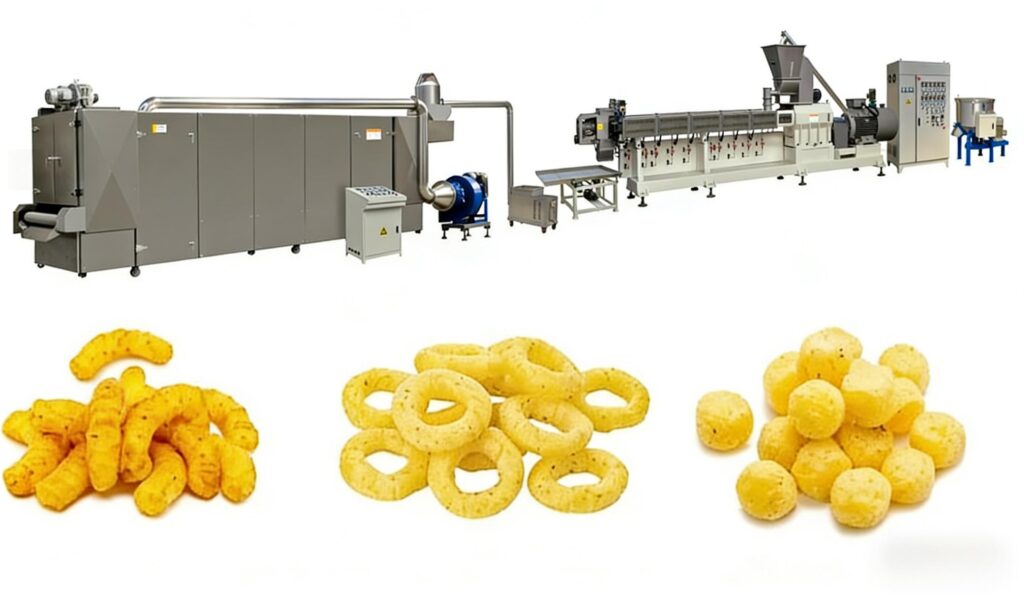
Most modern cereal plants use twin-screw extrusion cooking, which combines cooking, mixing, and shaping in a single continuous operation .
Extrusion cooking process:
- Preconditioning: The dry ingredient blend is moistened and preheated in a preconditioner cylinder
- Extrusion barrel: The conditioned material enters the extruder where rotating screws generate mechanical shear and frictional heat
- Temperature profile: Barrel temperatures range from 80-150°C (176-302°F) along multiple heating zones
- Die plate: The cooked dough is forced through a die that shapes the product into its final form
- Expansion: Upon exiting the die, the sudden pressure drop causes superheated water to flash into steam, expanding the product
Extrusion cooking is highly efficient and flexible, enabling production of a wide range of shapes and textures by changing die configurations and process parameters .
5. Primary Processing Operations
After cooking, the product undergoes specific operations depending on the cereal type being manufactured.
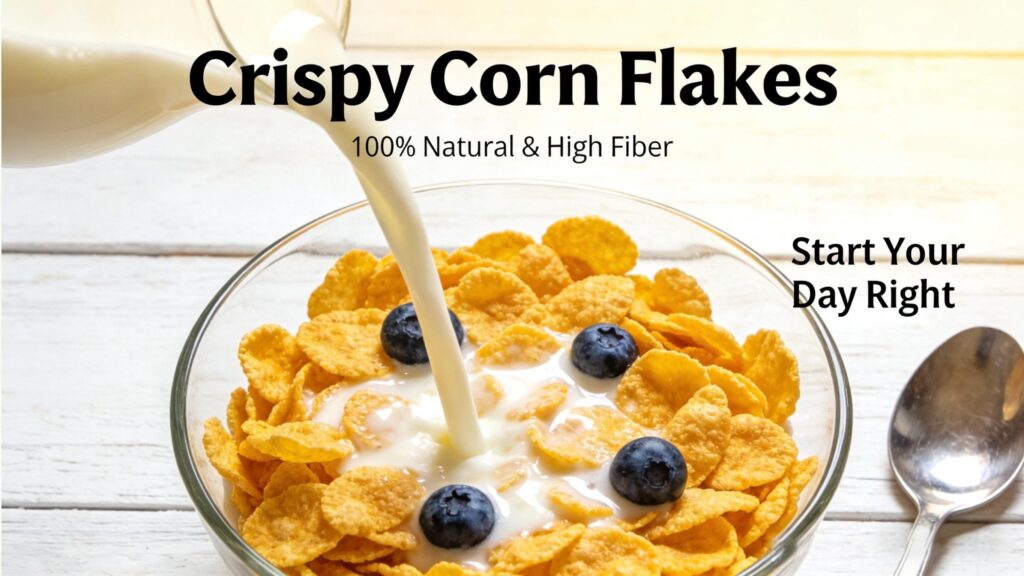
5.1 For Flaked Cereals (e.g., Corn Flakes)
Tempering: Cooked grain “berries” are allowed to rest for several hours to equilibrate moisture throughout each kernel. This tempering period is essential for proper flaking .
Flaking: Tempered grains pass between large, counter-rotating flaking rolls. The gap between rolls (typically 0.2-0.5 mm) determines flake thickness. The rolls compress each grain into a thin, flat flake.
5.2 For Extruded Shredded Cereals
Shredding: Cooked dough is extruded through a series of small holes, creating multiple continuous strands. These strands are deposited onto a conveyor belt in layers.
Layering and cutting: Multiple layers are combined, then cut into individual biscuits or bite-sized pieces.
5.3 For Puffed Cereals
Tempering: Cooked grains or pellets are conditioned to specific moisture content (typically 10-14%) .
Puffing (Gun Puffing): The tempered product is loaded into a pressure vessel (puffing gun) and heated. When the internal pressure reaches approximately 150-200 psi, the vessel is rapidly opened. The explosive release of pressure causes the moisture within each grain to flash into steam, expanding the product up to 12 times its original volume .
Alternative Puffing Technology: Continuous hydrothermal puffing systems (e.g., Bühler Cerex) offer improved energy efficiency and yield. These systems preheat raw materials to up to 120°C (248°F), then expose them to steam and pressure before sudden pressure reduction causes expansion . Modern systems achieve production yields exceeding 95% and consume approximately 60 kWh per 100 kg of product—half the energy of comparable technologies .
5.4 For Granola Cereals
Mixing: Oats and other dry ingredients are combined with liquid syrup (sweeteners, oil, water) to form a cohesive mass .
Sheeting and compression: The mixture is spread into a uniform sheet across the width of an oven band using feed rolls and compression rollers .
6. Drying and Toasting
6.1 Drying
After primary forming, the product typically contains 20-35% moisture, which must be reduced to 2-5% for shelf stability and crisp texture. Drying is accomplished using:
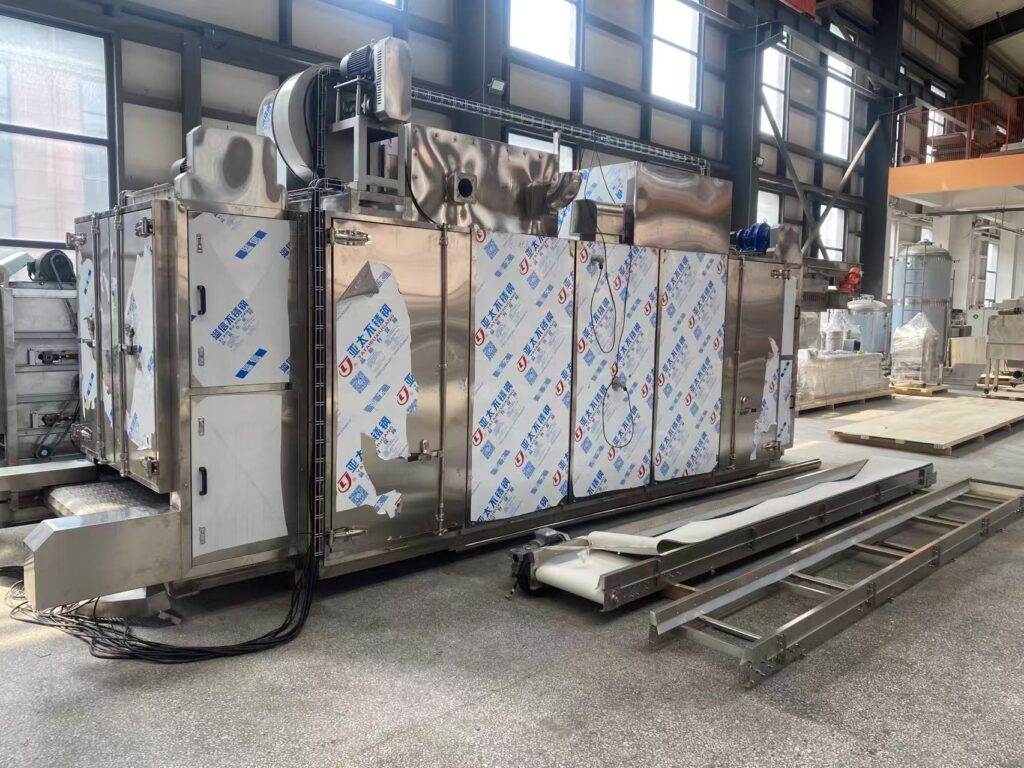
- Multi-pass band dryers: Product travels through multiple temperature zones
- Fluidized bed dryers: Hot air fluidizes the cereal pieces for uniform drying
- Rotary dryers: For granola and cluster-type products
Drying temperatures range from 100-200°C (212-392°F) depending on the product and dryer type .
6.2 Toasting
Toasting is distinct from drying—it develops color, flavor, and additional crispiness through Maillard browning reactions. Cereals pass through high-temperature ovens (200-300°C / 392-572°F) for short durations (1-5 minutes) .
For granola products, a high-rate direct convection heating system (e.g., TruBake HiCirc) bakes the sheet before assisted cooling binds the mass together, giving the characteristic baked granola crunch .

7. Tempering (Post-Drying)
After toasting, the hot cereal requires a tempering period to allow internal moisture to equilibrate. This step prevents the product from becoming soggy during packaging and ensures a uniformly crisp texture . Tempering typically occurs in holding bins for 30 minutes to several hours.
8. Coating and Flavoring
Many breakfast cereals receive additional coatings to enhance palatability, nutritional value, or appearance.
8.1 Sugar Coating
Sugar solutions are sprayed onto cereal pieces in rotating drums, followed by drying to form a glossy, sweet coating. For frosted cereals, a heavier sugar application is used.
8.2 Vitamin and Mineral Fortification
Heat-sensitive vitamins (e.g., B1, B2, B3, B6, B12, folic acid) and minerals (e.g., iron, zinc) are sprayed onto cooled cereal surfaces after toasting . This post-cooking application prevents thermal degradation that would occur if added earlier in the process.
8.3 Flavor Coatings
Savory or sweet flavor systems—including honey, cinnamon, cocoa, or fruit powders—are applied using similar drum coating technology.

9. Size Reduction (For Certain Products)
For granola and cluster products, the baked sheet must be broken into individual clusters. A three-unit system accomplishes this:
- Pre-breaker: Initial size reduction of the baked sheet
- Mechanical conveyor: Transfers partially broken product
- Kibbling unit: Final reduction to uniform cluster sizes
10. Packaging
The final manufacturing stage is packaging, which must protect the crisp, dry product from moisture absorption and oxidation.
Packaging Process:
- Weighing: Product is precisely weighed into target serving sizes
- Bag filling: Vertical form-fill-seal (VFFS) machines form bags from roll-stock film
- Gas flushing: Nitrogen is injected into the bag before sealing to displace oxygen, preventing rancidity
- Sealing: Heat seals close the bag, locking in freshness
- Secondary packaging: Bags are packed into cartons or outer boxes
Packaging materials typically include multi-layer films with moisture and oxygen barrier properties .
11. Process Flow Summary
The complete manufacturing flow for a typical flaked breakfast cereal (e.g., corn flakes) is:
Grain Receiving → Cleaning → Milling to Grits → Weighing & Blending → Cooking (Batch or Extrusion) → Tempering → Flaking → Drying → Toasting → Tempering → Vitamin/Fortification Spraying → Cooling → Packaging (with Nitrogen flushing)
For direct expanded products (puff-style cereals), the flow is simplified:
Grain Receiving → Milling → Blending → Extrusion Cooking & Expansion → Drying → Coating → Packaging
12. Quality Control and Food Safety
Throughout the manufacturing process, quality control checks are performed at critical control points:
| Control Point | Parameters Monitored |
|---|---|
| Raw grain intake | Moisture, protein, mycotoxins, foreign material |
| After cooking | Degree of gelatinization (starch cook), moisture content |
| After drying/toasting | Color, moisture (2-5% target), water activity |
| After coating | Uniformity, nutrient concentration |
| Finished product | Texture (crunch force), dimensions, sensory attributes |
| Packaging | Seal integrity, oxygen level (after nitrogen flush), weight accuracy |
13. Modern Trends and Innovations
13.1 Clean Label and Minimal Processing
Consumer demand for recognizable ingredients has driven reformulation to reduce additives while maintaining texture and shelf life.
13.2 High-Protein and High-Fiber Formulations
Manufacturers are incorporating pulses (chickpeas, lentils), ancient grains (quinoa, amaranth, spelt), and bran to improve nutritional profiles .
13.3 Energy-Efficient Processing
New puffing technologies consume up to 50% less energy than conventional systems, with yields exceeding 95% .
13.4 Sustainable Ingredient Sourcing
The ability to process locally available raw materials reduces transportation-related CO₂ emissions . Research projects like Bran4Food are developing technologies to upgrade cereal bran—a milling byproduct—into valuable ingredients for breakfast cereals and baked goods .
 Spanish
  English
  Russian
  Italian
  Arabic
  Portuguese
  German
  French
  Japanese
  Moroccan Arabic
  Persian
  Belarusian