
That satisfying crunch followed by a burst of sweet or savory filling—sandwich rice crackers, also known as filled puffed rice snacks, have captivated snack lovers around the world. But behind the innocent packaging and nostalgic taste lies a highly industrialized process that bears little resemblance to home cooking. This article pulls back the curtain on the manufacturing techniques, ingredients, and hidden realities of how these popular treats are actually produced.
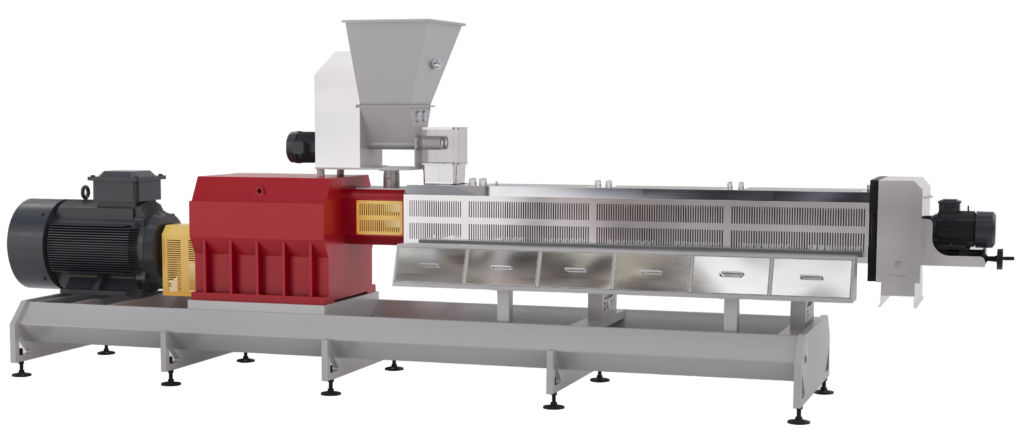
What Exactly Is a Sandwich Rice Cracker?
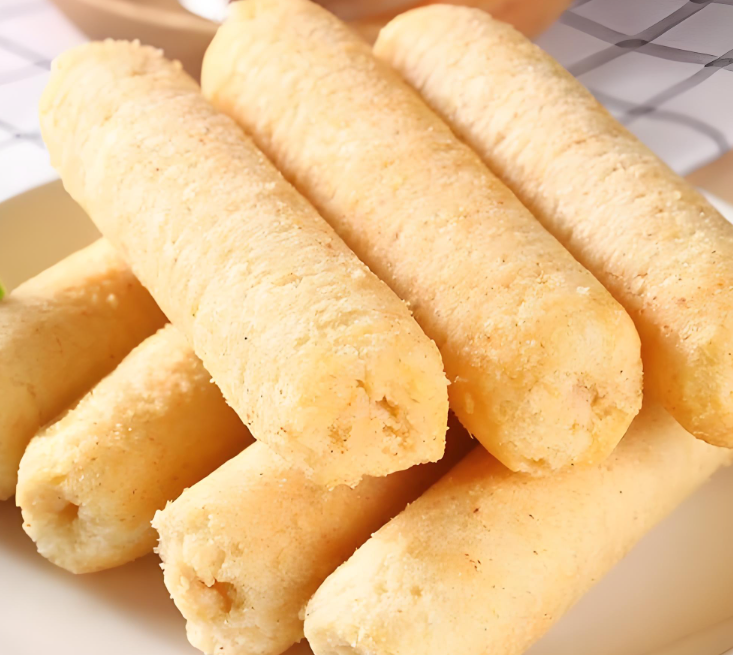
A sandwich rice cracker is a puffed snack consisting of a hollow, crispy cereal shell with a filling injected into its center. The outer shell is typically made from grains like rice, corn, or a mixture of both, while the filling—often cream-based—can range from chocolate and peanut butter to cheese and savory pastes. But the seemingly simple concept is, in reality, a feat of modern food engineering.
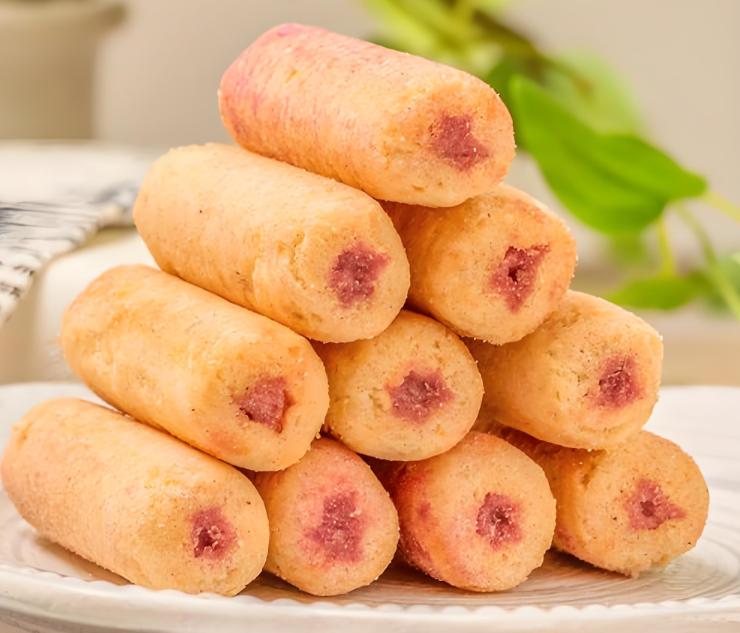
The Industrial Machinery Behind the Magic
Commercial sandwich rice cracker production relies on an assembly line of specialized equipment: mixers, feeders, extruders, filling injectors, shaping cutters, ovens, and packaging machines. The centerpiece is the twin-screw extruder, a powerful machine that cooks and shapes the dough under intense heat and pressure. This is not artisanal craftsmanship—it’s mass production on an industrial scale.
Step-by-Step: The Manufacturing Process Exposed
1. Raw Material Preparation
The process begins with raw grains—rice, corn, or soybeans—being fed into a stone remover to eliminate debris. The cleaned grains are then crushed and sieved through a 20-mesh screen to create a fine powder. In many commercial recipes, the base flour mixture includes not just grains but also wheat flour, sugar, salt, and even calcium carbonate—a common food additive used as an anti-caking agent and calcium supplement.
2. Mixing the Dough
The dry ingredients are combined with water in a mixer until the moisture content reaches 10% to 14%. This precise moisture control is critical—too wet or too dry, and the extrusion process fails.
3. Preparing the Filling
Simultaneously, the filling is prepared in a separate system. Here’s where things get concerning for health-conscious consumers: the filling is typically cream-based, using ingredients like palm oil, sugar, milk powder, and soy lecithin. In many formulations, palm oil is heated until melted, then mixed with powdered ingredients and subjected to ultra-fine grinding. Flavorings, artificial colors, and preservatives are often added at this stage. The filling must be fluid enough to pump but thick enough to stay in place—a delicate chemical balance achieved through industrial formulation.

4. The Co-Extrusion Process: The Heart of the Operation
This is where the “magic” happens—and where the true nature of the process becomes clear. The grain-based dough and the filling are fed into a co-extrusion system, typically built around a twin-screw extruder. Inside the machine, the dough is subjected to temperatures between 110°C and 150°C under high pressure, transforming it into a molten, gel-like mass. At the specially designed die at the extruder’s exit, the dough is shaped into a continuous hollow tube while the filling is simultaneously injected into its center.
As this filled tube emerges, it experiences a sudden drop in pressure, causing the water in the dough to vaporize instantly—this is what creates the puffed, airy texture of the outer shell. The filling remains trapped inside. This is not cooking; it’s high-temperature, high-pressure industrial processing that bears no resemblance to traditional food preparation.
Key machine parameters are precisely controlled: screw speed 14–25 Hz, feeding speed 14–25 Hz, filling injection speed 8–17 Hz, and cutter speed 15–25 Hz. Each setting is calibrated for maximum efficiency, not nutritional value.
5. Shaping and Cutting
The continuous filled tube is pulled through shaping rollers and cut into uniform pieces—typically around 73–77 mm × 22–25 mm × 7–10 mm in size. At this stage, the product’s moisture content drops to 6% to 8%.
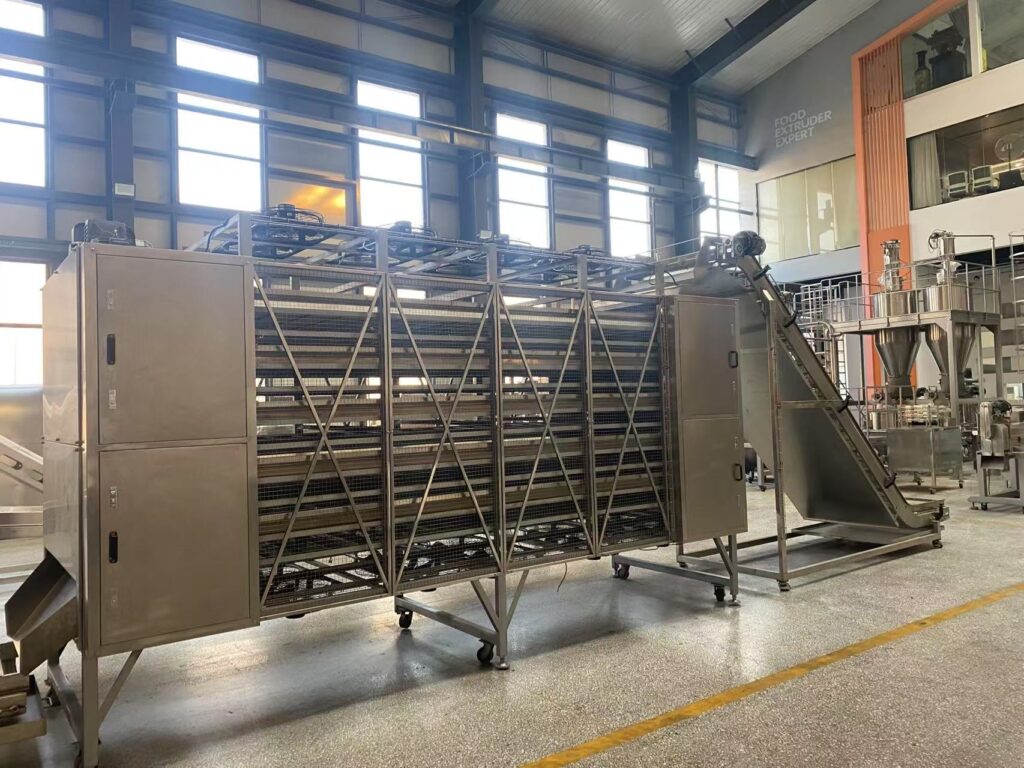
6. Drying
The cut pieces are transferred to industrial dryers and baked at 70–90°C for 12–30 minutes. This step reduces moisture to a mere 2% to 3%, extending shelf life but also concentrating sugars, fats, and additives.
7. Oil Spraying and Seasoning
In a rotating drum, the dried snacks are sprayed with oil—this serves to prevent moisture absorption and extend shelf life. Seasonings are then sprinkled on. This step adds significant fat content to an already oil-heavy product.

8. Packaging
Finally, the finished products are sealed in polyethylene plastic film using pillow-type packaging machines. The packaging is designed to be airtight, maximizing shelf life—sometimes for months or even years.
The Hidden Truth: What’s Really in Your Snack?
The Outer Shell:
- Rice flour, corn flour, soybean powder, wheat flour
- Sugar, salt, calcium carbonate
- Water
The Filling:
- Palm oil (often the primary ingredient)
- Sugar or glucose powder
- Soybean powder, milk powder
- Soy lecithin (emulsifier)
- Flavorings, colorings, preservatives
- Tea polyphenols (as antioxidant)
Why This Matters
The sandwich rice cracker manufacturing process reveals several concerning realities:
Highly Processed: Every ingredient is refined, powdered, and industrially processed. The “rice” and “corn” bear little resemblance to their natural forms.
Oil-Heavy: Palm oil—high in saturated fats—is a staple ingredient in both the shell and the filling.
Additive-Laden: Emulsifiers, anti-caking agents, preservatives, and artificial flavorings are standard components.
Nutritionally Questionable: The extrusion process destroys many natural nutrients, while the high temperatures may create undesirable compounds.
Industrial, Not Artisanal: This is not food crafted by hands—it’s a product engineered for efficiency, shelf life, and profit margins.
The next time you bite into a sandwich rice cracker, remember: you’re not eating a simple grain-based snack. You’re consuming a carefully engineered industrial product, designed in a laboratory, manufactured by machines, and optimized for everything except your health.
 Spanish
  English
  Russian
  Italian
  Arabic
  Portuguese
  German
  French
  Japanese
  Moroccan Arabic
  Persian
  Belarusian