
Producing safe, high-quality dog food is not just about nutrition—it is fundamentally about contamination control. Unlike human food, pet food is often manufactured in high-volume facilities using raw animal proteins, grains, and vegetables. Without rigorous safeguards, deadly pathogens like Salmonella and Listeria, physical hazards (metal, plastic), and chemical residues (pesticides, mycotoxins, cleaning agents) can enter the supply chain and sicken pets—and even the humans handling the food.
This guide outlines the key contamination risks and the industrial best practices required to prevent them at every stage of production, from raw material intake to final packaging.
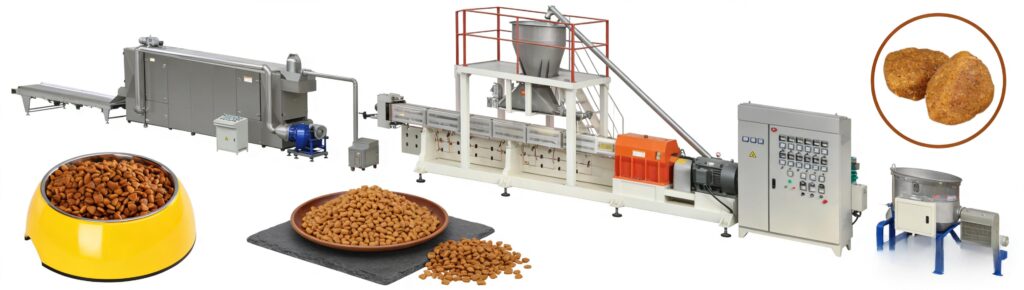
The Three Types of Contamination in Dog Food
- Biological: Bacteria (Salmonella, E. coli, Listeria, Clostridium), mold (Aspergillus producing aflatoxins), yeast.
- Chemical: Pesticides, heavy metals (lead, mercury), mycotoxins (from moldy grains), excessive drug residues, cleaning agents, lubricants.
- Physical: Metal shards, plastic fragments, glass, bone chips, stones, or equipment wear particles.
A robust contamination prevention program addresses all three simultaneously.
Critical Control Points for Contamination Prevention
1. Raw Material Receiving & Storage (The First Line of Defense)
Contamination often begins at the loading dock.
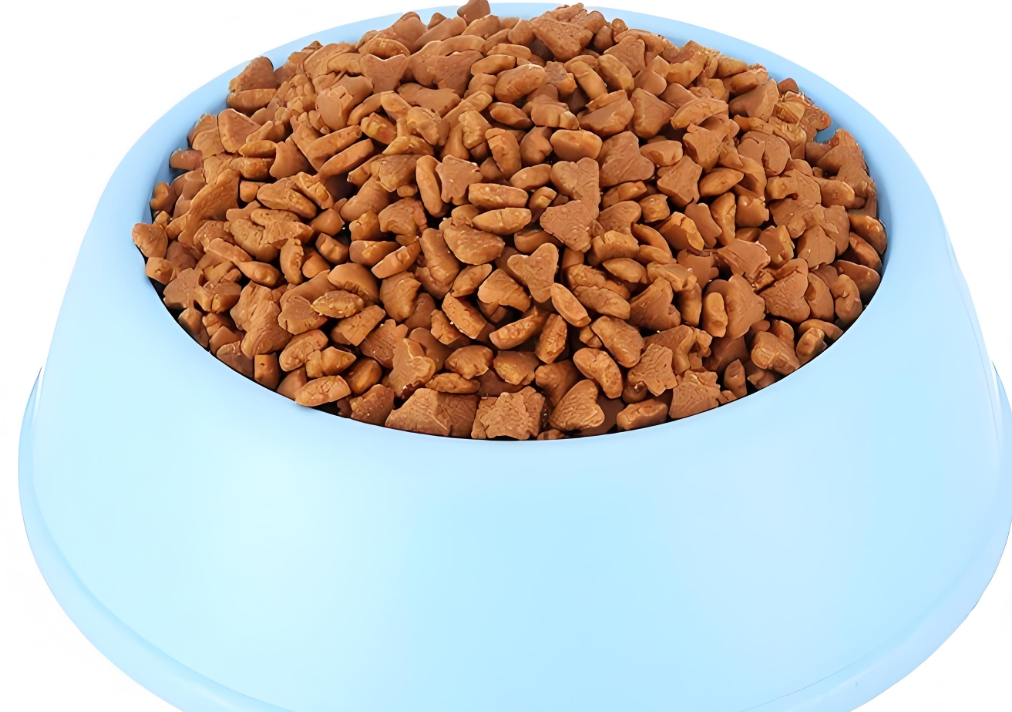
- Supplier Qualification & Auditing: Only source ingredients from certified suppliers who test for pathogens and toxins. Require Certificates of Analysis (CoA) for each batch of high-risk materials like meat meal, grains, and animal fats.
- Incoming Inspection: Reject any shipment with torn bags, signs of pest infestation, abnormal odor, or visible foreign material. Test each lot of grain for aflatoxins (potent liver toxins produced by mold).
- Segregated Storage:
- Store raw animal proteins (fresh or frozen) in a completely separate cooler from cooked or ready-to-eat ingredients.
- Keep dry ingredients (grains, starches, vitamin premixes) in humidity-controlled silos or rooms (below 12–14% moisture) to prevent mold growth.
- Use FIFO (First-In-First-Out) inventory rotation to prevent expired ingredients from being used.
2. Processing: The Kill Step (Heat Treatment)
For extruded (kibble) and canned dog food, the “kill step” is thermal processing designed to eliminate vegetative pathogens.
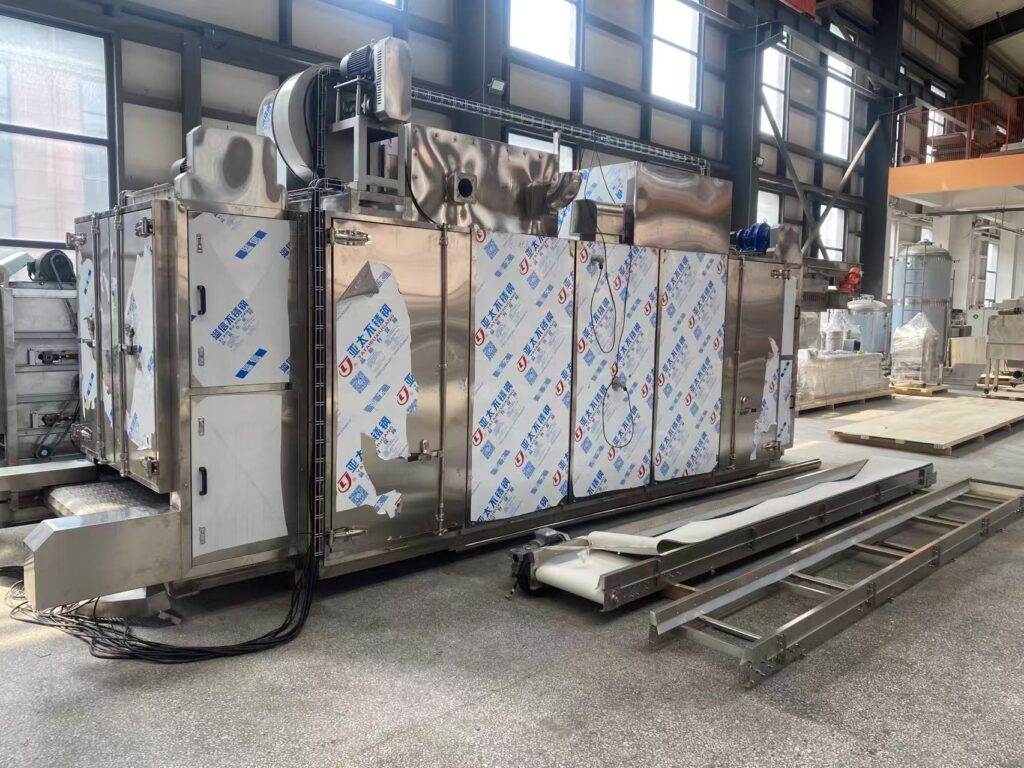
- Extrusion (Dry Kibble): The cooking process must achieve a minimum internal temperature of 90–100°C (194–212°F) with sufficient residence time under pressure. Continuous monitoring of temperature, steam pressure, and dwell time is mandatory.
- Retort Canning (Wet Food): Canned dog food must be heated to at least 121°C (250°F) under pressure to destroy Clostridium botulinum spores. Validate the thermal process for every can size and recipe.
- Post-Kill Cross-Contamination Prevention: The single greatest risk is recontamination after the kill step. The cooked kibble must never touch raw surfaces, and air handling systems must maintain positive pressure (air flows outward) in the post-cook zone.
3. Hygienic Equipment Design & Cleaning (CIP/COP)
Bacteria love harborage points—cracks, crevices, hollow rollers, and dead legs in piping.
- Clean-in-Place (CIP) Systems: All wet processing equipment (mixers, conveyors, extruder barrels) should be designed for automated CIP. Use a validated sequence: pre-rinse → hot caustic wash (e.g., 2% NaOH at 75°C) → intermediate rinse → acid wash → final sanitizer rinse (e.g., peracetic acid or hypochlorite).
- Dry Cleaning for Low-Moisture Environments: In dry kibble post-processing, water can actually promote bacterial growth. Instead, use vacuums, compressed air, and dry steam. Follow a “clean to dry” protocol.
- Verification: Swab surfaces for ATP (adenosine triphosphate) bioluminescence after cleaning to confirm organic residue removal. Periodically send swabs to a lab for pathogen culture (Salmonella, Listeria spp.).
4. Environmental Monitoring & Zoning
A Hazard Analysis Critical Control Point (HACCP) approach divides the factory into hygienic zones.
| Zone | Area | Control Measures |
|---|---|---|
| Zone 1 (High Hygiene) | Direct post-cook contact surfaces (coolers, coating drums) | Strictly restricted access; dedicated tools and uniforms; HEPA-filtered positive air pressure |
| Zone 2 (Medium) | Non-contact surfaces near Zone 1 (machine exteriors, walls) | Frequent sanitation; no employee passage from raw areas |
| Zone 3 (Low/Raw) | Raw material intake, meat grinding, mixing | Full containment; separate ventilation; employees wear distinct colored uniforms and cannot enter Zone 1 without changing |
- Regular Pathogen Swabbing: Every week, swab 30–50 standardized locations across plant zones (floor drains, belts, air returns, employee boot soles). A single positive for Salmonella in Zone 1 triggers a production shutdown until root cause is found.
5. Employee Hygiene & Training
Human handlers are a major source of cross-contamination.
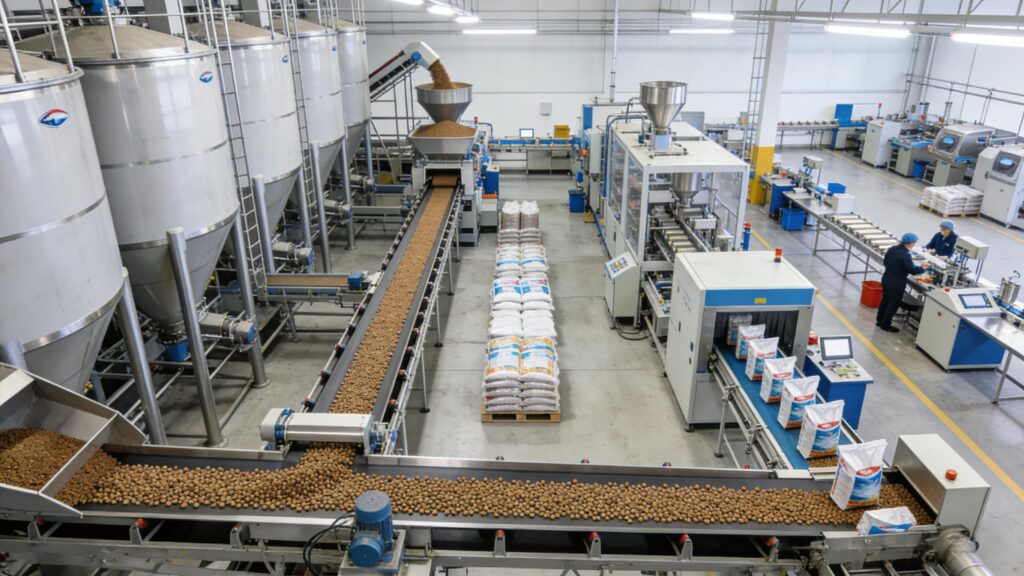
- Strict Entry Protocols: Hairnets, beard covers, disposable gloves, and dedicated smocks/uniforms. Mandatory handwashing with antimicrobial soap for at least 20 seconds upon entry.
- Illness Policy: Any employee with vomiting, diarrhea, or infected cuts must be reassigned away from production lines.
- Color-Coded Zones: Require employees to change into zone-specific boots and uniforms when moving from raw ingredient handling to post-cook areas. Use footbaths with sanitizer at zone boundaries.
- Ongoing Training: Monthly refreshers on “What is contamination?” and “Why the kill step matters.” Track training records.
6. Foreign Material Control (Physical Contaminants)
Metal and plastic are invisible to the naked eye at the end of a high-speed line.
- Magnets: Install high-strength rare earth magnets over ingredient chutes and at the extruder inlet to capture ferrous metal from grain mills or worn equipment.
- Magnetic Separators: Use rotating magnetic drum separators for dry powders.
- X-Ray Inspection (Gold Standard): Place an X-ray machine immediately before the bagging station. Modern X-rays detect:
- Stainless steel (even non-magnetic 316)
- Glass, stone, and calcified bone
- Dense plastic
- Missing or broken product pieces
- Metal Detectors: As a backup for ferrous and non-ferrous metals, but X-rays are superior for dense contaminants.
- Sieves & Screens: Use vibrating screens (e.g., 10–20 mesh) for incoming flour or powdered vitamin premixes to remove oversized debris.
7. Mycotoxin & Chemical Residue Control
Chemical contamination is often invisible and odorless.

- Mycotoxin Testing: Test every incoming lot of corn, wheat, rice, and soy for aflatoxin B1 (limit ≤ 20 ppb in US dog food; stricter in EU at ≤ 10 ppb). Also test for fumonisins, deoxynivalenol (vomitoxin), and ochratoxin.
- Heavy Metals: Periodically test meat meals and fish-based ingredients for lead, mercury, and cadmium. Source from regions with known low environmental contamination.
- Cleaning Chemical Residue: After CIP, rinse thoroughly and test final rinse water for pH and conductivity. Use a residual test strip for quaternary ammonium or chlorine sanitizers—zero tolerant in final product.
- Lubricants: Use only NSF H1 (food-grade) lubricants on any equipment that might contact food. Maintain a lubrication log.
8. Packaging & Finished Product Quarantine
Contamination can be introduced at the very last step.
- Packaging Material Inspection: Before using new bags or cans, examine for pinholes, dirty interior surfaces, or insect damage.
- Seal Integrity: For flexible bags, perform a seal strength test (tensile) and a dye penetration test to ensure no leaks. For cans, check seam double-seal dimensions (body hook, cover hook, overlap).
- Hold & Release: Finished pallets should be quarantined in a clean, dry warehouse until laboratory results confirm:
- Salmonella: Negative in 375g sample (FDA BAM method)
- Listeria monocytogenes: Negative
- Aflatoxin: ≤ 20 ppb
- Standard plate count: < 10,000 CFU/g
- Traceability: Every batch must be coded with date, line, shift, and ingredient lot numbers. You must be able to recall a specific 30-minute production window within 2 hours of notification.
Real-World Example: A Cross-Contamination Scenario
What went wrong? A dry kibble plant found Salmonella in finished product. Investigation traced to a shared bucket conveyor belt. The belt passed from the raw mixing zone into the post-cook cooling zone. Despite regular cleaning, the belt’s fabric backing had absorbed meat juices and never dried completely, creating a biofilm.

Corrective actions:
- Replaced fabric belt with solid plastic modular belt (non-absorbent).
- Added a dry steam sanitizer head that automatically hits the belt each time it passes from raw to cooked side.
- Increased swabbing frequency on belt to daily for one month.
Summary Checklist for a Contamination-Free Dog Food Plant

| Stage | Critical Control |
|---|---|
| Receiving | Inspect every load; test grain for aflatoxin |
| Storage | Segregate raw from cooked; control humidity |
| Grinding/Mixing | Clean equipment between batches; use magnets |
| Kill Step (Extrusion/Retort) | Validate time/temperature; log continuously |
| Post-Cook Handling | Enforce zoning; positive air pressure; dedicated tools |
| Coating (Fats/Flavors) | Use clean, filtered liquid fats; avoid standing tanks |
| Packaging | X-ray or metal detector; seal integrity test |
| Finished Goods | Quarantine until micro and toxin results pass; traceability codes |
Final Thought
Preventing contamination in dog food production is not a single action—it is a culture. From the CEO to the line operator, everyone must understand that pet food safety is public health. A single contaminated batch can cause recalls, lawsuits, destroyed brand reputation, and—most tragically—the death of beloved family pets.
Invest in validated kill steps, rigorous environmental monitoring, and empowered employees who stop the line when something looks wrong. That is the true recipe for safe, nutritious dog food.
1.Will you help us with the installation ?
Yes , We will send engineers to install and debug the equipment, and assist in training your staff.
2.Are you a factory or trading company?
We are a factory.
3.What certificate do you have?
We have ISO and CE certificate.
4.How long is the warranty period?
All of our machines have one year warranty.
5.What’s the main market of your company?
Our customers all over the world.
6.How much production capacity of your company one year?
This depends on your needs.
 German
  English
  Russian
  Spanish
  Italian
  Arabic
  Portuguese
  French
  Japanese
  Moroccan Arabic
  Persian
  Belarusian