
Introduction
Fortified rice, also known as enhanced, artificial, or nutritious rice, is a food product designed to combat micronutrient malnutrition (often called “hidden hunger”). Billions of people rely on rice as a dietary staple, but milled white rice is poor in essential micronutrients like iron, zinc, folic acid, and vitamin A. Fortified rice aims to address this deficiency by adding these lost or missing nutrients back into the grain.
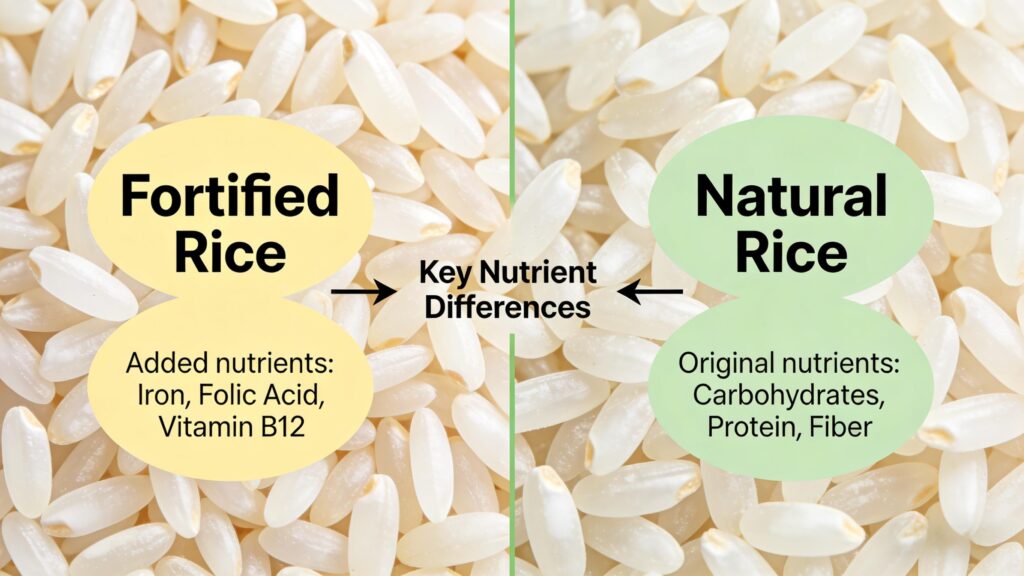
Unlike traditional rice, which is simply milled and polished, fortified rice is an engineered product. It is typically produced by creating rice-like kernels from rice flour dough that has been enriched with a precise blend of vitamins and minerals. These synthetic kernels are then mixed with natural polished rice (usually at a ratio of 1:100 to 1:200) to deliver a nutritionally enhanced final product. This article outlines the key stages of this manufacturing process.
1. Raw Material Preparation and Dry Mixing
The foundation of the fortified kernel is rice flour. This flour is typically made from broken rice grains (which are otherwise a low-value byproduct of milling), creating a circular economy. The flour must be very fine and uniform to ensure a smooth texture and proper cooking behavior.
The critical step is the creation of the premix. A highly concentrated blend of micronutrients is prepared according to World Health Organization (WHO) or national food fortification standards. This premix typically contains:
- Iron (often encapsulated to prevent off-flavors and color changes).
- Folic Acid.
- Vitamin B12.
- Zinc.
- Vitamin A (often in a stable, encapsulated form).
The rice flour, vitamin-mineral premix, and other dry ingredients (such as emulsifiers or gums to improve texture) are loaded into a high-intensity ribbon or paddle mixer to ensure every particle of flour is evenly coated with the nutrient blend. Homogeneity at this stage is critical for the final nutritional consistency.
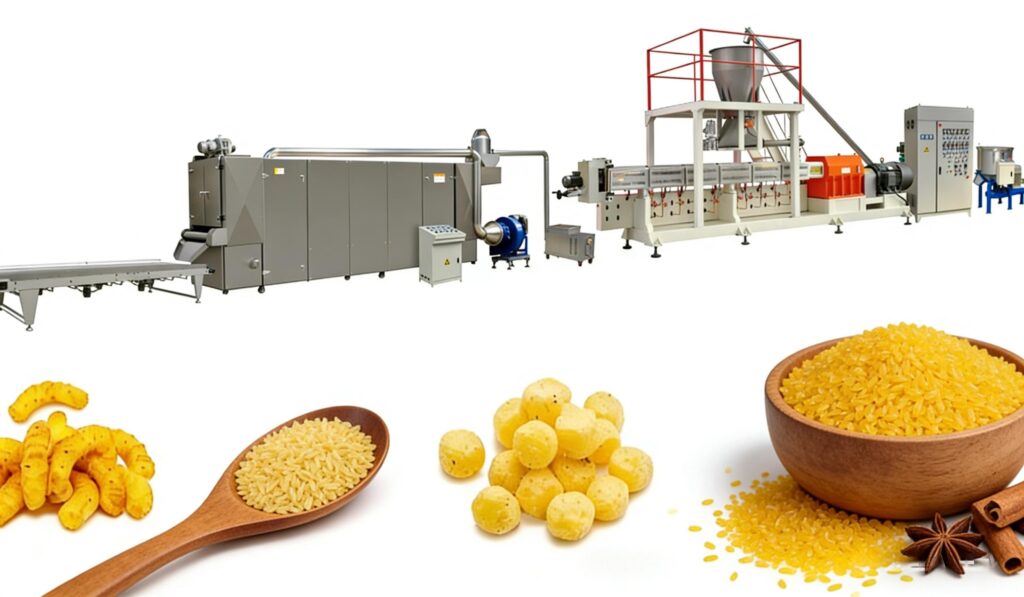
2. Wet Mixing and Dough Formation
The dry blend is then transferred to a continuous mixer where water (typically 30-40% of the flour weight) is added. This creates a stiff, homogeneous dough.
- Key Additives: To mimic the texture and cooking quality of natural rice, other ingredients are often added:
- Binders: Starches or gums (e.g., xanthan gum) help the kernel hold its shape.
- Emulsifiers: Such as mono- and diglycerides to prevent stickiness.
- Lipids: A small amount of oil can improve mouthfeel.
- Hydration: The water hydrates the starch and activates the binders, forming a cohesive, pliable mass. The dough temperature is carefully controlled (typically 25-40°C) to prevent premature starch gelatinization.
3. Extrusion (Kernel Shaping)
Extrusion is the core technology that transforms the dough into rice-shaped kernels. This is typically done using a single-screw or twin-screw extruder.
- Feeding and Conveying: The dough is fed into the extruder barrel and transported forward by the rotating screw.
- Low-Temperature, Low-Pressure Process (Cold Extrusion): Unlike snacks or dog food which use high-temperature extrusion to puff the product, fortified rice is typically made using cold extrusion (below 70°C). High heat would degrade sensitive vitamins (especially vitamin A and folic acid). Instead, the dough is simply compressed and shaped without cooking it fully at this stage.
- Die Plate: The dough is forced through a specialized die plate containing multiple small holes shaped like rice grains (typically 2 mm wide, 5-8 mm long with pointed ends). The shape must closely mimic natural rice so that consumers do not reject the product.
4. Cutting and Spheronization
As the rice-shaped strands exit the die, a high-speed rotating knife cuts them to the desired length (approximately the length of a natural rice grain).

Some systems include an additional spheronizer (a rotating friction plate) after cutting. This machine tumbles the cut kernels, rounding the sharp edges and giving them a smoother, more authentic rice appearance. This step also helps to seal the surface, preventing the nutrients from leaching out during washing and cooking.
5. Drying and Tempering (Stabilization)
The freshly extruded kernels are very moist (30-40% moisture) and are soft and fragile. They must be dried to a shelf-stable level (10-12% moisture) without cracking.
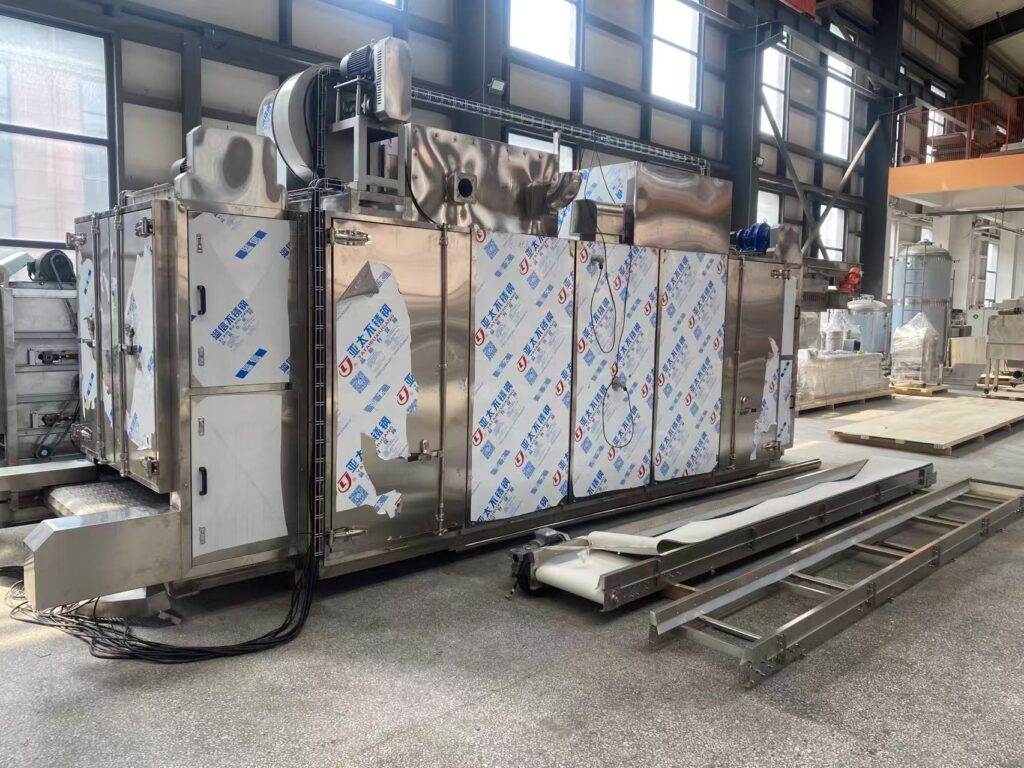
- Pre-Drying: Kernels are conveyed through a fluidized bed dryer or belt dryer using controlled warm air (40-60°C). This gentle heat removes surface moisture quickly.
- Tempering (Conditioning): After pre-drying, the kernels are transferred to a tempering bin for several hours. This allows internal moisture to migrate evenly to the surface, equalizing the moisture gradient and preventing internal stresses that lead to cracking.
- Final Drying: A second drying stage reduces the moisture to the final target (10-12%). The drying process must be carefully managed: too fast will cause cracks, and too slow may allow microbial growth.
6. Coating (Optional Surface Protection)
To further protect the sensitive vitamins (especially vitamin A) from oxidation and to prevent nutrients from washing into the cooking water, a thin, edible coating may be applied.
- Coating Materials: Food-grade waxes (e.g., carnauba wax or beeswax), shellac, or edible polymers.
- Application: The coating is sprayed onto the kernels in a rotating drum coater as they tumble. The coating dries quickly, forming a thin, invisible barrier. This “encapsulation” also helps to mask any metallic taste that iron might otherwise impart.
7. Blending and Final Quality Control
The fortified rice kernels are not meant to be eaten alone. They are a concentrate. Therefore, they are blended with natural, polished white rice at a precise ratio.
- Blending: The fortified kernels (typically 0.5-1% of the total weight) are fed into a continuous blender along with bulk natural rice. The mixture is gently tumbled to achieve a uniform distribution—every spoonful of rice should contain approximately one fortified kernel.
- Quality Control Checks:
- Color and Appearance: The fortified kernels should visually resemble the natural rice (often manufacturers add a subtle color, like light yellow, for quality control traceability).
- Size and Shape Verification: Kernels are screened to remove broken or misshapen pieces.
- Nutrient Analysis: Samples are tested using HPLC (for vitamins) or ICP (for minerals) to confirm that the final blend meets the declared nutritional values.
- Cooking Test: A sample is cooked to ensure the fortified kernels soften at the same rate as natural rice and do not disintegrate or remain hard.
- Leaching Test: The cooking water is analyzed to ensure that excess nutrients are not washing out.
8. Packaging
The final blended rice is packaged in moisture-proof, light-barrier bags (often with a nitrogen flush) to protect the vitamins from degradation. The packaging also includes clear labeling indicating that the product is “fortified” or “enriched.”

Conclusion
The manufacturing of fortified rice is a precise blend of food science and public health engineering. Using low-temperature extrusion, manufacturers can create rice-shaped kernels that carry a concentrated load of essential micronutrients without compromising the taste, texture, or cooking quality that consumers expect. When blended with ordinary rice at a ratio of 1:100, this technology provides a simple, cost-effective, and scalable solution to address widespread malnutrition, delivering critical vitamins and minerals in every single meal.
 Belarusian
  English
  Russian
  Spanish
  Italian
  Arabic
  Portuguese
  German
  French
  Japanese
  Moroccan Arabic
  Persian