
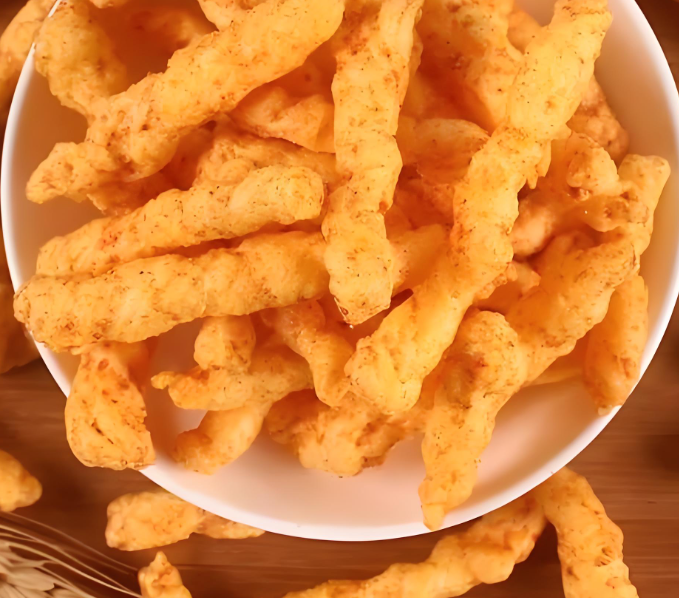
Kurkure, a popular brand of savory snack known for its unique curly shape and crunchy texture, is a staple in many countries, particularly in India. kurkure making machine price Often compared to Cheetos or Nik Naks, its distinct taste and mouthfeel are achieved through a specialized food processing technique known as extrusion. While the specific recipes are proprietary, the fundamental manufacturing process involves a combination of mixing, high-pressure cooking, shaping, frying, and flavoring .
1. Raw Material Preparation
The primary ingredient for Kurkure is corn grits (also known as maize grits). Unlike corn flour, which is too fine, corn grits provide the necessary granular structure for the final product’s crispiness . Supplementary ingredients may include rice flour, edible vegetable oil, and water. These dry ingredients are fed into a high-speed mixer where water is added to achieve a specific moisture level, typically around 12-15%. This hydration is critical; too much water makes the dough sticky, while too little results in poor expansion later in the process .

2. The Extrusion Process (The Critical Step)
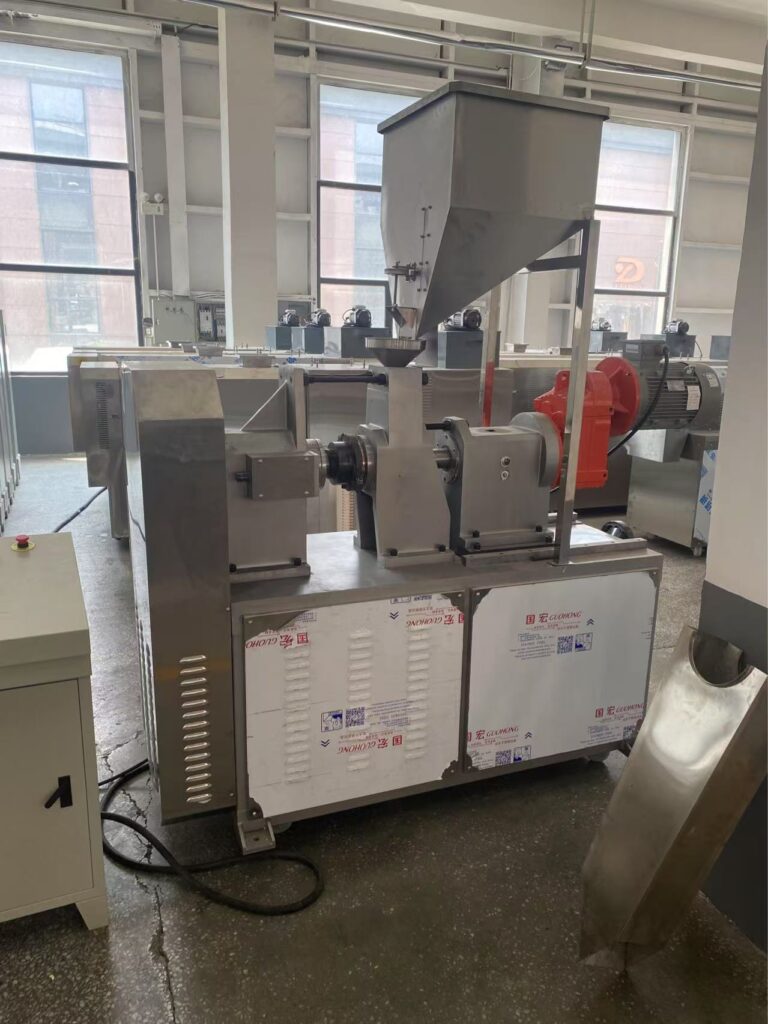
The heart of Kurkure manufacturing lies in the Rotary Head Extruder. Unlike standard pasta extruders that simply push dough through a die, the Kurkure extruder utilizes a unique kneading and twisting mechanism.

Once the moistened corn grits enter the extruder hopper, a rotating screw conveys the mixture down the barrel. Here, two forces act upon the dough:
- High Pressure: The screw compresses the material, creating significant pressure (10-20 bar).
- High Temperature: Friction between the rotating screw and the barrel wall generates intense heat, raising the temperature to approximately 150-180°C .
As the dough travels through the barrel, it transforms into a molten, gelatinized mass. When this super-heated, high-pressure dough reaches the rotating die head, kurkure making machine price it is forced through brass plates. The combination of the rotating die and the sudden drop in atmospheric pressure causes the moisture inside the dough to flash into steam instantly. This “explosion” of steam puffs the snack up, creating the porous, light, and crispy structure. Simultaneously, rotating knives cut the extruded rope into bite-sized pieces .
3. Frying (or Baking)
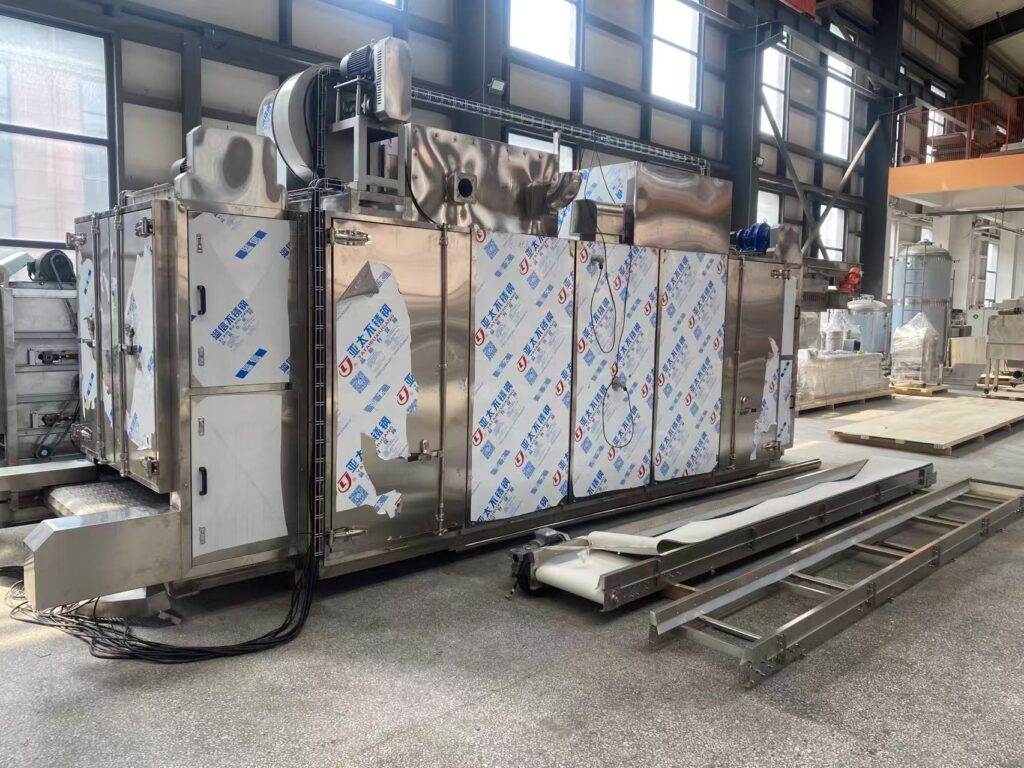
After extrusion, the shaped pellets pass through a conveyor system and enter a continuous fryer. They are submerged in hot vegetable oil (or a blend of oils) at temperatures ranging from 170°C to 190°C. Frying serves three purposes:
- Texture: It removes residual moisture, solidifying the crispy crunch.
- Flavor: It adds the rich, fatty mouthfeel associated with savory snacks.
- Color: It gives the snack its characteristic golden-yellow hue .
After frying, the snacks pass over a vibratory de-oiling machine. This shaking mechanism helps remove excess surface oil, ensuring the final product is not greasy and extends the shelf life of the frying oil by filtering out debris .
4. Flavor Coating
Once fried and de-oiled, the base snack is hot and ready to receive its flavor. The pieces enter a rotating coating drum. First, a fine mist of oil is often sprayed onto the snacks; this acts as an adhesive. Immediately following, the flavor powder—such as Masala, Cheese, or Chaat—is dusted onto the rotating snacks. The tumbling action of the drum ensures that every curly surface is evenly coated with the seasoning .
5. Cooling and Packaging
The flavored snacks are transported via a cooling conveyor. This step allows the oil to set and the snack to cool to room temperature, which prevents condensation inside the packaging. Finally, the Kurkure are fed into vertical packaging machines. kurkure making machine price To maintain freshness and crunch, the bags are often flushed with nitrogen gas to displace oxygen, preventing the oil from going rancid and keeping the moisture out. The bags are then sealed, date-coded, and packed into cartons for distribution .

Summary of Process Flow
For a quick overview, the production line follows this sequence:
- Mixing: Corn grits + Water + Color
- Extrusion: High pressure & heat (Rotary Head Extruder)
- Cutting: Shaped into curls
- Frying: Cooked in oil for crispiness
- De-oiling: Removal of excess oil
- Flavoring: Coated with masala/seasoning in a drum
- Cooling: Stabilization
- Packaging: Nitrogen flushed bags .
 Belarusian
  English
  Russian
  Spanish
  Italian
  Arabic
  Portuguese
  German
  French
  Japanese
  Moroccan Arabic
  Persian