Entering the pet feed industry requires more than purchasing an extruder and mixing raw materials. It demands systematic market research, nutritional formulation, regulatory approval, factory planning, equipment procurement, supply chain building, quality control system construction and team training. Missing any key preparation link may lead to unqualified products, production shutdowns or food safety risks. This article outlines all core preparations before you start manufacturing extruded kibble for cats and dogs.
1. Market Research and Feasibility Study
First, define your product positioning: budget mass-market kibble, mid-range balanced daily food, high-protein premium formulas, grain-free products or veterinary functional pet food. Conduct market surveys to understand target customer demands, competitor ingredient formulas, pricing and packaging. Complete a feasibility report covering production capacity, capital budget, break-even analysis and sales forecasting. For small new factories, a starting capacity of 100–300 kg/h twin-screw extrusion line is a common choice to control initial investment and reduce inventory pressure.
2. Regulatory Compliance and Certification
Pet feed is strictly regulated animal food, and production cannot start before obtaining relevant permits. Different markets follow different standards: the US adopts AAFCO nutritional profiles and FDA CGMP rules; Europe follows FEDIAF guidelines; China requires the feed production license and compliance with national feed standards. You must register the production plant, prepare ingredient files, finish label review and establish a HACCP food safety plan. All labels must clearly mark guaranteed nutrient analysis, ingredient list, feeding instructions, shelf life and manufacturer information. Any false nutritional claims will trigger regulatory penalties and product recalls.
3. Nutritional Formula Development and Laboratory Testing
Recruit a pet nutritionist or cooperate with a professional feed R&D laboratory to design formulas that meet nutritional standards. For cats, as obligate carnivores, the formula must guarantee sufficient animal protein, taurine and low carbohydrate levels. Test raw materials and finished products in third-party labs for crude protein, fat, moisture, ash, vitamins and minerals. Microbiological tests including salmonella and mould count are mandatory. Each new formula should complete at least 3–5 pilot test batches on the extruder to adjust extrusion temperature, screw speed and moisture addition, and avoid burnt pellets, unstable pellet shape or nutrient loss.
4. Factory Site Selection and Workshop Layout
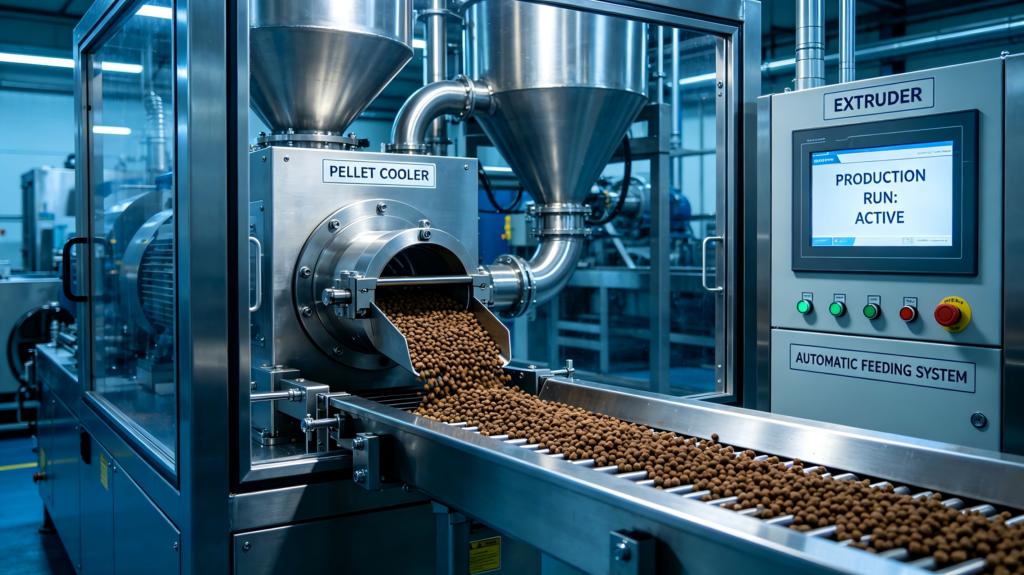
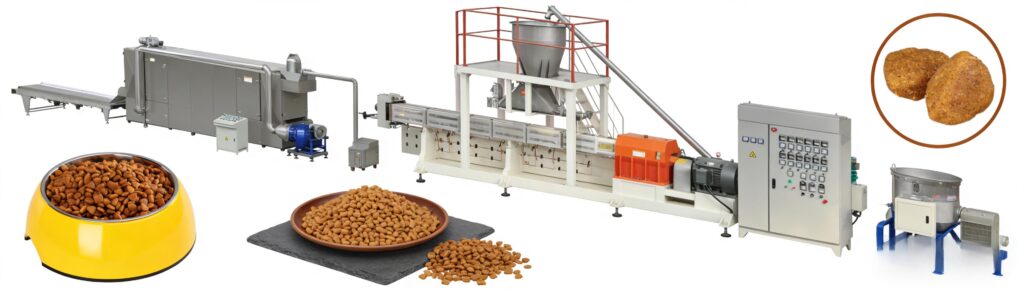
Select a factory location with stable water, electricity and steam supply, convenient raw material transportation and sewage disposal approval. The workshop must adopt a linear one-way workflow: raw material receiving → storage → grinding → pre-conditioning → twin-screw extrusion → drying → fat and palatability coating → cooling → packaging → finished product warehouse. Strict physical separation is required between raw material zone and finished product zone to prevent cross-contamination. Set up refrigerated storage rooms for fresh meat and meat meal, dry warehouses for grain and powder premixes, independent cleaning areas and a quality inspection laboratory. The workshop needs pest control, dust removal and drainage systems to meet food-grade hygiene requirements.

5. Equipment Selection and Procurement
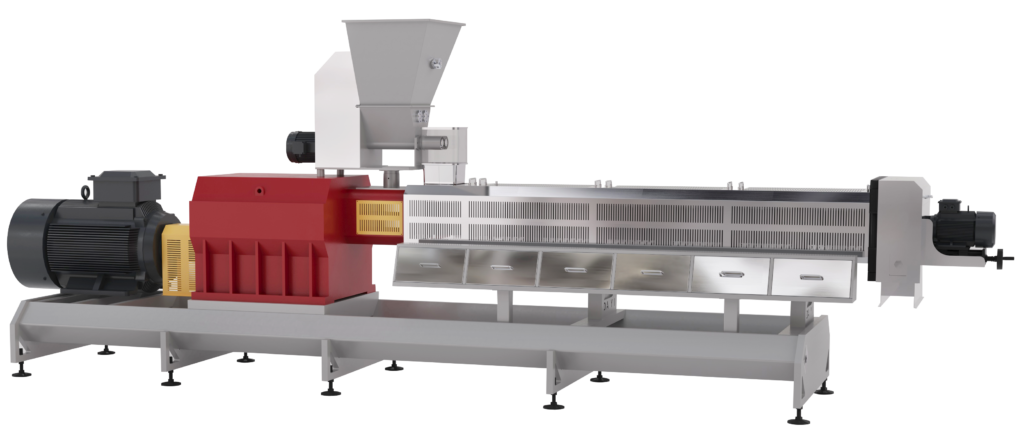
For dry extruded pet food, core equipment includes raw material grinding hammer mill, mixing machine, pre-conditioner, twin-screw extruder, dryer, oil coating system, cooling conveyor, packaging machine and auxiliary dust collection system. When purchasing the twin-screw extruder, confirm barrel material, screw configuration, temperature control range and cleaning convenience. Prepare auxiliary tools such as brass scrapers, nylon brushes and screw pullers for regular disassembly and deep cleaning, as introduced in the previous cleaning operation manual. Before formal production, complete equipment installation, commissioning, trial run and operator safety training.
6. Raw Material Supply Chain Setup
Screen and audit qualified suppliers for meat meal, fresh meat, fish meal, corn, potato starch, vitamin-mineral premix, fat and palatability enhancers. Require suppliers to provide inspection certificates and traceability documents for each batch of materials. Set incoming material inspection rules: test moisture, protein and microbial indicators before warehousing. Build safety stock for key raw materials to avoid production interruption caused by supply delays. Raw materials should be classified and stored separately; high-fat animal materials need low-temperature storage to prevent oxidation and rancidity.
7. Quality Control and SOP System Establishment
Formulate complete standard operating procedures (SOPs), including raw material receiving, batching, extrusion parameter control, equipment purging and deep cleaning, finished product sampling, packaging and warehouse management. Set critical control points: extrusion temperature (120–180°C), drying temperature, final kibble moisture (8–10%), and microbial limits. Keep full production records including batch number, formula ratio, processing parameters, cleaning logs and test reports for traceability. Prepare emergency response plans for non-conforming products, salmonella contamination or raw material quality accidents.
8. Team Recruitment and Training
You need production operators, nutrition technicians, QC inspectors, warehouse managers and maintenance staff. Train workers on LOTO safety procedures, twin-screw extruder operation, formula batching rules, hygiene standards and cleaning workflows. Maintenance personnel must master disassembly, inspection and routine maintenance of extruder screws, barrels and die plates to reduce equipment downtime.
9. Packaging, Branding and Sales Channel Preparation
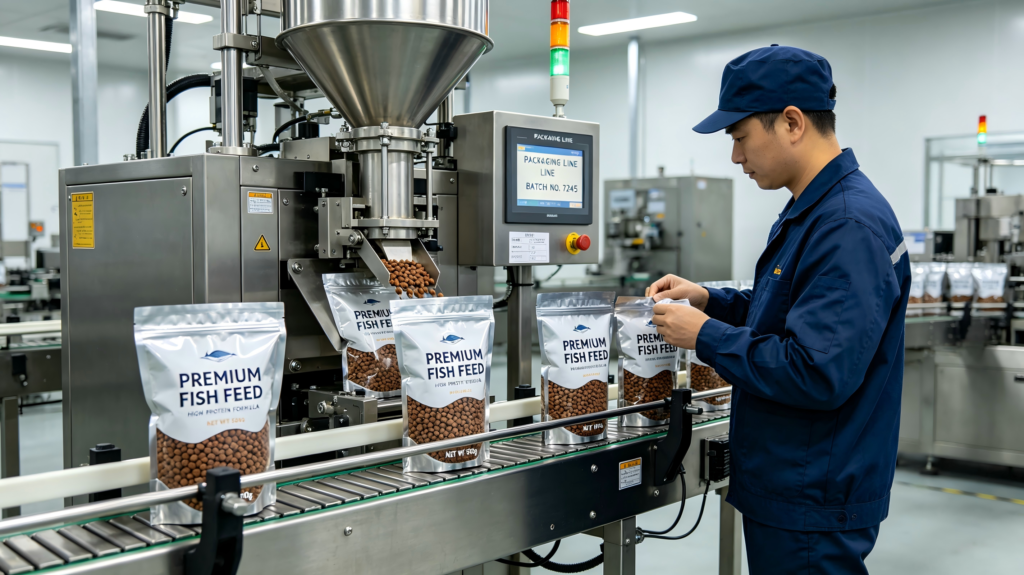
Select food-grade packaging bags with oxygen and moisture barrier properties to control shelf life. Complete brand registration, packaging design and label compliance verification. Build sales channels: offline pet shops, distributors, veterinary hospitals or online e-commerce platforms. Prepare product introduction documents, test reports and after-sales service rules before launch.
Conclusion
Pet feed manufacturing is a capital-intensive, heavily regulated industry that balances animal nutrition, food safety and mechanical processing. Do not rush into mass production. Complete market assessment, regulatory approval, formula verification, factory construction, equipment commissioning and QC system building step by step. Stable raw material supply and standardized daily equipment maintenance, especially regular cleaning of twin-screw extruders, are the long-term foundation for consistent product quality and brand credibility.
 Belarusian
 English
 Russian
 Spanish
 Italian
 Arabic
 Portuguese
 German
 French
 Japanese
 Moroccan Arabic
 Persian