
The production of fortified rice represents one of the most impactful public health innovations in modern food processing. By transforming nutrient-deficient milled rice into a vehicle for essential vitamins and minerals, this technology addresses “hidden hunger”—micronutrient malnutrition affecting over 2 billion people worldwide . This article provides a comprehensive overview of how fortified rice is manufactured, with primary focus on extrusion technology—the gold standard for commercial production.
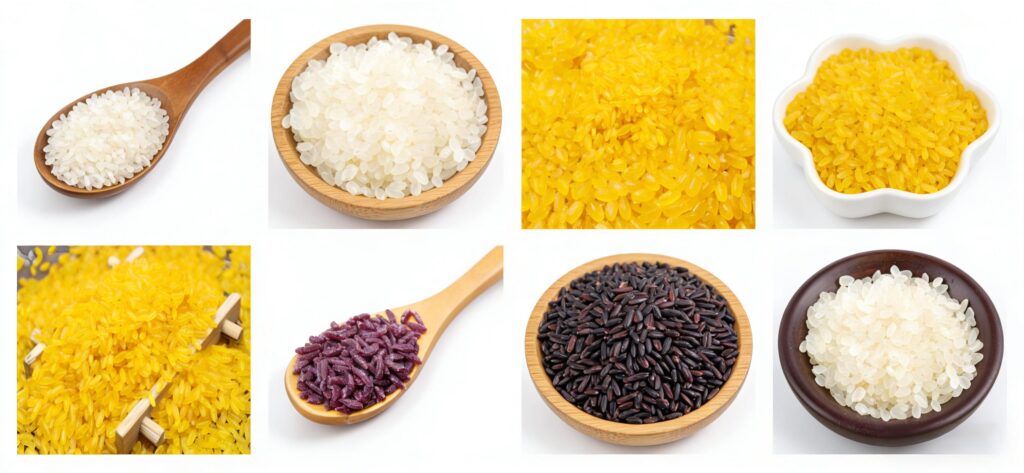
1. Overview: What Is Fortified Rice?
Fortified rice is produced by adding essential micronutrients—typically iron, folic acid, and vitamin B₁₂—to regular milled rice. The process involves two fundamental steps regardless of technology chosen :
- Production of Fortified Rice Kernels (FRK) or direct application of nutrients
- Blending of these fortified components with non-fortified rice, typically at ratios of 1:50 to 1:200
The result is rice that is nearly identical to conventional rice in appearance, aroma, taste, and texture, yet delivers critical nutrients with every meal .
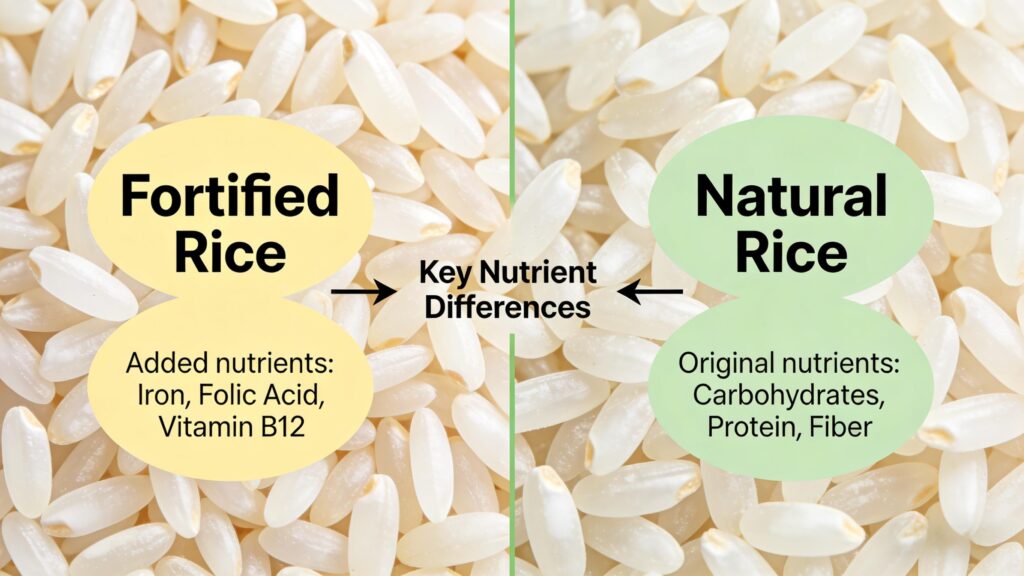
Fortification Levels (Example from NRRI Standards)
| Micronutrient | Concentration in Premix (per 100g) | Final Fortified Rice (per 100g) |
|---|---|---|
| Iron | 425 mg | 4.25 mg |
| Folic Acid | 1250 µg | 12.5 µg |
| Vitamin B₁₂ | 12.5 µg | 0.125 µg |
*Source: *
2. The Four Technologies for Rice Fortification
Before diving into detailed processing, fortified rice machinery it is essential to understand that four distinct technologies exist, each with unique characteristics and applications .
Comparison of Fortification Technologies
| Technology | Process Description | Key Characteristics | Primary Advantage | Primary Limitation |
|---|---|---|---|---|
| Hot Extrusion | Rice flour + premix + water → cooked and shaped through extruder at 70–110°C | Fully or partially pre-cooked; resembles regular rice; transparent sheen | Superior micronutrient retention; indistinguishable from regular rice; stable during washing/cooking | Higher capital investment; requires specialized equipment |
| Cold Extrusion | Same as hot extrusion but temperature maintained below 70°C | Uncooked; opaque grains; easier to distinguish from regular rice | Lower energy input; simpler equipment | Poorer consumer acceptance; nutrients less stable |
| Coating | Nutrient mixture with waxes/gums sprayed onto rice kernels in layers | Surface-coated kernels; requires multiple layers | Lower equipment cost | Nutrients can wash off during rinsing; visible coating may be rejected by consumers |
| Dusting | Powdered premix dusted onto polished rice (electrostatic adhesion) | Most economical method | Lowest cost; simple process | Requires “no rinse” labeling; nutrients lost during traditional washing |
Among these, hot extrusion is the preferred technology globally due to the stability of micronutrients during processing, storage, washing, and cooking, as well as favorable cost considerations .
3. Raw Materials for Extruded Fortified Rice Production
3.1 Rice Flour Base
The primary raw material is broken rice—a byproduct of rice milling that would otherwise have lower economic value . fortified rice machinery Using broken rice creates a circular economy benefit while reducing production costs.
Quality requirements for rice flour :
- Particle size: 60–80 mesh (approximately 177–250 microns)
- Moisture content: 13–14% (typical for milled rice)
- Purity: Cleaned, free from contaminants
- Type: Polished broken rice from any variety (Swarna, IR-64, etc.)
3.2 Micronutrient Premix
The premix contains vitamins and minerals in concentrated form. Mandatory nutrients typically include :
| Nutrient | Function | Typical Concentration in Premix |
|---|---|---|
| Iron (as NaFeEDTA or ferric pyrophosphate) | Prevents anemia | 17,000 mg/100g |
| Folic Acid | Prevents neural tube defects | 50–1250 mg/100g |
| Vitamin B₁₂ (Cyanocobalamin) | Supports nerve function | 0.52–12.5 mg/100g |
Optional nutrients may include zinc, vitamin A, thiamine (B₁), riboflavin (B₂), niacin, and pyridoxine (B₆) .
Critical consideration: The choice of iron source significantly affects product stability. NaFeEDTA (sodium iron ethylenediaminetetraacetic acid) provides superior stability and bioavailability compared to ferrous sulfate, though at higher cost .

3.3 Emulsifiers and Additives
Emulsifiers may be added to:
- Reduce specific mechanical energy input
- Prevent stickiness during cutting
- Improve dough handling characteristics
4. Detailed Processing Steps for Extruded Fortified Rice
The production of extruded fortified rice kernels involves a systematic sequence of operations .
Step 1: Pulverization (Milling of Broken Rice)
The process begins with grinding broken or whole polished rice into a fine, homogeneous flour. fortified rice machinery This step is critical because particle size directly influences FRK quality.
Equipment used: Hammer mill with interchangeable screens
Process parameters :
- Sieve mesh size: Determines flour granulation
- Capacity: Milling capacity should be at least double the extrusion capacity to ensure continuous supply
- Quality check: Metal detectors/separators upstream to prevent equipment damage
Why fineness matters: Finer flour requires less energy for dough formation, improves starch gelatinization, and produces more homogeneous FRK with better appearance .
Step 2: Mixing and Conditioning
The rice flour is precisely weighed and mixed with the micronutrient premix and, optionally, emulsifiers. This ensures uniform distribution of nutrients throughout the final product.
Equipment types :
- Automated paddle mixers: Preferred for large-scale production; documents batch weights
- Vertical batch mixers: Common in warm extrusion lines; allows addition of hot water (~90°C)
Conditioning (hot extrusion only): Steam and hot water may be added to the mixture to initiate starch gelatinization before extrusion. This pre-cooking step improves final product quality.
Step 3: Extrusion Cooking
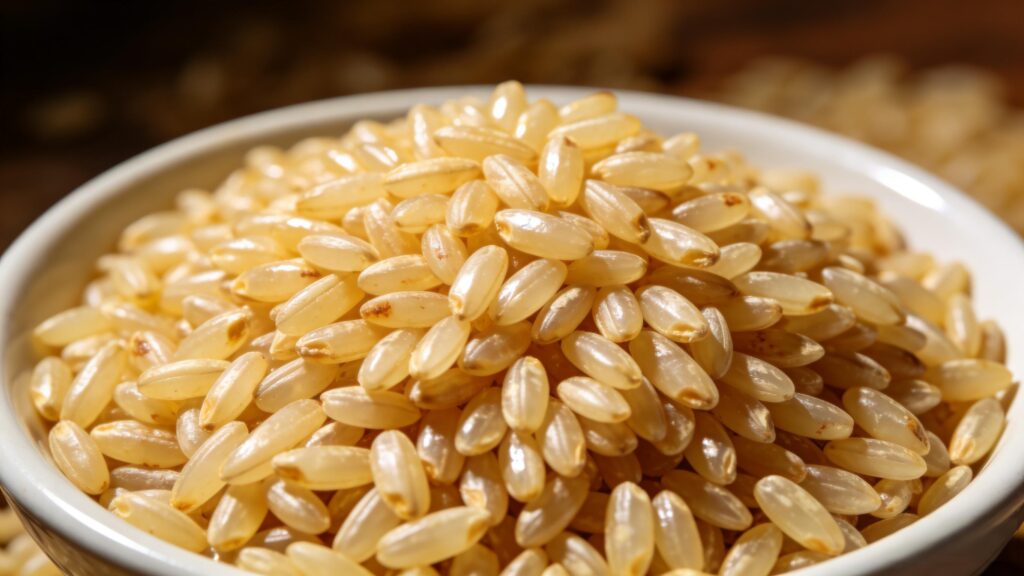
The heart of the process—extrusion transforms the fortified flour mixture into rice-shaped kernels through controlled application of heat, moisture, and mechanical shear.
The Extruder System
Twin-screw extruders are preferred for FRK production due to superior mixing capabilities and process control .
Key extruder components:
- Feeder: Metered screw conveyor delivering mixture to extruder
- Barrel: Enclosed chamber containing rotating screw(s)
- Heating/cooling zones: Maintain precise temperature profile
- Die plate: Contains rice-shaped holes (0.5–1.5 mm diameter)
- Cutting knife: Rotary blade that slices extrudate into kernel-length pieces
Process Parameters for Hot Extrusion
| Parameter | Typical Range | Effect on Product |
|---|---|---|
| Die head temperature | 70–110°C | Higher temp increases gelatinization; >100°C risks expansion |
| Screw speed | 40–80 rpm | Higher speed increases shear and torque |
| Feeder screw speed | 20–60 rpm | Controls throughput rate |
| Feed moisture | 26–34% (wet basis) | Higher moisture reduces shear, increases density |
| Die head pressure | 26–41 bar | Reflects dough viscosity and resistance |
| Torque | 13–15 Nm | Indicates energy input to dough |
*Sources: *
Critical Distinction: Hot vs. Warm Extrusion
Hot Extrusion (>100°C dough temperature):
- Allows flexibility in ingredient modification
- Requires cooling zone at barrel end to prevent expansion
- Produces fully gelatinized, pre-cooked kernels
Warm Extrusion (<100°C dough temperature):
- No expansion risk
- Produces partially gelatinized starch
- May result in FRK that disintegrates during consumer cooking
Why avoid expansion? Unlike puffed breakfast cereals, FRK must NOT expand at the die. Expansion occurs when water in the dough exceeds 100°C and flashes to steam upon exit. For rice fortification, expansion is undesirable because it creates porous kernels that :
- Have different density than regular rice
- Cook differently (float or disintegrate)
- May be rejected by consumers
Prevention methods:
- Maintain dough temperature below 100°C at die (warm extrusion)
- OR use cooling zone in final barrel section (hot extrusion)
Starch Transformation During Extrusion
The desired rice-like appearance and cooking properties depend on complete starch gelatinization :
| Stage | Location | Process | Result |
|---|---|---|---|
| Pre-conditioning | Preconditioner | Water absorption at >gelatinization temperature | Starch granules swell but retain shape |
| Extrusion (shear zone) | Extruder barrel | Mechanical energy input | Granular structure dissolves into homogeneous mass |
| Extrusion (cooling zone) | Final barrel section | Temperature reduction (<100°C) | Prevents expansion; sets matrix |
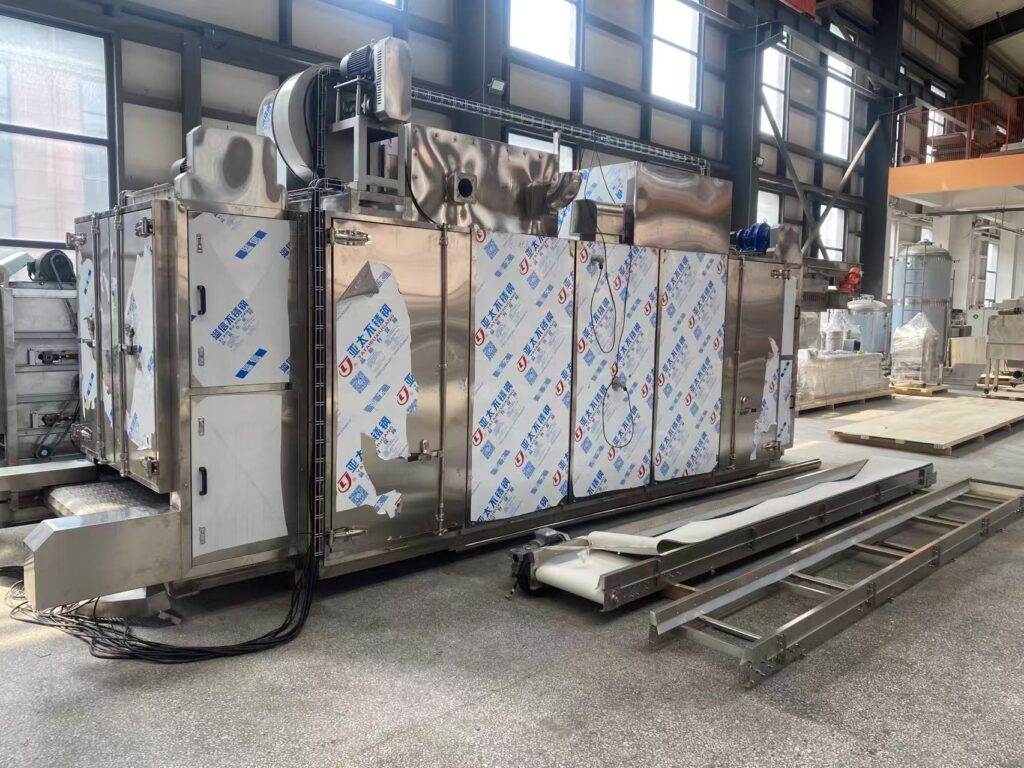
Step 4: Drying
Freshly extruded FRK contains 20–30% moisture and requires drying to 10–14% for stability .
Drying methods:
- Multi-pass belt dryers: Most common; gentle drying prevents cracking
- Fluid bed dryers: Faster but requires precise control
- Continuous drum dryers: Used in integrated production lines
Drying objectives:
- Reduce water activity for microbial stability
- Prevent kernel cracking (caused by rapid moisture removal)
- Maintain shape integrity
Step 5: Polishing (Optional)
Some production lines include a polishing step to:
- Remove surface starch fines
- Improve appearance (sheen)
- Enhance blending compatibility with regular rice
Step 6: Blending
The final step before packaging involves mixing FRK with non-fortified milled rice .
Blending ratios:
- Typical ratio: 1 part FRK to 100 parts regular rice (1:100)
- Range: 1:50 to 1:200 depending on premix concentration and nutritional targets
Equipment: Rotating drum blenders or continuous flow mixers
Quality check: Homogeneity testing ensures consistent nutrient distribution throughout the batch .
5. Alternative Method: Coating Technology
While extrusion dominates large-scale production, fortified rice machinery coating remains viable for smaller operations.
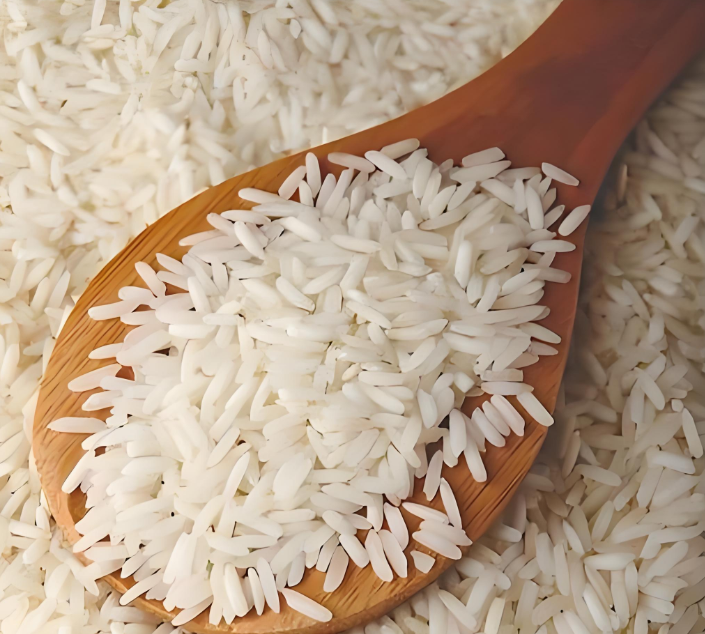
Coating Process Steps
| Step | Description | Parameters |
|---|---|---|
| 1. Preparation | Select polished rice (preferably parboiled or quick-cooking varieties) | (no-wash rice) recommended |
| 2. Nutritional solution preparation | Mix fortificants with coating agents (waxes, gums) into emulsion | Uniform (milky emulsion) required |
| 3. Fluidized bed coating | Spray nutrient solution onto rice in fluidized bed chamber | Bed temperature: 25–35°C; Spray rate: 5–20 rpm; Application: 10–20% by weight |
| 4. In-situ drying | Continue fluidization after spraying | Temperature: 25–35°C |
| 5. Packaging | Package coated, dried rice | Standard food-grade packaging |
Advantages of fluidized bed coating :
- Lower capital investment than extrusion
- Gentle processing (low temperature)
- Applicable to existing rice (no shape change)
Disadvantages:
- Multiple coating layers often required
- Nutrient loss during washing/cooking
- Consumer detection possible (coated kernels may appear different)
6. Quality Assurance and Control
Critical Control Points (HACCP)
Based on operational guidelines, key control points include :
| Process Step | Control Point | Critical Limit | Monitoring Method |
|---|---|---|---|
| Raw material receipt | Mycotoxins, heavy metals | As per national standards | Laboratory analysis |
| Milling | Particle size | 60–80 mesh | Sieve analysis |
| Mixing | Nutrient homogeneity | Coefficient of variation <10% | Batch sampling |
| Extrusion | Die temperature | 70–110°C ± 2°C | Thermocouple monitoring |
| Extrusion | Moisture content | 26–34% wb | In-line moisture sensor |
| Drying | Final moisture | 10–14% | Moisture analyzer |
| Blending | FRK:rice ratio | 1:100 ± 10% | Visual count or NIR |
Analytical Testing
Micronutrient analysis methods :
- Iron: Colorimetric or atomic absorption spectroscopy
- Folic acid: HPLC with fluorescence detection
- Vitamin B₁₂: Microbiological assay or LC-MS/MS
Cooking quality tests :
- Cooking time: 12–17 minutes (similar to regular rice)
- Cooking losses: Should be <5% (lower is better)
- Water absorption ratio: 2.0–2.6 (similar to unfortified rice)
7. Alternative: Fortification by Soaking (Small-Scale/Research)
For research or small-scale applications, a simpler soaking method exists, though not suitable for commercial production .
Process:
- Predry broken rice: 90°C for 1 hour
- Soak in nutrient solution: Rice:solution ratio 2:1
- Drying: 70°C for 1 hour 50 minutes
Nutrient retention after processing:
| Nutrient | Loss During Processing |
|---|---|
| Calcium | ~5% |
| Iron | ~10% |
| Thiamine | ~13% |
| Folate | 17–23% |
Storage stability: Thiamine loss during accelerated storage (42°C, 3 months) was not statistically significant .
8. Advantages of Extrusion Technology
Extrusion has emerged as the preferred technology for multiple reasons :
- Micronutrient stability: Nutrients remain stable during processing, storage, AND cooking—unlike coating where nutrients leach into washing/cooking water
- Consumer acceptance: FRK are visually indistinguishable from regular rice—critical where consumers sort or reject visibly different kernels
- No behavior change required: Unlike dusting (which requires “no rinse” labeling), extrusion-fortified rice can be washed and cooked normally
- Utilization of broken rice: Creates value from milling byproduct
- Scalability: Twin-screw extruders can produce 15–500+ kg/hour
- Pre-cooked option: Hot extrusion produces partially pre-cooked rice that cooks faster than regular rice (12–17 minutes vs. 20–25 minutes)
9. Applications and Public Health Impact
Fortified rice programs have been implemented globally through :
- School meal programs: Mid-Day Meal Scheme (India)
- Social safety nets: Public Distribution System (PDS)
- Maternal and child health: Integrated Child Development Services (ICDS)
- Humanitarian food aid: World Food Programme distributions
The technology is technically effective and operationally feasible within existing government systems and schemes .
Summary: Complete Process Flow Diagram
Broken Rice → Cleaning → Pulverization (Hammer Mill) → Rice Flour
                                                              ↓
                                                    Mixing with Premix
                                                    (Paddle/Automated)
                                                              ↓
                                                    Conditioning (Steam + Water)
                                                              ↓
                                                    Extrusion (Twin-Screw)
                                                    Parameters:
                                                    - Temp: 70-110°C
                                                    - Moisture: 26-34%
                                                    - Screw: 40-80 rpm
                                                              ↓
                                                    Die Cutting → Wet FRK
                                                              ↓
                                                    Drying (10-14% moisture)
                                                              ↓
                                                    Polishing (optional)
                                                              ↓
                                                    Blending (1:100 ratio)
                                                              ↓
                                                    Packaging → Fortified Rice
From nutrient-deficient milled rice to a powerful public health intervention, the fortification process represents the successful marriage of food engineering and nutritional science—transforming a dietary staple into a vehicle for combating global malnutrition.
 Belarusian
  English
  Russian
  Spanish
  Italian
  Arabic
  Portuguese
  German
  French
  Japanese
  Moroccan Arabic
  Persian