
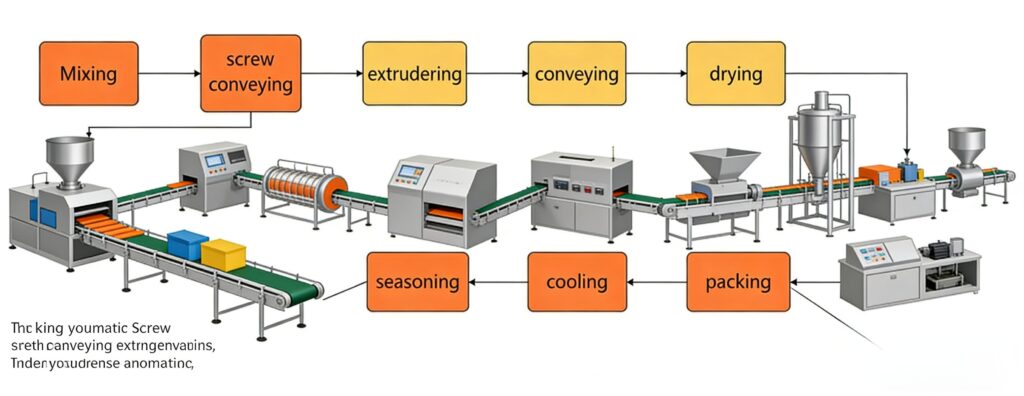
Breakfast cereal manufacturing is a complex sequence of unit operations where small errors in process control can cascade into major quality defects. From raw material selection through extrusion, drying, tempering, and toasting, each stage presents distinct challenges that processors must manage to achieve consistent product quality, safety, and shelf stability.

Raw Material Selection and Formulation
The foundation of any breakfast cereal is the grain itself. Wheat, corn, rice, oats, and barley are the primary cereals used, with whole wheat grains typically employed for flaked cereals and soft white wheat for shredded products . The choice of grain variety and its protein content significantly affects processing behavior and final texture. Higher protein levels (8-15% in wheat) make expansion more difficult, while low-protein wheats tend to produce more tender and expanded products . Starch composition is equally critical: wheat starch’s amylose content of 20-25% significantly improves expansion and texture in extruded products .
Moisture content at the formulation stage requires precise control. For extrusion-based processes, the initial moisture content typically ranges from 25% to 35%, with the specific target depending on the grain and processing method . Insufficient moisture prevents proper starch gelatinization, while excessive moisture produces a product that will not nucleate correctly in the cooking chamber .

Extrusion Process Control
Extrusion is where many breakfast cereals take their basic structure, and it is also where process control becomes most demanding. The extrusion process uses a combination of mechanical shear and thermal energy to cook and shape the cereal dough. A critical consideration is the balance between barrel temperature, screw speed, and residence time. Typical zone temperatures range from 265°F to 313°F in the cooking sections, with die pressures of 1,550 to 2,500 psig .
One often-overlooked parameter is the devolatilization step. When the cooked product passes through a devolatilization port, pressure release causes moisture flash-off and a significant temperature drop—documented as 55°F to 95°F in some processes . This step prevents undesirable puffing upon final extrusion, and the vacuum or pressure conditions at this port directly affect final product density .
Screw speed and die clearance also influence water absorption characteristics. Research on single-screw extruders for breakfast cereal production found that increasing die hole number from 1 to 9 increased water absorption from approximately 24% to 49% . Optimal operating conditions identified in that study included a screw speed of 438 rpm, die clearance of 3mm, and formulation moisture content of 24% .
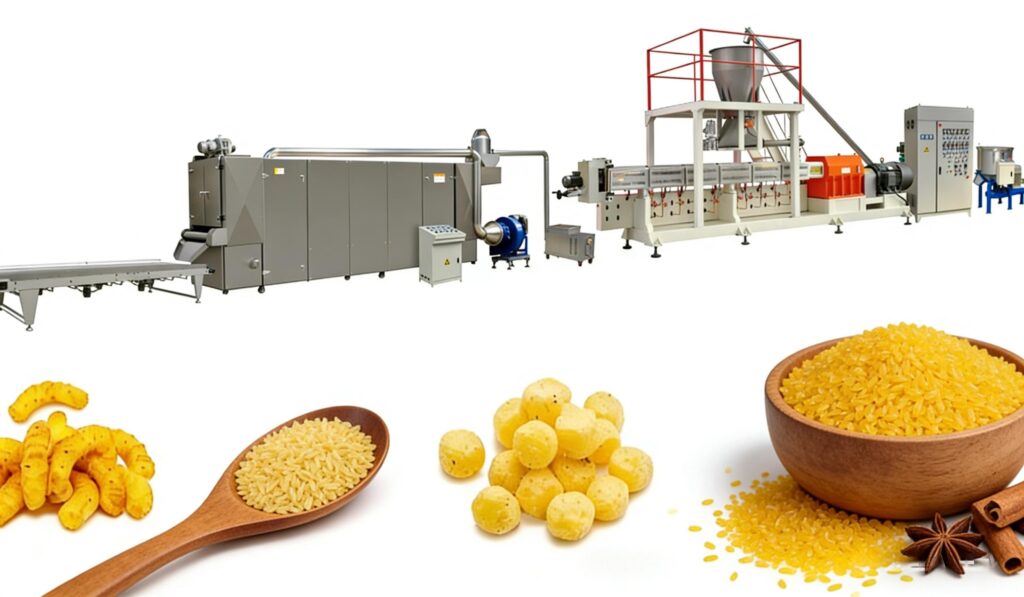
Drying and Moisture Management
Drying is where improper operation causes defects that no subsequent processing can correct. The goal is to reduce moisture from the 18-30% range down to approximately 13-19% for flaking, or lower for final products . But the method of drying matters as much as the endpoint.
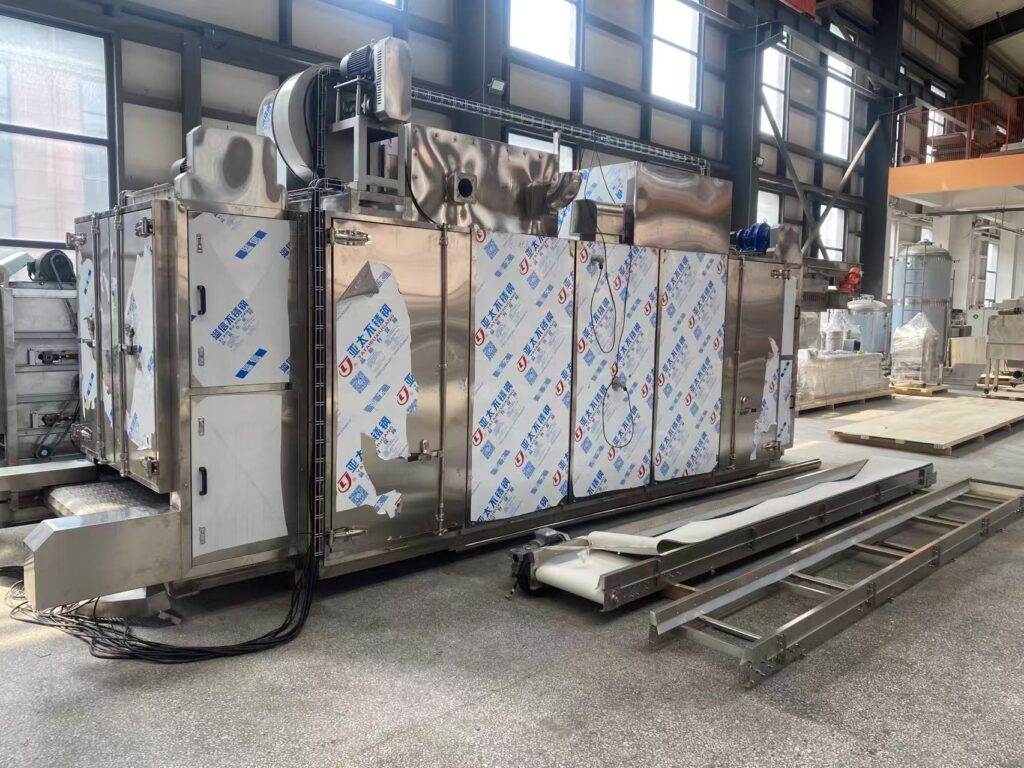
Processors must resist the temptation to raise dryer temperatures to increase throughput. Higher temperatures cause case-hardening—a condition where the particle surface dries faster than the interior, trapping moisture inside . This creates a moisture gradient that requires extended tempering to equilibrate, and poor drying conditions cannot be compensated for by longer tempering . The recommended approach is moderate drying that avoids case-hardening, often achieved by controlling humidity as well as temperature within the dryer .
Tempering: The Critical Equilibration Step
Tempering is the holding period during which moisture equilibrates within the cereal particles and starch retrogradation develops the desired flakability or shredability . This step is commonly misunderstood. Tempering is not simply a rest period—it is where the physical properties that determine whether a grit will flake properly are established.
Cooling before tempering is essential. If grain dried to 17% moisture for flaking is binned at temperatures much over 100°F, its color darkens during tempering, and this discoloration persists through flaking and toasting . For shredded wheat, grain binned at elevated temperatures remains overly sticky and will not produce the long, straight shreds required for attractive biscuits . The importance of cooling before tempering “cannot be overemphasized” .

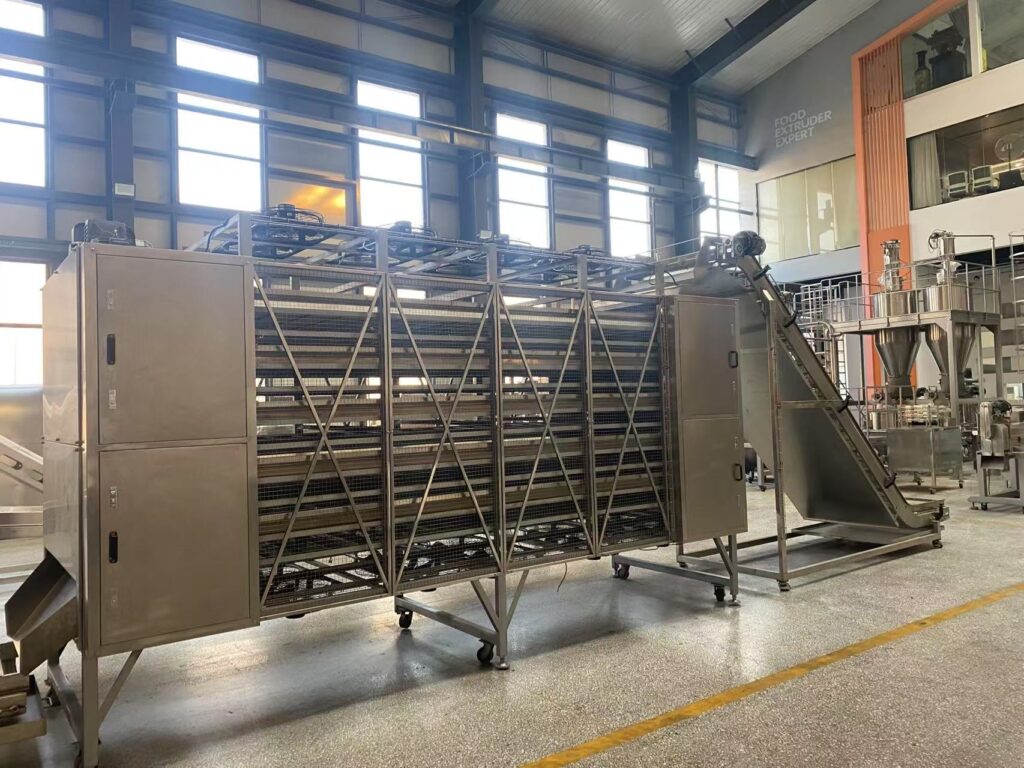
Tempering bins themselves require careful design. A typical flaking grit tempering bin might be 10 feet wide, 20 feet long, and 5 feet high, with a slow-moving conveyor belt as the bottom and rakes to break up blocks that form as grits settle . The first product loaded is the first discharged, requiring attention to inventory management.
Flaking and Shredding
The flaking operation is time-sensitive. For optimal blistered, curled flakes, the cooled grain pieces must be flaked within 15-20 minutes of cooling, preferably within 5-15 minutes . Product flaked outside this window produces dull, lifeless, blister-free flakes that closely resemble the inferior products that tempering is meant to avoid .
Flaking rolls themselves require temperature management. The rolls are typically cooled to dissipate frictional heat generated during operation . Roll pressure and gap settings determine flake thickness and texture.
For shredded cereals, the challenge is different. Cooked whole grains such as corn have a tendency to become hard and rubbery during cooling and tempering due to starch retrogradation, which interferes with shreddability . Subjecting the cooked, tempered grains to high shear in a pelletizer has been found to soften and plasticize the starch matrix, making the grains pliable and shreddable without stickiness .
Toasting and Final Processing
Toasting serves multiple functions: it develops flavor through Maillard reactions, reduces moisture to final target levels, and creates the characteristic crisp texture. Typical toasting conditions for filled cereals are approximately 420°F for 2.5 minutes, though temperatures below 360°F require extended time that can degrade heat-sensitive components . Toasting temperatures above 600°F risk burning the exterior . The toasting step also completes the drying process, and for products like filled cereal biscuits, the final moisture content should not exceed 5% for proper crispness .
Sanitation and Facility Design
Perhaps the most fundamental consideration—and the one most easily compromised under production pressure—is facility sanitation. An FDA warning letter to a California cereal manufacturer documented live insect activity throughout the manufacturing facility, including more than ten live flying and ten live beetle-type insects in the mill room where post-cook activities occurred . The letter also noted condensate dripping from overhead equipment onto food contact surfaces and exposed product, and equipment used for sampling that was stored in direct contact with non-food contact items before being returned to the product stream .
These findings illustrate a critical principle: a cereal product can pass through every thermal kill step with full pathogen control, yet still be contaminated through post-processing exposure. Condensate from chill water lines, air handling units, and mill rollers can introduce pathogens or spoilage organisms onto product that has already been cooked . Pest activity in ingredient storage can contaminate raw materials before processing even begins .
Regulatory Compliance
Breakfast cereal manufacturers in the United States must register with the FDA and comply with Current Good Manufacturing Practices under the Food Safety Modernization Act . This includes biennial facility registration renewal (October 1 through December 31 of even-numbered years) and compliance with Preventive Controls rules . Labeling requirements include Nutrition Facts panels, ingredient lists, allergen declarations, and any health claims or whole grain statements, all governed by specific FDA regulations .
Conclusion
The breakfast cereal manufacturing process is unforgiving of shortcuts. Formulation errors, inadequate drying, skipped tempering time, or compromised sanitation each produce distinct and often irreversible defects. The technical literature and regulatory records make clear that quality is built through disciplined attention to process parameters at every stage—from the moisture content of the incoming grain to the temperature of the flaking rolls to the cleanliness of the air circulating through the dryer. Processors who treat these as mere suggestions rather than requirements produce cereal that is technically edible but fails on every dimension that matters: texture, flavor, appearance, and safety.
 Belarusian
  English
  Russian
  Spanish
  Italian
  Arabic
  Portuguese
  German
  French
  Japanese
  Moroccan Arabic
  Persian