The shape of breadcrumbs is not determined by a single mold or cutter. Instead, it is the result of a series of choices made before and after baking: how the dough is sheeted, how it is baked, and how the finished bread is milled. To make breadcrumbs of different shapes, you must change the structure of the bread itself, not just the blade at the end of the line.

The Two Fundamental Textures: American vs. Japanese
The most significant distinction in breadcrumb shape comes from the baking method, which creates either a dense, irregular crumb or a light, elongated sliver.
American-style breadcrumbs are typically irregular, coarse, and granular. The dough is sheeted to a relatively thick gauge—approximately 25 mm in a patented process—and then baked with convection heat at around 400°F for about 20 minutes . The resulting bread is dense. After baking, it is fed directly into shredders or mills with coarse screens while still hot . The grinding action breaks the dense sheet into irregular, chunky fragments. The shape is essentially a crushed solid: angular, uneven, and compact.
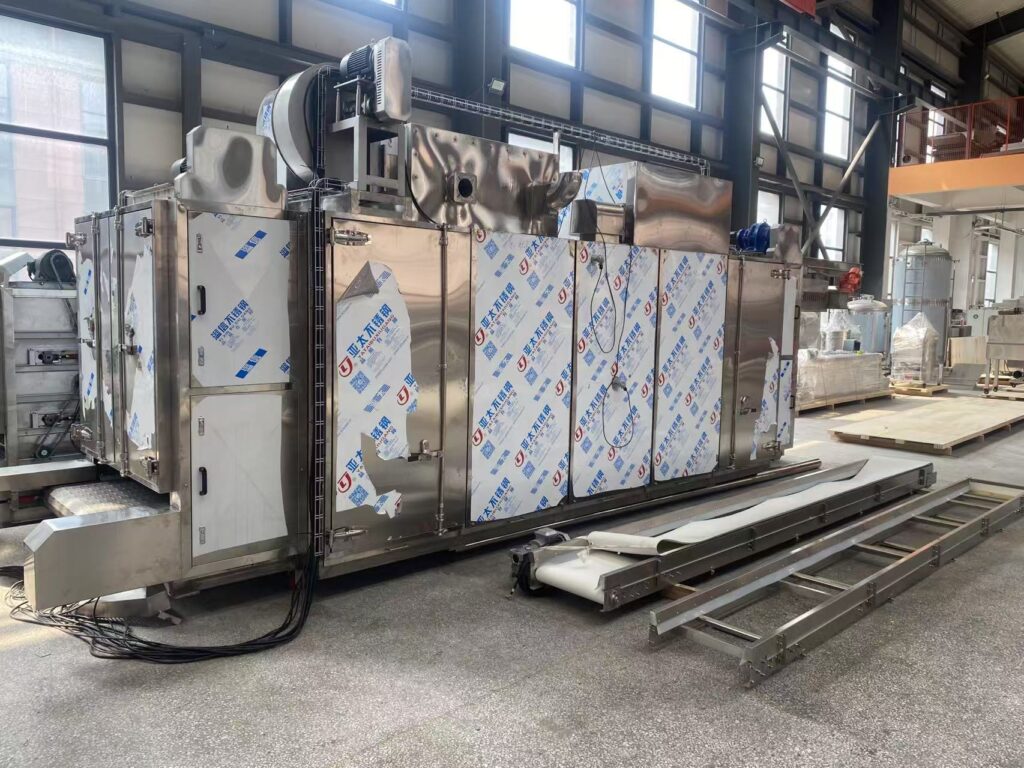
Japanese-style breadcrumbs (panko) are the opposite: light, airy, and elongated. The dough is sheeted much thinner, to about 6 mm, and then allowed to ripple and undulate on the conveyor before baking . This rippling creates folds that become the source of the characteristic sliver shape. The baking method is also different. Instead of convection, the dough is baked using radio frequency or dielectric heating, which heats the dough volumetrically without forming a crust . This allows the dough to rise freely into a porous, crustless structure. After baking, the bread is cooled for two hours and then ground with fine screens . The grinding tears the porous sheet into long, needle-like shards rather than dense chunks.

Extrusion-Based Shaping: Controlling Form Before Milling
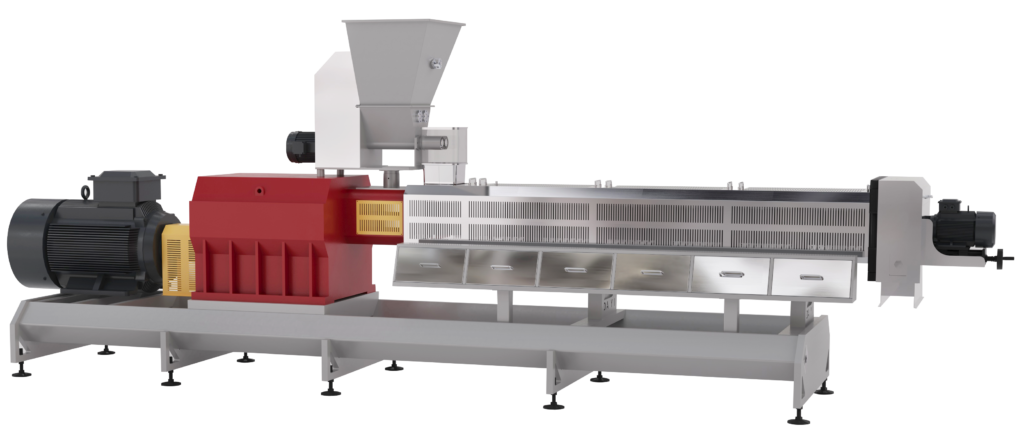
A more direct way to control shape is to bypass the sheet-and-bake method entirely and use an extruder. In this process, a flour-and-water mix is forced through a die under high pressure and temperature, producing a continuous rope of expanded material. The die shape and the cutting method determine what the intermediate product looks like, which in turn constrains the final crumb shape.
For flake or snowflake-style crumbs, the extruded rope is cut into short segments and then milled. The resulting crumbs are flat, thin, and irregularly flaky . For needle-shaped crumbs, the extruded rope is drawn out into a thin strand, cut into short sticks, and then broken apart. After crushing and sieving, the surviving pieces are slender and needle-like . The key difference here is the drawing step: pulling the extrudate into a thin strand before cutting produces a fundamentally different starting geometry than simply chopping a thick rope.
Milling Is Not a Shape-Changer; It Is a Size-Selector
It is tempting to think that a different mill blade can turn American crumbs into Japanese panko. It cannot. The mill only breaks what is already there. A dense, convection-baked sheet will always break into blocky fragments, regardless of the screen size. A porous, crustless, rippled sheet will always tear into slivers. The mill’s role is to reduce size and to sort the results.
Industrial lines acknowledge this by using multiple mills or screens in sequence. After baking, the product may pass through a coarse cutter for initial size reduction, followed by a finer grinder, with sieving at the end to separate acceptable pieces from fines that are recycled back into the dough . The screen size determines whether the final product is coarse or fine, but it does not change the fundamental aspect ratio of the particles. A long, thin panko sliver and a compact American crumb can both be “fine,” but they will never look alike.
Summary of Shape-Controlling Variables
| Desired Shape | Key Process Intervention |
|---|---|
| Irregular, granular (American) | Thick sheeting (~25 mm), convection baking, coarse grinding while hot |
| Elongated, slivery (Japanese/Panko) | Thin sheeting (~6 mm), rippling before baking, crustless RF/dielectric baking, cooling before fine grinding |
| Flaky, snowflake-like | Extrusion, short cutting, milling of expanded segments |
| Needle-like | Extrusion, drawing into thin strands, cutting into sticks, breaking and sieving |
The shape of a breadcrumb is written into the bread before the mill ever touches it. The sheeter, the oven, and the conveyor decide whether the final product will be a chunk, a flake, or a needle. The grinder only reveals what the process has already made.
 Moroccan Arabic
 English
 Russian
 Spanish
 Italian
 Arabic
 Portuguese
 German
 French
 Japanese
 Persian
 Belarusian