
When you bite into a puffed snack, you are not simply chewing a solid mass of starch—you are crushing a delicate, foam-like structure filled with thousands of tiny air cells. corn puffs machine These air cells, or pores, are the defining structural feature of puffed foods, and their size, distribution, shape, and wall thickness collectively determine whether a snack feels light and airy, sharply crispy, pleasantly crunchy, or disappointingly hard. Understanding the relationship between air cell architecture and sensory perception is central to the science of snack texture.
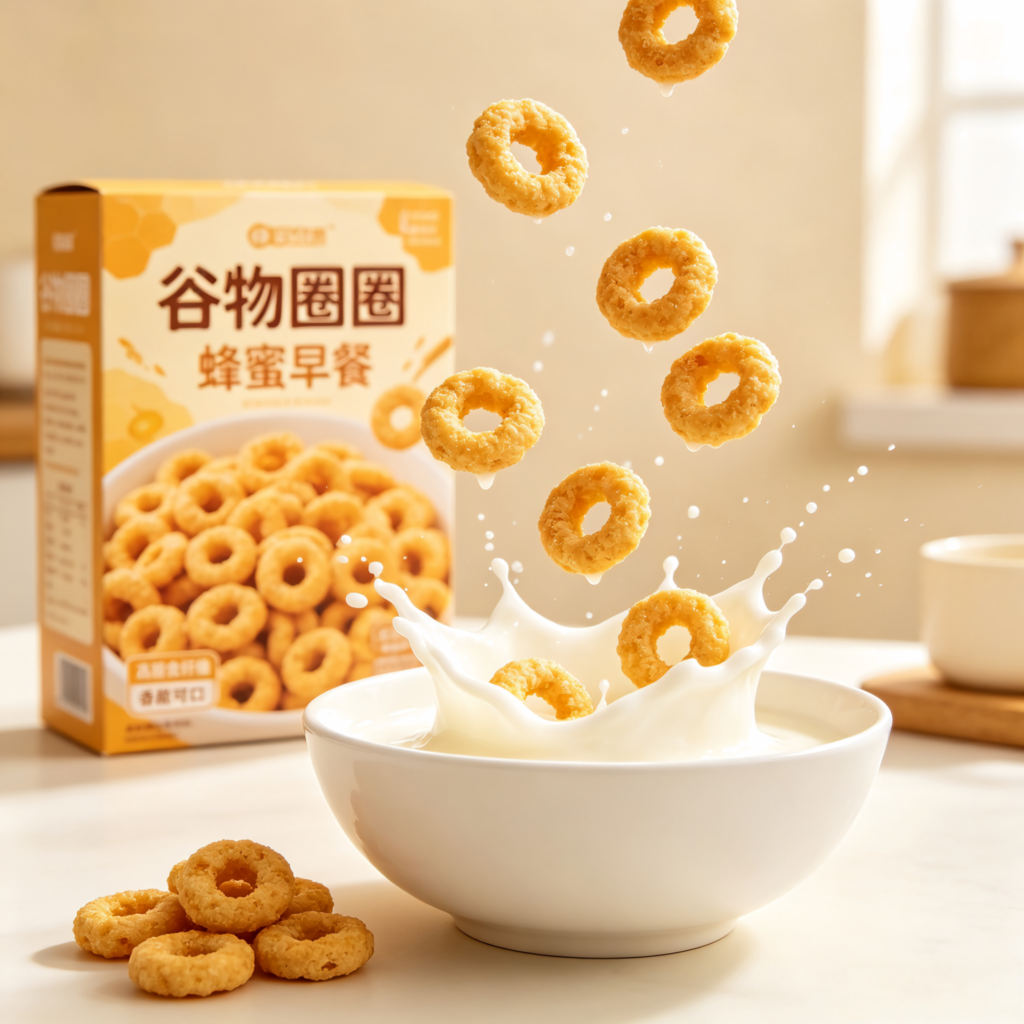
1. The Puffed Snack as a Solid Foam
A puffed snack is best understood as a solid foam: a continuous starch-protein matrix that encloses a dispersed gas phase. During extrusion or frying, superheated water flashes into steam, inflating the matrix and leaving behind a network of voids once the structure sets. The porosity of the snack—the proportion of its volume occupied by air—is the first major determinant of texture. High porosity generally produces a lighter, more fragile product, while low porosity yields a denser, harder bite. However, porosity alone does not tell the whole story; the organization of those pores matters just as much.
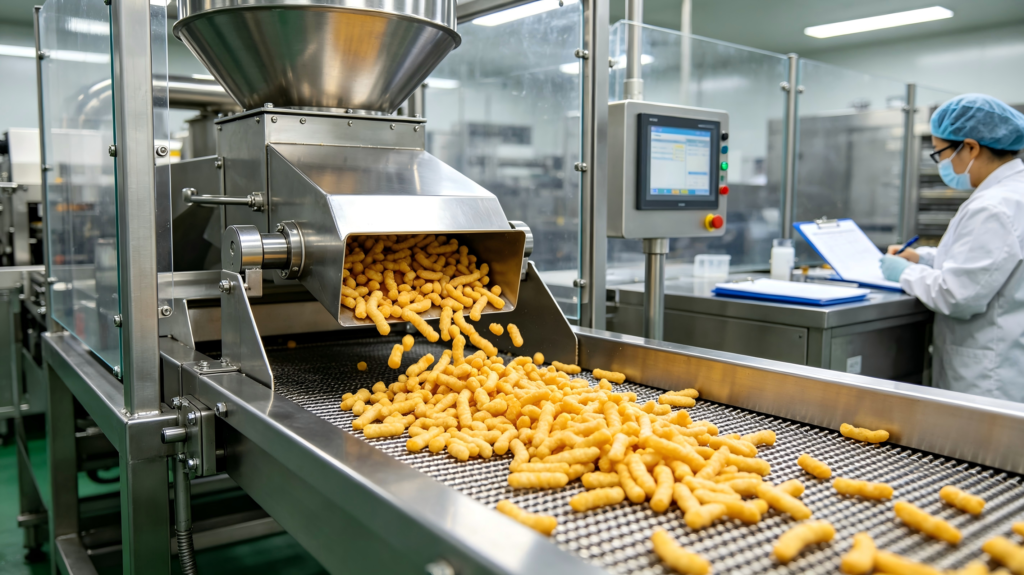
2. Air Cell Size and Uniformity
Cell size strongly influences how a snack breaks down in the mouth. Snacks with small, uniform air cells tend to produce a fine, delicate crispness—the structure fails progressively through many tiny fractures, releasing energy smoothly and giving a sensation of lightness. In contrast, snacks with large, irregular cells create a coarser, more aggressive crunch, as the bite must rupture thicker walls and larger voids in a more chaotic sequence.
Uniformity of cell size is equally important. A narrow cell-size distribution produces a predictable, consistent texture with every bite. corn puffs machine A wide distribution—some very large cells mixed with many small ones—creates an inconsistent mouthfeel, with soft spots and hard spots alternating unpredictably. This is why industrial producers invest heavily in controlling nucleation and bubble growth during expansion.
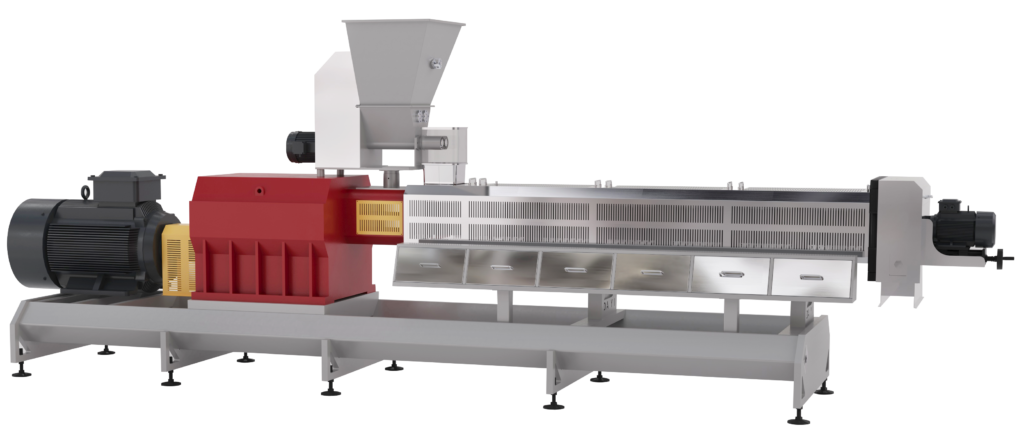
3. Cell Wall Thickness
The thickness of the starch walls surrounding each air cell determines the firmness and fracture behavior of the snack. Thin cell walls buckle and break easily, producing a light, melt-in-the-mouth crispness and a low crushing force. Thick cell walls, by contrast, resist deformation, requiring greater biting force and generating a harder, louder crunch. Wall thickness is governed by the degree of expansion and the amount of solid material available to form the matrix: greater expansion stretches the same mass of starch over more surface area, thinning the walls and softening the bite.
4. Cell Shape and Orientation
The geometry of the cells also matters. Isotropic (roughly spherical) cells give a snack that responds similarly to force from any direction, producing a uniform crunch. Anisotropic cells—elongated or flattened, as often seen in extruded snacks that expand preferentially in one direction—create a texture that is directionally dependent: the snack may snap easily along one axis but resist crushing along another. This directional fracture can be perceived as either an appealing “snap” or an unpleasant toughness, depending on the product’s intended character.
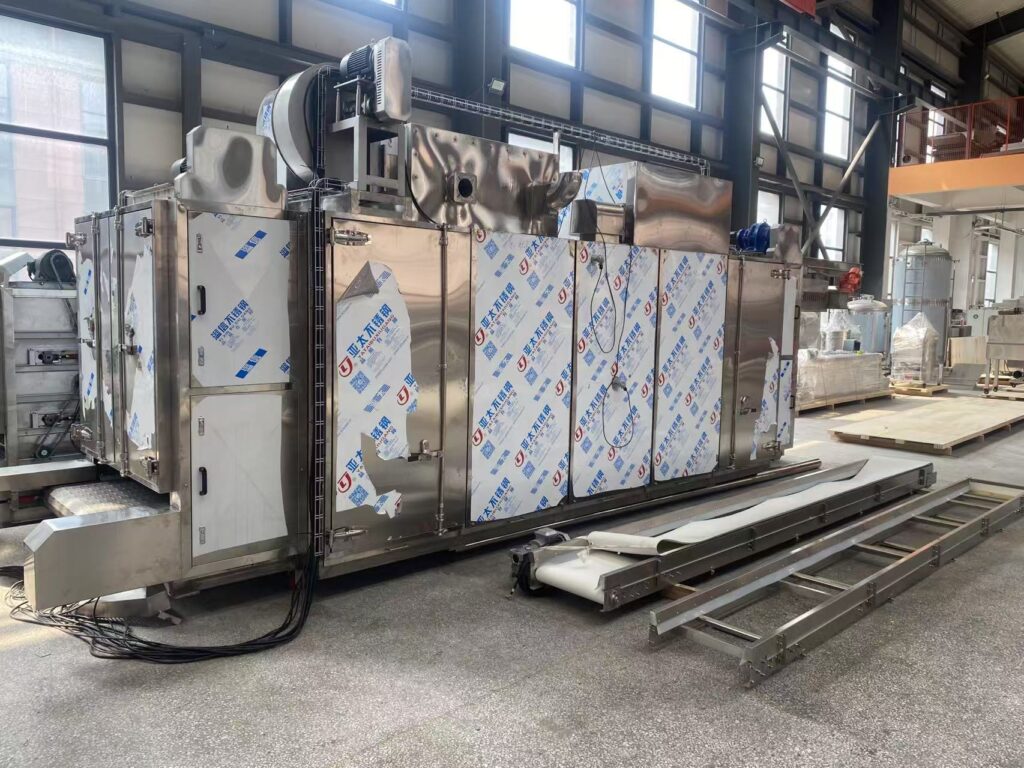
5. Open versus Closed Cells
Air cells may be closed (sealed within the matrix) or open (interconnected to the surface and to one another). Closed-cell structures tend to be crisper and more resistant to moisture uptake initially, but they can produce a “hollow” or explosive sensation when ruptured. Open-cell structures, common in some fried snacks, allow oil and saliva to penetrate more readily, which can make the snack feel less crispy and more quickly soggy. corn puffs machine The balance between open and closed porosity therefore affects both the initial bite and the texture’s persistence over time.
6. How Air Cells Govern the Sensory Experience
The acoustic and tactile sensations of eating a puffed snack arise directly from air cell architecture:
- Crispness is associated with the rapid, brittle fracture of thin-walled, small-celled structures, which generates high-frequency sound and a clean, sharp break.
- Crunchiness is linked to thicker walls, larger cells, and more numerous sequential fractures, producing a louder, more sustained noise and a rougher breakdown.
- Lightness and melt-in-the-mouth behavior depend on high porosity with fine, thin-walled cells that collapse easily under the tongue.
- Hardness results from low porosity and thick cell walls that resist initial deformation.
- Sogginess arises when open cells and capillary channels admit moisture, causing wall collapse and loss of structure.
7. Controlling Air Cells in Production
Because air cell architecture is so consequential, processors manipulate it deliberately. Nucleation agents (such as calcium carbonate or added fine particles) increase the number of bubble nuclei, promoting many small cells rather than fewer large ones. Extrusion parameters—temperature, moisture, screw speed, and die design—govern bubble growth and stabilization. Drying and frying conditions determine whether the cell walls set firmly or collapse. Even ingredient choices, such as starch type and the presence of proteins or lipids, influence how bubbles nucleate, grow, and stabilize.

Conclusion
The air cells inside a puffed snack are far more than empty space—they are the architectural blueprint of its texture. Their size, uniformity, wall thickness, shape, and openness together dictate whether a snack is delicately crisp, robustly crunchy, melt-in-the-mouth light, or unpleasantly hard. For food scientists, engineering the perfect bite means engineering the bubble: controlling nucleation, expansion, and stabilization to build a foam whose structure delivers exactly the sensory experience the consumer expects. The next time you crunch a cheese puff, remember that you are experiencing the carefully designed failure of thousands of microscopic air cells—a triumph of structural design hidden in every bite.
 Moroccan Arabic
 English
 Russian
 Spanish
 Italian
 Arabic
 Portuguese
 German
 French
 Japanese
 Persian
 Belarusian