
Producing high-quality fish feed requires careful attention to processing techniques. From raw material preparation to final pellet stability, each step influences feed digestibility, water stability, and fish growth performance. Here are ten essential tips for effective fish feed processing.

1. Inspect and Clean Raw Materials Thoroughly
Before processing begins, all incoming ingredients must undergo quality inspection. Check for visible mold, off-odors, or signs of contamination. Feed toxins—whether from chemical residues, mold, or naturally occurring anti-nutritional factors—can directly harm fish and pose food safety risks to consumers. Remove foreign materials: pass ingredients through screens to remove non-metallic debris, and use magnets to eliminate metal contaminants. This protects both feed quality and processing equipment.
2. Control Particle Size (Grinding Fineness)
Grinding fineness determines the surface area available for cooking and binding. Finer particles gelatinize more completely during extrusion and produce more durable pellets. However, over-grinding increases energy costs and may reduce digestibility by passing too quickly through the fish’s digestive tract. As a general guideline: 60-mesh for juvenile fish feed and 40-mesh for adult fish feed provides an optimal balance.
3. Manage Moisture Addition Carefully
Water plays a critical role in binding and gelatinization during processing. Add just enough water so the mixed feed forms a clump when squeezed but crumbles easily when pressed. Adjust water addition based on ingredient moisture content and ambient humidity—wet weather requires less added water, dry weather requires more. Too much water delays drying and risks mold; too little results in poor pellet integrity and high dust levels.

4. Choose Binders Wisely for Pellet Stability
Water stability is crucial for aquaculture feeds—pellets must hold together long enough (typically 15 minutes to an hour) for fish to find and consume them without disintegrating. Carbohydrates act as natural binders when properly cooked during extrusion. For homemade or small-scale feeds, binders like algin (kelp extract), gelatin, or even small amounts of fish meal help improve cohesion.
5. Optimize Extrusion Parameters for Expansion and Buoyancy
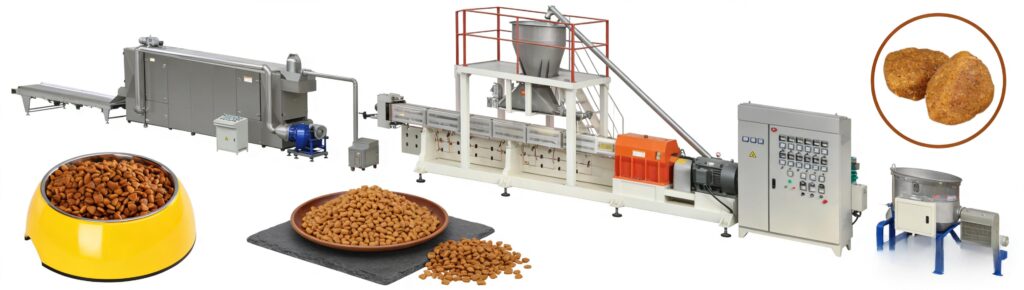
Extrusion cooking uses a combination of mechanical energy (shear) and thermal energy (heat) to gelatinize starches and denature proteins. Adjust screw speed, barrel temperature, and residence time to control pellet expansion, density, and buoyancy—key factors for floating versus sinking feeds. Modern extruders with flexible screw designs allow manufacturers to map these variables for consistent technical quality.
6. Monitor Drying Conditions to Prevent Spoilage
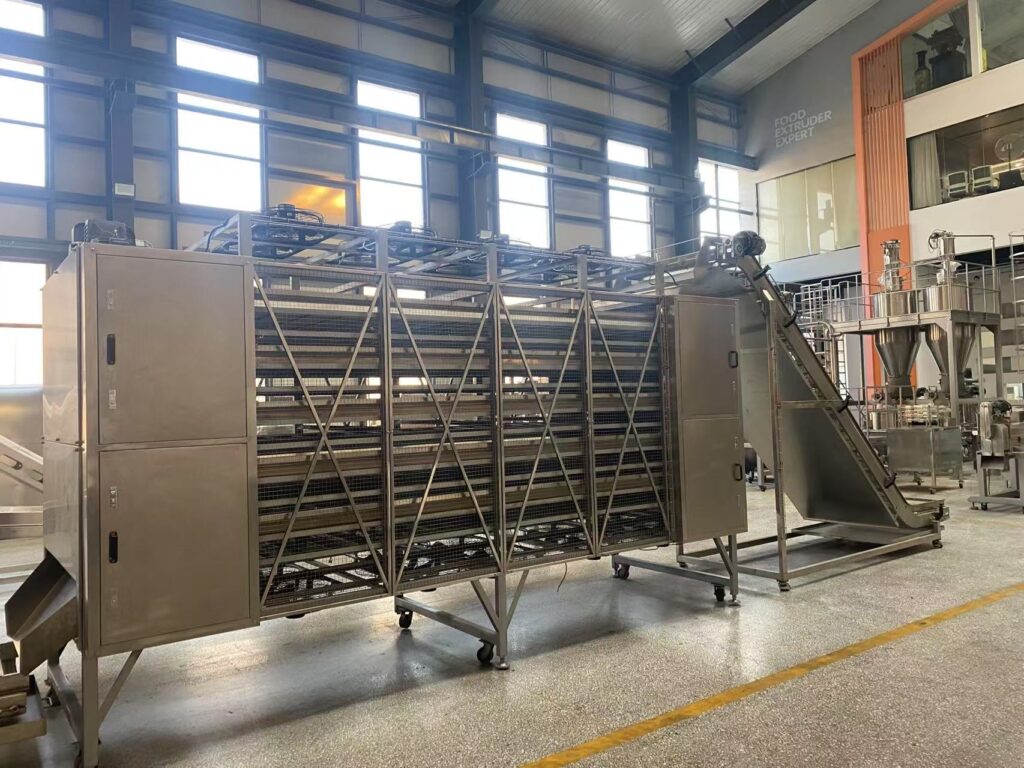
After extrusion, pellets must be dried to a safe moisture level (typically below 10–12%) to prevent mold growth and maintain shelf life. Uneven or incomplete drying softens pellets, increasing breakage and dust during handling. Automated drying systems with optimized parameters can improve efficiency and reduce energy costs while maintaining product quality. Store dried feed in a cool, dry environment and avoid double-stacking high-fat pellets, which can cause oil seepage.
7. Control Pellet Hardness and Dust Levels
Excessive dust (fines) represents lost nutrients and creates problems in storage and feeding systems. A dust level of 1% or less is considered normal. Regularly test pellet hardness and dust content during production. If dust exceeds acceptable levels, check binder addition, extrusion settings, and drying conditions. Properly processed pellets have a smooth, shiny surface and resist breakage.
8. Apply Oil Coatings Properly
Modern aquafeeds often contain relatively high fat levels to meet energy requirements. Oil can be added during mixing (internal) or sprayed onto finished pellets (external coating). To prevent oil from seeping to the bottom of bags or bins—especially in warm weather—apply optimal extrusion, expansion, and drying techniques that allow the pellet structure to absorb and retain fat effectively.
9. Implement Quality Control and Traceability
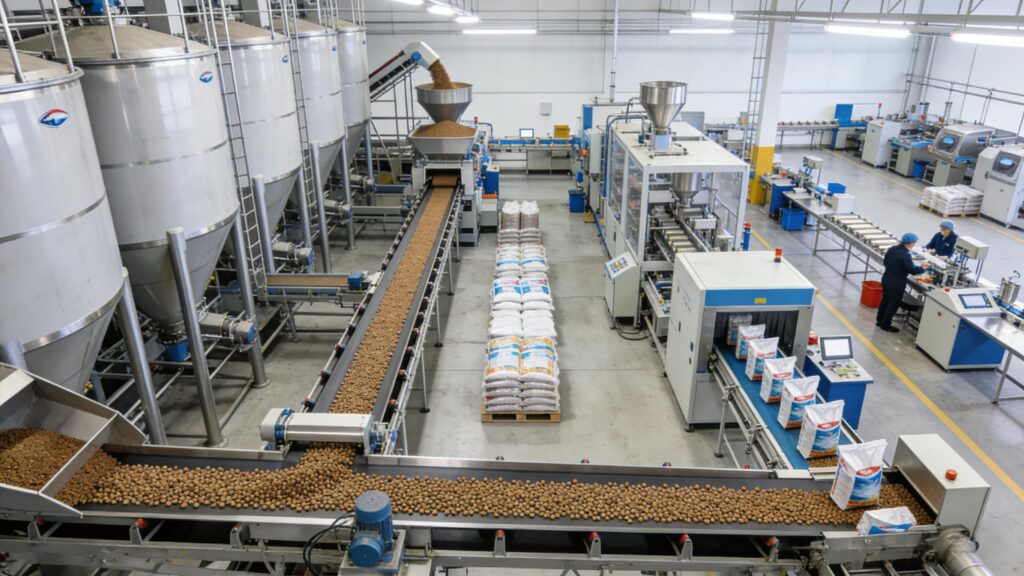
Feed safety requires systematic controls. Implement Good Manufacturing Practices (GMPs) and hazard analysis (HACCP) to identify and manage critical control points throughout the production line. Maintain traceability from raw ingredients to finished feed, enabling rapid recalls if quality issues arise. Keep samples, photos, and control sheets to help diagnose any problems related to feed quality.
10. Adapt Techniques to Scale and Equipment
Processing techniques differ dramatically between small-scale and commercial production. For homemade feeds: mix ingredients into a stiff paste, extrude through a pastry bag or adapted caulking gun, bake until hard, and break into pellets. Freeze small batches to preserve nutritional value. For commercial production: invest in reliable extrusion and drying systems that provide consistent throughput and minimize variability in moisture and nutrient density. Always test new formulations in small quantities before scaling up to verify fish acceptance and water stability.

By mastering these ten processing techniques, feed manufacturers—whether small-scale operators or large commercial mills—can produce aquafeeds that are nutritionally balanced, physically stable, and economically sustainable. As aquaculture continues to grow, ongoing innovation in extrusion technology and quality control will remain essential for meeting global seafood demand responsibly.
 Moroccan Arabic
  English
  Russian
  Spanish
  Italian
  Arabic
  Portuguese
  German
  French
  Japanese
  Persian
  Belarusian