
If you have ever bitten into a crunchy, corn-based pillow and felt the sweet or savory cream burst onto your tongue, you have experienced a marvel of food engineering. Core filled snack food machine Unlike a standard cheese puff, which is homogenous throughout, the “Crispy Pillow” (or filled corn snack) requires a dance between two different textures and two different states of matter at the exact same moment.
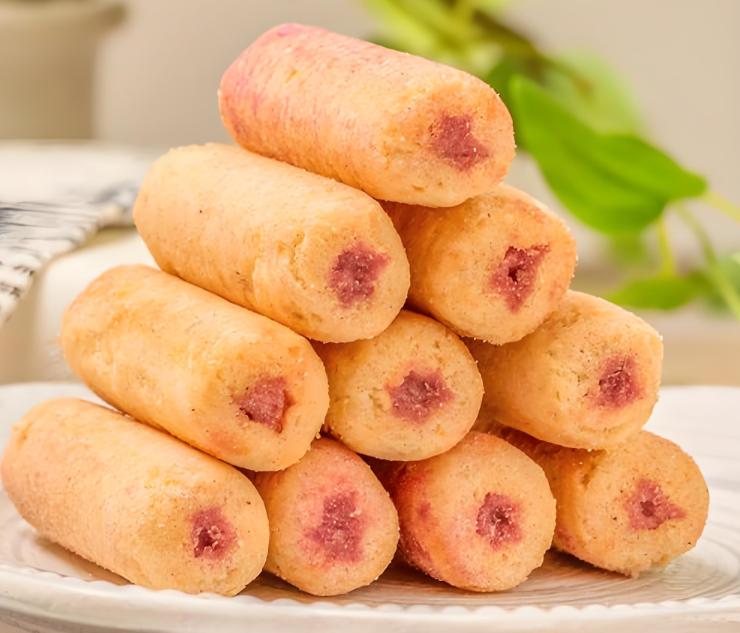
Here is the step-by-step process of bringing this dual-texture snack to life.
Step 1: The Foundation (The Dry Mix)
The production line begins with two separate recipes: one for the Shell and one for the Filling.
- The Shell Base: The primary ingredients are corn grits (or rice flour), water, and a pinch of salt. For an airy crunch, the corn must be refined to a specific particle size—too fine, and it won’t expand; too coarse, and it will be gritty.
- The Filling Base: This is a fat-continuous system. It usually consists of vegetable oil (palm or high-oleic sunflower), sugar or maltodextrin, whey powder (for cheese flavors), lecithin (an emulsifier), and natural flavor extracts.
Step 2: The “Double Barrel” (Co-Extrusion Technology)
While standard snacks use a single screw, the filled pillow requires a Co-Extruder.
Imagine two concentric pipes: one inside the other.
- The Outer Pipe (The Shell): The corn dough is forced through the outer ring of the die at high pressure.
- The Inner Pipe (The Filling): Simultaneously, a piston pump forces the paste-like filling (peanut butter, chocolate, cheese, or fruit cream) through the central needle.
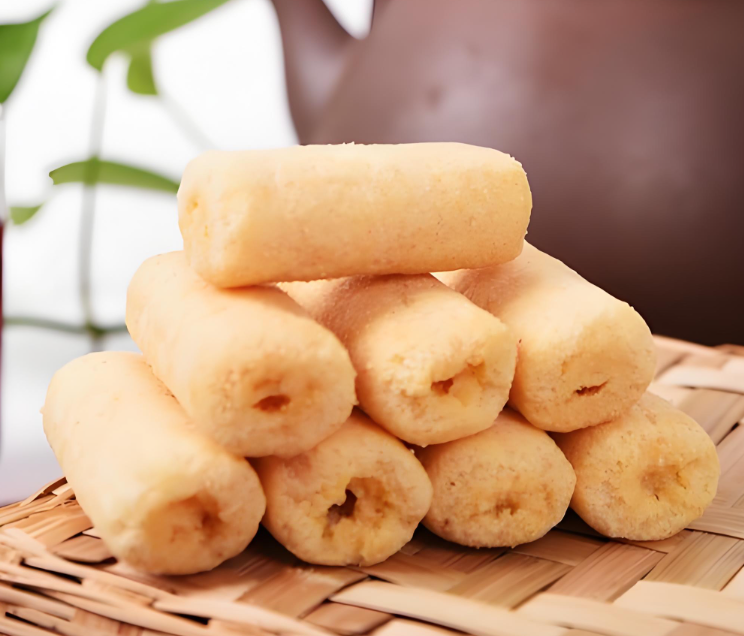
The Critical Moment: As the combined tube of dough and filling exits the machine, it hits the atmosphere. The sudden drop in pressure causes the water in the outer corn layer to flash into steam instantly. This expands the corn (like popcorn), Core filled snack food machine creating the crispy, porous matrix. However, the filling remains dense and creamy because it contains almost no water. The heat actually gelatinizes the starch in the shell while melting the fat in the filling.
Step 3: The Guillotine (Rotary Cutting)
The snack is emerging as a continuous, endless sausage of hot, crispy shell filled with liquid cream.
A Rotary Cutter (a spinning wheel of blades) spins at high speed. Because the snack is moving fast, the blades don’t crush it; they “pinch and sever.” The speed of the cutter determines the length of the pillow.
- Fast cutting = Short, bite-sized pillows.
- Slow cutting = Long, stick-shaped snacks (like filled breadsticks).
Step 4: The Dryer (Setting the Crunch)
At this point, the outer shell is puffed, but it isn’t “snap” crunchy yet—it is slightly pliable and moist on the inside. The pillows travel through a Multi-Zone Conveyor Dryer.
- Temperature: 120°C to 150°C (250°F to 300°F).
- Time: 3 to 5 minutes.
- Action: Hot air circulates aggressively around the pillows. It removes the final 2-3% of moisture from the shell, locking in the “snap” while keeping the center soft. If the dryer is too hot, the filling melts and leaks out. If it is too cool, the snack will be chewy.
Step 5: The Tumble Coater (Flavor Application)
Unlike puffed corn, you cannot toss a fragile filled pillow in a rotating drum like a potato chip—it would shatter. Instead, producers use a Gentle Flavor Tumbler.

Inside a slow-rotating mesh drum:
- Oil Spray: A fine mist of oil is sprayed onto the pillows. This acts as an adhesive.
- Powder Dusting: Seasoning powder (BBQ, Sour Cream & Onion, or Cinnamon Sugar) is dispersed into the air within the drum.
- The Result: The powder sticks only to the outside shell, never touching the sweet or savory filling inside. This creates the signature contrast: a savory dusting on your tongue, followed by a sweet cream in the center.
Step 6: The Cooling Tunnel
The pillows are hot (roughly 80°C) and slightly soft from the coating process. They enter a long Cooling Conveyor where ambient or chilled air flows upward through the mesh belt. This solidifies the fat in the filling and sets the “snap” of the shell. If you package them while warm, they will sweat condensation inside the bag and become stale within hours.
Step 7: Nitrogen Flushing (Preservation)
Because the filling is high in fat (which goes rancid) and the shell is hygroscopic (absorbs moisture from the air), standard air packaging is impossible.
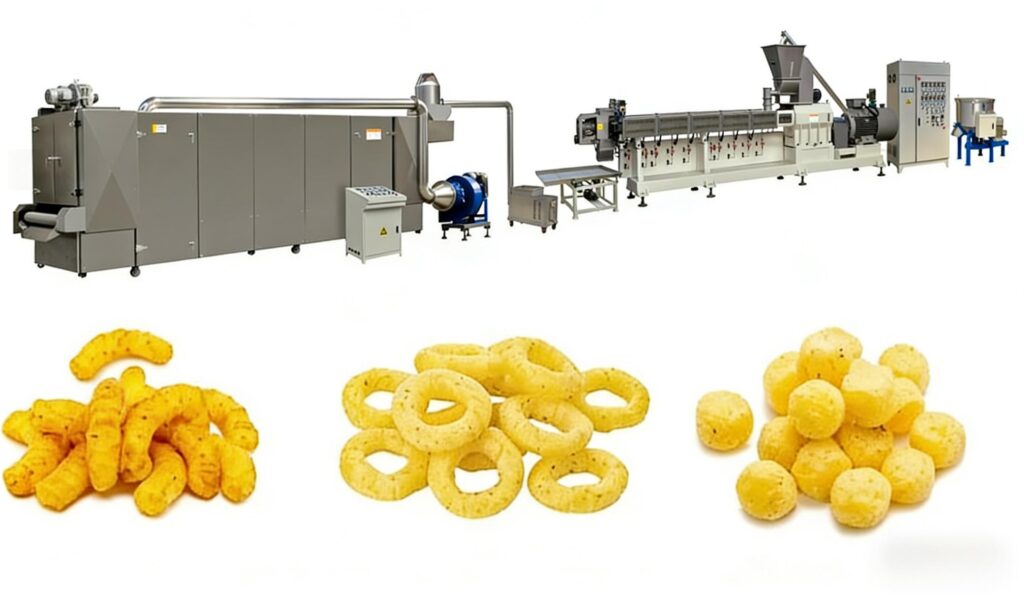
The vertical form-fill-seal machine drops the pillows into a bag, but just before sealing, it injects a jet of Nitrogen Gas.
- Nitrogen pushes out the oxygen (which causes staleness and mold).
- It also creates a protective “cushion” around the delicate pillows, preventing them from crushing into dust during shipping.
The Final Product
You tear open the bag. The nitrogen escapes with a hiss. You pick up a golden pillow—crispy, dusted with savory cheddar powder, weighing almost nothing. You bite down.
Crunch. (The shell shatters).
Swoosh. (The room-temperature-creamy cheese filling floods the cavity).
You have just eaten a piece of thermo-mechanical engineering where moisture, pressure, fat, and starch were balanced to the gram. That is how you make a stuffed crunch.
 Arabic
  English
  Russian
  Spanish
  Italian
  Portuguese
  German
  French
  Japanese
  Moroccan Arabic
  Persian
  Belarusian