
Walk down any pet food aisle and you’ll see bags covered in pictures of fresh chicken, garden vegetables, and wholesome grains. The marketing suggests something close to home cooking. The reality of how most commercial dog food is actually made tells a different story.
The vast majority of dry dog food on the market is produced through a process called экструзия, a high-temperature, high-pressure manufacturing method that transforms a slurry of ingredients into the familiar kibble shapes dogs eat every day. Understanding this process—from raw material sourcing to the final oil coating—reveals important truths about what’s in the bag.

The Rendering Room: Where “Meat” Begins
Before any kibble takes shape, the protein components must be prepared. Most commercial dog foods rely on rendered meat meals rather than fresh meat as their primary protein source. Rendering is essentially a high-temperature cooking process that separates fat from protein and bone in animal tissues.
The raw materials for rendering come from what the industry euphemistically calls “by-products” and “offal”—parts of slaughtered animals that aren’t sold for human consumption. This can include organs, bones, blood, and fat trim. According to regulatory definitions, meat meal is made from “parts of the carcass” excluding hair, horns, hooves, and stomach contents, while meat and bone meal includes the bone as well.
The rendering process itself is straightforward: raw animal tissues are ground, heated to evaporate moisture, and pressed to extract fat. What remains is dried and ground into a fine powder—a concentrated protein source that’s shelf-stable and cheap to transport. A named meat meal like “chicken meal” provides significantly more protein per pound than fresh chicken, which is mostly water.
The Extrusion Line: Cooking Under Pressure
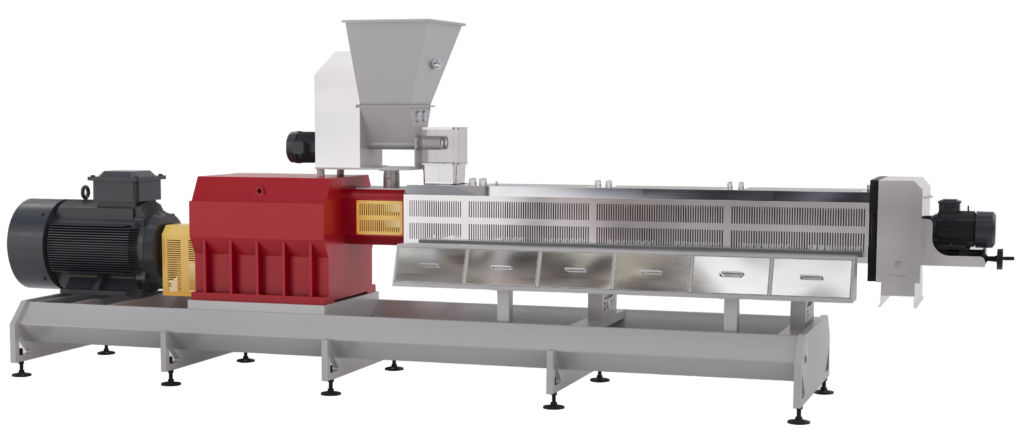
The heart of kibble manufacturing is the extruder—a long, multi-zone barrel containing rotating screws that push, shear, and heat the ingredient mixture.
The process begins with preconditioning. Dry ingredients—typically a mix of meat meal, grains like corn or rice, and various vitamin and mineral premixes—are fed into a preconditioner where steam and water are injected. This step begins the cooking process and hydrates the starches, usually at temperatures around 87°C.
From there, the mixture enters the extruder itself. As the screws turn, friction and injected steam raise the temperature and pressure dramatically. One patent example describes six temperature zones ranging from 87°C to 127°C, with pressure reaching approximately 3.4 MPa before the mixture exits the die.
When this superheated, pressurized dough is forced through the die—a shaped opening at the end of the extruder—the sudden drop in pressure causes water in the mixture to flash into steam. This is expansion, the same principle behind puffed snacks. The steam creates countless tiny air pockets, giving kibble its characteristic porous, crunchy texture.
The extruded strands are then cut into individual pieces by rotating blades at the die face and dropped into a dryer.
Drying: The Long Bake
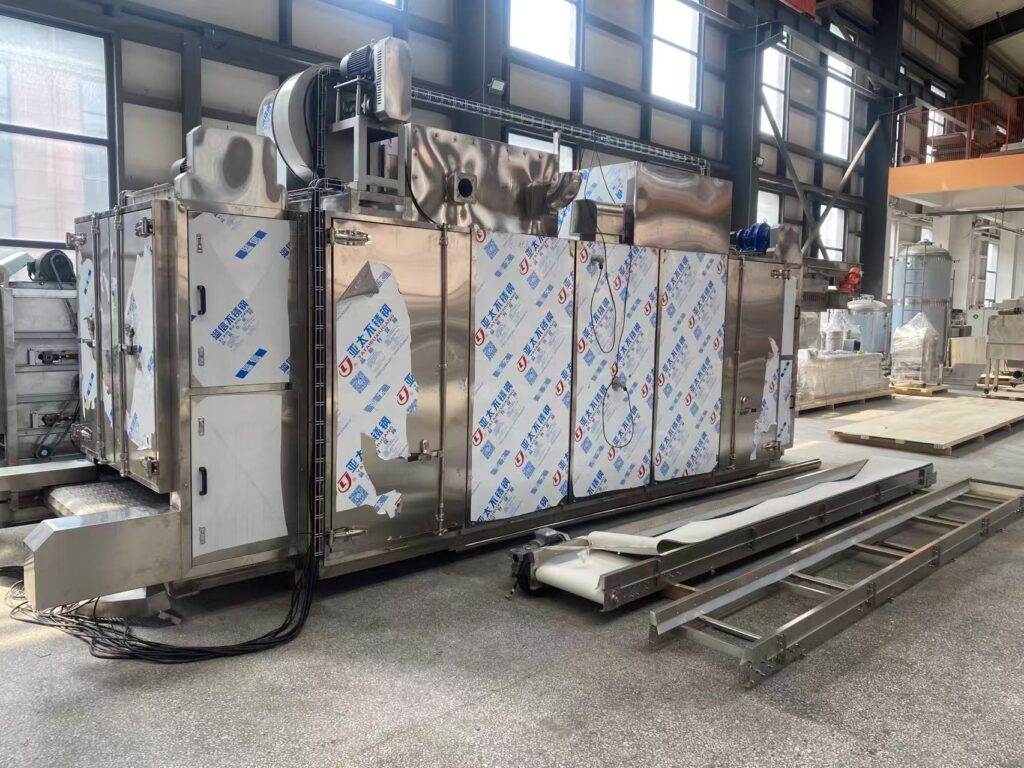
Freshly extruded kibble contains far too much moisture to be shelf-stable. It must be dried down to a moisture content between 6% and 10% to prevent mold and bacterial growth.
Drying typically occurs in large continuous belt dryers at temperatures around 100°C to 150°C, often for 20 minutes to an hour depending on the product. The goal is to remove enough water to ensure a long shelf life while avoiding over-drying, which can make kibble brittle and prone to crumbling during shipping. One patent notes that drying conditions must be carefully controlled—products dried too aggressively showed 25% breakage rates compared to 4-5% for properly dried batches.
After drying, the kibble is cooled to near room temperature.
The Coating: Fat, Flavor, and Preservatives
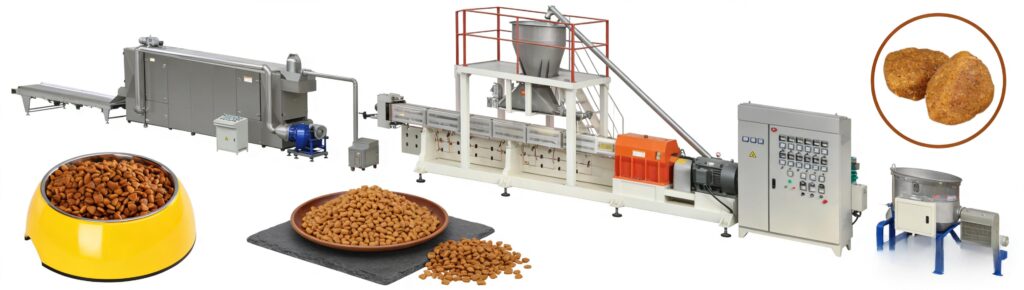
Perhaps the most important step for palatability happens after drying: enrobing. This is where the fat, flavor, and preservatives are applied.
Dry kibble without added fat is largely unappealing to dogs. Manufacturers spray the dried pieces with animal fat—often poultry fat or beef tallow—along with digest, a liquid made from hydrolyzed animal tissues that creates a strong aroma dogs find irresistible. This coating process is also where many preservatives are added to prevent the fat from going rancid.
It’s worth noting what typically isn’t in the coating: named meat. The protein in the food comes almost entirely from the rendered meals cooked into the core of the kibble. The spray-on coating is for flavor and fat, not nutrition.

What the Label Doesn’t Tell You
Several aspects of this process deserve scrutiny.
First, fresh meat is mostly water. When a label lists “chicken” or “beef” first, that ingredient is weighed raw—including its ~70% moisture content. It may contribute far less protein by the time the food is dried than its position on the list suggests. This is why animal protein meals often appear second or third on ingredient lists, even though they provide most of the actual protein.
Second, “meat meal” without a species name is a red flag. Regulations require that when a specific animal is named—”chicken meal,” “beef meal”—the meal must come from that species. Generic “meat meal” or “poultry meal” can come from any number of animals, making it impossible to know what you’re feeding. For dogs with allergies or sensitivities, this is a significant concern.
Third, the rendering industry’s raw materials have historically raised questions. While FDA regulations prohibit the use of diseased animals or animals that died otherwise than by slaughter in animal feed, enforcement and sourcing transparency have been ongoing concerns. The FDA has acknowledged that pentobarbital—a euthanasia drug—can survive the rendering process and has been detected in dog food, though the agency considers the risk low.

Beyond Extrusion: Alternative Processing
Extrusion isn’t the only way to make dog food, though it dominates the market for reasons of cost and efficiency.
Baking uses lower temperatures over longer periods, potentially preserving more nutrients but often requiring binders like wheat gluten that some dogs react poorly to. Freeze-drying removes moisture through sublimation—ice turning directly to vapor under vacuum—preserving the structure and nutrients of raw ingredients at significantly higher cost. Air-drying gently evaporates moisture at low temperatures, similarly preserving more of the original nutrition.
These alternatives produce foods that more closely resemble their starting ingredients. But they cost more, which is precisely why extrusion remains the industry standard.
What This Means for Dog Owners
Understanding how kibble is made doesn’t mean it’s inherently bad. Extrusion kills pathogens, creates a shelf-stable product that’s easy to portion, and can deliver complete nutrition when properly formulated. Millions of dogs thrive on extruded diets.
But the process also explains why ingredient quality matters more than marketing. A bag with a picture of a chicken breast may contain mostly corn, meat meal from unnamed sources, and spray-on fat. A bag that lists “chicken meal” and “chicken” at the top, with no generic “meat meal” or artificial preservatives, is more likely to deliver what the label implies.
The dog food factory isn’t a sinister place. It’s an industrial food production facility optimized for cost, shelf life, and palatability. Knowing what happens inside helps you read the bag with clearer eyes—and make choices that actually serve your dog’s health.
 Russian
  English
  Spanish
  Italian
  Arabic
  Portuguese
  German
  French
  Japanese
  Moroccan Arabic
  Persian
  Belarusian