
Fish feed processing is a critical link between aquaculture nutrition and the actual delivery of nutrients to farmed fish. Unlike terrestrial animal feeds, aquafeeds must contend with a unique challenge: they must remain physically stable in water long enough for fish to consume them, without disintegrating and polluting the aquatic environment. fish feed production line Poor feed durability and water stability can lead to economic losses and unintended nutrient loading in receiving waters. This article provides a comprehensive guide to fish feed processing techniques, covering the essential unit operations that transform raw ingredients into high-quality, nutritionally balanced pellets.
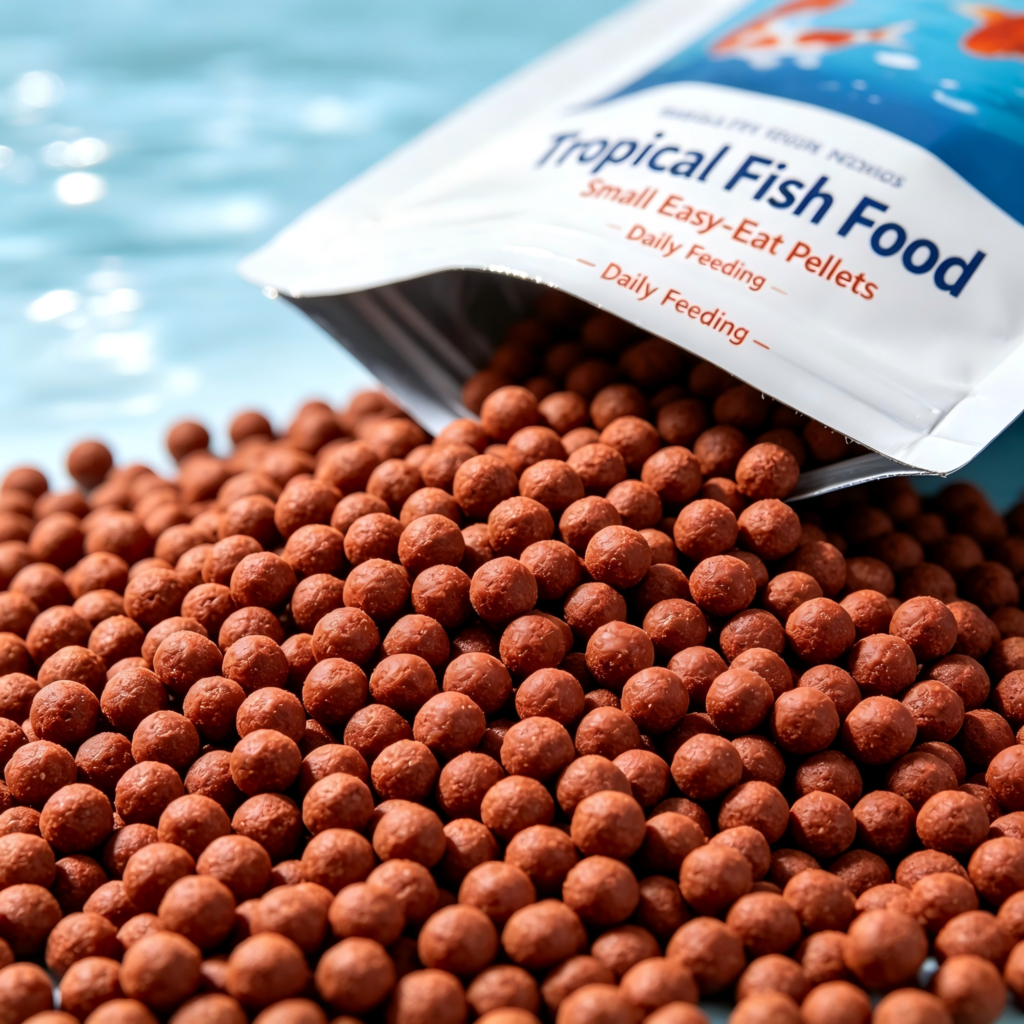
Why Processing Matters
Fish feed processing serves multiple essential functions:
- Nutrient delivery: Proper processing improves digestibility and nutrient bioavailability.
- Physical stability: Well-processed pellets withstand handling, transportation, and immersion in water without disintegrating.
- Palatability: Processing affects texture, flavor, and acceptance by fish.
- Pathogen control: High-temperature extrusion eliminates harmful microorganisms.
- Buoyancy control: Processing parameters determine whether pellets float, sink, or suspend in the water column.
Raw Material Preparation and Formulation
Ingredient Selection
Fish feed formulations are designed based on the target fish species (carnivorous, omnivorous, or herbivorous) and growth stage (larvae, juvenile, or adult). Key ingredients include:
- Protein sources: Fish meal, soybean meal, krill meal, insect meal, and other plant or animal proteins.
- Energy sources: Cereals such as corn flour, wheat flour, and wheat bran serve as binders and energy providers.
- Lipids: Fish oil and vegetable oils provide essential fatty acids and energy.
- Micronutrients: Vitamins, minerals, and other additives are incorporated to meet specific nutritional requirements.
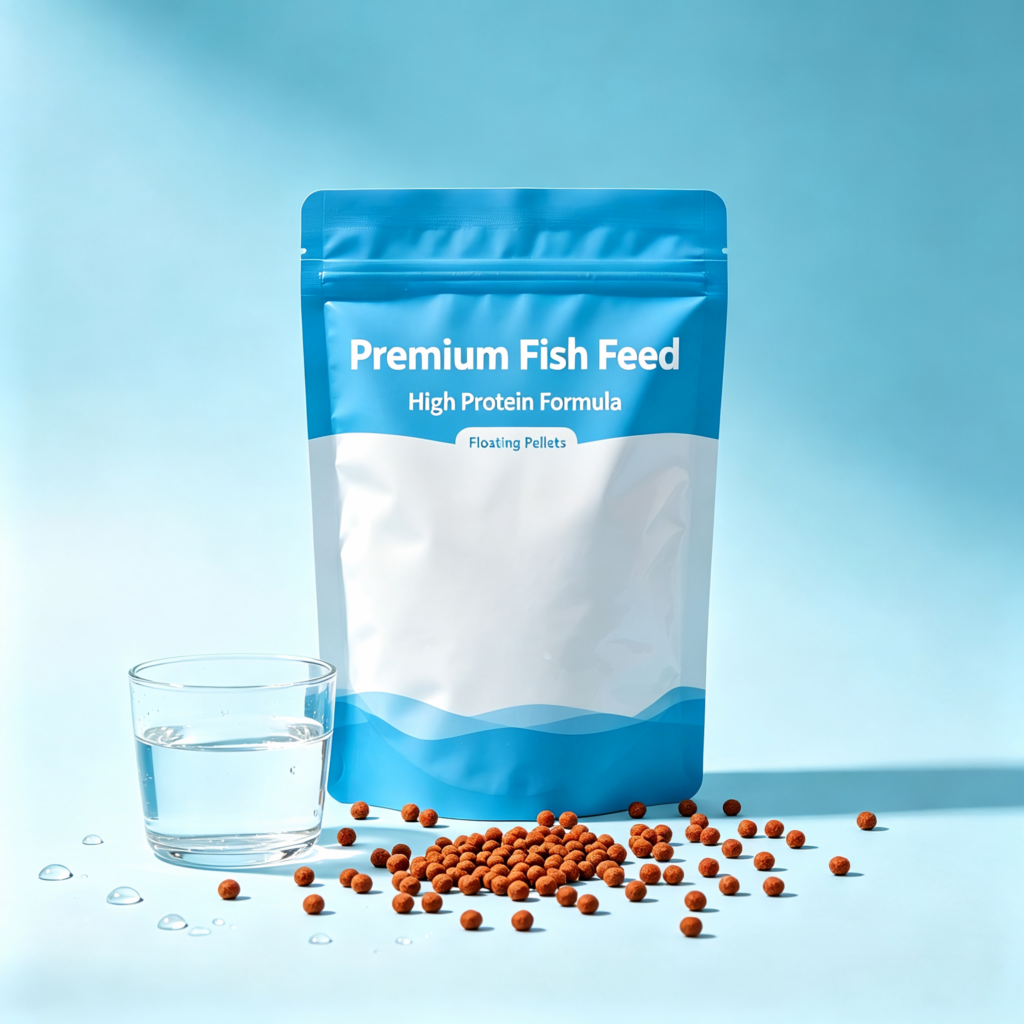
Typical formulations may contain 25–50% crude protein and 6–20% lipid, depending on the species and production goals.
Grinding
Raw materials are ground to a fine powder to ensure uniform mixing and optimal extrusion performance. For aquafeeds, particle sizes are typically smaller than for terrestrial animal feeds—some as small as 50 microns. fish feed production line A common specification is that 95% of the material passes through an 80-mesh or finer screen. Fine grinding increases the surface area for hydration and cooking during extrusion, improving starch gelatinization and pellet quality.
Mixing
The ground ingredients are accurately weighed and mixed in a horizontal or vertical mixer for 5–10 minutes to ensure uniform distribution of all components. Proper mixing is essential because uneven distribution of micronutrients or binding agents can lead to inconsistent pellet quality.
Conditioning
Before extrusion, the mixed powder is fed into a preconditioner where steam and/or water are added. This step serves several purposes:
- Moisture adjustment: Moisture content is typically raised to 16–18% or higher. Some processes condition to 23–27% moisture.
- Temperature elevation: The material is heated to 85–95°C or 90–112°C.
- Starch gelatinization: Heat and moisture initiate cooking of the starch fraction, which acts as a natural binder.
- Pre-softening: The material is softened for more efficient extrusion.
Conditioning time typically lasts 2–5 minutes to ensure even heat and moisture distribution.
Extrusion
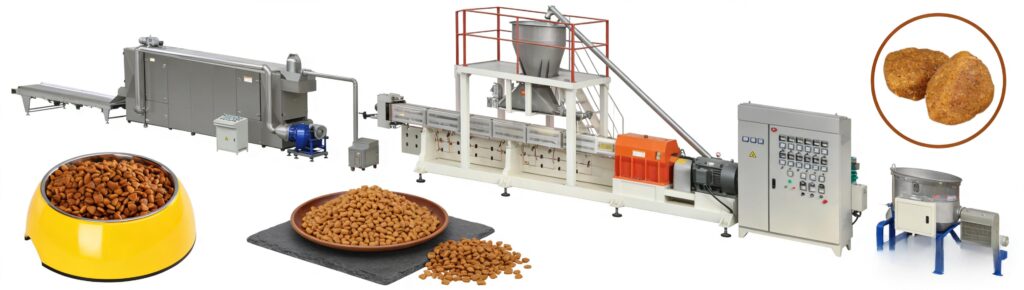
Extrusion is the core processing step in modern aquafeed production. It is a thermomechanical process where the feed mix is cooked, shaped, and texturized under controlled conditions of heat, pressure, and shear. Extrusion processing lines consist of well-defined unit operations that convert feed mixes into texturized, shaped, and stable aquafeed pellets.

Types of Extrusion
Two primary extrusion technologies are used in aquafeed production:
- Dry-type extrusion: Operates on friction to generate heat, with minimal added moisture.
- Wet-type extrusion: Uses steam and water injection, with drying serving as a binding process.
Extrusion Parameters
Key extrusion parameters significantly affect pellet quality:
- Temperature: Barrel and die temperatures typically range from 100°C to 140°C, with some processes operating at 138°C.
- Moisture content: Feed mash moisture during extrusion generally ranges from 23% to 27%.
- Screw speed: Typically 200–300 rpm, with 265 rpm being common.
- Pressure: 3–10 MPa for floating feed production.
Extrusion for Floating vs. Sinking Feed
The extrusion parameters are adjusted to achieve the desired pellet density:
- Floating feed: High temperature (110–130°C) and pressure create expansion when the material exits the die. The sudden pressure drop causes the pellets to expand into a porous structure with density ≤1 g/cm³, allowing them to float.
- Sinking feed: Pellet mills compress the material through a ring die without expansion, producing dense pellets with density >1 g/cm³ that sink.
High-Moisture Extrusion
Recent advances include high-moisture extrusion using a twin-screw extruder with a specially designed cooling die. This process produces feed that is softer in texture, more durable, and extremely water-stable compared to conventionally extruded feed. fish feed production line The new feed absorbs water slowly and maintains a soft texture even after 24 hours of soaking, while exhibiting significantly less dry matter loss in water. Importantly, this method can reduce or eliminate the need for added starch binders.
Резка
A rotating knife at the extruder die face cuts the extruded strands into pellets of the desired length, typically ranging from 0.3 mm to 10 mm or more, depending on fish size.
Drying
Freshly extruded pellets contain 18–28% moisture and must be dried immediately to prevent spoilage and achieve the desired physical properties.

Why Drying Matters
Drying serves several critical functions:
- Shelf stability: Reducing moisture to below 10–12% prevents mold growth. Final moisture content is typically around 5–10%.
- Texture development: Proper drying sets the expanded structure and creates the desired hardness.
- Structural integrity: Drying stabilizes the pellet matrix for subsequent handling and coating.
Drying Equipment
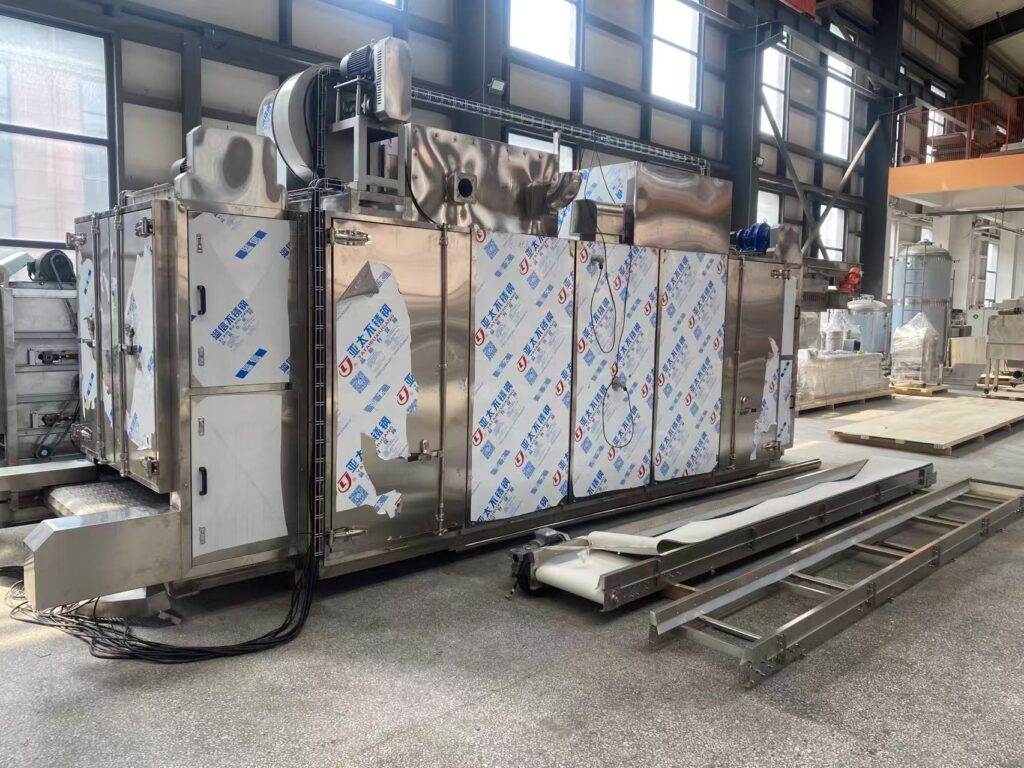
Several types of dryers are used in fish feed production:
Fluidized Bed Dryers
These dryers suspend pellets in a stream of hot air, providing excellent heat and mass transfer. For fluidized bed drying of extruded fish feed, optimal conditions include a bed height of approximately 186 mm, a temperature of about 97°C, and an air flow rate of 0.67 m/s. Drying air temperatures typically range from 60°C to 120°C, with drying times of 10–90 minutes.
Belt Dryers (Continuous)
In continuous belt dryers, pellets are conveyed through a heated chamber on a perforated belt. These dryers are often physically compartmented into several drying zones with different temperatures and/or humidity levels. A belt dryer might operate at a drying temperature around 97.5°C.
Vertical Deck Dryers
These dryers feature multiple decks or trays through which pellets cascade while hot air passes through the product bed.
Drying Parameters
Key drying parameters include:
- Temperature: Inlet temperatures can range from 60°C to 170°C. Some dryers operate with inlet temperatures of 160–170°C and outlet temperatures of 85–90°C.
- Drying time: Varies from 10 minutes to 90 minutes depending on the equipment and target moisture.
- Final moisture: Typically reduced to 5–10%, with some processes targeting approximately 10%.
Small-Scale Drying
For small-scale or farm-level production, sun drying remains a practical option. Fresh pellets are spread under sunlight for 2 days or more, depending on temperature. However, sun-dried feed must be monitored for fungal growth and should be re-dried periodically during storage.
Cooling
After drying, the hot pellets must be cooled to near-ambient temperature before further processing or packaging. Cooling prevents moisture migration within the product, reduces the risk of condensation in packaging, and protects heat-sensitive coatings that may be applied later. Counterflow coolers are commonly used for this purpose.

Coating
Coating is a critical step in fish feed production, particularly for applying oils, vitamins, and other heat-sensitive nutrients that cannot withstand extrusion temperatures.
Oil Coating
Fish oil and other lipids are essential energy sources for many farmed fish. However, high oil levels can interfere with extrusion; therefore, oils are typically applied after drying. Depending on the feed type and fish species, 4% to 40% oil may be applied to the extruded pellets.
Vacuum Coating
The most advanced coating technique is vacuum coating. In this process:
- A vacuum of approximately 200 mbar absolute pressure is applied to remove air from the feed pores.
- Oil is sprayed onto the pellets while paddles mix the product.
- When the vacuum is released, the oil is forced into the pellet pores.
This method achieves deep penetration of oil into the pellet matrix, improving oil absorption capacity and nutrient retention. Step-vacuum coating processes, where oil is applied in multiple stages, can further improve water stability of high-fat feeds.
Other Coatings
Beyond oils, pellets may be coated with vitamins, amino acids, probiotics, or other functional additives. These can be applied through top-coating methods (mixing liquid or dry additives with pellets) or vacuum coating.
Контроль качества
Quality control is essential throughout the fish feed production process. Key quality parameters include:
- Moisture content: Critical for shelf stability and texture.
- Pellet durability: Measures resistance to breakage during handling and transport. High-quality aquafeed can achieve durability values exceeding 98%.
- Water stability: The ability of pellets to maintain integrity upon immersion. This is particularly important for aquafeeds because feed that disintegrates quickly leads to nutrient loss and water pollution.
- Buoyancy/Sinking velocity: Determines whether pellets float, sink, or suspend in the water column.
- Bulk density: Affects both buoyancy and handling characteristics.
- Hardness: Influences palatability and feeding behavior.
- Water activity: An indicator of microbial stability.
Safety and Good Manufacturing Practices
Feed safety is paramount in aquafeed production. Implementation of Good Manufacturing Practices (GMPs) and Hazard Analysis and Critical Control Point (HACCP) programs is essential for upholding safety standards. Critical control points include raw material quality, processing conditions (particularly temperature and moisture), and finished product storage. Odor control is also addressed in modern feed manufacturing facilities.
Заключение
Fish feed processing is a sophisticated sequence of unit operations—from grinding and mixing through conditioning, extrusion, drying, cooling, and coating—each of which must be carefully controlled to produce high-quality, nutritionally balanced pellets. The extrusion process, in particular, offers unparalleled flexibility in creating feeds with specific physical properties, whether floating or sinking, durable or soft, for different fish species and life stages.
Recent advances such as high-moisture extrusion and vacuum coating are pushing the boundaries of feed quality, producing pellets with superior water stability, durability, and nutrient retention. At the same time, the industry is increasingly focused on sustainability, exploring alternative protein sources to reduce dependence on fish meal and minimizing waste through improved feed quality.
Whether for large-scale industrial production or small-scale farm-level manufacturing, the fundamental principles remain the same: select quality ingredients, process them under carefully controlled conditions, and rigorously monitor product quality at every stage. With proper attention to these processing techniques, manufacturers can produce fish feed that supports efficient growth, maintains fish health, and minimizes environmental impact—the cornerstones of sustainable aquaculture.
 Russian
  English
  Spanish
  Italian
  Arabic
  Portuguese
  German
  French
  Japanese
  Moroccan Arabic
  Persian
  Belarusian