
The journey from raw grain to a light, crispy puff is one of food processing’s most fascinating transformations. Puffed snacks owe their characteristic airy texture to the rapid expansion of superheated steam. This expansion is achieved through two primary industrial methods—extrusion cooking and indirect puffing—each governed by the same fundamental principles of starch science and thermodynamics.

The Core Principle: Gelatinization and the “Steam Explosion”
At the heart of every puffed snack is starch gelatinization. Under heat and moisture, the tight, crystalline structure of raw starch granules breaks down, absorbing water and forming a plastic, gel-like mass. When this gelatinized dough is suddenly released from a high-pressure environment into normal atmospheric pressure, the superheated water within it flashes instantly into steam. The rapid expansion of this vapor pushes against the softened starch matrix, creating the myriad of tiny, stable air pockets that define a puffed snack’s crispy texture.
This principle is executed differently across the two main production pathways:
1. Direct Extrusion Puffing (The Continuous Method)
Extrusion is the most common method for producing modern puffed snacks and breakfast cereals. It is a continuous, highly efficient system that combines mixing, cooking, shaping, and puffing in a single machine called an экструдер.

The Extruder in Action
An extruder consists of a large, rotating screw tightly fitted inside a heated barrel. The process unfolds in three distinct zones:
- Feeding and Mixing: Raw ingredients (typically cornmeal, wheat flour, or rice flour) are fed into the barrel. Water, flavorings, and sometimes colorings are added to create a moist dough. The screw conveys this mixture forward.
- Приготовление пищи и стрижка овец: As the screw moves the dough toward the die, the space becomes tighter. The combination of external barrel heat and intense friction from the screw’s rotation raises the temperature to between 130°C and 180°C, while pressure can build to 10-20 bar or more. Under these conditions, starch gelatinizes, and proteins denature, forming a molten, plasticized mass.
- Expansion and Shaping: The hot, pressurized dough is forced through a specially shaped умереть at the end of the barrel. The moment it exits, the sudden pressure drop causes the entrapped superheated water to vaporize instantly. This “steam explosion” puffs the product to several times its original size. A rotating blade cuts the emerging extrudate into uniform pieces, which are then dried and coated with oils and seasonings.
Extrusion is highly versatile. By altering the screw speed, barrel temperature, and moisture content (typically kept below 40%), manufacturers can control the expansion ratio, bulk density, and texture of the final product. For example, high shear and high temperatures generally yield a more expanded, lighter snack.
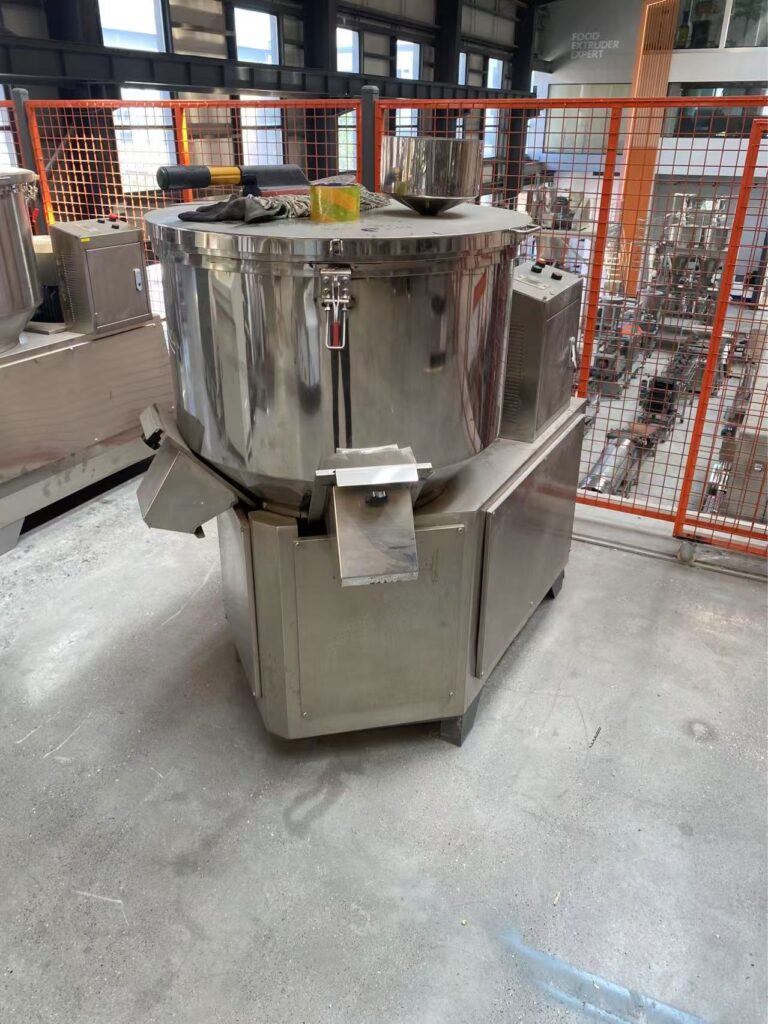
2. Indirect Puffing (The Batch Method)
Before the advent of modern extrusion, puffing was achieved through a more labor-intensive, batch-oriented process. This method is still used for certain traditional products and involves a two-stage approach: creating a dense “half-product” (or pellet) and then puffing it later.
The Two-Step Process
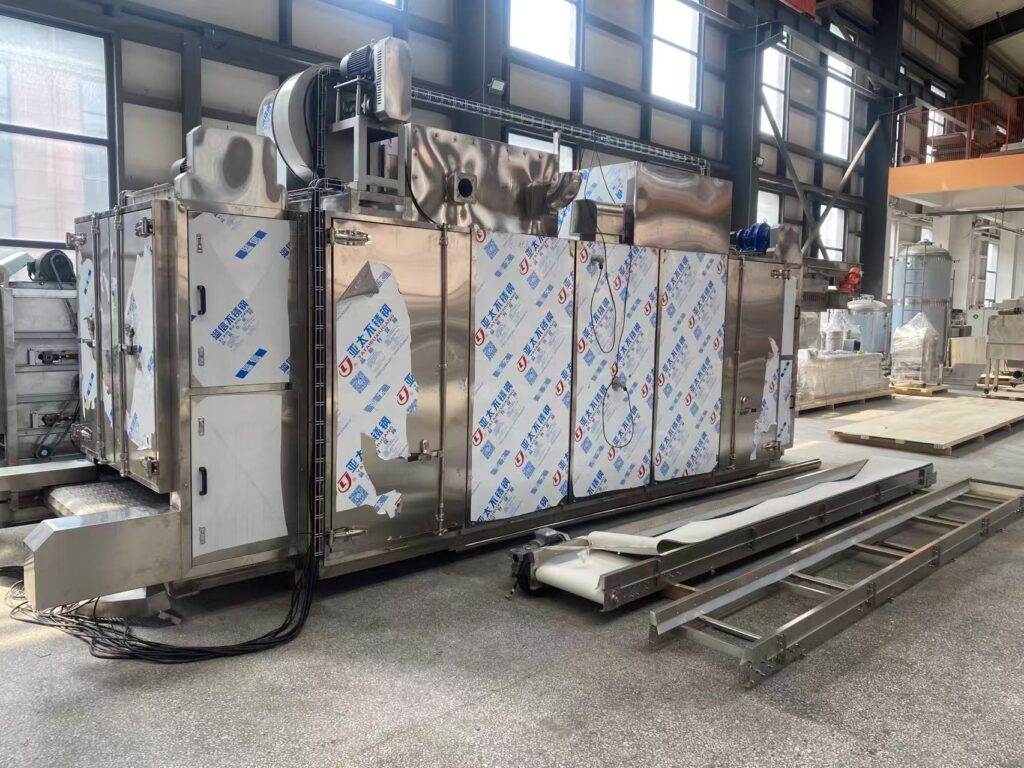
Stage 1: Creating the Pellet
- Cooking: A starch-based dough (often from corn, potato, or tapioca) is thoroughly cooked with steam to ensure complete gelatinization.
- Sheeting and Forming: The gelatinized dough is rolled into a thin sheet and cooled. This cooling step is critical. It induces retrogradation, a process where the gelatinized starch partially recrystallizes into a more rigid structure, effectively “trapping” the moisture within a crystalline lattice.
- Drying: The sheet is cut into specific shapes and dried to a precise moisture content (typically 7-15%). The resulting pellets are hard, dense, and shelf-stable.
Stage 2: Puffing the Pellet
The final puffing occurs when the pellet is subjected to intense, rapid heat, causing the trapped moisture to vaporize explosively. This can be done using several methods:
- Hot Oil Frying: Submerging the pellet in hot oil (around 190°C) for a few seconds cooks and puffs it simultaneously, giving a rich, fatty flavor.
- Hot Air or Sand Roasting: Pellets are puffed using hot air or by tumbling in heated salt or sand. This method results in a lower-fat product.
- Microwave Puffing: Pre-formed pellets can be designed to puff when heated in a microwave, capitalizing on the rapid, uniform heating of water molecules.
Key Variables and Their Impact
| Process Variable | Effect on Puffed Product | Reference |
|---|---|---|
| Moisture Content | Too much moisture leaves a soggy texture; too little fails to generate enough steam for optimal expansion. Precise control (7-15% for pellets, often <40% in extrusion) is crucial. | |
| Temperature & Pressure | Higher temperatures and pressure generally increase expansion. The rapid pressure drop at the die or in the fryer is the primary driver of the “puff.” | |
| Ingredient Composition | High-starch ingredients with high amylopectin content (like waxy maize or potato starch) yield the best expansion. Added proteins or fats can inhibit expansion by strengthening the dough’s structure or reducing steam pressure. | |
| Shear Rate (Extrusion) | Higher screw speeds and shallow screw flights generate more friction and heat, leading to greater starch breakdown and a higher degree of puffing. |
Заключение

Producing a puffed snack is a precise application of food science. Whether through the continuous, high-efficiency process of extrusion or the traditional two-step method of creating half-products, the goal remains the same: to harness the power of gelatinized starch and superheated steam. By meticulously controlling moisture, temperature, pressure, and ingredient formulation, food engineers can orchestrate a controlled “explosion” that transforms a dense grain into a light, crispy, and beloved treat.
 Russian
  English
  Spanish
  Italian
  Arabic
  Portuguese
  German
  French
  Japanese
  Moroccan Arabic
  Persian
  Belarusian