
When parents reach for a box of infant rice cereal, they see simplicity: rice, vitamins, perhaps a touch of sweetness. What they rarely see is the industrial process that transforms a humble grain into the fine, instant-mixing powder sold as a baby’s first solid food. That process—extrusion puffing—is efficient, cheap, and nearly universal in the powdered infant cereal market. It is also the source of quiet compromises that manufacturers seldom advertise.

The Extrusion Process: A Brief Anatomy
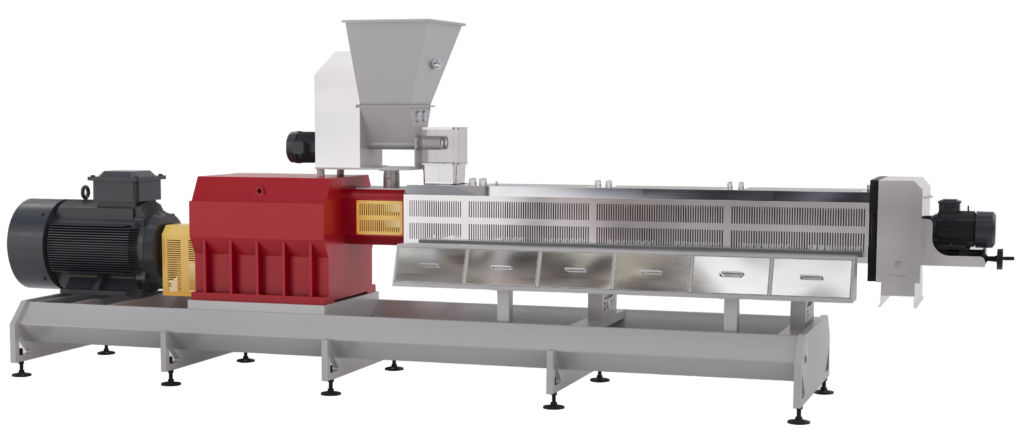
Puffed infant rice cereal is made through a method called extrusion cooking. Dry rice flour is fed into a long, heated barrel containing one or two rotating screws. Water and sometimes oils are injected, and the mixture is subjected to intense mechanical shear and temperatures that can reach 120–160°C within seconds . The pressure builds until the material is forced through a tiny die at the end of the barrel. The sudden drop to atmospheric pressure causes the water inside to flash into steam, literally exploding the starch structure from within. The result is a lightweight, porous, pre-cooked powder that dissolves easily in warm water or milk.

The efficiency is undeniable. Extrusion is a high-temperature, short-time (HTST) process that gelatinizes starch, denatures proteins, inactivates anti-nutritional factors like trypsin inhibitors, and sterilizes the product—all in one continuous operation . For manufacturers, the economics are compelling: lower production costs, higher throughput, and a shelf-stable product with excellent reconstitution properties .
What the Heat Takes Away
That same efficiency, however, comes with trade-offs that matter for infant nutrition.
The most immediate concern is nutrient loss. The combination of high temperature and mechanical shear is harsh on heat-sensitive vitamins. While manufacturers routinely add a vitamin-mineral premix after extrusion to compensate, this fortification is a corrective measure, not a solution. The native micronutrients present in the rice itself—already modest—are largely degraded by the process. One Chinese review of infant rice flour production notes that puffed powder cereals suffer from both structural destruction of the grain and significant heat-related nutrient losses, resulting in lower overall nutritional value compared to rice cereals made by gentler methods .
More subtle but equally troubling is the structural damage to starch. The patent literature itself acknowledges that extrusion cooking causes “high shear forces to rupture the gelatinized starch granules,” leading to a sticky, cohesive consistency upon reconstitution . This might sound like a technical footnote, but for an infant’s developing digestive system, the integrity of starch structure affects how quickly sugars are released and absorbed. Fully gelatinized, structurally fragmented starch may be easier to digest, but it also means the carbohydrate delivers a faster glucose load—a consideration that rarely features on the packaging but matters for metabolic programming.
Heavy Metals: A Contaminant Pathway
Rice has a well-documented propensity to absorb arsenic and cadmium from soil and water. These toxic elements accumulate in the grain, and no amount of processing removes them. In fact, processing may concentrate them.
A 2026 scoping review of global baby food contamination found that rice mixes had the highest median lead and arsenic concentrations among all baby food categories, with 30% of rice mix items exceeding the maximum level for arsenic and over 20% exceeding the limit for lead . Cadmium, meanwhile, was highest in cereals generally, with more than 17% of items exceeding the maximum level .
Critically, infants are more vulnerable than adults. The European Food Safety Authority has determined that children under three have two to three times higher exposure to inorganic arsenic compared to adults, due to both higher intake relative to body weight and immature detoxification pathways . Health consequences associated with early arsenic exposure include delayed neurological development, impaired growth, and increased lifetime cancer risk .
The extrusion process does not create these contaminants, but it concentrates rice into a form that infants consume in significant quantities—often as their first and most frequent solid food. A Swedish study of baby foods on the market found that infants consuming an energy-appropriate diet of rice-based porridges and cereals would “easily exceed the health-based guidance values for inorganic arsenic, cadmium and manganese” . The researchers concluded that manufacturers must select ingredients not only by type but by cultivation location and farming practices—because some rice simply should not go into baby food .
The Convenience Trap
Puffed powdered cereal offers real advantages: it mixes smoothly, it is easy to store, and it costs less than the alternative wet-process flake cereals that require more careful manufacturing . For families on tight budgets, that affordability matters.

But the convenience of instant-mixing rice flour has created a feeding pattern where rice cereal becomes a dietary staple rather than a transitional food. Public health guidance increasingly recommends switching up grains—offering oatmeal, barley, and multigrain cereals instead of relying solely on rice—precisely to limit heavy metal exposure . The extrusion process that makes rice cereal so convenient also makes it easy to over-rely on a single, contaminated grain.
What Parents Can Do
The processing realities of puffed infant rice cereal do not mean parents should panic. They mean parents should think about frequency and variety. Health agencies advise offering a range of grains, alternating brands, and avoiding rice-based snacks and teething biscuits that offer little nutrition and measurable contaminant risk . For families who choose rice cereal, rotating it with oat or mixed-grain options is a simple harm-reduction strategy.
The industrial food system has made infant cereal cheap, shelf-stable, and effortless to prepare. What it has not made is a product that is nutritionally superior to what rice can offer in a gentler form—or a product that can undo the contamination absorbed by the grain before it ever entered the extruder. The puff is a triumph of food engineering. Whether it is a triumph for infant health is a question the packaging does not answer.
 Portuguese
  English
  Russian
  Spanish
  Italian
  Arabic
  German
  French
  Japanese
  Moroccan Arabic
  Persian
  Belarusian