
Operation of a Twin-Screw Extruder for Expanded Products

1. Introduction A twin-screw extrusion cooking system (often called a twin-screw extruder for puffed or expanded foods) is used to continuously mix, cook, and shape formulations such as cereal snacks, breakfast cereals, and texturized ingredients. Successful operation depends on controlling feed rate, moisture, screw speed, temperature profile, and die conditions to achieve stable flow, target expansion, and consistent texture. 2. Pre-Start Preparation Before starting the machine, operators typically confirm that the extruder and auxiliary systems are ready. Good preparation reduces the risk of start-up surges, plugging, excessive torque, and unstable expansion. 3. Start-Up Procedure Start-up is usually performed gradually to warm the system and establish a stable material flow. 4. […]
Critical Considerations in Puffed Snack Food Production

Introduction Puffed snack production is a sophisticated, multi-stage process that balances food science with high-speed manufacturing. Success requires meticulous attention to detail across all operations—from raw material selection to final packaging—to ensure consistent product quality, safety, and shelf stability. This document outlines the key technical and operational considerations essential for efficient and compliant production. 1. Raw Material Selection and Specification Management 2. Process Control in Extrusion and Cooking 3. Thermal Processing (Drying/Toasting/Baking/Frying) 4. Seasoning Application and Adhesion 5. Food Safety and Sanitation 6. Quality Assurance and Consistency 7. Packaging Integrity 8. Energy Efficiency and Sustainability Conclusion Producing high-quality puffed snacks consistently at an industrial scale is an exercise in precision […]
Manufacturing Variously Shaped Puffed Snacks: Technology and Methods

1. Introduction to Shape Formation The diverse and often intricate shapes of puffed snacks—from classic balls and curls to stars, rings, and three-dimensional animal figures—are not merely decorative but serve functional purposes in enhancing texture, mouthfeel, and seasoning adhesion. The creation of these shapes is a core competency in snack food engineering, primarily achieved through extrusion die design, cutter technology, and forming processes. 2. The Primary Method: Extrusion Die and Cutter Design Most shaped snacks are produced via cooking extrusion, where the shape is determined at the final stage of the extruder. A. The Role of the Die PlateThe die is a thick, hardened metal plate mounted at the end […]
Flavoring Technology for Puffed Snack Foods

Introduction Flavoring is the critical final transformation in puffed snack production, converting bland, expanded starch bases into crave-worthy, differentiated products. This process requires precise engineering to ensure flavor uniformity, stability, and consumer appeal. Modern seasoning technology balances sensory science with industrial-scale application. 1. Core Flavor Delivery Systems Puffed snacks utilize three primary seasoning methods: A. Powder Coating (Dry Seasoning) B. Oil-Based Slurry Coating C. Compound Seasoning (Wet-Dry Combination) 2. Industrial Application Equipment Rotary Drum Seasoners (Most Common) Fluidized Bed Coaters Enrobing Belts (For Heavy Coating) 3. Flavor Science & Formulation Principles Flavor Layering TechnologyEffective seasoning creates a temporal sensory experience: Key Interactions & Challenges 4. Quality Control Parameters Analytical Metrics […]
Market Outlook for Savory Snacks (Puffed/Torrefied)
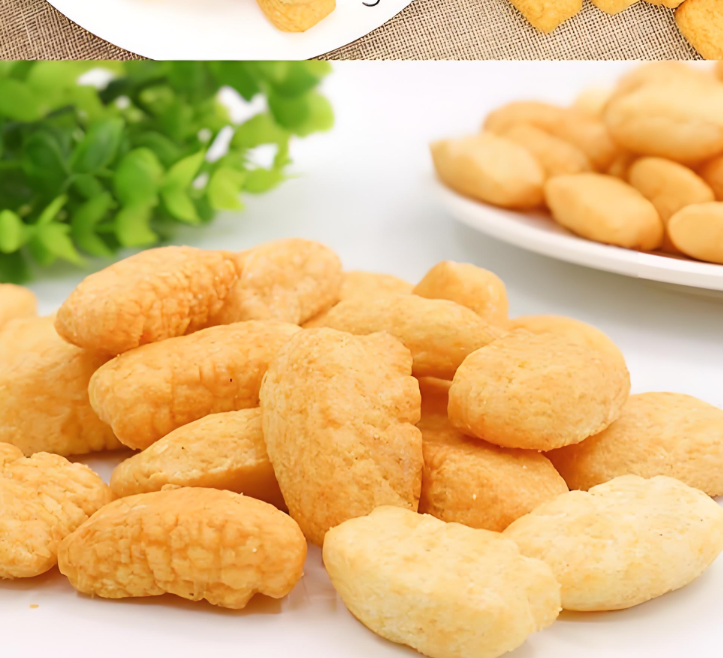
1. Executive Summary The global savory snacks market, with puffed and extruded products as a dominant sub-segment, is poised for robust growth driven by urbanization, rising disposable incomes, and evolving consumer lifestyles. Valued at approximately USD 200 billion in 2024, the segment is expected to grow at a CAGR of 5-7% through 2030. Growth will be driven less by volume expansion of traditional products and more by premiumization, health-conscious innovation, and experiential consumption. The industry’s future hinges on navigating a fundamental paradox: offering indulgent, crave-worthy textures while aligning with modern wellness and sustainability demands. 2. Current Market Landscape & Key Drivers 3. Mega-Trends Shaping the Future The market is undergoing […]
Processing Technology of Puffed Snack Foods
Abstract: Puffed snack foods represent a major segment of the global snack industry, characterized by their light, crispy texture, diverse shapes, and broad flavor adaptability. The core processing technology involves subjecting a starch-based mixture to high temperature and pressure, followed by a sudden pressure release, causing rapid expansion and formation of a porous structure. This article details the primary production methods, unit operations, and key technological considerations involved in manufacturing extruded and fried puffed snacks. 1. Introduction & Classification Puffed snacks are broadly categorized by their processing method: This article focuses primarily on extrusion puffing, the most versatile and widely used industrial method. 2. Raw Material Selection & Preparation The […]
How Crispy Puff Snacks Are Made: The Production of Crunchy Extruded Foods
Crispy puffed snacks—such as corn puffs, cheese curls, rice puffs, and many other “extruded” snacks—feel simple to eat, but they are engineered foods. Their light texture, loud crunch, and quick melt-in-the-mouth bite come from tightly controlled processing: hydration, cooking under pressure, rapid expansion, drying, and seasoning. This article explains how manufacturers produce consistently crisp puffed foods and what variables make or break crunch. 1) Start With the Right Base: Starch Is the Engine of Puffing Most crispy puff snacks are built on starch-rich flours or grits, commonly: Why starch matters: during extrusion, starch gelatinizes (cooks and swells). When the product exits the die, water flashes into steam and the cooked […]
A Guide to Lubrication Practices for Twin-Screw Extruders in Snack Food Production

Effective lubrication is critical for the reliable, efficient, and safe operation of twin-screw extruders used in the production of expanded snacks, pet food, and textured proteins. Proper lubrication minimizes wear, prevents premature failure of costly components, manages heat, and ensures consistent product quality. This guide outlines key principles and best practices. 1. Understanding Lubrication Points A twin-screw extruder has two primary lubrication systems: 2. Lubrication of the Mechanical Drive System a) Gearbox Lubrication: b) Thrust Bearing Lubrication: c) Grease-Points (Slew Bearings, Couplings): 3. Critical Considerations for Food Safety & Product Integrity 4. Operational & Process Impact 5. Maintenance Schedule Summary Conclusion:Lubricating a twin-screw extruder is less about greasing moving parts […]
Achieving Superior Crunch: A Technical Guide to Enhancing Crispness in Expanded Snack Foods
The signature appeal of expanded snacks lies in their delicate, airy, and profoundly crispy texture. This characteristic “crunch” is not accidental but the result of precise scientific and engineering control throughout the manufacturing process. snack extruder machine Achieving and maximizing crispness involves optimizing the structure of the snack matrix itself and preserving it until consumption. Here is a comprehensive guide to the key factors. 1. Foundational Principles: The Science of Crispness Crispness is a textural attribute perceived when a brittle, glassy material fractures suddenly and completely under force, producing many high-frequency sound waves. In snacks, this state is achieved when the biopolymer matrix (primarily gelatinized starch) is in a rigid, […]
A Comprehensive Guide to Moisture Control in Expanded Snack Foods
A Comprehensive Guide to Moisture Control in Expanded Snack Foods Abstract: Moisture content is the single most critical factor determining the texture, shelf life, and overall acceptability of expanded (puffed) snack foods. Achieving and maintaining the ideal low moisture level—typically between 1% and 3%—is a complex challenge that spans the entire production chain. This article outlines the key principles and control points for effective moisture management in puffed snack manufacturing. 1. Introduction: The Importance of CrispnessThe desirable “crisp” or “crunchy” texture of puffed snacks is a direct function of their glassy state, achieved at very low moisture levels. Excessive moisture plasticizes the starch-protein matrix, leading to a soft, chewy, or […]
Controlling Moisture Content in Expanded Snack Foods
Moisture content is a critical parameter in the production of expanded snack foods (often called puffed or extruded snacks). It directly influences product texture, shelf life, microbial stability, flavor, and overall quality. Effective moisture control is essential throughout the manufacturing process—from raw materials to packaging. This article outlines key strategies for managing moisture in expanded snacks. 1. Raw Material Selection and Pre-processing The journey of moisture control begins with the raw materials, snacks machinery typically grains (corn, rice, wheat), potatoes, or legumes. 2. The Extrusion Process: The Heart of Expansion The extruder is where moisture, heat, and shear force combine to create the puffed structure. 3. Post-Extrusion Drying and Toasting […]
Functions and Applications of the Twin Screw Extruder
A twin screw extruder is an advanced processing machine widely used in the food, feed, and industrial manufacturing sectors. Compared with single screw extruders, twin screw extruders feature two intermeshing screws rotating inside a barrel, which provide superior mixing, conveying, and processing performance. One of the key functions of a twin screw extruder is efficient material mixing and conveying. The intermeshing screw design ensures uniform distribution of raw materials, snacks production machines moisture, and additives, resulting in stable processing conditions and consistent product quality. The machine is capable of handling a wide range of raw materials, including powders, granules, and high-viscosity formulations. Another important function is precise control of temperature, […]
 Japanese
  English
  Russian
  Spanish
  Italian
  Arabic
  Portuguese
  German
  French
  Moroccan Arabic
  Persian
  Belarusian