
Differences Between Needle-Shaped Bread Crumbs and Block-Shaped Bread Crumbs

Bread crumbs are widely used in food processing to improve texture, appearance, and flavor of fried and baked foods.bread crumbs making machine According to their shape and production method, bread crumbs can be mainly classified into needle-shaped bread crumbs and block-shaped bread crumbs. Although both are made from bread, they differ significantly in structure, performance, and application. 1. Shape and Physical Structure Needle-shaped bread crumbs are long, thin, and fibrous in appearance. They have a loose, open structure with many air gaps. This shape allows them to form a light and crispy coating after frying.Block-shaped bread crumbs, on the other hand, are irregular, compact particles formed by crushing baked bread […]
How to Make Puffed Foods with Excellent Taste

Puffed foods are popular worldwide because of their light, snacks making machine crispy texture and pleasant mouthfeel. Achieving high-quality texture in puffed snacks requires careful control of raw materials, processing conditions, and post-treatment methods. The following factors are key to producing puffed foods with excellent texture. 1. Selection of Raw Materials High-quality raw materials are the foundation of good puffed products. snacks making machine Grains or starches such as corn, rice, wheat, or potatoes should have appropriate starch content and low impurity levels. Starch with good gelatinization properties helps create a uniform internal structure during puffing. Moisture content of the raw materials is also critical; materials that are too dry […]
Key Points in Fish Feed Processing

Fish feed processing is a critical link between feed formulation and farm performance. fish food making machine Even with an excellent recipe, poor processing can reduce nutrient availability, pellet integrity, and water stability, leading to higher feed waste and inferior growth. The following key points summarize what matters most when manufacturing high-quality fish feed, especially pelleted and extruded products used in aquaculture. 1. Ingredient Selection and Quality Control Consistent raw materials are the foundation of consistent feed. Fish meal, soybean meal, wheat flour, corn gluten, oils, vitamins, and minerals should be evaluated for: Incoming quality checks and supplier audits help prevent production issues and protect fish health. 2. Grinding and […]
The Puff Paradox: A Behind-the-Scenes Look at How Your Favorite Airy Snacks Are Made

We’ve all reached for a bag of cheese puffs, veggie sticks, or crispy rice cakes. They’re light, crunchy, and irresistibly moreish. puffed corn snack making machine But what goes into creating that iconic melt-in-your-mouth texture? The journey from raw grain to puffed snack is a highly engineered process that relies on extreme physics and industrial-scale food science. Here’s a step-by-step exposé of what really happens inside the factory. Stage 1: The Base – From Humble Grain to Uniform Grit It starts not with flashy flavors, but with bland, dry staples. Stage 2: The Dough – Creating a Volatile Paste The dry mix is transformed into a workable paste. Stage 3: […]
The Drive System of an Extruder: Power, Precision, and Control

The drive system is the powerhouse of an extruder, responsible for converting electrical energy into the controlled, high-torque mechanical rotation of the screw(s). food extruder machine It is a critical subsystem whose performance directly determines the machine’s processing capability, stability, product quality, and energy efficiency. Far more than just a motor, the modern extruder drive is an integrated assembly of several key components working in concert. Core Components of the Drive System: 1. Prime Mover (Motor):This is the primary source of power. For industrial extruders, two main types are prevalent: 2. Gear Reducer (Transmission):The motor typically rotates at high speeds (e.g., 1,200-1,800 RPM), while the extruder screw requires much lower […]
The Components of an Extruder: A Comprehensive Overview

An extruder is a sophisticated machine used extensively in the food, feed, and plastics industries to produce a wide variety of puffed and shaped products—from breakfast cereals and snacks to pet food and biodegradable packaging. extruder machine Its operation relies on the application of heat, pressure, and mechanical shear to transform raw materials (often a powder or dough) into a molten mass, which is then forced through a die to achieve the desired shape and texture. The fundamental components of a food/feed extruder can be categorized into several key systems: 1. Feeding SystemThis is the starting point of the extrusion process. It typically consists of a hopper or storage bin […]
Market Prospects for Puffed Foods: Trends, Drivers, and Future Outlook

The global puffed food market represents a dynamic and expanding segment within the broader snack food industry. Characterized by continuous innovation, shifting consumer preferences, puffed corn snack making machine and robust growth in emerging economies, the sector presents significant opportunities alongside evolving challenges. This analysis examines the current landscape, key growth drivers, emerging trends, and future projections for puffed snacks worldwide. 1. Current Market Landscape Market Size and Growth Product Segmentation 2. Primary Growth Drivers A. Changing Consumer Lifestyles B. Innovation in Health and Wellness C. Sustainability and Ethical Consumption D. Technological Advancements in Manufacturing 3. Emerging Trends Shaping the Future A. Premiumization and Experiential Snacking B. Plant-Based and Alternative […]
Key Factors for Successful Puffed Food Production
The production of puffed snacks is a complex process where precise control over multiple parameters determines the final product’s texture, flavor, shelf life, and consumer appeal. From simple extruded curls to multi-layered, coated snacks, mastering the following key elements is essential for consistent, high-quality production. 1. Raw Material Selection and Formulation The foundation of any puffed product lies in its recipe. 2. Thermal-Mechanical Process Control (The Heart of Puffing) This is the transformative stage, primarily occurring in the extruder or oven. 3. Die and Cutting Design The final shaping point has a major impact. 4. Drying and Toasting Post-Extrusion Most puffed snacks exiting the extruder have a high residual moisture […]
How to Cool an Extrusion Machine: Methods and Best Practices
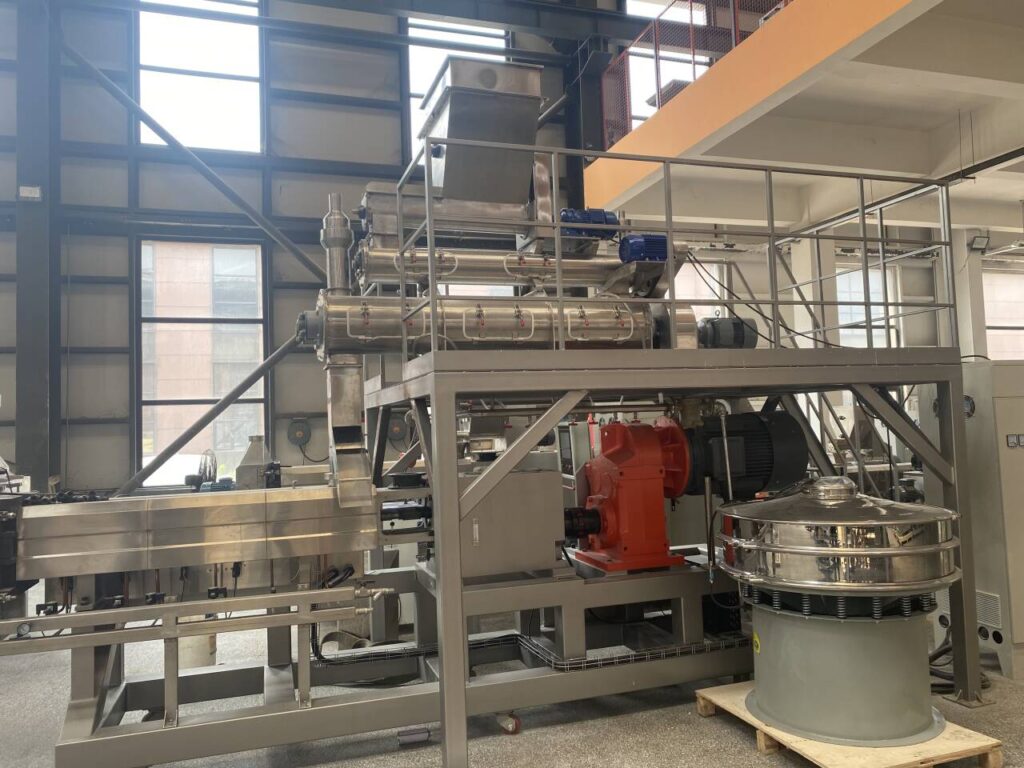
Effective cooling is a critical aspect of extrusion machine operation. Proper temperature control ensures product quality (preventing burning, ensuring correct texture and expansion), double screw extruder machinemaintains equipment integrity, prevents thermal degradation of materials, and ensures operator safety. An overheated extruder can lead to premature wear, motor overload, and inconsistent output. This guide outlines the primary methods and best practices for cooling an extrusion machine. 1. Understanding Heat Sources Before implementing cooling, it’s essential to understand where heat originates in an extruder: 2. Primary Cooling Methods Extruders utilize a combination of the following cooling systems: A. Barrel CoolingThe barrel is divided into multiple zones, each with independent temperature control. B. […]
Comprehensive Cleaning Procedure for an Extrusion Expander
Proper cleaning is a critical safety and operational procedure that ensures product quality consistency, prevents microbial growth, eliminates allergen cross-contamination,extruding machines and maintains machine efficiency. Follow this detailed, step-by-step guide for a thorough cleaning process. Phase 1: Pre-Cleaning Safety & Preparation 1.1 Safety First – Lock Out, Tag Out (LOTO) 1.2 Material & Tool Preparation Phase 2: Systemic Purge & Dry Cleanout 2.1 Pre-Disassembly Purge 2.2 Feeder & Pre-Conditioner Cleanout Phase 3: Disassembly Sequence Always follow the manufacturer’s specific teardown sequence. Phase 4: Manual Cleaning of Components 4.1 Screws 4.2 Die Assembly & Die Plate 4.3 Barrel 4.4 Feed Zone & Other Components Phase 5: Inspection & Reassembly 5.1 Critical […]
The Versatile Production Palette of a Twin-Screw Extruder
The twin-screw extruder is a true marvel of industrial processing, renowned for its exceptional flexibility and control. Its co-rotating, food extruder machine intermeshing screws create a highly efficient, self-wiping mixing and pumping action, making it the machine of choice for creating a vast and diverse range of products across multiple industries. From delicate foods to advanced biomaterials, its capabilities are nearly limitless. Here is a comprehensive look at the diverse product categories it can manufacture: 1. Food & Nutrition This is the most prominent application area, where the extruder’s precise thermal and mechanical control is key. 2. Animal Feed & Pet Nutrition 3. Modified Ingredients & Additives 4. Biomass & […]
Safe and Effective Operation of a Twin-Screw Extruder: A Step-by-Step Guide

Disclaimer: This guide provides a general operational framework. Always consult and follow the specific manufacturer’s manual, standard operating procedures (SOPs), extruding machineand safety guidelines for your exact machine model before operation. Phase 1: Pre-Startup Preparation & Safety Phase 2: Startup Sequence Phase 3: Steady-State Operation & Monitoring Phase 4: Shutdown Procedure Core Principle: Successful extrusion operation relies on steady-state control. The goal is to reach and maintain a stable equilibrium where all input parameters (feed, moisture, heat, mechanical energy) are balanced to produce a consistent output. Patience during startup and vigilant monitoring are the keys to efficiency, safety, and product quality.
 Japanese
  English
  Russian
  Spanish
  Italian
  Arabic
  Portuguese
  German
  French
  Moroccan Arabic
  Persian
  Belarusian