
Several Methods for Drying Corn Flakes

Drying is a critical step in corn flake production. After cooking and rolling, “green flakes” still contain too much moisture to be crisp or shelf-stable. cereal extrusion Drying (often followed by toasting) removes water in a controlled way so the flakes develop the right crunch, color, and bowl life without cracking or burning. Below are several common drying methods used in industry, along with when each method works best. 1) Hot-Air Belt (Conveyor) Dryer How it works: Flakes travel on a moving perforated belt while heated air passes through or across the product bed. Advantages Limitations Best for: medium-to-high capacity plants that prioritize consistent quality. 2) Multi-Zone Toasting Oven (Dry […]
How Corn Flakes Are Rolled (Flaked) in Manufacturing
Corn flakes are made by turning cooked corn grits into thin sheets and then toasting them into crisp flakes. corn flakes making machine The flaking (rolling) step is the key operation that gives corn flakes their familiar shape and crunch. Below is a practical explanation of how corn flakes are pressed into flakes in an industrial line. 1) Preparing the Corn: From Grits to Cooked “Pellets” Before rolling can happen, corn must be cooked and conditioned so it becomes plastic and formable. Typical upstream steps: 2) The Rolling (Flaking) Step: Turning Pellets into Thin Flakes The core machine: the flaking rolls (flake mill) Corn flakes are “pressed” using a pair […]
Drying Techniques for Corn Flakes (Breakfast Cereal)
Drying is one of the most important operations in corn flakes manufacturing. It determines crispness, color development during toasting, breakage rate, and shelf life. Effective drying is not only about removing moisture quickly—it is about removing it uniformly while protecting flake structure and preparing the product for stable, consistent toasting. 1) Understand the Role of Drying in Corn Flakes In a typical process, drying is used in two main places: Good drying control prevents common problems such as over-browning, blistering, sticking, fragile flakes, and uneven crunch. 2) Control Moisture Uniformity (Not Just Average Moisture) Corn flakes can show a correct “average moisture” but still dry poorly if moisture is uneven. […]
The Flaking (Rolling) Process for Breakfast Cereal Corn Flakes

In corn flakes production, the flaking (rolling) process is the key step that transforms cooked corn pellets (“grits gems”) into the thin, uniform flakes that can be toasted into a crispy, ready-to-eat cereal. A well-controlled flaking operation directly affects flake thickness, breakage rate, toast uniformity, texture, and final product appearance. 1) Purpose of the Flaking Step The main objectives of flaking are to: 2) Product Condition Before Flaking High-quality flaking starts with properly prepared pellets. Before entering the flaking rolls, pellets are typically: If pellets are too wet, flakes may smear and stick to the rolls; if too dry, they crack and generate excessive breakage. 3) Flaking Equipment and Key […]
Processing Method for Breakfast Cereal Corn Flakes
Corn flakes are a classic ready-to-eat breakfast cereal made primarily from corn grits or corn flour. Their characteristic thin, crispy texture and toasted flavor come from a controlled process that includes cooking, forming, flaking, drying, and toasting. Below is a practical overview of the standard industrial processing method. 1) Raw Material Preparation Most corn flakes start with corn grits (degermed and dehulled) for a clean flavor and stable shelf life. Typical supporting ingredients may include: Raw materials are inspected for moisture, particle size, and impurities, then stored and dosed according to the recipe. 2) Mixing and Pre-Conditioning Dry ingredients are blended to ensure uniform distribution of salt, sugar, and premixes. […]
Key Considerations in Corn Flake Production: Ensuring Quality, Safety, and Efficiency
The production of corn flakes, while seemingly straightforward, is a complex process requiring careful attention at every stage to ensure final product quality, safety, and consistency. Here are the critical considerations that must be managed throughout the manufacturing process. 1. Raw Material Selection and Quality Control 2. Critical Process Control Points 3. Food Safety and Hygiene 4. Nutritional Consistency and Fortification 5. Texture and Sensory Quality 6. Operational and Efficiency Considerations 7. Packaging and Shelf-Life Stability Successful corn flake production relies on a holistic approach that integrates rigorous raw material standards, precise control of thermal and mechanical processes, unwavering commitment to food safety, and meticulous attention to sensory and operational […]
The Art and Science of Corn Flake Toasting: A Critical Manufacturing Process
Introduction Corn flake toasting, more accurately described as a high-heat drying and thermal transformation process, is the defining stage where malleable, moist flakes acquire their signature golden hue, crisp texture, and complex flavor. This controlled application of heat converts a bland, dough-based intermediate product into the palatable, shelf-stable breakfast cereal recognized worldwide. The process balances physical chemistry with precision engineering. Process Objectives and Transformation Goals The toasting stage is designed to achieve multiple simultaneous outcomes: Core Process Technology: Multi-Zone Conveyor Toasting Ovens Industrial toasting is predominantly conducted in gas-fired or electric multi-pass conveyor ovens. The Underlying Science of Thermal Transformation Critical Process Control Parameters Precision control is paramount for consistent […]
Market Outlook and Future Trends for Breakfast Corn Flakes
Executive Summary The breakfast corn flakes market, while a mature segment within the global cereal industry, is undergoing a significant transformation. Driven by shifting consumer preferences, health and wellness trends, and intense competition from alternative breakfast options, the category is navigating a path of challenge and opportunity. Future growth will not come from volume expansion of traditional products but from premiumization, functional innovation, and sustainability. Current Market Landscape: A Mature Market Under Pressure The global breakfast cereal market, valued at approximately $50-55 billion USD in 2024, is experiencing slow, low-single-digit annual growth. The corn flakes segment, as a foundational product, faces specific headwinds: Key Growth Drivers and Opportunities Despite challenges, […]
Corn Flake Drying & Toasting: The Critical Process for Crunch and Flavor
Introduction The drying and toasting stage is arguably the most transformative phase in corn flake manufacturing. While often simplified as “toasting” on cereal boxes, this high-heat process is a precisely engineered thermal operation that determines the final product’s texture, stability, flavor, and shelf life. This stage converts soft, malleable flakes into the crisp, golden, and stable breakfast cereal consumers expect. The Core Objectives of Drying/Toasting This single-stage process serves multiple critical functions: Industrial Drying Systems: Design and Operation Modern cereal plants utilize one of two primary dryer designs, both operating as continuous conveyors through precisely controlled thermal zones. 1. Multi-Pass Conveyor Dryers (Most Common) 2. Fluidized Bed Dryers (For Enhanced […]
The Reality Behind the Crunch: How Breakfast Corn Flakes Are Really Made
Introduction Walk down any supermarket cereal aisle and you’ll find bright boxes promising “wholesome,” “natural,” and “nutritious” breakfast corn flakes. The marketing depicts golden fields, sunshine, and simple goodness. But the industrial reality of how most commercial corn flakes are manufactured tells a different story—one involving extreme processing, significant nutrient loss, and the creation of what nutritionists call “hyper-palatable” food products. The Industrial Corn Flake Production Line: A Step-by-Step Dissection 1. Raw Material: Not Just Simple Corn Contrary to the pastoral imagery, the primary ingredient isn’t simply dried corn kernels. Most large manufacturers start with degerminated corn grits or corn meal—corn that has had its fiber-rich bran and nutrient-dense germ […]
Inside Corn Flakes: A Transparent Look at How Breakfast Cereal Is Really Made
Corn flakes are marketed as simple and wholesome—“made from corn,” “fortified with vitamins,” “crispy and light.” corn flakes making machine But the familiar golden flakes in a box are not a raw grain product. They are the result of a carefully engineered industrial process designed to control texture, sweetness, color, shelf life, and cost. This article lays out the real manufacturing steps behind corn flakes, and points out where processing choices shape what ends up in your bowl. 1) The Raw Materials: More Than Just “Corn” Most corn flakes start with milled corn (often corn grits), not whole kernels. A typical formula includes: What’s worth noticing: “corn” provides the structure, […]
The Crunchy Truth: How Your Breakfast Cornflakes Are Really Made
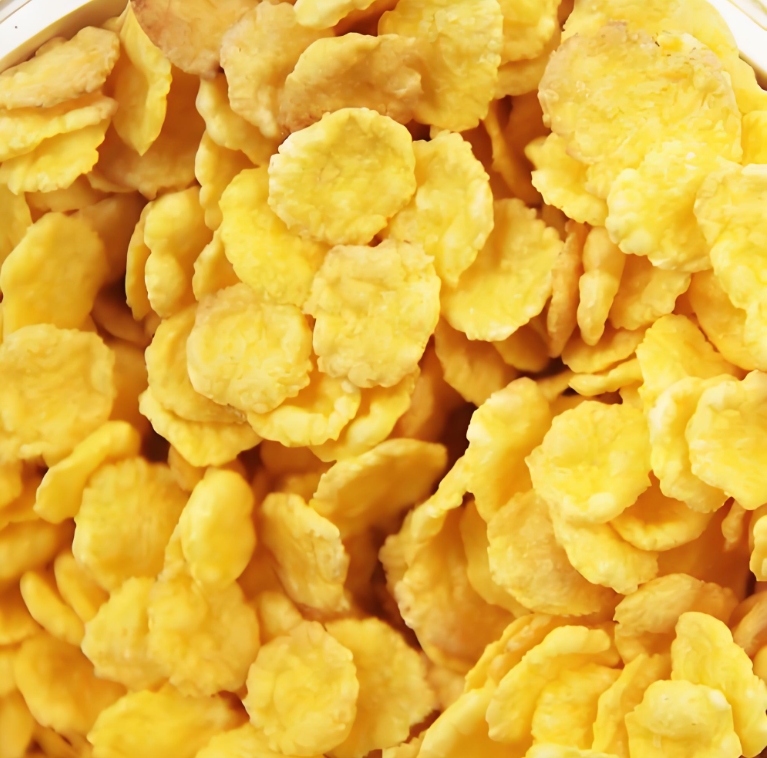
For decades, breakfast cereal giants have marketed cornflakes as a wholesome, simple start to the day—a “sunshine in a bowl.” The reality of their industrial manufacturing process, however, is a far cry from this rustic image. corn flakes machine It’s a journey of extreme processing designed for shelf life, crunch, and addictive taste, often at the expense of nutritional value. From Kernel to “Flake”: A Process of Transformation The Nutritional Paradox: Fortified, Yet Highly Processed The final product is a triumph of food engineering: uniform, shatteringly crisp, and able to float in milk without immediately turning to mush. However, corn flakes machine this comes with consequences: The Illusion of Wholesomeness […]
 Japanese
  English
  Russian
  Spanish
  Italian
  Arabic
  Portuguese
  German
  French
  Moroccan Arabic
  Persian
  Belarusian