
Key Parameters for Producing High-Quality Puffed Snacks
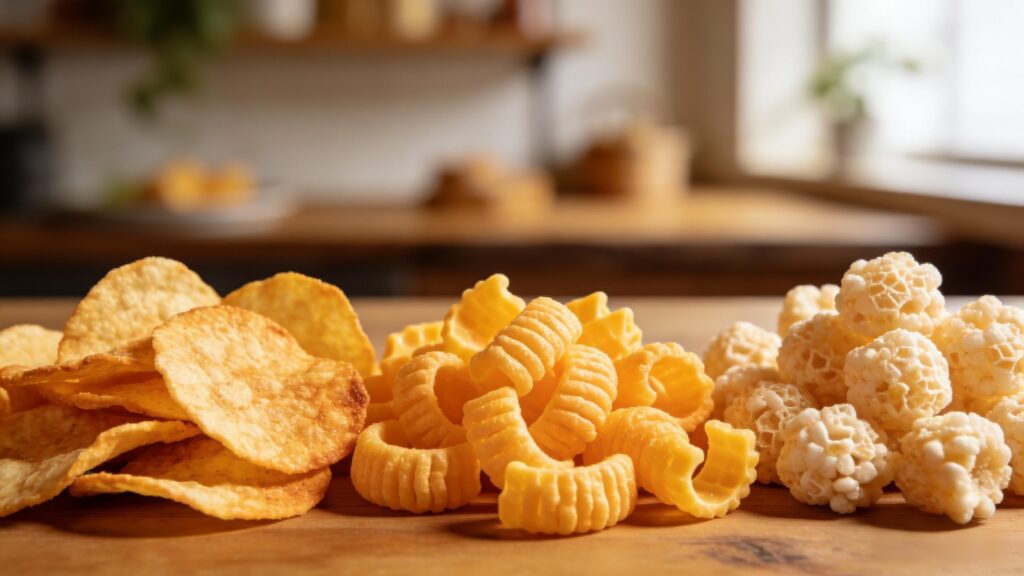
Producing puffed snacks—such as corn puffs, rice crisps, and cheese balls—requires a careful balance of multiple process variables. snack extruder machine Even small deviations can lead to poor expansion, uneven texture, or off-flavors. Below are the most critical parameters that determine product quality. 1. Raw Material Properties a. Starch Type and Purity b. Moisture Content (Pre‑Extrusion) As detailed previously, optimal moisture is 12–18% (wet basis). 2. Extruder Configuration a. Screw Profile and Speed b. Barrel Temperature Profile Puffed snacks usually require a gradual temperature rise along the extruder barrel: Zone Typical Temperature Purpose Feeding 20–40°C Avoid premature melting Compression 60–100°C Begin gelatinization Cooking 100–140°C Complete gelatinization Die 120–160°C Superheat water […]
The Critical Role of Raw Material Moisture in Producing High-Quality Extruded Snacks

In the production of puffed (extruded) snacks such as cheese balls, puffed corn sticks, and rice crisps, moisture content in the raw materials is one of the most crucial process parameters. snack food machinery Proper moisture levels directly influence expansion ratio, texture, mouthfeel, and overall product quality. This article outlines the requirements and effects of raw material moisture in puffed food manufacturing. 1. Optimal Moisture Range For most starch-based raw materials (e.g., corn flour, rice flour, wheat starch, potato granules), the ideal moisture content before extrusion typically falls between 12% and 18% (wet basis). The exact value depends on the recipe, extruder type (single-screw or twin-screw), and target product characteristics. […]
How to Control the Baking/Drying Temperature for Extruded Puffed Foods
After extrusion, many expanded food products (e.g., direct-expanded snacks, cereal balls, and pellets for further processing) require a post-extrusion thermal treatment — often called baking, drying, or toasting. This step removes residual moisture, sets the structure, develops flavor and color, and ensures a crisp texture. Controlling baking temperature is critical. Too low → soggy, underdeveloped product. snack extruder machine Too high → burnt surface, case hardening, or off-flavors. Below is a systematic guide to achieving consistent, high-quality results. 1. Understand the Role of Baking Temperature Baking serves three main purposes in expanded foods: Purpose Temperature effect Moisture reduction Evaporates water from ~8–12% post-extrusion down to 2–5% final (crisp texture). Structure […]
Components of a Twin-Screw Extruder

A twin-screw extruder is a sophisticated piece of processing equipment widely used in the food, feed, polymer, and chemical industries. corn snack extruder It performs multiple unit operations — conveying, mixing, cooking, shearing, and shaping — within a single machine. Understanding its components is essential for proper operation, maintenance, and troubleshooting. Below is a breakdown of the major components of a typical twin-screw extruder. 1. Feeding System The feeding system delivers raw materials (powders, granules, or liquids) into the extruder barrel at a controlled and consistent rate. 2. Drive System The drive system provides rotational power to the twin screws. 3. Barrel Assembly The barrel encloses the screws and forms […]
Precautions for Starting a Twin-Screw Extruder
Starting a twin-screw extruder requires careful preparation and adherence to safety and operational procedures. snack food extruder Improper startup can lead to equipment damage, poor product quality, or personal injury. Below are key precautions to follow when starting a twin-screw extruder. 1. Pre-Startup Inspection 2. Electrical and Control System Check 3. Preheating Procedure 4. Feeding System and Material Preparation 5. Startup Sequence 6. Key Monitoring Parameters During Startup 7. Emergency Procedures 8. After Successful Startup Common Mistakes to Avoid By following these precautions, operators can ensure a safe, efficient startup of a twin-screw extruder, minimizing downtime and extending equipment life. Always refer to your specific extruder manufacturer’s manual for model-specific […]
 Japanese
  English
  Russian
  Spanish
  Italian
  Arabic
  Portuguese
  German
  French
  Moroccan Arabic
  Persian
  Belarusian