
What Is Starch Gelatinization and Its Role in the Puffing Process

Starch gelatinization is one of the most fundamental physicochemical transformations in food processing, particularly in the production of puffed snacks, breakfast cereals, and extruded foods. Understanding this process is essential for controlling product texture, expansion, and overall quality. 1. What Is Starch Gelatinization? Starch is a polysaccharide composed of two glucose polymers: amylose (linear) and amylopectin (highly branched). snack food machine In its native state, starch exists as semi-crystalline granules that are insoluble in cold water. Gelatinization is the process in which these granules absorb water, swell, and lose their crystalline structure when heated in the presence of sufficient moisture. The Stages of Gelatinization: Key conditions for gelatinization: 2. What […]
How Temperature and Pressure Change During the Puffing Process

The puffing process, widely used in the production of snacks, breakfast cereals, and texturized plant-based proteins, snack food production line relies on a precisely controlled sequence of temperature and pressure changes. These two thermodynamic parameters are not static; they evolve dramatically along the extruder barrel and especially at the die exit. Understanding their dynamic profiles is essential for achieving desired expansion, texture, and product uniformity. 1. Temperature Profile: Gradual Rise, Then Rapid Drop Feeding Zone (Low Temperature, ~20–60°C)At the inlet, the raw material (usually flour, starch, or protein blend) is at ambient temperature. Frictional heat is minimal. Water (12–25% moisture) is added, and the mixture is simply conveyed forward by […]
The Role of Water in the Extrusion/Puffing Process

Water is a critical yet often underestimated component in the extrusion and puffing of starch-based and protein-based snacks. Its physical and chemical behavior during processing directly influences product expansion, texture, and microstructure. snacks making machine Understanding the multifaceted role of water is essential for controlling the quality and characteristics of puffed foods. 1. Plasticization and Viscosity Reduction At the initial stage of puffing (e.g., within a cooking extruder), water acts as a plasticizer. Water molecules penetrate the amorphous regions of starch and protein, breaking hydrogen bonds between polymer chains. snacks making machine This increases molecular mobility and reduces the glass transition temperature (Tg) of the material. Consequently, the melt viscosity […]
How Temperature and Pressure Evolve During the Puffing Process

Introduction Puffing is a rapid food processing technology used to create expanded snacks, breakfast cereals, and even some animal feeds. snack extruder machine The hallmark of puffing is the sudden expansion of a solid or semi-solid food matrix into a porous, crispy structure. This transformation is driven by carefully orchestrated changes in temperature and pressure. Understanding these dynamics is essential for controlling product quality, texture, and nutritional value. Two common puffing methods are: While equipment differs, the fundamental relationship between temperature, pressure, and expansion remains similar. Part 1: Changes During Extrusion Puffing (Most Common) Extrusion puffing uses a screw inside a heated barrel to convey, mix, cook, and pressurize the […]
Exploring Protein Denaturation in the Extrusion/Puffing Process
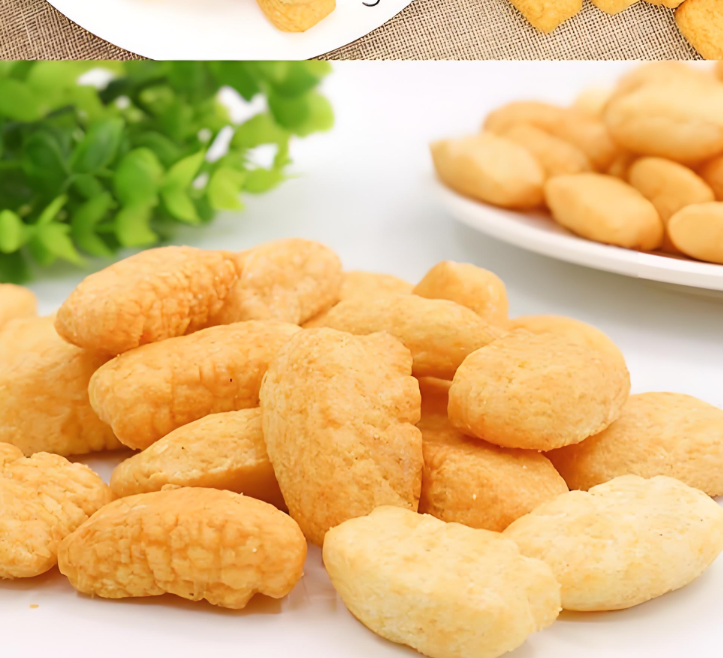
Introduction Puffing (or extrusion cooking) is a popular food processing technique used to produce snacks, breakfast cereals, and textured plant-based proteins. extruder snacks During this process, raw ingredients—often containing starch and protein—are subjected to high temperature, high pressure, and mechanical shear. A key question for food scientists is: Does protein denaturation occur during puffing? The short answer is yes. However, the extent and consequences of denaturation depend on processing conditions and the type of protein involved. Mechanisms of Denaturation in Puffing Denaturation refers to the unfolding of a protein’s native three-dimensional structure, typically caused by heat, pH changes, or mechanical forces. In puffing: Evidence from Research Consequences of Denaturation in […]
 Japanese
  English
  Russian
  Spanish
  Italian
  Arabic
  Portuguese
  German
  French
  Moroccan Arabic
  Persian
  Belarusian