In the landscape of modern food manufacturing, few machines offer the versatility and efficiency of the twin-screw extruder. If you have ever enjoyed a bowl of puffed breakfast cereal, a crispy snack pellet, or a modern plant-based burger, you have witnessed the output of this remarkable piece of engineering. Twin-screw extruders are the backbone of numerous food production lines, transforming raw powders and granules into structured, cooked, and flavorful finished products in a matter of seconds .

What is a Twin-Screw Extruder?
At its core, a twin-screw extruder is a continuous processing machine that cooks, shapes, and texturizes food ingredients. It consists of two intermeshing, rotating screws housed within a closed barrel. While single-screw extruders rely heavily on friction against the barrel wall to move product forward, twin-screw extruders use positive displacement. The interlocking screws physically force the material along the barrel, making them much more versatile and efficient .
The barrel is divided into specific zones—typically feeding, melting/mixing, venting, and pumping—each serving a distinct purpose in the transformation of the raw material .
The Mechanism: How It Works
Understanding the flow of material through the machine is key to appreciating its capabilities. The process begins with raw ingredients—such as cereal flours, starches, or protein isolates—being fed into the machine via a precision feeder. From there, the journey involves several stages:
- Feeding and Conveying: The screws pick up the raw material. Unlike single-screw machines, twin-screws can handle high-fat or very wet mixtures without slipping, ensuring a steady flow .
- Cooking and Mixing: As the material moves forward, the screws create intense shear and pressure. The barrel is heated (using steam, oil, or electricity) while friction from the screws adds mechanical heat. This “thermo-mechanical” process cooks the starch and denatures proteins . The modular design of the screws allows engineers to mix kneading blocks and reverse elements to achieve specific textures .
- Degassing: Before the product exits, the design allows for a venting zone. A vacuum can be applied here to remove trapped air, moisture, or unwanted volatile compounds, resulting in a denser, smoother final texture .
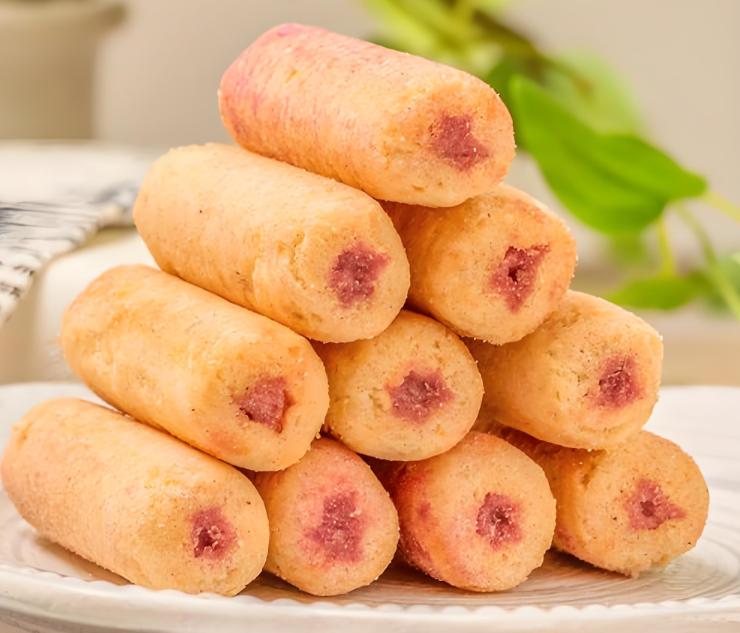
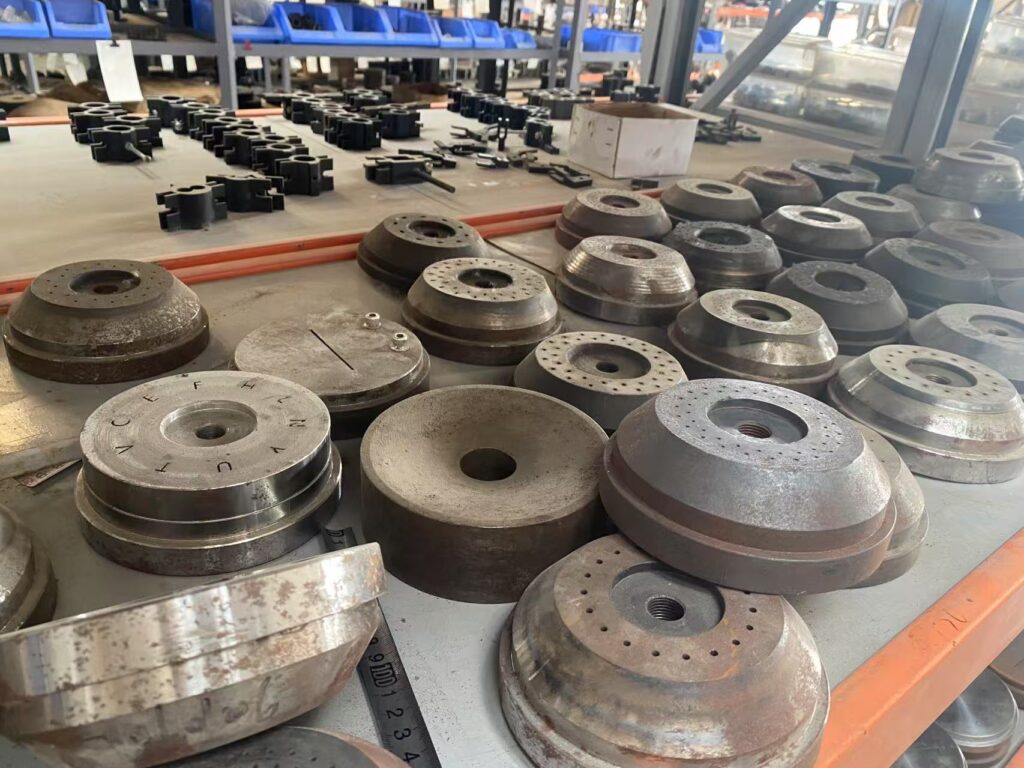
- Shaping: Finally, the cooked dough is forced through a die. The die plate contains specific holes or slots that shape the extrudate. As the high-pressure dough exits the die, a rotating cutter slices it into the desired length. If the product is “direct expanded” (like cheese curls), the sudden release of pressure causes moisture to flash into steam instantly, puffing up the product .
Co-Rotating vs. Counter-Rotating
There are two main configurations of twin-screw extruders, defined by how the screws turn relative to one another:
- Co-rotating (Most Common): The screws turn in the same direction. This design allows for high speeds and significant shear input. It is generally preferred for high-volume food applications such as snacks, breakfast cereals, and plant-based proteins because of its excellent mixing and self-wiping properties .
- Counter-rotating: The screws turn in opposite directions. While they generate high pumping pressure, they operate at lower speeds. These are often used for processing more shear-sensitive materials or specific shapes like confectionery .
Key Applications in the Food Industry
The flexibility of the twin-screw extruder allows it to create an astonishing variety of food textures and shapes. Its main applications include:
- Direct Expanded Snacks (D.E.S.): The classic puffed snacks and cheese balls. The high-temperature, high-pressure process causes the dough to expand instantly upon exit .
- Breakfast Cereals: Flaked, puffed, or shaped cereals. Extrusion can cook the grains and form them into Os, flakes, or pillows in one continuous step .
- Texturized Vegetable Protein (TVP) & Meat Analogues: This is one of the fastest-growing sectors. By processing defatted soy flour or pea protein under specific temperature and pressure conditions, the extruder creates a fibrous, “meat-like” structure. High Moisture Meat Analogues (HMMA) use specialized cooling dies to achieve a texture even closer to real meat .
- Pet Food and Aquatic Feeds: The extruder cooks the starches to bind the ingredients and gelatinizes them for digestibility, while also ensuring the kibble floats or sinks as required .
Design for Hygiene and Efficiency
Modern food extruders are built with “Hygienic Design” in mind. Because food processing requires rigorous sanitation, manufacturers like Leistritz and Coperion design their machines with stainless steel surfaces, sloped frames to prevent water pooling, and minimal crevices where bacteria could hide. Some advanced models even feature “WiP” (Washing in Place) capabilities, allowing the machine to be cleaned with high-pressure water jets without complete disassembly .
Conclusion
The twin-screw extruder is much more than just a pump; it is a complete chemical reactor, cooker, and forming machine rolled into one. Its ability to handle a diverse range of raw materials, from delicate starches to high-fiber proteins, combined with its precise control over time, temperature, and mechanical shear, makes it the “Swiss Army knife” of food processing. As the food industry continues to innovate in plant-based meats and functional snacks, the twin-screw extruder will undoubtedly remain at the heart of that evolution .
 Italian
  English
  Russian
  Spanish
  Arabic
  Portuguese
  German
  French
  Japanese
  Moroccan Arabic
  Persian
  Belarusian