
Mouthfeel—the tactile sensation food produces in the mouth—is one of the most important quality attributes of puffed snacks. snacks machinery Consumers expect a light, crispy, and melt-in-the-mouth experience, and any deviation can significantly affect acceptability. The mouthfeel of puffed snacks is a complex, multi-factor property shaped by raw materials, processing conditions, structure, and storage. This article reviews the key factors that influence it.
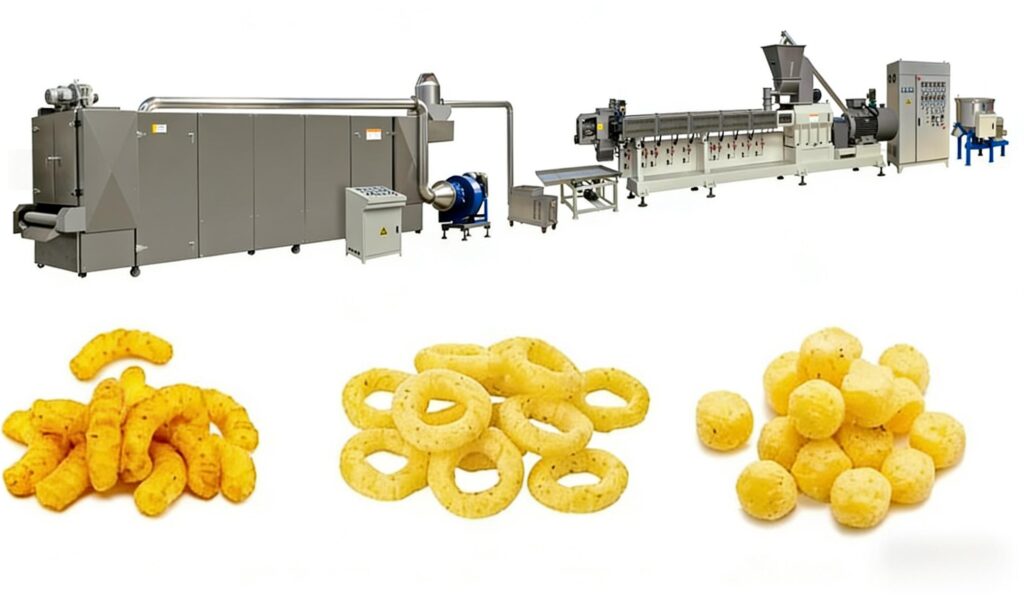
1. Raw Material Composition
Starch source and type. Starch is the main structural component of most puffed snacks. Different starches (corn, potato, rice, wheat, tapioca) differ in amylose/amylopectin ratio, granule size, and gelatinization behavior. High-amylose starches tend to produce harder, denser textures, while high-amylopectin starches expand more readily and give a lighter, crispier bite.
Protein content. Proteins can interfere with starch expansion and contribute to hardness or chewiness. In cereal-based snacks, moderate protein levels may improve structure, but excessive protein restricts puffing and leads to a tough, less crispy texture.
Moisture content of raw materials. Feed moisture strongly affects starch gelatinization, expansion, and final texture. Too low moisture can cause scorching and uneven puffing; too high moisture reduces expansion and yields a hard, soggy product.
Additives and ingredients. Emulsifiers, hydrocolloids, fibers, sugars, and salts influence expansion, cell structure, and crispness. For example, small amounts of emulsifiers can improve texture and reduce staleness, while high sugar or fiber levels tend to reduce expansion and increase hardness.

2. Processing Conditions
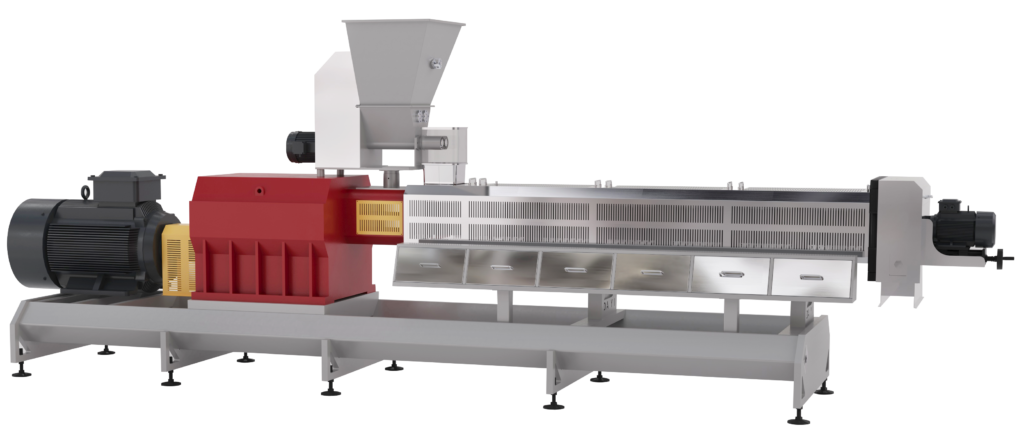
Extrusion parameters. In extrusion puffing, screw speed, barrel temperature, feed rate, and die design determine the degree of starch gelatinization, pressure drop at the die, and flash-off of moisture—all of which govern expansion and cell structure. Higher expansion generally gives a lighter, crispier texture, but excessive expansion can produce a fragile, brittle product.
Puffing method. Extrusion, gun puffing, hot-air puffing, microwave puffing, and frying each produce distinct textures. Frying adds crispness and richness but increases oil content; hot-air and microwave puffing tend to give a harder, drier texture unless optimized.
Drying and toasting. Post-extrusion drying and toasting reduce moisture and set the glassy state of the starch matrix, which is essential for crispness. Over-drying can make the product too hard and brittle.
3. Structural and Physical Properties
Porosity and cell structure. The size, distribution, and wall thickness of air cells largely determine how the snack fractures during chewing. snacks machinery Fine, uniform cells with thin walls typically produce a crispy, light texture, whereas large, irregular cells or thick walls give hardness or grittiness.
Density and expansion ratio. Lower bulk density and higher expansion are usually associated with improved crispness, though very low density can make the product too fragile.
Glass transition and moisture distribution. Puffed snacks exist in a metastable glassy state. Moisture acts as a plasticizer; as water content rises above a critical level, the matrix transitions from glassy to rubbery, and crispness is lost.
4. Moisture and Storage Conditions
Moisture migration. During storage, moisture uptake from the environment or migration between components softens the matrix and causes loss of crispness (staleness). Packaging with adequate moisture barrier properties is therefore critical.
Temperature and humidity. High storage humidity accelerates moisture absorption and texture deterioration. Temperature fluctuations can also promote moisture migration and structural changes.
5. Oral Processing and Perception
Bite force and sound. Crispness is perceived through the sound and force of fracture during biting. The acoustic signature of a snack—its “crunch”—is closely linked to cell wall thickness and brittleness.
Saliva interaction and dissolution. How quickly the snack hydrates, breaks down, and dissolves in saliva affects sensations such as meltability, stickiness, and mouth-coating. Products that dissolve rapidly are often perceived as more pleasant.
Coating and seasoning. Surface coatings (oil, seasoning, chocolate) alter friction, lubrication, and the initial tactile impression, modifying perceived crispness and creaminess.

6. Conclusions
The mouthfeel of puffed snacks is determined by an interplay of raw material composition, processing parameters, structural characteristics, moisture state, and oral perception. Achieving a desirable crispy, light texture requires careful control of starch type, moisture, extrusion or puffing conditions, drying, and packaging. A deeper understanding of these factors enables manufacturers to design products with consistent, appealing texture and improved consumer acceptance.
 Italian
 English
 Russian
 Spanish
 Arabic
 Portuguese
 German
 French
 Japanese
 Moroccan Arabic
 Persian
 Belarusian