
Kurkure, the popular extruded snack known for its distinctive curl shape and crispy texture, represents a triumph of food engineering. kurkure making machine Producing a consistent, high-quality product requires meticulous control over every stage of the manufacturing process—from raw material selection to final packaging. This article outlines the critical factors that manufacturers must address to achieve the ideal texture, flavor, and shelf life that consumers expect.

1. Raw Material Selection: The Foundation of Quality
The journey to a premium Kurkure begins with the right ingredients. Corn grits serve as the primary raw material, and their quality directly influences the snack’s expansion and crispness. High-starch, low-fat corn grits are preferred for optimal puffing, as they provide the necessary structure for expansion during extrusion.
In addition to corn, manufacturers often incorporate rice flour, gram flour, or potato starch to modify texture and improve eating quality. kurkure making machineEach ingredient contributes differently to the final structure. Some research has shown that protein-rich additions like lentil flour can boost nutritional value but may reduce expansion and increase hardness if not carefully balanced. Therefore, maintaining consistent ingredient quality through rigorous supplier monitoring is essential.

2. The Mixing Process: Achieving Uniform Hydration
Before extrusion, dry ingredients must be blended with water to create a consistent dough. This step is more critical than it might appear. Uniform moisture distribution is vital for preventing issues during extrusion, such as inconsistent expansion or equipment clogging. kurkure making machine The dough’s moisture content is typically maintained around 12–18%, though optimal levels depend on the specific formulation. Over-hydration results in sticky dough and poor expansion, while under-hydration leads to brittle, dense products.
3. Extrusion: The Heart of Kurkure Production
Extrusion is the defining step that transforms the meal mix into the finished snack’s shape and texture. Kurkure is produced using a specialized rotary die extruder, which creates its signature irregular curl. The mechanism involves a rotating die head that twists and shears the hot dough as it exits, forming the characteristic corkscrew shape. The extruder’s parameters must be precisely controlled, as each variable significantly impacts the final product.
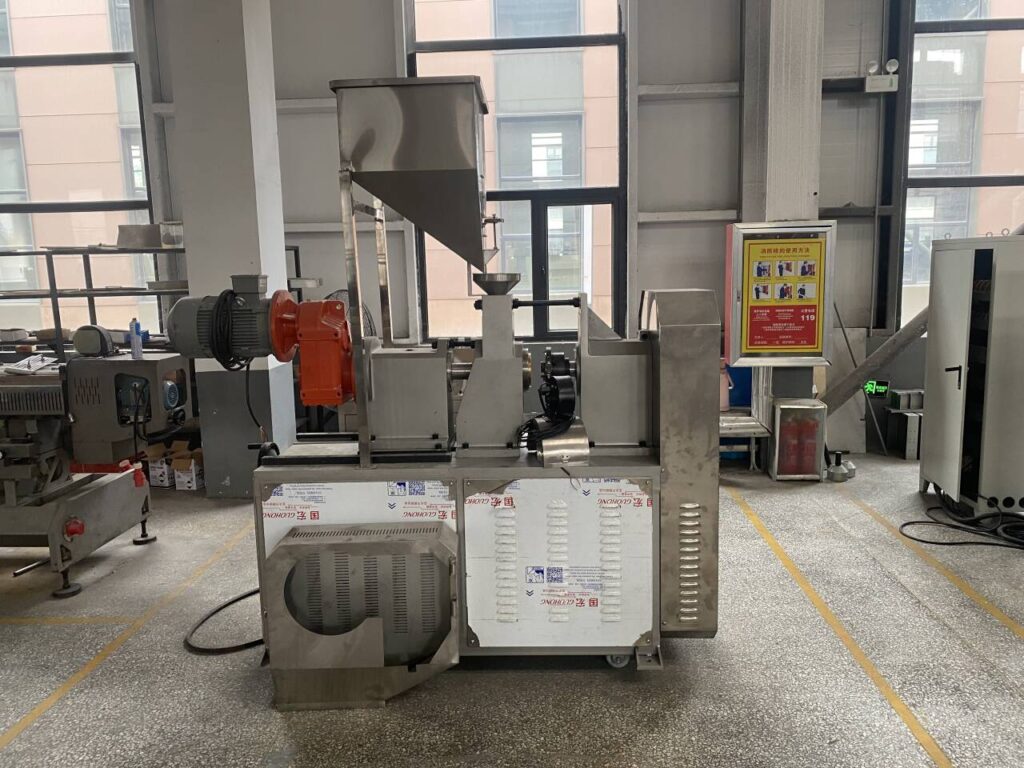
Key Extrusion Parameters
- Moisture Content: The feed moisture is a primary determinant of expansion. Lower moisture can lead to insufficient puffing, while excessive moisture may result in soggy, under-expanded snacks. For optimal results, moisture content is carefully adjusted, typically between 12% and 18%, and is controlled via the preconditioner and automated water dosing systems.
- Barrel Temperature: The heat generated through electrical heating and mechanical friction cooks the dough, gelatinizing starches and enabling expansion. Optimal barrel temperatures generally range from 120°C to 180°C. Higher temperatures can improve expansion and reduce hardness, but excessive heat can burn the product or degrade nutrients.
- Screw Speed (RPM): The screw speed regulates material throughput and the amount of mechanical energy (shear heat) imparted to the dough. Faster speeds increase frictional heating, raising the internal temperature of the dough and affecting its viscosity and expansion properties.
- Die Design and Cutter Speed: The die aperture determines the cross-sectional density and size, while the rotating face cutter blades slice the expanded material to the desired length. The synchronization of these components ensures consistent piece size and weight.
Real-time monitoring and control of these parameters via automated PLC systems are crucial for maintaining batch-to-batch consistency and enabling rapid recipe adjustments.
4. Frying or Baking: Developing Texture and Crispness
After extrusion, the snack pieces are either fried or baked to achieve their final texture.
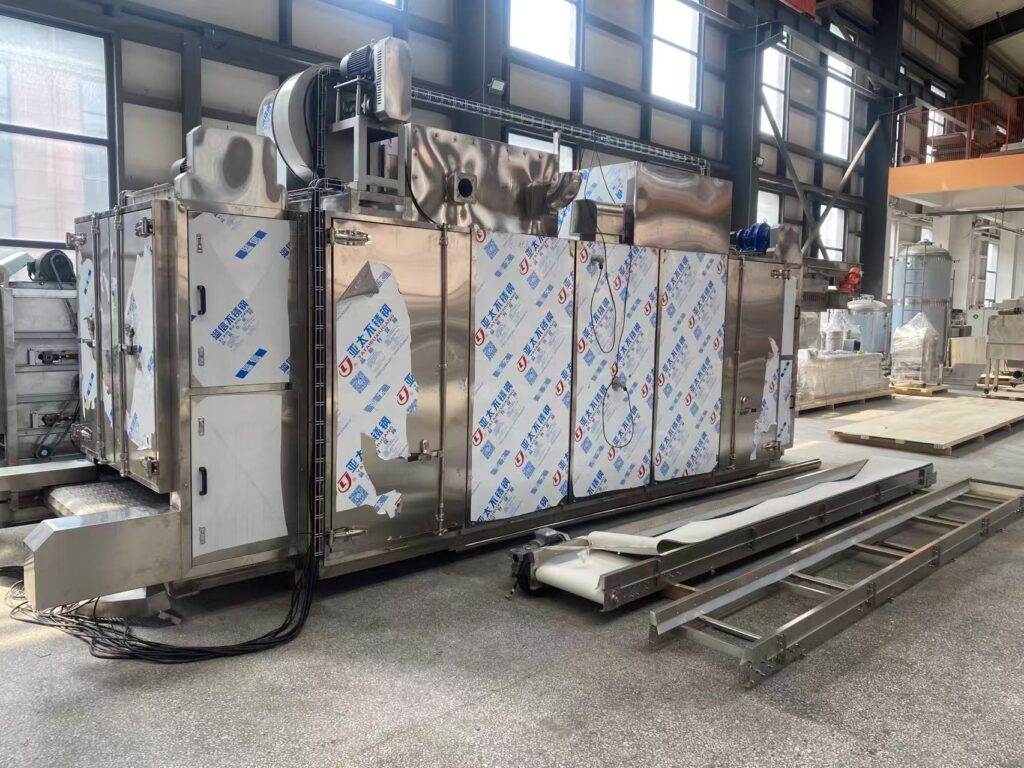
- Frying: Deep-frying in oil at temperatures around 170–190°C is a common method that imparts a rich, crispy texture. Continuous fryers allow for precise control over cooking temperature and time, ensuring uniform color and crispness.
- Baking: For a healthier, low-oil alternative, the snacks can be dried in a belt dryer or oven at 80–120°C. While this reduces oil content, it may produce a less crispy product compared to frying.
Oil quality is a major concern in frying. Regular oil filtration and monitoring are necessary to prevent off-flavors and maintain product consistency. Oil content also inversely affects expansion and hardness, so its addition must be carefully managed.
5. Seasoning: Achieving Uniform Flavor Distribution
Once cooked, the snacks pass through a seasoning line, typically a rotating drum, where oil and flavoring powders are applied. Uniform coating is essential for a consistent eating experience. A light spray of oil helps seasonings adhere to the snack’s surface, while excessive moisture can cause clumping.
6. Packaging: Preserving Freshness and Crunch
Achieving the perfect texture is pointless if it is not preserved until the consumer opens the packet. Packaging plays a vital role in maintaining quality by protecting the snacks from moisture and oxygen. Moisture-barrier films are critical, as even slight moisture ingress can cause the product to lose its crispness and become soggy. In many cases, nitrogen flushing is used to displace oxygen within the package, reducing oxidation and extending shelf life.

Conclusion

Producing high-quality Kurkure is a sophisticated process that demands a holistic approach. It begins with premium raw materials, continues through precise control of mixing and extrusion parameters, and ends with careful monitoring of the frying and seasoning processes. kurkure making machine Effective packaging is the final, crucial step that locks in the quality. By understanding and managing the interplay of moisture, temperature, and mechanical forces at each stage, manufacturers can consistently deliver the crispy, flavorful snack that has become a favorite worldwide.
 Italian
  English
  Russian
  Spanish
  Arabic
  Portuguese
  German
  French
  Japanese
  Moroccan Arabic
  Persian
  Belarusian