
Introduction
Rice fortification is a public health strategy designed to address micronutrient deficiencies in populations where rice is a dietary staple. fortified rice making machine The process involves adding essential vitamins and minerals to polished rice grains to restore nutrients lost during milling or to supplement nutrients that are otherwise insufficient in daily diets. Understanding the processing principles of fortified rice is key to ensuring its nutritional efficacy, physical stability, and consumer acceptance.
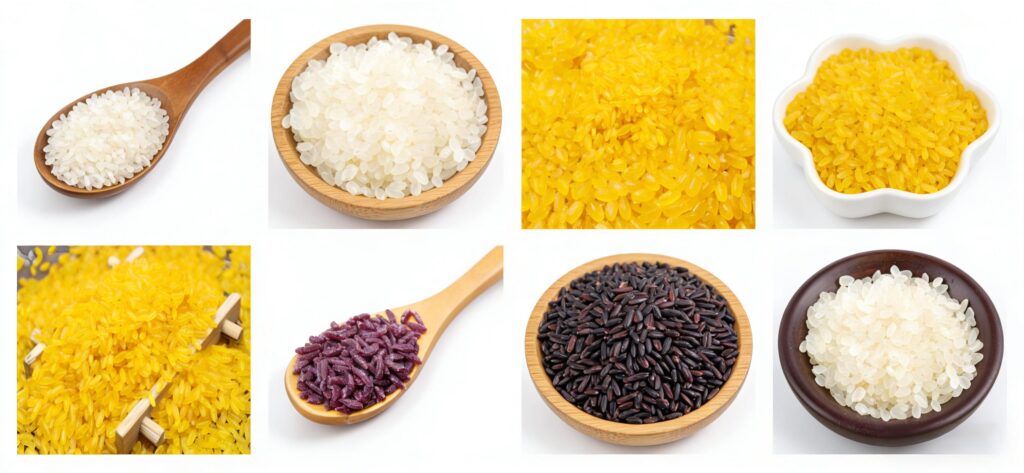
Core Principles of Rice Fortification
The fundamental goal of rice fortification is to produce rice kernels that mimic natural rice in appearance, cooking behavior, and taste, while delivering precise amounts of micronutrients. fortified rice making machine The main technologies used are based on three scientific principles: extrusion, coating, and dusting. Among these, extrusion is the most widely adopted due to its superior retention of nutrients and physical resemblance to natural rice.
1. Extrusion Technology – The Dominant Method
Extrusion is a thermomechanical process that transforms raw materials into fortified rice kernels (often called “faux rice” or “artificial grains”).
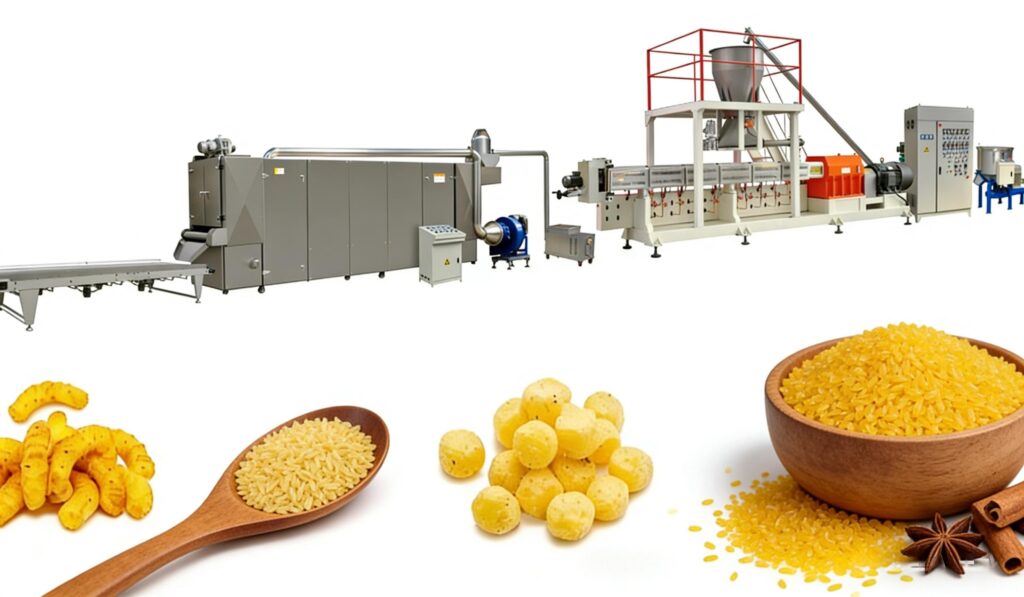
- Raw Material Preparation: A mixture is made using rice flour (broken or low-grade rice), a binding agent (e.g., guar gum or calcium carbonate), and a vitamin-mineral premix containing iron, folic acid, zinc, vitamin A, and other B vitamins.
- Mixing and Conditioning: The dry blend is mixed with water or steam to form a dough-like consistency.
- Extrusion Cooking: The dough is fed into an extruder, which applies high temperature (80–110°C), high pressure (20–40 bar), and shear forces. This gelatinizes the starch, denatures proteins, and kills vegetative microorganisms.
- Shaping and Cutting: The molten dough is forced through a die plate with small holes shaped like rice grains. A rotating cutter slices the extruded strands into lengths similar to typical rice kernels (2–3 mm).
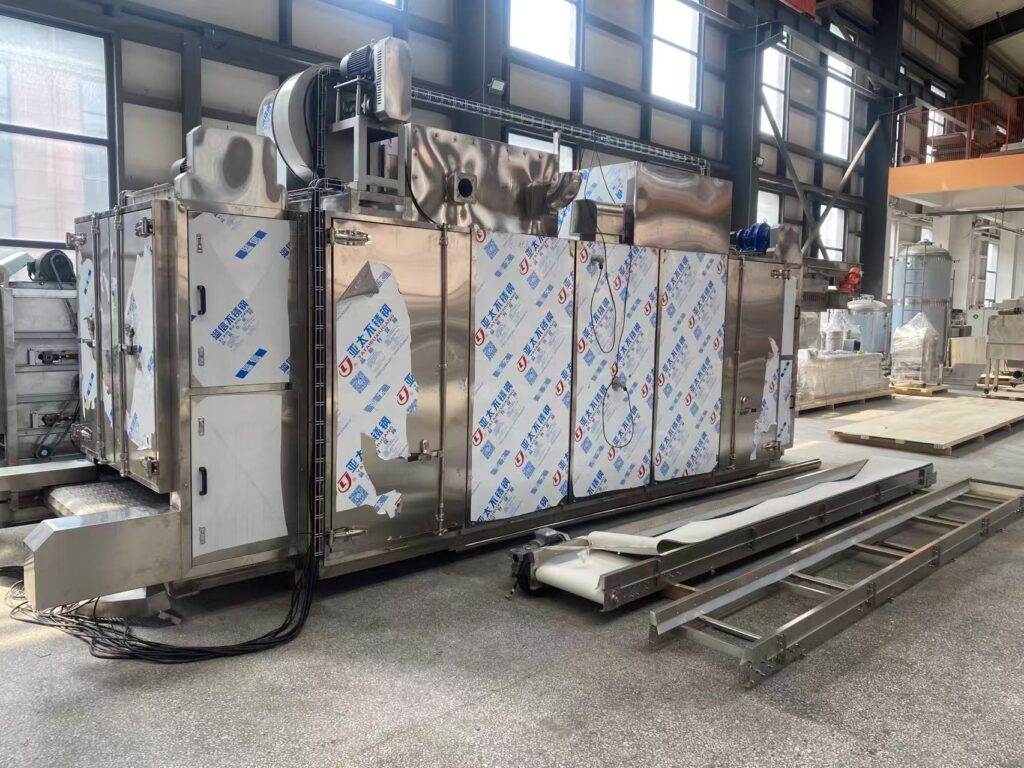
- Drying and Cooling: The freshly extruded kernels are dried (usually to 10–12% moisture content) and cooled to harden their structure and extend shelf life. Drying conditions must be controlled to prevent cracking or nutrient degradation.
The result is a uniform, grain-like product that can be blended with natural rice at a typical ratio of 1:100 (fortified kernels to natural rice).
2. Coating Technology
Coating involves applying a nutrient-rich solution or slurry onto parboiled or polished rice grains. The coating process often includes:

- Spraying a solution containing vitamins and minerals onto the rice in a rotating drum.
- Adding edible coatings (e.g., waxes or gums) to lock nutrients on the surface and reduce wash-off during rinsing.
However, coating is less preferred because surface nutrients are easily lost during repeated washing or cooking.
3. Dusting Technology
Dusting uses a dry powdered premix that adheres electrostatically or via oil spray to rice grains. fortified rice making machine This method is simple and inexpensive, but nutrient retention is poor as the dust is quickly removed with water.
Quality Control Parameters
Processing of fortified rice requires strict adherence to quality standards:
- Uniformity: Kernels must be homogenous in size, color, and shape to ensure even blending and consumer acceptance.
- Nutrient Retention: Processing conditions (especially temperature and shear) must be optimized to minimize thermal degradation of heat-sensitive vitamins like vitamin A and folic acid.
- Cooking Stability: Fortified kernels must retain at least 70–80% of added nutrients after typical washing and cooking procedures.
- Sensory Neutrality: No off-odor, discoloration, or altered taste should be detectable.
Post-Processing: Blending and Packaging
After production, fortified kernels are blended with regular milled rice at a specified ratio (e.g., 1:50 to 1:200). The blend is then packaged in moisture-proof bags to prevent oxidation, especially of fat-soluble vitamins (A, D, E, K). Packaging often includes nitrogen flushing to extend shelf life.

Conclusion
The processing of fortified rice is a science-driven operation that balances engineering principles with nutritional and sensory requirements. fortified rice making machine Extrusion remains the gold standard due to its ability to create stable, invisible, and effective fortified kernels. When properly executed, fortified rice can significantly reduce micronutrient deficiencies, such as anemia and neural tube defects, without changing the daily eating habits of consumers.
 Italian
  English
  Russian
  Spanish
  Arabic
  Portuguese
  German
  French
  Japanese
  Moroccan Arabic
  Persian
  Belarusian